Summer brings high temperatures, humidity, heavy rainfall, and frequent thunderstorms, all of which can significantly increase the failure rate of industrial instrumentation systems.
Common summer issues include:
transmitter zero drift
moisture ingress
overheating of electronic components
lightning damage
impulse line vapor lock
unstable pneumatic air supply
false level readings caused by vapor interference
To ensure stable plant operation, regular inspection and preventive maintenance become especially critical during this season.
This guide summarizes the most important inspection points for industrial instruments during summer operation.
1. General Environmental Inspection
The first step is to check the overall environmental conditions around the instruments.
Surface Temperature Check
Inspect whether transmitters, valve positioners, solenoid valves, and junction boxes are overheating.
Common causes include:
direct sunlight exposure
installation close to hot pipelines
heat tracing left active
poor cabinet ventilation
Excessive temperature may cause:
signal drift
LCD display blackout
electronic aging
unstable communication
Installing a sunshade cover is strongly recommended for outdoor instruments.
2. Moisture, Rain, and Condensation Protection
Summer humidity is one of the most common causes of field failures.
Inspection points:
cable glands properly tightened
junction box covers fully sealed
presence of water or condensation inside terminal boxes
drainage around field cabinets
Moisture may lead to:
short circuits
terminal corrosion
signal fluctuations
communication failure
3. Pressure Instrument Inspection
Pressure transmitters and gauges are highly affected by summer temperature changes.
Vapor Lock in Impulse Lines
For volatile media such as:
gasoline
LPG
ammonia solution
hot water
condensate
high temperature may cause vaporization inside the impulse line.
This often results in:
unstable readings
zero shift
no signal output
Inspection should focus on:
condensate pots
impulse line blockage
root valve leakage
manifold valve sealing
4. Flow Meter Inspection
This section is highly valuable for your business because it naturally links to your products.
Electromagnetic Flow Meter
Summer inspection points include:
grounding condition
cable sealing
sensor insulation
electrode moisture protection
Humidity may cause:
full-scale false reading
unstable signal
display blackout
For outdoor applications, we recommend:
split type installation
IP68 sensor protection
proper grounding ring
waterproof cable glands
This is a strong point to naturally introduce your electromagnetic flow meters.
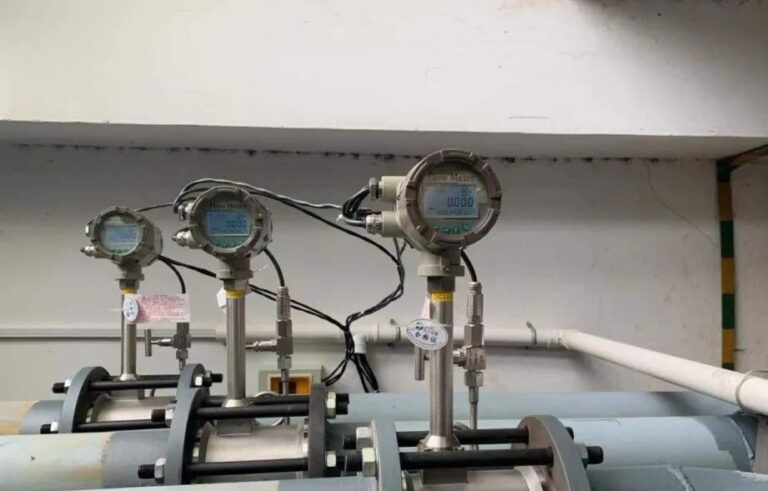
Vortex and Mass Flow Meters
Check for:
probe drift
pipeline vibration
thermal expansion stress
compensation accuracy
For gas measurement, verify whether temperature and pressure compensation are functioning properly.
5. Level Instrument Inspection
This section is extremely useful for radar level meter promotion.
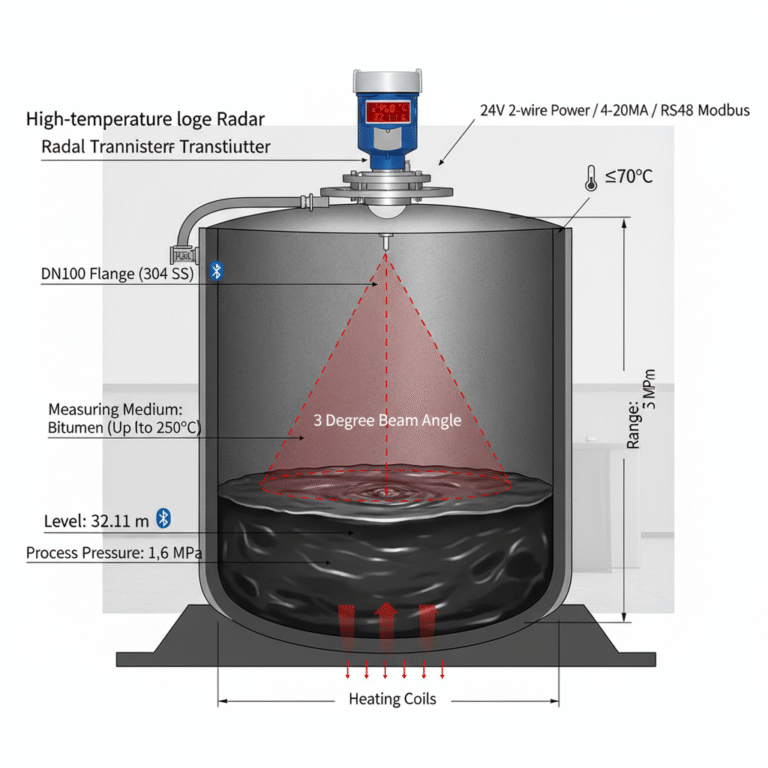
Radar Level Meter False Echo During Summer
High summer temperatures may create:
vapor layers
condensation
foam
antenna buildup
These conditions often cause:
false echo
unstable level reading
ghost level alarm
Inspection points:
antenna cleanliness
moisture on antenna surface
purge air system
flange sealing
This section is highly suitable for introducing your 80GHz radar level transmitters.
6. Control Valve and Positioner Inspection
Summer is the peak season for pneumatic valve failures.
Key inspection points:
positioner overheating
water in air supply
slow response
valve stem sticking
packing leakage
Pay special attention to:
air filter regulator drainage
compressor condensate
air tank water discharge
7. Instrument Air System Inspection
This part is very professional and customers will trust this immediately.
The most critical issue in summer is:
water in instrument air lines
This may cause plant-wide instability.
Inspect:
air dryer
filter separator
air receiver drainage
pressure stability (0.4–0.7 MPa)
8. Lightning Protection
Summer thunderstorms are a major risk for field transmitters.
Inspection points:
grounding resistance
surge protection modules
signal line SPD
control cabinet earth bonding
Lightning damage commonly affects:
transmitters
PLC cards
safety barriers
communication modules
9. Recommended Preventive Actions
We strongly recommend increasing inspection frequency for:
distillation units
tank farms
gasification systems
boiler rooms
outdoor pipelines
Critical inspection frequency:
once per shift during extreme summer weather
10. Final Recommendation
If your plant is facing issues such as:
signal drift
unstable level reading
false alarms
valve hunting
moisture ingress
our engineering team can help recommend suitable:
pressure transmitters
electromagnetic flow meters
radar level meters
control valve positioners
for high-temperature and high-humidity summer applications.