
Introduction

Selecting the right flowmeter is essential for accurate process measurement, efficient operation, and long-term reliability in industrial systems.
However, choosing a flowmeter is not simply a matter of matching the meter size to the pipeline diameter. Different flow measurement technologies have different operating principles, application limitations, and installation requirements. A flowmeter that performs well in clean water service may not be suitable for viscous oil, steam, compressed air, or corrosive chemical applications.
Incorrect selection can result in inaccurate readings, unstable signals, excessive pressure loss, frequent maintenance, and even premature equipment failure.
A reliable selection process should consider the fluid properties, operating conditions, required accuracy, flow range, pipeline configuration, and communication requirements.
This guide explains the main types of industrial flowmeters, their typical applications, and the key factors engineers should evaluate before making a selection.
1. What Information Is Required Before Selecting a Flowmeter?
Before recommending a flowmeter, engineers should collect sufficient process information. Missing operating data is one of the most common reasons for incorrect instrument selection.
The following parameters should be confirmed.
1.1 Fluid or Gas Type
Identify the medium to be measured:
- Water, wastewater, and cooling water
- Diesel, gasoline, and other petroleum products
- Natural gas, compressed air, and nitrogen
- Saturated steam and superheated steam
- Chemical solutions, acids, and alkalis
- Slurries and liquids containing suspended solids
Different fluids require different measurement technologies.
1.2 Fluid Properties
Important properties include:
- Electrical conductivity
- Density and viscosity
- Corrosiveness
- Solid particle content
- Gas or air bubble content
- Tendency to crystallize, scale, or deposit
For example, electromagnetic flowmeters require electrically conductive liquids, while turbine flowmeters generally perform best with relatively clean fluids.
1.3 Pipeline Information
Confirm the following:
- Nominal pipe diameter (DN)
- Pipe material and internal lining
- Full-pipe or partially filled conditions
- Pipeline connection type
- Available straight pipe length
These details help determine the appropriate flowmeter structure and installation method.
1.4 Operating Conditions
The most important operating parameters include:
- Minimum, normal, and maximum flow rates
- Operating pressure and maximum allowable pressure
- Minimum, normal, and maximum temperature
- Expected flow fluctuations
- Continuous or intermittent operation
Always provide actual flow conditions rather than relying only on the pipeline diameter.
1.5 Installation and Electrical Requirements
Other considerations include:
- Available installation space
- Upstream and downstream pipe fittings
- Pump and compressor vibration
- Whether pipeline shutdown is permitted
- Power supply: 24 VDC, 220 VAC, or battery
- Output signals: 4–20 mA, pulse, HART, or RS485 Modbus
- Required enclosure protection and explosion-proof certification
1.6 Measurement Accuracy
The required accuracy depends on the application.
Process monitoring may accept moderate accuracy, while custody transfer, batching, and commercial measurement generally require stricter performance specifications.
It is also important to distinguish between percentage of reading, percentage of full scale, and percentage of calibrated span. These specifications are not interchangeable.
2. Understanding the Main Types of Industrial Flowmeters

Different flowmeters are designed for different measurement conditions. The following technologies cover many common industrial applications.
2.1 Electromagnetic Flowmeter
Electromagnetic flowmeters measure the flow velocity of electrically conductive liquids using Faraday’s law of electromagnetic induction.
<Add Image: Industrial electromagnetic flowmeter with remote converter and flanged sensor>
Typical applications:
- Water supply and wastewater treatment
- Cooling water and circulating water
- Chemical solutions
- Slurries and certain liquids containing suspended solids
- Industrial process liquids
Advantages:
- No moving parts
- Negligible additional pressure loss
- Good measurement accuracy
- Suitable for large pipeline diameters
- Can handle many dirty or particle-containing conductive liquids
Limitations:
- Cannot measure gases, steam, or non-conductive liquids such as most hydrocarbon oils.
- Requires sufficient electrical conductivity.
- The pipeline should normally remain completely filled during measurement.
Key selection considerations:
Lining and electrode materials must be selected according to the medium’s chemical properties and operating temperature.
Common lining materials include rubber, PTFE, and other application-specific materials. Electrode options include 316L stainless steel, Hastelloy, titanium, and tantalum.
For partially filled pipelines, a specially designed solution may be required rather than a conventional full-pipe electromagnetic flowmeter.
2.2 Vortex Flowmeter
Vortex flowmeters operate based on the Kármán vortex street principle. As fluid passes a bluff body inside the meter, alternating vortices are generated. Their frequency is proportional to the flow velocity within the instrument’s operating range.
<Add Image: Industrial flanged vortex flowmeter installed on a steam pipeline>
Typical applications:
- Saturated steam
- Superheated steam
- Compressed air
- Natural gas
- Clean process liquids
Advantages:
- Simple and robust construction
- No rotating mechanical components
- Suitable for relatively high temperatures
- Available for liquid, gas, and steam measurement
- Generally economical for many industrial applications
Limitations:
- Sensitive to excessive mechanical vibration.
- Requires sufficient flow velocity and suitable Reynolds number.
- Performance may deteriorate with unstable or highly disturbed flow profiles.
- Not ideal for heavily contaminated fluids.
Key selection considerations:
Ensure that sufficient upstream and downstream straight pipe lengths are available. Actual requirements depend on the disturbance type, meter design, and manufacturer recommendations.
For steam measurement, pressure and temperature compensation may be necessary to calculate mass flow accurately when operating conditions vary.
2.3 Differential Pressure Flowmeter
Differential pressure flowmeters measure flow by creating a pressure difference across a primary element installed in the pipeline.
Common primary elements include:
- Orifice plates
- Venturi tubes
- Flow nozzles
- Averaging pitot tubes
<Add Image: Industrial orifice plate differential pressure flow measurement assembly>
Typical applications:
- Steam measurement
- Natural gas
- Compressed air
- Clean process liquids
- High-temperature and high-pressure applications
Advantages:
- Mature and widely established technology
- Suitable for high-pressure and high-temperature services
- No moving parts in the primary element
- Extensive engineering standards and calculation methods
Limitations:
- Permanent pressure loss can be significant, particularly with orifice plates.
- Accuracy depends on installation conditions and proper sizing.
- Impulse lines may become blocked or require regular maintenance.
- Additional instrumentation may be required for mass flow calculation.
Key selection considerations:
The differential pressure transmitter, pressure tapping arrangement, impulse lines, and manifold must be properly designed.
For steam and gas measurement, pressure and temperature compensation may be required. The primary element should be sized according to the actual operating conditions, not simply the nominal pipeline diameter.
2.4 Ultrasonic Flowmeter
Ultrasonic flowmeters use sound waves to determine fluid velocity.
Two common technologies are transit-time and Doppler ultrasonic measurement.
<Add Image: Portable clamp-on ultrasonic flowmeter installed on an industrial water pipe>
Typical applications:
- Clean water
- Cooling water
- Oil pipelines, depending on acoustic properties
- Large-diameter pipelines
- Temporary flow measurement
- Applications where pipeline cutting is undesirable
Advantages:
- Clamp-on models do not require cutting the pipeline.
- No additional pressure loss.
- Suitable for large pipe diameters.
- Can be installed without interrupting normal operation in many applications.
- Useful for pipeline inspection and temporary measurement.
Limitations:
- Measurement performance depends on acoustic transmission conditions.
- Thick deposits, unsuitable pipe materials, and internal lining may affect signal quality.
- Transit-time models generally require relatively clean fluids.
- Doppler models require sufficient acoustic reflectors, such as suspended particles or gas bubbles.
Key selection considerations:
Confirm pipe material, outside diameter, wall thickness, internal lining, fluid characteristics, and available installation space.
For clamp-on instruments, correct sensor positioning and acoustic coupling are essential for reliable measurement.
2.5 Coriolis Mass Flowmeter
Coriolis flowmeters measure mass flow directly by detecting the phase shift or vibration response of vibrating measuring tubes.
<Add Image: Industrial U-shaped Coriolis mass flowmeter with transmitter>
Typical applications:
- Diesel and fuel oil
- Chemical liquids
- High-value liquids
- High-viscosity fluids
- Batching and dosing systems
- Mass flow and density measurement
Advantages:
- Direct mass flow measurement
- High measurement accuracy
- Can provide density and temperature measurements
- Generally less dependent on changes in fluid density and viscosity than volumetric technologies
- Suitable for many demanding process applications
Limitations:
- Higher initial cost compared with many conventional flowmeters.
- Pressure drop may be significant in certain configurations.
- Large pipe sizes can be expensive.
- External vibration and installation stress should be considered.
Key selection considerations:
Evaluate maximum flow rate, operating pressure, fluid viscosity, pressure drop, and material compatibility.
For custody transfer and other high-accuracy applications, verify the required certification, calibration range, and applicable metrological approvals.
2.6 Turbine Flowmeter
Turbine flowmeters use a rotor installed in the flow passage. The rotational speed is proportional to the fluid velocity over the specified operating range.
<Add Image: Stainless steel industrial liquid turbine flowmeter and gas turbine flowmeter>
Typical applications:
- Clean water
- Diesel and refined petroleum products
- Low-viscosity liquids
- Natural gas
- Compressed air
Liquid turbine and gas turbine flowmeters have different internal designs and operating characteristics.
Advantages:
- Good accuracy under suitable operating conditions
- Fast response
- Relatively compact construction
- Wide range of industrial applications
- Suitable for pulse-based flow measurement
Limitations:
- Moving components are subject to wear.
- Sensitive to solid particles and contamination.
- Performance can be affected by viscosity changes.
- Requires suitable flow conditions and maintenance.
Key selection considerations:
Check the minimum and maximum flow rates, fluid viscosity, filtration requirements, bearing materials, and expected operating life.
For gas applications, pressure and temperature compensation may be required depending on whether standard or actual volumetric flow is needed.
2.7 Thermal Mass Flowmeter
Thermal mass flowmeters determine gas mass flow by measuring heat transfer between heated and temperature-sensing elements.
<Add Image: Industrial insertion thermal mass flowmeter installed on compressed air pipeline>
Typical applications:
- Compressed air
- Nitrogen
- Oxygen
- Biogas
- Other compatible industrial gases
Advantages:
- Direct gas mass flow measurement
- No separate pressure and temperature compensation is normally required for the measurement principle.
- Available in insertion and inline designs.
- Particularly useful for compressed air monitoring and energy management.
Limitations:
- Gas composition affects calibration and measurement performance.
- Condensation, oil contamination, and sensor deposits may affect accuracy.
- Not suitable for liquids or steam.
Key selection considerations:
Confirm gas composition, operating pressure, temperature, pipe diameter, flow velocity, and gas cleanliness.
For mixed gases or changing gas composition, the calibration basis must be carefully evaluated.
2.8 Rotameter (Variable Area Flowmeter)
Rotameters measure flow based on the position of a float inside a tapered measuring tube.
<Add Image: Industrial metal tube rotameter with local flow indication>
Typical applications:
- Small liquid flow measurement
- Gas flow monitoring
- Chemical dosing
- Laboratory and auxiliary process lines
Advantages:
- Simple operating principle
- Easy local indication
- No external power required for basic models
- Relatively low purchase cost
Limitations:
- Generally less suitable for high-pressure or high-flow applications.
- Installation orientation is important.
- Glass tube models require additional mechanical protection.
- Gas and liquid readings depend on the calibration medium and operating conditions.
Key selection considerations:
Confirm the medium, operating pressure, temperature, flow range, installation orientation, and required connection materials.
2.9 Positive Displacement Flowmeter
Positive displacement flowmeters measure flow by dividing the fluid into known volumes and counting the number of measuring cycles.
Oval gear flowmeters are a common industrial design.
<Add Image: Industrial oval gear positive displacement flowmeter for oil measurement>
Typical applications:
- Diesel and fuel oil
- Lubricating oil
- High-viscosity liquids
- Chemical liquids
- Batching and commercial measurement
Advantages:
- Good accuracy for suitable applications
- Performs well with many viscous liquids.
- Relatively low sensitivity to flow profile disturbances.
- Suitable for applications requiring volumetric measurement.
Limitations:
- Moving components are subject to wear.
- Solid particles can cause jamming or damage.
- Pressure drop increases with viscosity and flow conditions.
- Requires appropriate filtration for contaminated fluids.
Key selection considerations:
Evaluate viscosity, maximum flow rate, operating pressure, particle content, filtration, and material compatibility.
3. How to Select a Flowmeter Based on the Application
The following table provides a practical starting point for selecting flow measurement technologies.
| Application | Recommended technologies | Main considerations |
|---|---|---|
| Clean water | Electromagnetic, ultrasonic, turbine | Conductivity, pipe conditions |
| Wastewater | Electromagnetic | Solids, conductivity, lining |
| Saturated steam | Vortex, differential pressure | Pressure and temperature |
| Superheated steam | Vortex, differential pressure | High temperature, compensation |
| Natural gas | Gas turbine, vortex, differential pressure | Pressure, temperature, gas properties |
| Compressed air | Thermal mass, vortex, ultrasonic | Energy monitoring, flow range |
| Diesel | Turbine, Coriolis, oval gear | Viscosity, accuracy |
| High-viscosity oil | Coriolis, oval gear | Pressure drop, viscosity |
| Chemical liquids | Electromagnetic, Coriolis | Corrosion resistance, conductivity |
| Gas consumption monitoring | Thermal mass, gas turbine | Gas composition, operating conditions |
These recommendations are preliminary. The final selection should always be based on actual process conditions and the manufacturer’s technical specifications.
4. Common Flowmeter Selection Mistakes

Even when the correct measurement technology is selected, several engineering details can still affect measurement performance.
4.1 Ignoring Straight Pipe Requirements
Vortex, turbine, and differential pressure flowmeters can be affected by upstream disturbances such as elbows, reducers, pumps, and control valves.
Insufficient straight pipe length may cause measurement errors, unstable readings, or poor repeatability.
Always follow the manufacturer’s installation recommendations and applicable engineering standards.
4.2 Selecting the Wrong Flow Range
One common mistake is selecting a flowmeter based only on pipeline diameter.
For example, a DN50 pipeline does not automatically require a flowmeter with a particular measuring range.
The minimum, normal, and maximum operating flow rates must all be considered.
The normal operating point should be within the instrument’s specified measurement range, with sufficient margin for expected process fluctuations.
Do not apply a universal 30%–80% rule to every flowmeter. The appropriate operating range depends on the measurement technology, turndown ratio, accuracy specification, and actual process requirements.
4.3 Overlooking Material Compatibility
Corrosion resistance is not determined by the meter body alone.
The following components may also contact the process medium:
- Electrodes
- Measuring tube
- Internal lining
- Sealing materials
- Rotor and bearing components
- Sensor protection materials
Always verify the compatibility of all wetted parts with the actual chemical composition, concentration, temperature, and pressure.
4.4 Ignoring Mechanical Vibration
Vortex flowmeters can be particularly sensitive to external mechanical vibration.
Installation near reciprocating compressors, pumps, and vibrating equipment may cause unstable readings.
Where necessary, consider relocating the meter, improving pipeline support, or selecting a measurement technology better suited to the installation environment.
4.5 Neglecting Electromagnetic Flowmeter Grounding
Proper grounding and equipotential bonding are essential for electromagnetic flowmeters.
Incorrect grounding, poor electrical connections, or unsuitable grounding arrangements can cause unstable signals and measurement errors.
Special attention should be given to non-metallic pipelines, lined pipes, and electrically isolated installations.
4.6 Ignoring Pressure and Temperature Compensation
For gas and steam applications, actual volumetric flow is not always equivalent to mass flow or standard volumetric flow.
Changes in pressure and temperature can significantly affect fluid density.
Depending on the application, pressure and temperature transmitters may be required to calculate compensated flow accurately.
5. A Practical Step-by-Step Flowmeter Selection Process
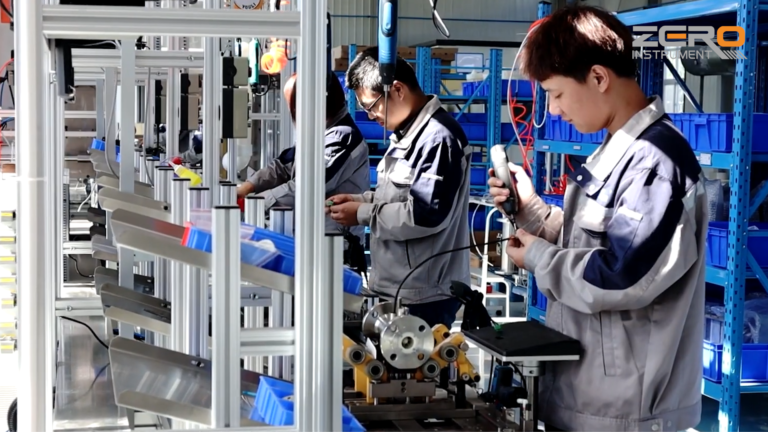
A systematic selection process helps reduce engineering errors and avoid unnecessary equipment costs.
Step 1: Identify the medium.
Determine whether the application involves liquid, gas, steam, or slurry.
Step 2: Evaluate fluid properties.
Check conductivity, viscosity, density, corrosiveness, and solid particle content.
Step 3: Confirm operating conditions.
Collect minimum, normal, and maximum flow rates, together with operating pressure and temperature.
Step 4: Select the measurement technology.
Compare electromagnetic, vortex, differential pressure, ultrasonic, Coriolis, turbine, thermal mass, and positive displacement technologies.
Step 5: Check the measuring range.
Ensure the selected meter can accurately cover the required operating range, including expected fluctuations.
Step 6: Verify mechanical and material specifications.
Confirm nominal diameter, connection type, pressure rating, temperature limits, wetted materials, and enclosure protection.
Step 7: Check installation conditions.
Evaluate straight pipe requirements, mounting orientation, available space, vibration, and maintenance accessibility.
Step 8: Confirm electrical and communication requirements.
Specify power supply, output signals, communication protocols, display requirements, and explosion-proof certification where necessary.
Step 9: Review the final technical configuration.
Confirm that the complete instrument configuration meets the process requirements before issuing the final quotation or placing the order.
6. Final Recommendations
There is no universal flowmeter suitable for every industrial application.
Electromagnetic flowmeters are widely used for conductive liquids, vortex flowmeters are common in steam and gas measurement, and differential pressure flowmeters remain an established solution for many high-pressure and high-temperature applications.
Ultrasonic flowmeters are particularly useful for non-invasive measurement, while Coriolis flowmeters provide direct mass flow measurement for demanding liquid applications. Turbine, thermal mass, rotameter, and positive displacement flowmeters each have their own advantages in specific operating conditions.
The most reliable selection starts with accurate process information rather than simply choosing an instrument based on pipeline size or purchase price.
If you are selecting a flowmeter for a new project or replacing an existing instrument, provide the medium, pipe diameter, flow range, operating pressure, temperature, and required output signals.
An experienced instrumentation supplier can then evaluate the available technologies and recommend a suitable configuration for your application.
Choosing the right flowmeter from the beginning helps improve measurement reliability, reduce maintenance costs, and ensure stable long-term operation.