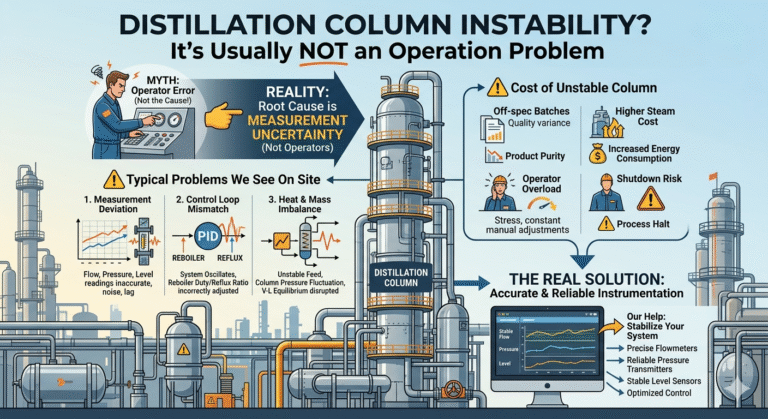
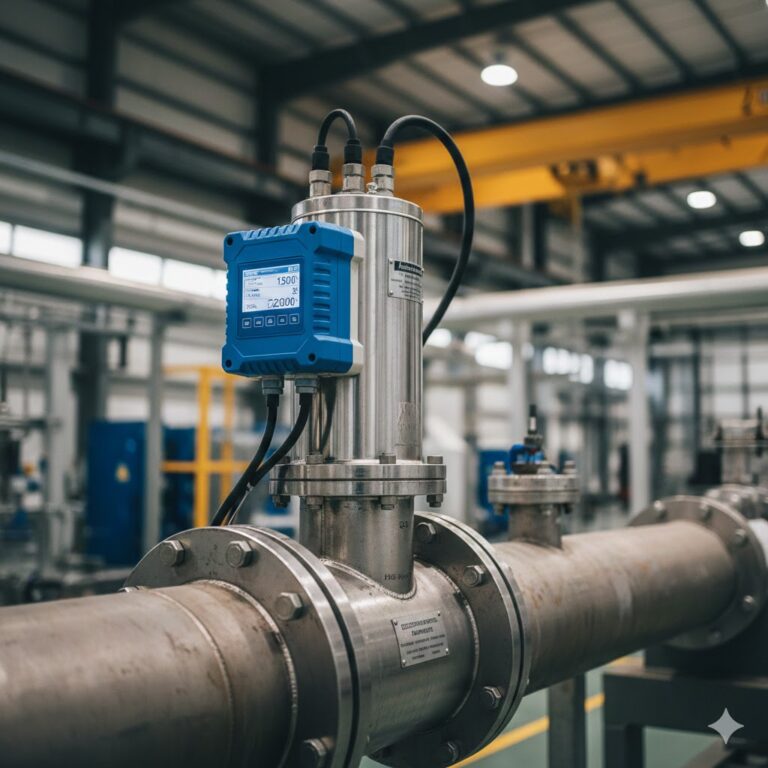
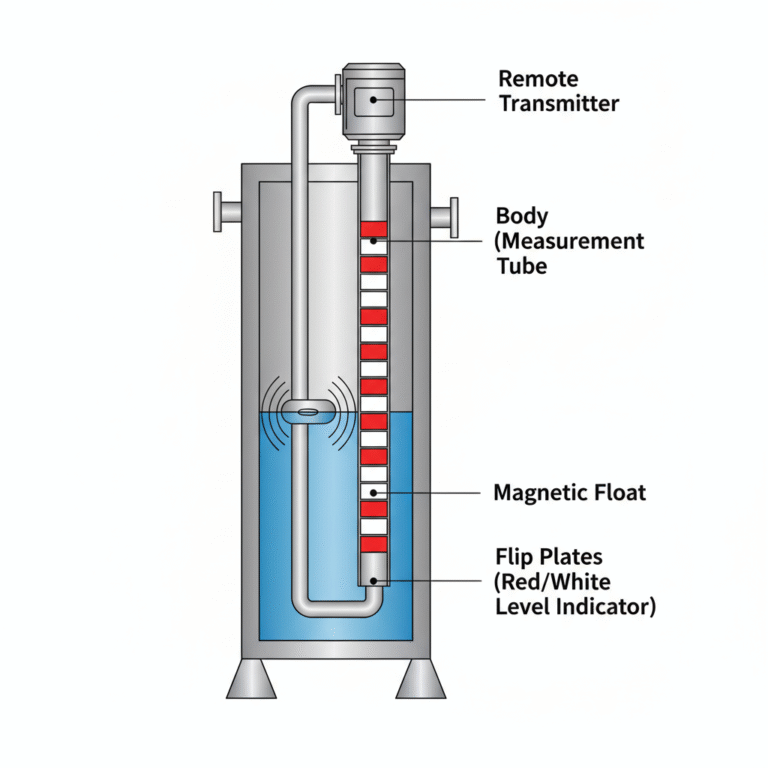
Distillation Column Instability? It’s Usually NOT an Operation Problem / Instrumentation Many engineers believe that when a distillation column becomes unstable, the issue comes from operator mistakes.👉 In reality, this is often wrong.In most cases, instability is caused by:Measurement deviationControl loop mismatchHeat and mass imbalance👉 Not operator error. ⚠️ What Does “Unstable Column” Really Cost You?Column instability is not just a technical issue — it directly impacts your production:Product purity fluctuates → off-spec batchesEnergy consumption increases → higher steam costFrequent adjustments → operator overloadSevere cases → shutdown risk👉 The real loss is hidden but significant 🔍 Why Distillation Columns Become UnstableA distillation column is a dynamic system involving:Heat transferMass transferVapor-liquid equilibriumPressure balanceTo remain stable, all these must be in balance.However, instability occurs when:Reboiler duty fluctuatesReflux ratio is not properly controlledFeed condition is inconsistentPressure inside the column is unstable👉 But behind these issues, there is a deeper root cause:Measurement uncertainty 🎯 The Real Problem: You Can’t Control What You Can’t MeasureIn many projects, we see the same situation:Flow readings are driftingPressure signals are delayedLevel measurement is unstable👉 As a result:Control loops react incorrectly→ system oscillates→ column becomes unstable ⚙️ Where Instrumentation Makes the DifferenceStable distillation operation depends heavily on accurate and reliable measurements:Flow MeasurementSteam flow to reboilerReflux flowFeed flow👉 If flow data is unstable → heat balance collapses Pressure MeasurementColumn top pressureReboiler pressure👉 Pressure fluctuation directly changes boiling point and separation efficiency Level MeasurementBottom levelReflux drum level👉 Incorrect level → dry-out or flooding risk 🚨 Typical Problems We See On SiteFrom real project experience:Low-quality flowmeters → signal fluctuationPoor grounding → noise interferenceWrong instrument range → low resolutionDelayed response → control loop oscillation👉 These are often misjudged as “operation problems” 🚀 How We Help You Stabilize Your Distillation SystemWe don’t just supply instruments — we help stabilize your process.We provide:Accurate and stable flow measurement (even for difficult media)Reliable pressure transmitters with fast responseHigh-stability level measurement solutions (radar / DP / guided wave)Proper sizing and configuration based on your process👉 Result:More stable column operationLower energy consumptionFewer manual adjustmentsBetter product consistency 📈 Engineering Insight: Stability = Balance + MeasurementA stable distillation column is not achieved by:Increasing heatIncreasing reflux👉 It is achieved by:Precise control of heat, flow, and pressure — based on reliable measurement 📩 Need Help with Your Distillation Project?If your system has:Temperature fluctuationsPressure instabilityProduct inconsistency👉 Send us:Process mediumFlow / pressure rangeColumn sizeOperating conditionsWe will recommend a practical and cost-effective instrumentation solution. Share This Story, Choose Your Platform! Contact Us Please prove you are human by selecting the tree. Request a Quote