
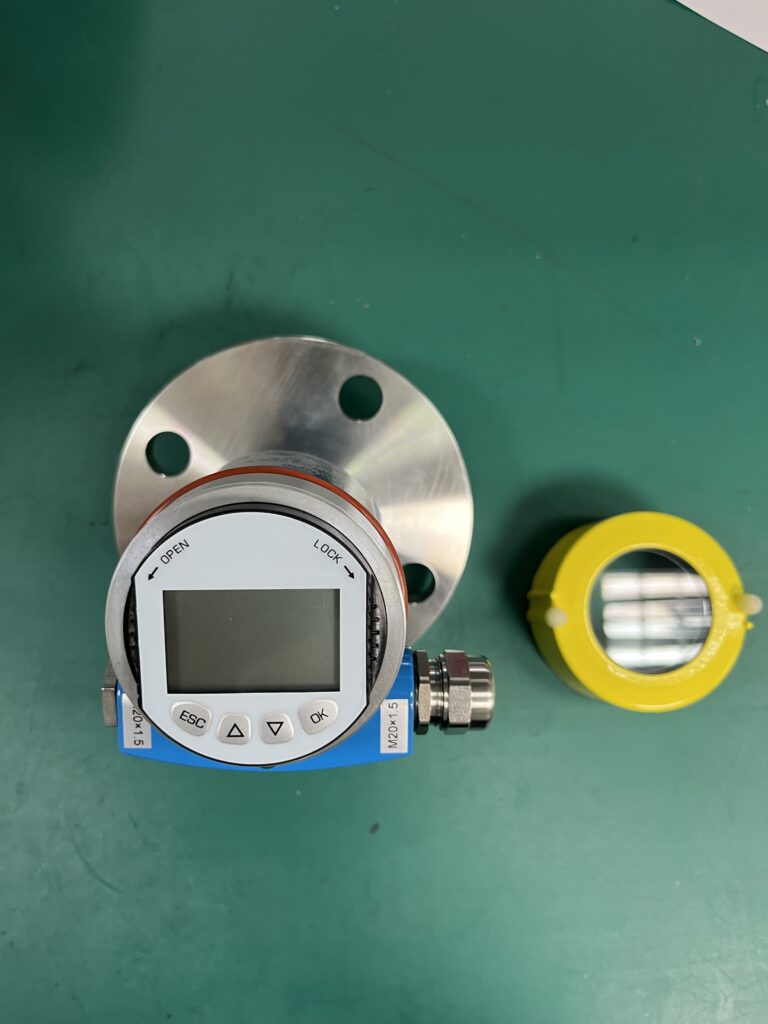
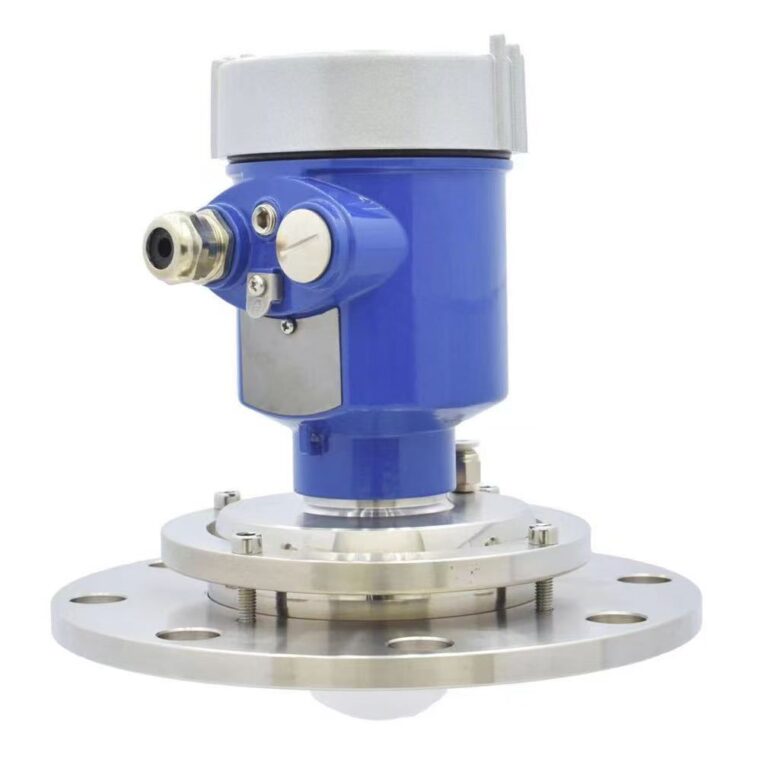
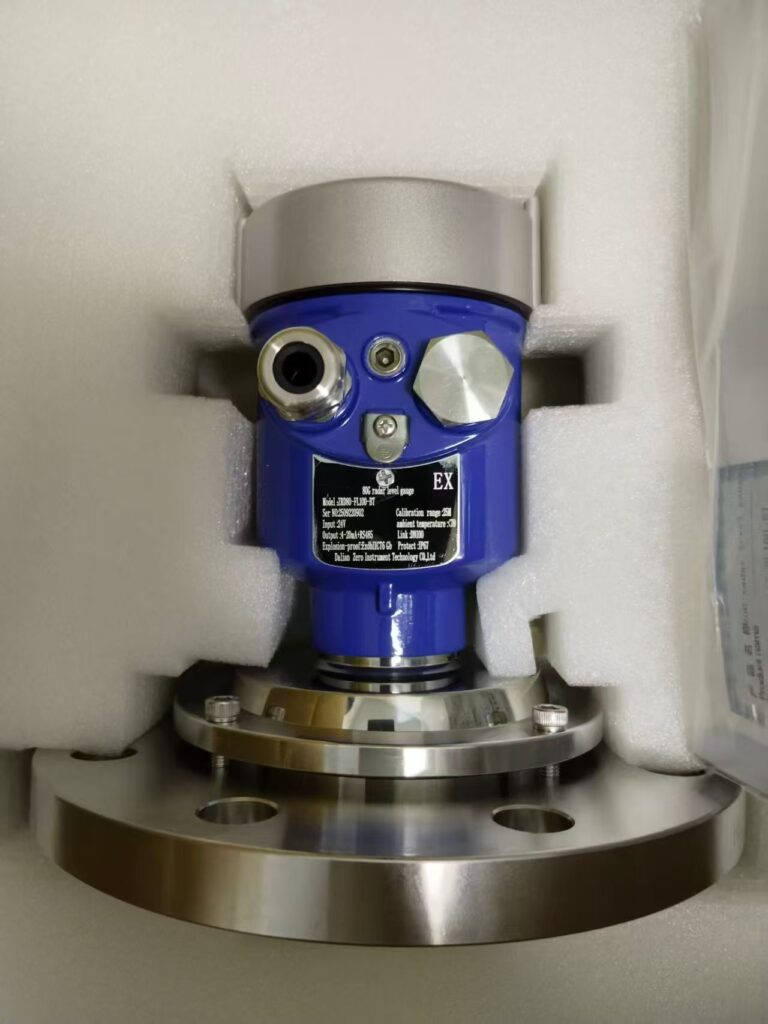
In many industrial applications, it is common to see an 80GHz radar level meter installed inside a metal stilling well (also called a guide pipe or bypass pipe).
Even under difficult conditions such as:
- Steam and vapor
- Foam on the liquid surface
- Agitated tanks
- Strong liquid turbulence
- Internal obstacles
the radar level transmitter can still provide stable and reliable measurement.
This often raises two questions:
Why can radar level meters work inside a metal stilling well?
Why can ultrasonic level meters not use the same principle?
Many explanations simply say:
“The stilling well reduces interference.”
Although this is partially correct, it does not explain the real physical reason.
The fundamental difference is that:
Radar waves are electromagnetic waves, while ultrasonic waves are mechanical waves.
A metal pipe can act as an electromagnetic waveguide for radar signals, but it cannot create the same effect for ultrasonic waves.
1. Radar Waves and Ultrasonic Waves Are Fundamentally Different
The biggest misunderstanding is that radar and ultrasonic measurement are simply two different frequencies of the same type of wave.
They are not.
| Radar Wave | Ultrasonic Wave | |
|---|---|---|
| Physical type | Electromagnetic wave | Mechanical wave |
| Energy form | Electric and magnetic fields | Air molecule vibration |
| Requires medium | No | Yes |
| Can travel in vacuum | Yes | No |
| Governing theory | Maxwell equations | Acoustic wave theory |
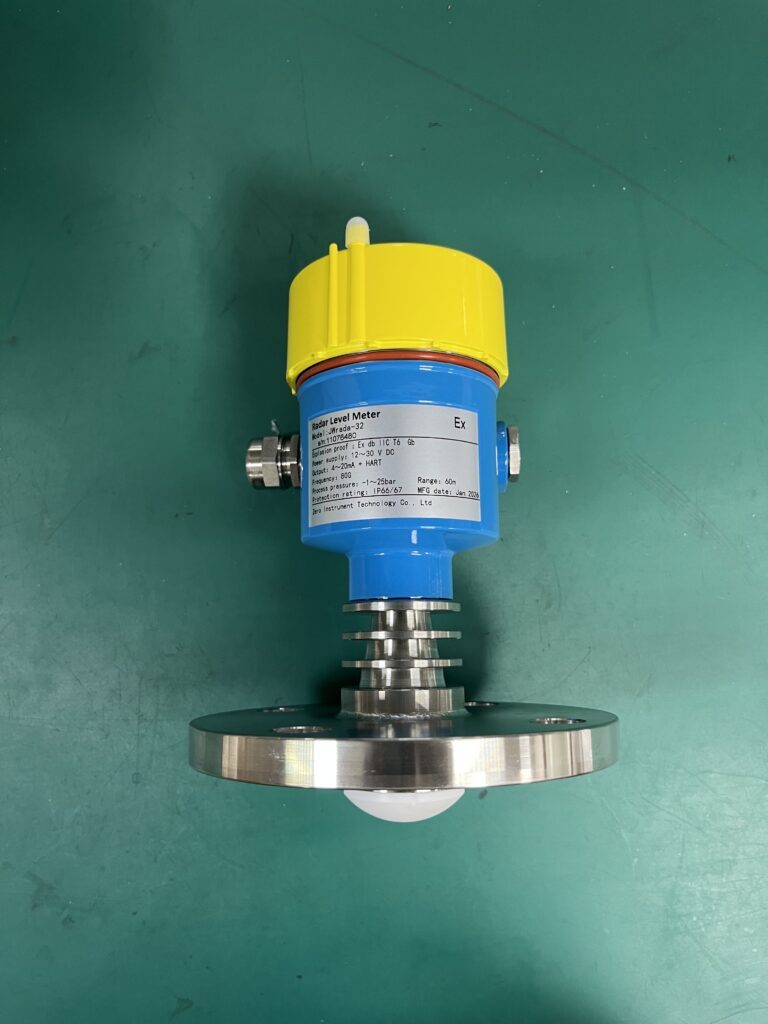
Radar level meters transmit microwave signals, while ultrasonic level meters transmit sound waves.
Their propagation mechanisms are completely different from the beginning.
2. How Does a Radar Level Meter Work?
Industrial radar level meters usually operate at frequencies such as:
- 6GHz
- 26GHz
- 80GHz
Modern high-frequency radar level meters mainly use the 80GHz frequency band because the shorter wavelength allows a narrow beam angle and higher measurement accuracy.
The wavelength can be calculated by:
λ=fc
For an 80GHz radar:
- Frequency: approximately 80 billion Hz
- Wavelength: about 3.75 mm
The radar sensor emits electromagnetic waves toward the material surface.
When the wave reaches the liquid surface, part of the energy is reflected back to the antenna.
By measuring the time delay or frequency difference between transmitted and received signals, the instrument calculates the distance and converts it into level.
3. Why Do Radar Waves Spread in Free Space?
Without any physical boundary, electromagnetic waves naturally spread outward.
A radar antenna does not transmit a perfectly straight beam like a laser.
Even with an 80GHz radar, which typically has a very narrow beam angle of around 3°–4°, the signal can still reach unwanted objects such as:
- Tank walls
- Agitators
- Ladders
- Heating coils
These unwanted reflections may create false echoes and reduce measurement reliability.
This is where a stilling well becomes valuable.
4. Why Can a Metal Pipe Guide Radar Waves?
The key point is:
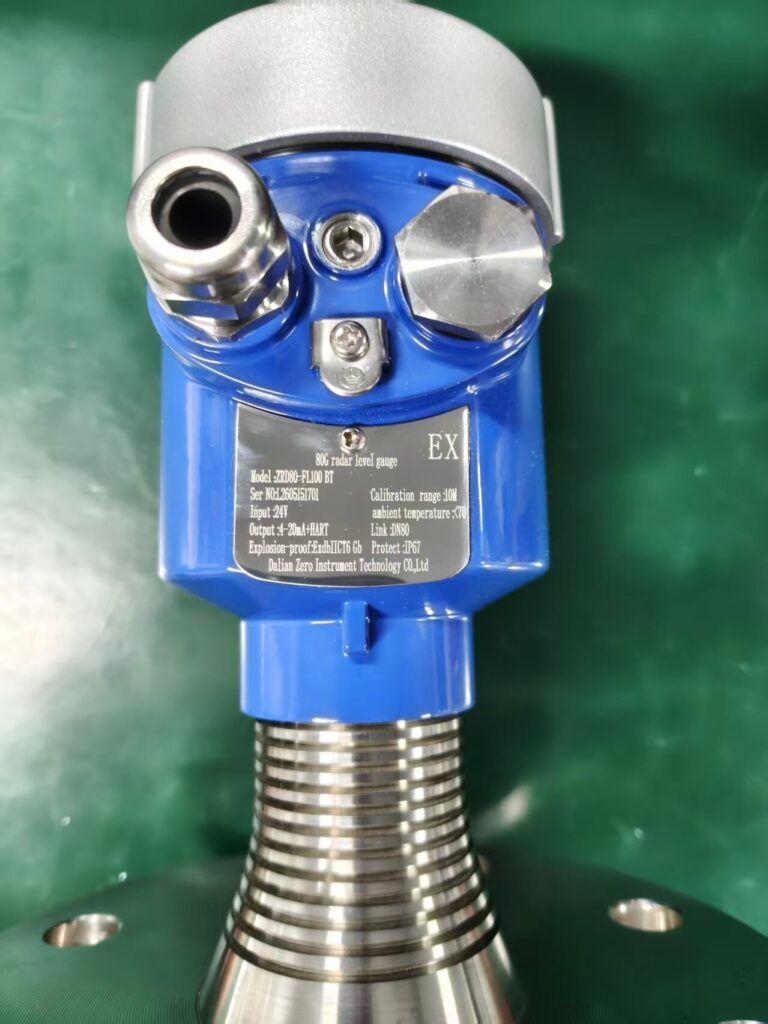
A metal stilling well does not simply “protect” radar waves. It changes the way electromagnetic waves propagate.
Metals contain a large number of free electrons.
When electromagnetic waves reach a metal surface:
- The electric field causes electrons to move.
- The movement creates induced currents.
- These currents generate a secondary electromagnetic field.
The result is that electromagnetic energy cannot freely enter the metal.
The metal boundary forces the electromagnetic field to satisfy specific boundary conditions.
Therefore, the wave cannot propagate randomly in all directions.
Instead, it must follow specific electromagnetic propagation patterns called:
Waveguide Modes
such as:
- TE modes
- TM modes
The metal pipe becomes an electromagnetic waveguide.
5. What Happens Inside a Radar Stilling Well?
In free space:
- Radar energy spreads in many directions.
- Objects inside the tank can create unwanted echoes.
Inside a metal stilling well:
- The electromagnetic field is restricted by the pipe wall.
- Lateral radiation is greatly reduced.
- The energy mainly travels along the pipe axis.
The stilling well converts a freely spreading electromagnetic wave into a controlled waveguide mode.
As a result:
- Signal-to-noise ratio improves.
- False echoes are reduced.
- Measurement stability increases.
This is why radar level meters often perform better when installed in a properly designed stilling well.
6. Why Can Radar Detect the Liquid Surface?
Radar measurement depends on the reflection of electromagnetic waves.
Air and liquids have very different dielectric properties.
For example:
- Air has a relative dielectric constant close to 1.
- Water has a relative dielectric constant around 80.
The large difference creates an impedance change at the interface.
When electromagnetic waves reach this boundary:
- Part of the energy is reflected.
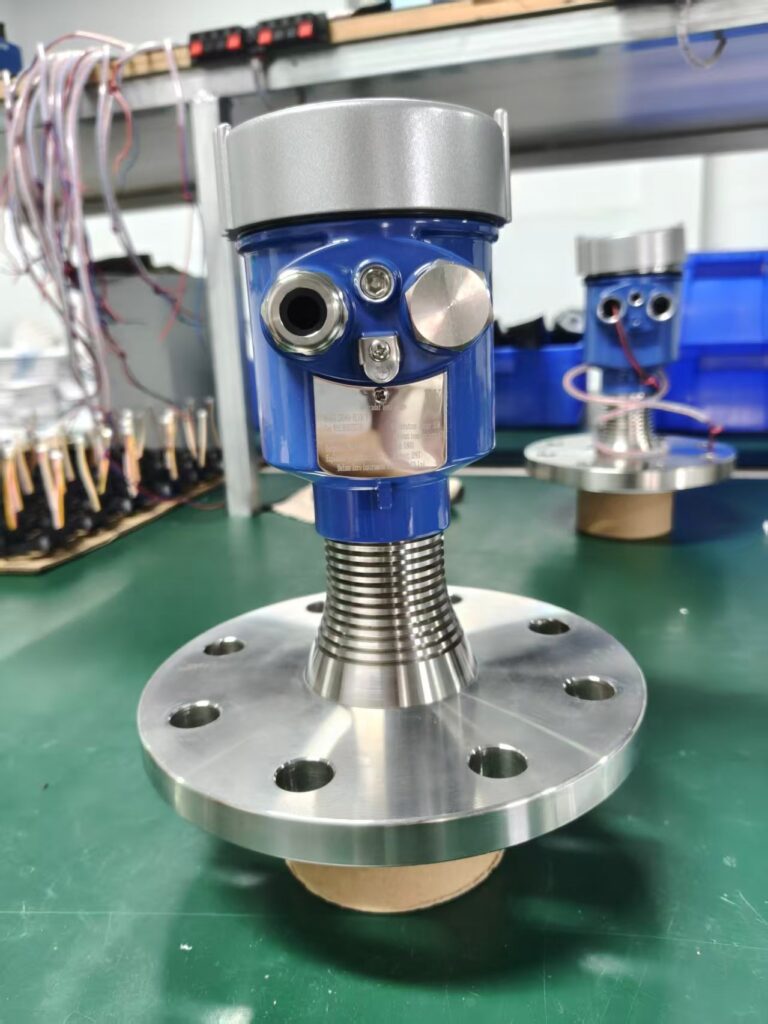
- The reflected signal returns to the radar antenna.
The stronger the reflection, the easier it is for the radar transmitter to identify the liquid surface.
7. Why Cannot Ultrasonic Level Meters Use the Same Principle?
This is the most important difference.
Ultrasonic level meters do not transmit electromagnetic waves.
They transmit mechanical sound waves.
Ultrasonic waves travel by repeatedly compressing and expanding the surrounding medium:
Compression → Expansion → Compression → Expansion
The energy is carried by molecules vibrating in the medium.
Therefore:
- Ultrasonic waves need air or another medium.
- They cannot propagate through vacuum.
- Their behavior depends strongly on acoustic conditions.
A metal pipe cannot become an ultrasonic waveguide in the same way as it does for radar.
8. Why Does a Metal Pipe Not Work as an Ultrasonic Waveguide?
For electromagnetic waves:
The metal wall acts as a boundary that controls the electromagnetic field.
The metal itself does not need to vibrate.
For ultrasonic waves:
The situation is completely different.
Sound waves create pressure changes.
These pressure changes interact with the pipe wall.
The steel wall can:
- Vibrate slightly
- Absorb energy
- Reflect sound
- Create additional acoustic paths
The pipe is no longer just a boundary.
It becomes part of a mechanical vibration system.
Therefore, a metal pipe cannot provide the same controlled propagation mechanism as an electromagnetic waveguide.
9. Why Can Ultrasonic Waves Create Standing Waves?
When ultrasonic waves repeatedly reflect inside a pipe:
- The original wave and reflected wave interact.
- Standing waves can form.
A standing wave contains:
- Nodes (minimum vibration points)
- Antinodes (maximum vibration points)
The pipe becomes similar to an acoustic resonance tube, like:
- A flute
- An organ pipe
- A musical instrument
This creates unstable acoustic conditions.
The ultrasonic sensor may receive:
- Multiple reflections
- False echoes
- Resonance signals
The instrument may have difficulty identifying the true liquid surface echo.
Possible results include:
- Signal fluctuation
- Lost echo
- Incorrect level reading
10. Can Ultrasonic Level Meters Be Installed in Stilling Wells?
Yes, some ultrasonic level meters can be installed in stilling wells.
However, the purpose is completely different.
For ultrasonic measurement, the stilling well is mainly used to:
- Reduce surface turbulence
- Isolate foam
- Avoid waves caused by agitation
- Provide a more stable measurement environment
It does not create a waveguide effect.
The installation usually requires:
- Proper pipe diameter
- Smooth internal wall
- Correct opening design
- Avoidance of acoustic resonance conditions
In other words:
Radar uses a stilling well to control electromagnetic propagation.
Ultrasonic uses a stilling well to improve measurement conditions.
Radar Stilling Well vs Ultrasonic Stilling Well: The Key Difference
| Radar Level Meter | Ultrasonic Level Meter | |
|---|---|---|
| Wave type | Electromagnetic wave | Mechanical wave |
| Role of metal pipe | Electromagnetic waveguide | Environmental stabilizer |
| Propagation control | Changes wave mode | Reduces turbulence |
| Main benefit | Less interference and stronger signal | More stable liquid surface |
| Physical principle | Electromagnetic theory | Acoustic theory |
Conclusion
The reason radar level meters can effectively use metal stilling wells is not simply because the pipe reduces interference.
The real reason is:
A metal stilling well can act as an electromagnetic waveguide.
The conductive wall controls the electromagnetic field distribution and forces radar energy to propagate along the pipe, reducing unwanted echoes and improving measurement stability.
Ultrasonic level meters work differently because they rely on mechanical sound waves. A metal pipe cannot guide sound waves in the same way as it guides electromagnetic waves. Instead, it may introduce reflections, resonance, and standing waves that affect measurement accuracy.
In one sentence:
Radar stilling wells control the propagation of electromagnetic waves, while ultrasonic stilling wells only improve the measurement environment.
This is the fundamental physical difference between radar and ultrasonic level measurement.