
Radar level transmitters are widely used in industrial applications for continuous level measurement of liquids, slurries, and solids. However, not all radar level transmitters are suitable for high-temperature processes.
The main difference between a standard radar level transmitter and a high-temperature radar level transmitter lies in their temperature capability, antenna design, installation structure, and application environment.
Choosing the correct radar level transmitter is essential to ensure measurement accuracy, equipment reliability, and long service life.
1. The Main Difference: Temperature Resistance Capability
The most significant difference between standard radar and high-temperature radar level transmitters is their operating temperature range.
Standard Radar Level Transmitter
Standard radar level transmitters are designed for normal industrial conditions.
Typical temperature range:
- Process temperature: approximately -40°C to 80°C
- Some industrial models can support up to 130°C or higher, depending on the design
They are commonly used for:
- Water tanks
- Chemical storage tanks
- Oil tanks
- Wastewater treatment systems
- Food and beverage processing
For normal temperature applications, standard radar transmitters provide reliable measurement with a more economical solution.
High Temperature Radar Level Transmitter
High-temperature radar level transmitters are specially designed for extreme process conditions where conventional instruments cannot operate reliably.
Typical applications include processes above:
- 150°C
- 200°C
- 300°C and higher
Some specially designed radar systems can measure extremely high-temperature processes by using:
- Extended antenna structures
- Thermal isolation components
- Cooling accessories
- High-temperature resistant materials
These designs prevent excessive heat from reaching the electronic components and ensure stable operation.
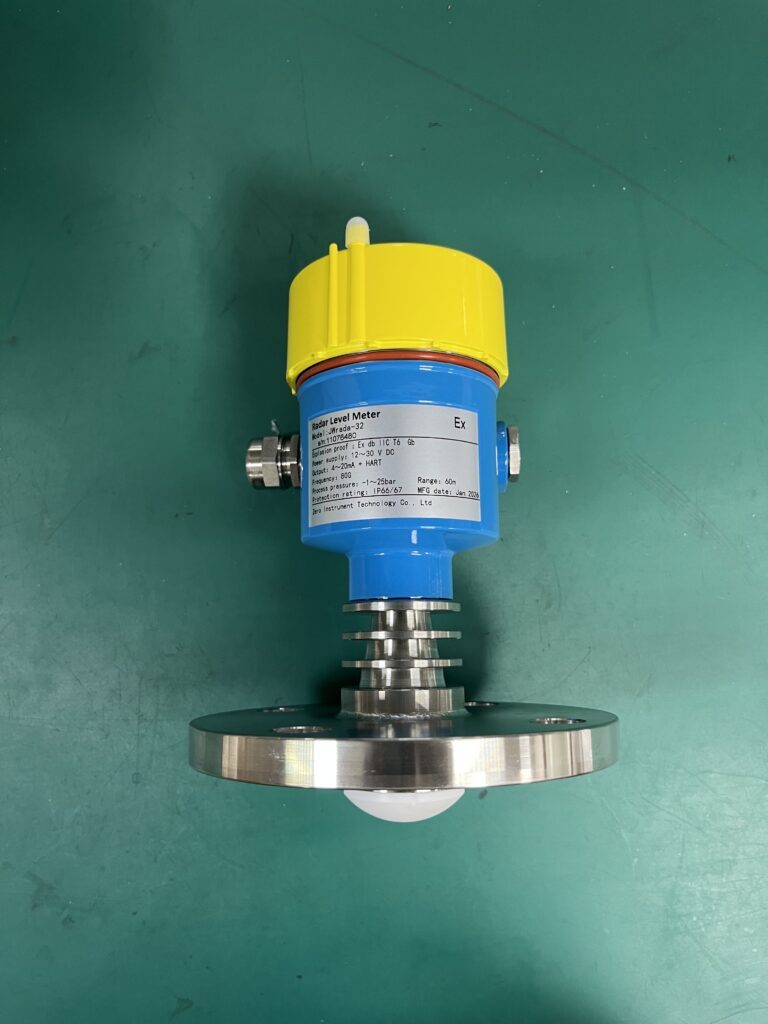
2. Structural Differences Between Standard and High Temperature Radar
Although both types use the same basic radar measurement principle, their mechanical designs are different.
Standard Radar Level Transmitter Structure
A standard radar level transmitter usually includes:
- Standard antenna
- Stainless steel wetted parts
- Normal process connection
- Integrated electronics housing
Common antenna materials include:
- 316L stainless steel
- PTFE
- Other corrosion-resistant materials
It is suitable for most storage and process measurement applications.
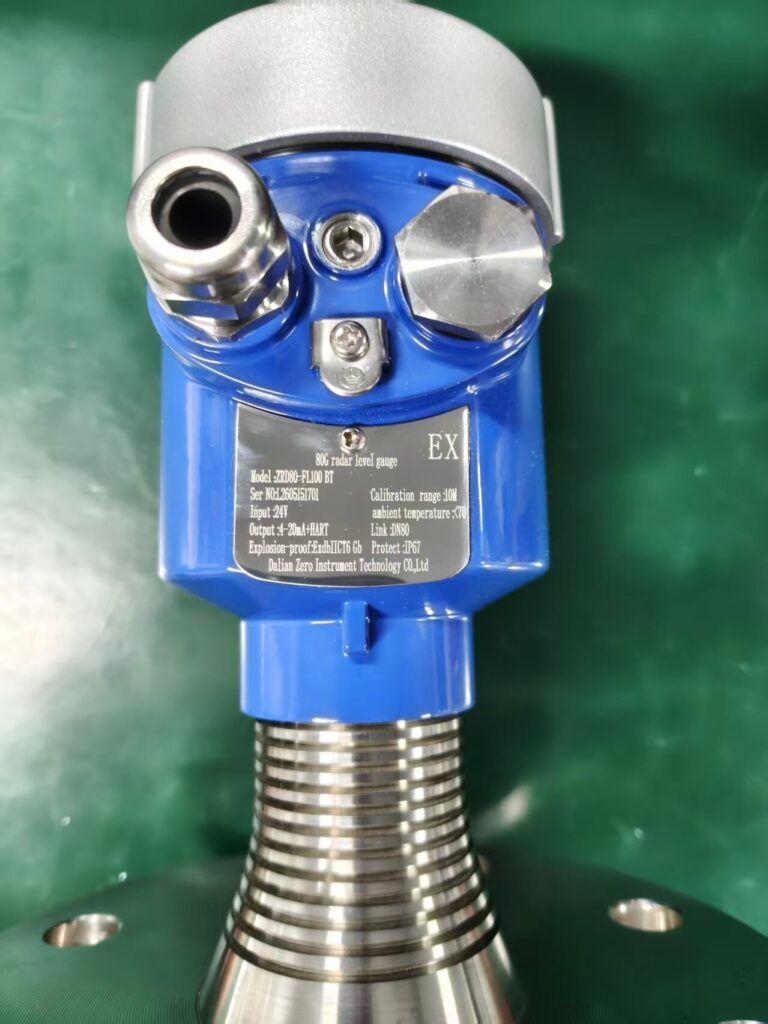
High Temperature Radar Level Transmitter Structure
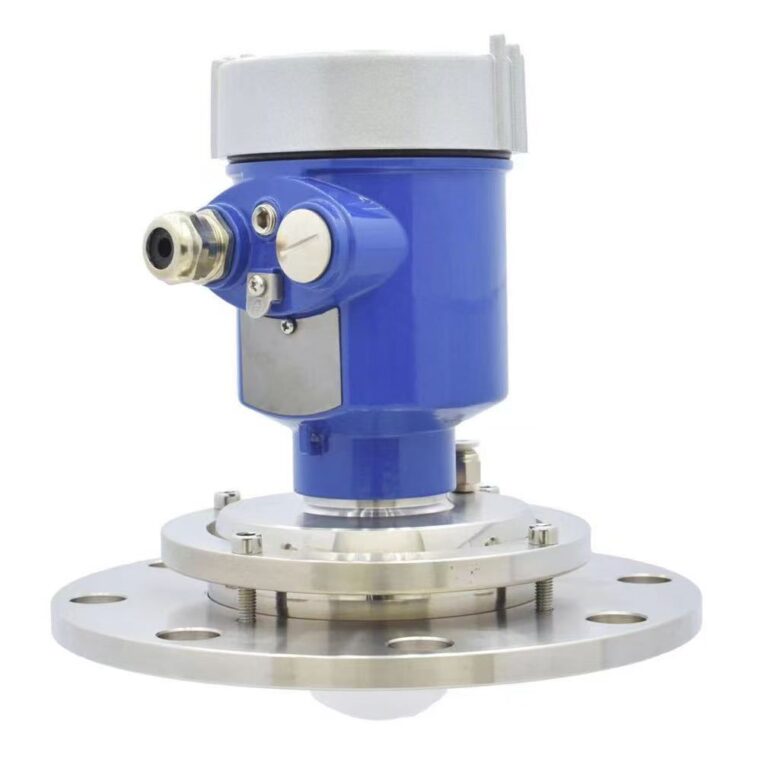
High-temperature radar transmitters usually include additional protection features:
1. Extended Antenna Design
The antenna is extended away from the high-temperature process area, reducing heat transfer to the electronics.
2. Thermal Isolation
Special isolation structures reduce thermal radiation and conduction.
3. High Temperature Resistant Materials
Depending on the application, materials may include:
- 316L stainless steel
- High-temperature ceramics
- Special alloy materials
4. Cooling or Heat Dissipation Systems
For extreme applications, additional cooling methods may be required to protect the transmitter electronics.
3. Working Principle: Both Use Radar Wave Measurement Technology
Both standard and high-temperature radar level transmitters operate based on the same measurement principle.
The transmitter sends high-frequency electromagnetic waves toward the material surface. When the radar wave reaches the surface, part of the signal is reflected back to the antenna.
The transmitter calculates the distance by measuring the time difference between signal transmission and reception.
The level is calculated as:
Tank Height – Distance to Material Surface = Actual Level
Modern radar level transmitters mainly use:
FMCW Radar Technology
Frequency Modulated Continuous Wave (FMCW) radar technology provides:
- Higher measurement accuracy
- Better stability
- Strong resistance to interference
80GHz radar technology is especially suitable for:
- Small nozzles
- Large tanks
- Steam environments
- Applications with internal obstacles
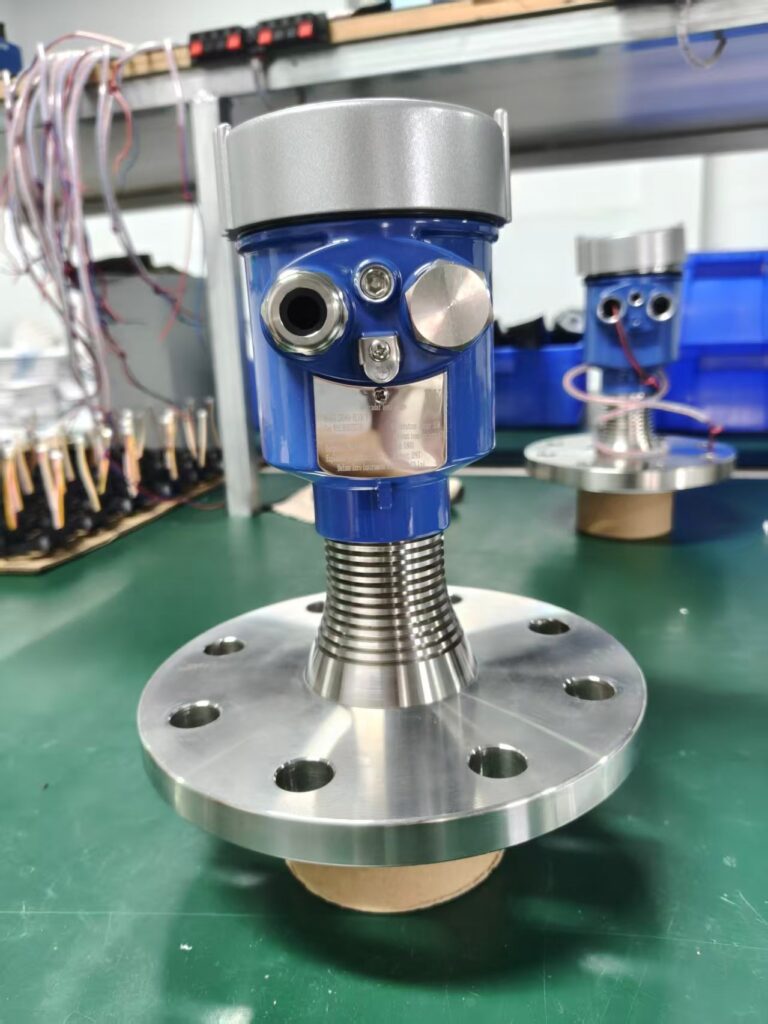
4. Application Comparison
High Temperature Radar Level Transmitter Applications
High-temperature radar transmitters are commonly used in industries where process temperatures are high.
Chemical Industry
Examples:
- High-temperature reactors
- Resin production vessels
- Chemical process tanks
- Molten salt storage tanks
Power and Energy Industry
Examples:
- Boiler drum level measurement
- Thermal oil tanks
- Biomass processing systems
Metallurgical Industry
Examples:
- High-temperature process vessels
- Furnace material level measurement
- Coke and ore storage bins
Standard Radar Level Transmitter Applications
Standard radar transmitters are widely used in general industrial applications.
Water and Wastewater
Examples:
- Water reservoirs
- Sewage treatment tanks
- Sedimentation tanks
Oil and Chemical Storage
Examples:
- Diesel tanks
- Oil storage tanks
- Chemical storage vessels
Food and Beverage
Examples:
- Liquid storage tanks
- Fermentation tanks
- Processing vessels
5. How to Choose Between Standard and High Temperature Radar?
The correct selection depends mainly on process conditions.
Choose Standard Radar Level Transmitter When:
✔ Process temperature is below 130°C
✔ The tank environment is normal
✔ No strong heat radiation exists
✔ Cost-effective measurement is required
Typical applications:
- Storage tanks
- Water treatment
- General chemical processes
Choose High Temperature Radar Level Transmitter When:
✔ Process temperature exceeds 150°C
✔ The vessel generates strong heat radiation
✔ Steam or high-temperature vapor exists
✔ The transmitter is installed near furnaces or reactors
Typical applications:
- High-temperature reactors
- Boiler systems
- Thermal processing equipment
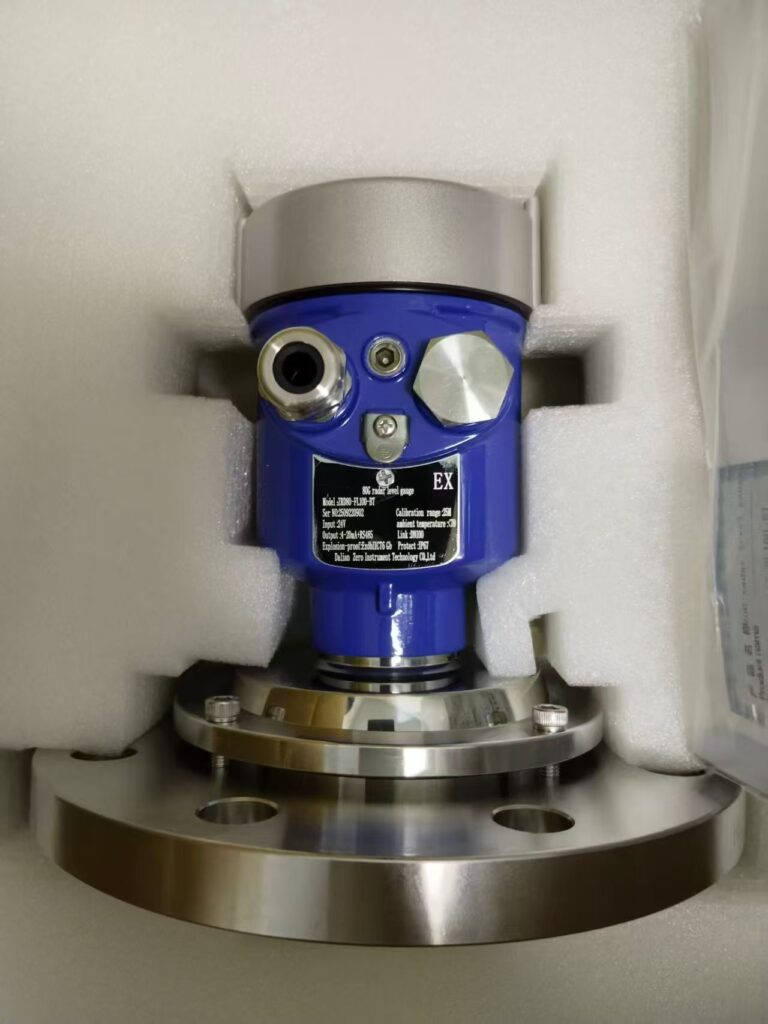
6. Standard Radar vs High Temperature Radar Comparison
| Feature | Standard Radar Level Transmitter | High Temperature Radar Level Transmitter |
|---|---|---|
| Temperature capability | Normal industrial temperature | High-temperature process conditions |
| Typical range | -40°C to 80/130°C | 150°C, 200°C or higher |
| Antenna design | Standard antenna | Extended or high-temperature antenna |
| Heat protection | Normal protection | Thermal isolation/cooling design |
| Installation | Direct mounting | Special installation may be required |
| Cost | Lower | Higher |
| Application | Storage and general processes | Reactors, furnaces, extreme conditions |
Conclusion
The choice between a standard radar level transmitter and a high-temperature radar level transmitter depends mainly on the process temperature and installation environment.
For normal industrial tanks, a standard radar transmitter provides an economical and reliable solution.
For high-temperature applications such as reactors, boilers, and thermal process equipment, a high-temperature radar level transmitter with proper thermal protection is necessary to maintain measurement accuracy and long-term reliability.
Before selecting a radar level transmitter, always consider:
- Process temperature
- Pressure
- Medium characteristics
- Steam or vapor conditions
- Installation space
- Required measurement accuracy
Selecting the right radar technology ensures stable operation and reduces maintenance costs in industrial level measurement systems.