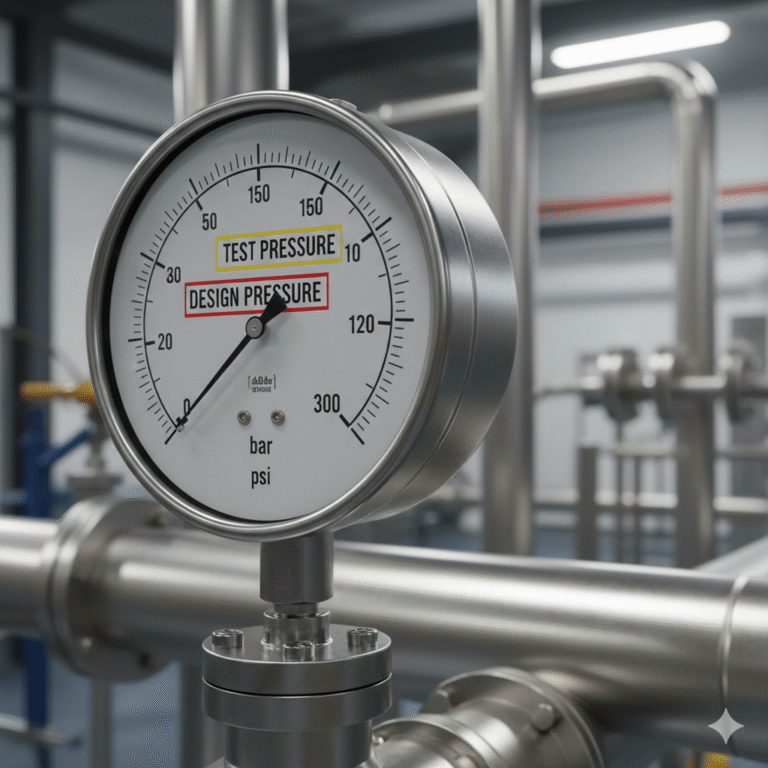
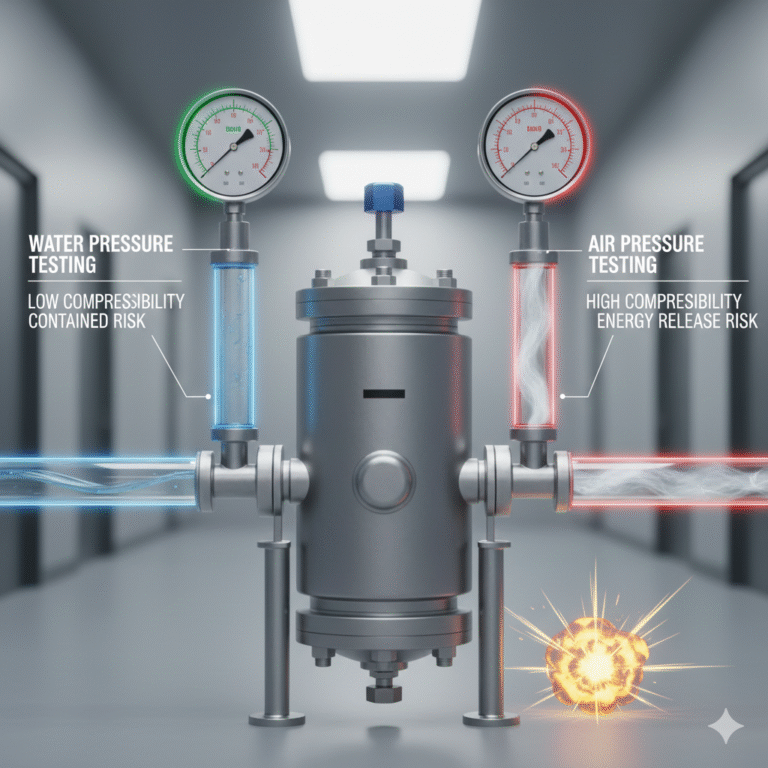
🔥 Why This Matters (Before You Choose Any Equipment)
Many engineers and buyers assume pressure is a simple parameter. But in reality, misunderstanding pressure definitions is one of the most common causes of:
Equipment failure
Leakage and safety risks
Incorrect flowmeter or transmitter selection
Failed inspections and project delays
If you are selecting flowmeters, pressure transmitters, valves, or pipelines, understanding the difference between these three pressures is critical.
1. What is Operating Pressure?
Operating pressure is the actual pressure during normal process conditions.
👉 It is determined by the process, not by mechanical design.
Key Characteristics:
Comes from PFD / P&ID
Defined by process engineers
Represents normal working conditions
NOT used for equipment strength calculation
Example:
If a pipeline operates at 1.6 MPa under normal conditions, this is your operating pressure.
2. What is Design Pressure?
Design pressure is the pressure used for mechanical design and equipment selection.
👉 This is the most important parameter when choosing instruments.
It determines:
Pipe thickness
Flange rating (PN16 / PN25 / ANSI 150 / 300)
Flowmeter pressure resistance
Valve and gasket selection
Safety valve setting
How it is calculated:
Design pressure must consider:
Maximum operating pressure
Static head (liquid column)
Pressure fluctuations
Safety margin
Example:
Item
Pressure (MPa)
Operating Pressure
1.6
Static Head
0.1
Fluctuation
0.05
Safety Margin
0.1
Design Pressure
≈ 2.0
👉 Even if your system runs at 1.6 MPa, your equipment should be designed for 2.0 MPa.
3. What is MAWP (Maximum Allowable Working Pressure)?
MAWP is the maximum pressure the equipment can safely withstand at design temperature.
👉 It is a physical limit, not a design target.
Important Notes:
Calculated after manufacturing
Based on actual thickness, material, welding quality
Defined by standards like ASME BPVC
Example:
Design Pressure: 2.0 MPa
Actual measured thickness → higher strength
Calculated MAWP: 2.15 MPa
👉 The equipment can withstand more, but you should still operate within design limits.
4. The Relationship Between the Three
This is the most critical rule:
👉 Operating Pressure ≤ Design Pressure ≤ MAWP
Think of it as 3 safety layers:
Level
Meaning
Operating Pressure
Actual working condition
Design Pressure
Engineering safety margin
MAWP
Physical maximum limit
5. Common Mistakes (and Why Projects Fail)
❌ Mistake 1: Using design pressure as operating pressure
→ Leads to fatigue and long-term damage
❌ Mistake 2: Ignoring static head (especially in tall tanks)
→ Causes unexpected overpressure at lower points
❌ Mistake 3: Assuming MAWP = safety valve setting
→ Can result in unsafe or non-compliant systems
❌ Mistake 4: Not recalculating MAWP after corrosion
→ Old equipment becomes high-risk
6. Practical Example (Flowmeter Selection)
When selecting an electromagnetic flowmeter, you may have:
Operating pressure: 1.6 MPa
Design pressure: 2.0 MPa
👉 Correct selection should be:
Flange: PN16 or PN25 (depending on safety margin)
Body material: carbon steel or stainless steel
Lining & electrode compatible with pressure & medium
⚠️ If you select based only on operating pressure, the flowmeter may fail during pressure fluctuation.
7. Standards Difference (GB vs ASME)
Item
China GB Standard
ASME Standard
Nameplate Pressure
Design Pressure
MAWP
MAWP Usage
Inspection reference
Main operating limit
Safety Valve Setting
≤ Design Pressure
≤ MAWP
✅ Final Takeaway
Operating Pressure → What your system runs at
Design Pressure → What your equipment must handle
MAWP → The absolute physical limit
👉 Understanding these differences helps you:
Avoid under-design
Prevent failures
Pass inspections
Select the right instruments
🚀 Need Help Selecting the Right Instrument?
If you’re not sure how to define pressure parameters for your project, we can help.
📩 Just send us:
Fluid type
Flow range
Pressure & temperature
Pipe size
👉 We will recommend a suitable solution within 24 hours, including: