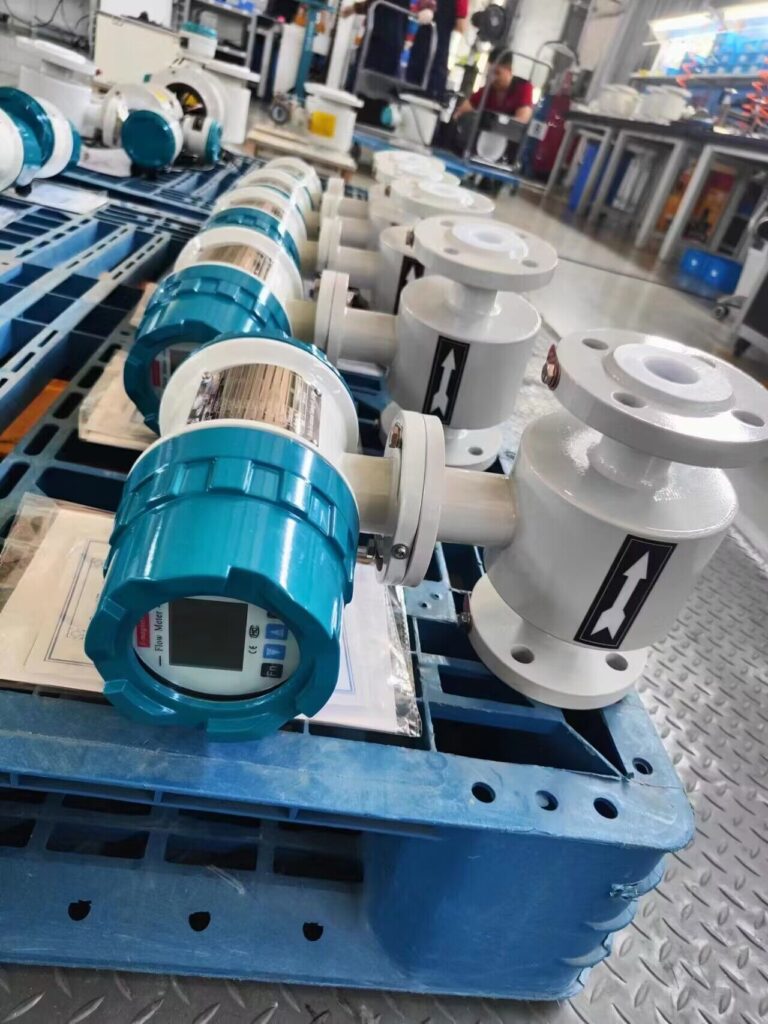
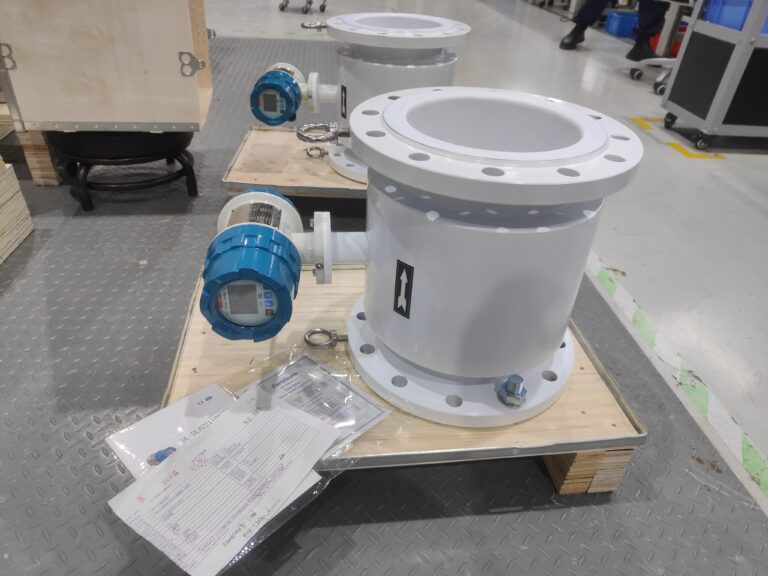
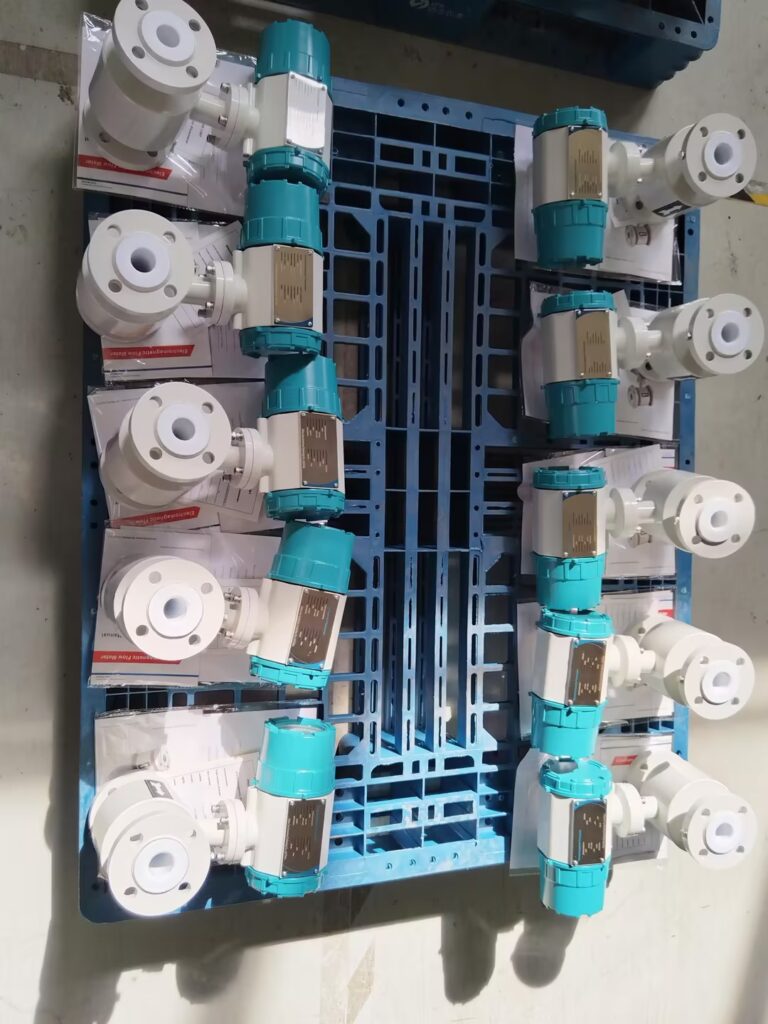
Electromagnetic flow meters are widely used in the chemical industry because they provide reliable measurement with no moving parts and minimal pressure loss. Based on Faraday’s Law of Electromagnetic Induction, they are suitable only for conductive liquids and slurries.
For chemical applications, proper selection depends on five key factors:
Medium conductivity
Liner material compatibility
Electrode material selection
Process conditions
Installation and hazardous area requirements
This guide provides practical selection rules that can be directly applied in real projects.
1. Conductivity Check — The First and Most Important Requirement
Electromagnetic flow meters can only measure conductive liquids.
Standard Requirement
Most conventional electromagnetic flow meters require:
Conductivity ≥ 5 μS/cm
Typical examples:
Medium
Typical Conductivity
Tap water
100–500 μS/cm
Acid solutions
>10,000 μS/cm
Alkali solutions
>10,000 μS/cm
Wastewater
500–5000 μS/cm
Suitable Applications
Water
Acids and alkalis
Salt solutions
Slurry
Pulp
Wastewater
Liquids containing suspended solids
Unsuitable Applications
Oil products
Gasoline
Alcohol
Organic solvents
Steam
Ultra-pure water
For very low conductivity applications, special high-frequency excitation technology may allow measurement down to approximately 0.1–1 μS/cm.
2. Selecting the Right Liner Material
The liner is the component that directly contacts the process medium and determines corrosion resistance, wear resistance and temperature capability.
PTFE / PFA Lining — The Chemical Industry Standard
Features
Excellent chemical resistance
High temperature resistance
Non-stick surface
Long service life
Temperature Range
PTFE: up to 180°C
PFA: up to 260°C
Recommended Applications
Sulfuric acid
Hydrochloric acid
Nitric acid
Caustic soda
Corrosive chemicals
Pharmaceutical and sanitary applications
Limitations
Not recommended for highly abrasive slurries.
Polyurethane (PU) Lining — Best for Abrasion
Features
Outstanding wear resistance
Excellent particle erosion resistance
Temperature Range
-10°C to 80°C
Recommended Applications
Mining slurry
Coal slurry
Wastewater sludge
High solids content liquids
Limitations
Not suitable for strong acids or high temperatures.
Rubber Lining (CR / Neoprene)
Features
Economical
Suitable for general-purpose service
Recommended Applications
Cooling water
Utility water
Neutral wastewater
Limitations
Not suitable for strong corrosive chemicals.
Ceramic Lining
Features
Exceptional abrasion resistance
Excellent corrosion resistance
High temperature capability
Temperature Range
Up to 250°C
Recommended Applications
Highly abrasive slurry
High-temperature chemicals
Severe service conditions
3. Electrode Material Selection
Selecting the correct electrode material is critical in chemical applications.
316L Stainless Steel
Suitable for:
Clean water
Cooling water
Neutral liquids
Mildly corrosive media
Not recommended for:
Hydrochloric acid
Chloride-containing media
Concentrated sulfuric acid
Hastelloy C-276
Recommended for:
Nitric acid
Mixed acids
Oxidizing chemicals
Medium to strong corrosion environments
Titanium
Recommended for:
Seawater
Brine
Sodium hypochlorite
Chlor-alkali processes
Ammonia solutions
Tantalum
Recommended for:
Concentrated hydrochloric acid
Concentrated sulfuric acid
Aqua regia
Extremely corrosive chemicals
Not suitable for hydrofluoric acid or fluoride-containing media.
4. Process Conditions
Temperature
Typical limits:
Liner Type
Maximum Temperature
Rubber
120°C
PTFE
180°C
PFA
260°C
Ceramic
250°C
Always maintain at least a 10°C safety margin above the maximum operating temperature.
Pressure Rating
Typical pressure ratings:
PN16 (1.6 MPa)
PN25 (2.5 MPa)
PN40 (4.0 MPa)
PN64 (6.4 MPa)
PN100 (10 MPa)
The flow meter pressure rating must always exceed the system design pressure.
Flow Velocity
Recommended flow velocity:
1.0 to 3.0 m/s
Acceptable range:
0.3 to 10 m/s
For most chemical applications, the optimal range is:
1.5 to 2.5 m/s
This provides the best balance between accuracy and service life.
5. Accuracy and Communication Requirements
Accuracy Selection
Application
Recommended Accuracy
Custody transfer
±0.2% to ±0.3%
Process control
±0.5%
Monitoring and wastewater
±1.0%
Communication Protocols
Common output options include:
4–20 mA
HART
Modbus RTU
Profibus-DP
Foundation Fieldbus
Pulse output
For modern plants, 4–20 mA + HART remains the most common configuration.
6. Essential Functions for Chemical Plants
Recommended features include:
Empty pipe detection
Low-flow cutoff
Bidirectional flow measurement
Electrode contamination alarm
Self-diagnostics
Advanced signal filtering
These functions significantly improve measurement stability and reduce maintenance costs.
7. Installation Requirements
Proper installation is just as important as proper selection.
Full Pipe Condition
Electromagnetic flow meters must always operate under full pipe conditions.
Vertical installation with upward flow is generally preferred.
Straight Pipe Requirements
Typical recommendation:
Upstream: ≥ 5DN
Downstream: ≥ 3DN
Avoid installation near:
Pumps
Valves
Elbows
Reducers
Strong electromagnetic fields
Grounding
Grounding is essential for stable operation.
Requirements:
Independent grounding point
Ground resistance below 10 Ω
Grounding rings for non-conductive pipelines
Improper grounding is one of the most common causes of unstable readings.
8. Explosion Protection
For hazardous areas, select certified explosion-proof models.
Typical certifications include:
Ex db IIC T6 Gb
Ex ia IIC T4 Ga
ATEX
IECEx
The required certification depends on the hazardous area classification of the installation site.
9. Typical Chemical Industry Applications
Sulfuric Acid and Caustic Soda
Liner: PTFE
Electrode: Hastelloy C-276
Accuracy: ±0.5%
Configuration: Remote type
Hydrochloric Acid
Liner: PTFE
Electrode: Tantalum
Explosion protection if required
Slurry and Mining Applications
Liner: Polyurethane
Electrode: 316L or Hastelloy
Recommended velocity: 2–3 m/s
Cooling Water Systems
Liner: Rubber
Electrode: 316L
Integral compact design
10. Common Selection Mistakes
Avoid the following mistakes:
❌ Using electromagnetic flow meters for oil products
❌ Incorrect liner material selection
❌ Incorrect electrode material selection
❌ Installing in partially filled pipelines
❌ Insufficient straight pipe length
❌ Poor grounding practices
❌ Operating beyond temperature or pressure limits
❌ Ignoring hazardous area requirements
Conclusion
Selecting an electromagnetic flow meter for chemical applications is not simply a matter of choosing pipe size and pressure rating.
In chemical plants, the correct combination of liner material, electrode material and installation practices often determines whether a flow meter operates reliably for ten years or fails within a few months.
A well-selected electromagnetic flow meter is not just an instrument — it is a long-term guarantee of process stability and measurement reliability.