
Glycerin, also known as glycerol, is widely used in the chemical, pharmaceutical, food processing, cosmetics, and biodiesel industries. Its relatively high viscosity and concentration-dependent physical properties can make flow measurement more challenging than measuring water or other low-viscosity liquids.
A common question from engineers and plant operators is:
Can an electromagnetic flow meter be used to measure glycerin?
The answer depends on the glycerin concentration, electrical conductivity, temperature, and operating conditions. While electromagnetic flow meters are widely used for conductive liquids, they are generally not the preferred solution for pure or high-purity glycerin.
In this article, we examine the challenges of glycerin flow measurement and compare the most suitable flow meter technologies for industrial applications.
1. What Is Glycerin?

Glycerin (glycerol) is a colorless, odorless, hygroscopic liquid with the chemical formula C₃H₈O₃.
It is used in numerous industrial applications, including:
-
Pharmaceutical and cosmetic manufacturing
-
Food and beverage processing
-
Chemical production
-
Biodiesel manufacturing
-
Resin and polymer production
-
Industrial blending and liquid transfer systems
One of the most important characteristics of glycerin is its viscosity.
At approximately 20°C, pure glycerol has a dynamic viscosity of around 1,400–1,500 mPa·s, compared with approximately 1 mPa·s for water.
This means that pure glycerin can be more than 1,000 times as viscous as water under comparable conditions.
However, glycerin viscosity decreases significantly as temperature increases or as water is added.
2. Why Is Glycerin Flow Measurement Challenging?
2.1 High and Temperature-Dependent Viscosity
Glycerin viscosity changes significantly with temperature.
The following table provides approximate reference values for pure glycerol.
| Temperature | Dynamic viscosity |
|---|---|
| 20°C | 1,400–1,500 mPa·s |
| 30°C | 600–650 mPa·s |
| 40°C | 280–300 mPa·s |
| 50°C | 140–150 mPa·s |
| 60°C | 80–85 mPa·s |
Values are approximate and depend on purity and reference data. Actual process conditions should be verified.
These changes can affect flow meter pressure loss, operating range, calibration, and measurement performance.
For example, a flow meter designed for low-viscosity water may not perform correctly when installed in a high-viscosity glycerin transfer system.
2.2 Low Electrical Conductivity
Electromagnetic flow meters operate according to Faraday’s law of electromagnetic induction.
They require the measured liquid to have sufficient electrical conductivity to generate a measurable signal.
Pure glycerin has very low electrical conductivity, making conventional electromagnetic flow measurement generally unsuitable.
However, glycerin solutions containing water, salts, or other conductive components may have higher conductivity.
Therefore, the actual electrical conductivity of the process liquid should be verified before considering an electromagnetic flow meter.
2.3 Pressure Loss
High-viscosity liquids require greater pumping pressure to move through pipelines.
Flow meters containing internal measuring mechanisms, such as oval gear meters, can introduce additional pressure loss.
Proper sizing is essential to avoid excessive differential pressure, insufficient flow, or mechanical overload.
2.4 Process Temperature and Concentration
Glycerin concentration and temperature affect both viscosity and density.
For accurate flow measurement, engineers should consider the complete operating range rather than selecting a flow meter based only on nominal pipe diameter.
3. Can an Electromagnetic Flow Meter Measure Glycerin?
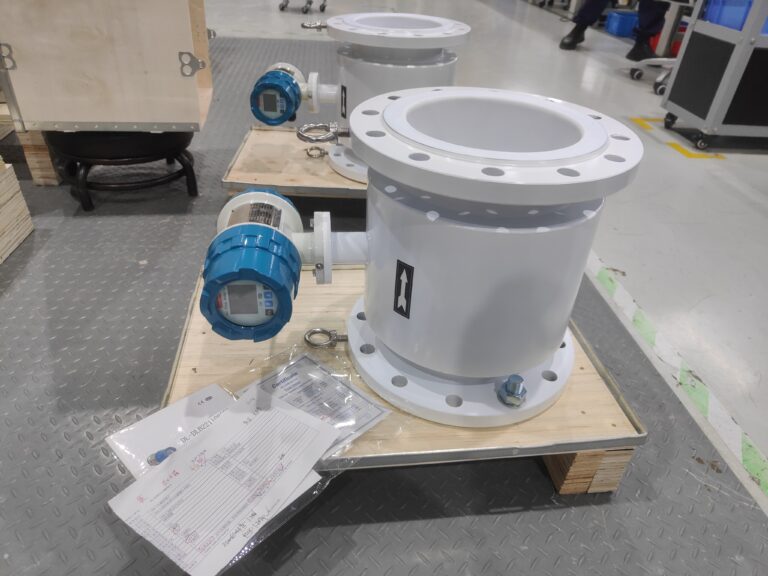
An electromagnetic flow meter measures the volumetric flow rate of electrically conductive liquids.
Its operating principle is based on Faraday’s law:
Where:
-
\(E\) = induced voltage
-
\(B\) = magnetic flux density
-
\(L\) = effective electrode spacing
-
\(v\) = average fluid velocity
The flow rate is then calculated from the measured velocity and pipe cross-sectional area.
Why Electromagnetic Flow Meters Are Generally Unsuitable for Pure Glycerin
Pure or high-purity glycerin has insufficient electrical conductivity for most conventional electromagnetic flow meters.
If conductivity falls below the meter’s specified minimum, the instrument may produce unstable readings, excessive noise, or no valid measurement.
Many industrial electromagnetic flow meters require a minimum conductivity in the range of approximately 5–20 µS/cm, although the exact requirement depends on the manufacturer and model.
Important: An electromagnetic flow meter should not be selected for glycerin solely because the liquid is chemically compatible with the meter’s wetted materials.
Electrical conductivity must also meet the instrument’s requirements.
For diluted glycerin solutions with sufficient conductivity, electromagnetic flow measurement may be technically feasible.
4. Oval Gear Flow Meters for Glycerin Measurement
Oval gear flow meters are a type of positive displacement flow meter commonly used for viscous liquids.
They operate using two intermeshing oval gears inside a measuring chamber.
As liquid passes through the meter, it causes the gears to rotate. Each rotation corresponds to a defined volume of liquid.
The meter determines volumetric flow rate and totalized volume by counting gear rotations.
Advantages
-
Suitable for many high-viscosity liquids
-
No minimum electrical conductivity requirement
-
Good repeatability under stable operating conditions
-
Direct volumetric measurement
-
Available with mechanical or electronic indicators
-
Often more economical than Coriolis mass flow meters
Limitations
Oval gear flow meters contain moving components and require consideration of:
-
Fluid cleanliness and particle contamination
-
Maximum allowable viscosity
-
Operating differential pressure
-
Mechanical wear
-
Pressure drop across the meter
-
Temperature-dependent viscosity changes
For relatively clean glycerin transfer applications, an appropriately sized oval gear flow meter can provide a practical and cost-effective solution.
5. Coriolis Mass Flow Meters for Glycerin
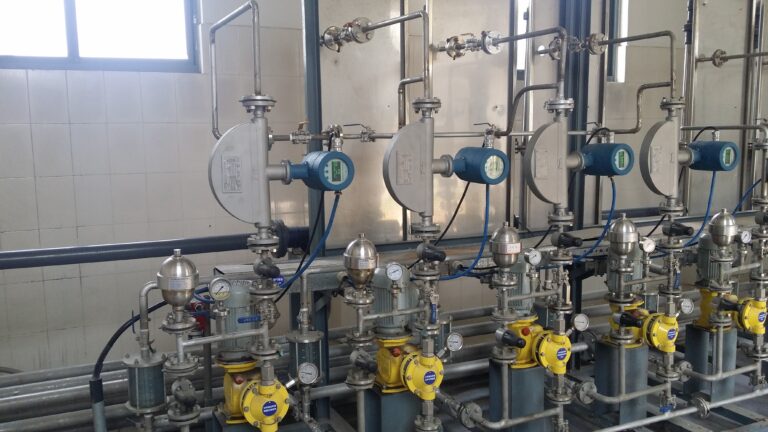
Coriolis mass flow meters measure mass flow directly by detecting the effect of fluid motion on vibrating measuring tubes.
Unlike volumetric flow meters, Coriolis meters do not require density conversion to provide mass flow readings.
Depending on the instrument design, they can also provide density and temperature measurements.
Advantages
-
Direct mass flow measurement
-
High measurement accuracy in suitable operating conditions
-
No electrical conductivity requirement
-
No internal rotating measuring gears
-
Useful for batching, blending, and mass balance applications
-
Suitable for many viscous liquids when correctly sized
Limitations
-
Higher initial investment
-
Pressure drop may become significant with high-viscosity fluids
-
Proper installation and mechanical support are important
-
Performance should be verified for the specified viscosity, flow range, and process conditions
Coriolis mass flow meters are particularly attractive when glycerin is purchased, sold, or processed by mass rather than by volume.
They are also useful when process density changes due to variations in concentration or temperature.
6. Comparison of Flow Meter Technologies for Glycerin
| Parameter | Electromagnetic | Oval gear | Coriolis |
|---|---|---|---|
| Pure glycerin | Generally unsuitable | Suitable* | Suitable* |
| Diluted glycerin | Conductivity-dependent | Suitable* | Suitable* |
| Mass flow measurement | No direct measurement | Requires conversion | Direct |
| Moving internal gears | No | Yes | No |
| Conductivity required | Yes | No | No |
| Initial cost | Medium | Low–medium | High |
| Typical application | Conductive solutions | Viscous liquid transfer | Precision mass measurement |
Suitability is subject to meter sizing, viscosity, pressure drop, temperature, material compatibility, and manufacturer specifications.
7. How to Select the Right Glycerin Flow Meter
Before selecting a flow meter, engineers should confirm several operating parameters.
7.1 Glycerin Concentration
Is the liquid pure glycerin, 99.5% glycerol, 85% glycerin solution, or another formulation?
Concentration affects viscosity, density, and potentially electrical conductivity.
7.2 Operating Temperature
A glycerin transfer system operating at 20°C can behave very differently from one operating at 60°C.
Temperature should be specified for both normal and extreme operating conditions.
7.3 Flow Rate
Determine the minimum, normal, and maximum flow rates.
A flow meter should be selected according to the required measuring range, not simply matched to the pipeline diameter.
7.4 Pipeline Diameter
Common industrial pipe sizes include DN15, DN25, DN40, DN50, and DN80.
However, the flow meter’s internal measuring size may differ from the existing pipe diameter if required for measurement performance.
7.5 Required Measurement Units
Confirm whether the process requires:
-
Volumetric flow rate: L/min or m³/h
-
Mass flow rate: kg/h or t/h
-
Totalized volume: L or m³
-
Totalized mass: kg or t
If direct mass measurement is required, a Coriolis flow meter may simplify the system.
7.6 Accuracy Requirements
The required accuracy should reflect the application.
For example, a basic liquid transfer monitoring system may not need the same accuracy as a commercial batching or custody-transfer operation.
The manufacturer’s accuracy specification should always be verified for the actual operating conditions.
8. Example: Selecting a Flow Meter for a Glycerin Transfer System

Consider an illustrative industrial application with the following conditions:
| Parameter | Example specification |
|---|---|
| Medium | Glycerin |
| Concentration | 99.5% |
| Pipeline size | DN25 |
| Operating temperature | 30–40°C |
| Flow rate | 0.5–3 m³/h |
| Operating pressure | 3 bar |
| Measurement requirement | Instantaneous flow and totalized volume |
These values are illustrative, not a documented customer installation.
For this application, an oval gear flow meter would be a reasonable candidate for initial technical evaluation.
However, the final selection would require confirmation of viscosity, differential pressure, available pump capacity, flow range, and material compatibility.
If the customer required direct mass measurement or high-accuracy batching, a Coriolis mass flow meter would also be worth evaluating.
An electromagnetic flow meter would not normally be recommended for high-purity glycerin without verified electrical conductivity.
9. Installation Recommendations
Proper installation is essential for reliable glycerin flow measurement.
Maintain a fully filled measuring tube. Avoid installations where air pockets or partially filled pipes can affect the measurement.
Consider pressure loss. High-viscosity glycerin can create significant pressure losses, particularly in positive displacement meters and smaller measuring tubes.
Control process temperature. Where practical, maintain stable temperature to reduce viscosity variations.
Prevent air entrainment. Entrained gas can adversely affect Coriolis measurement and may also cause errors in positive displacement meters.
Check filtration requirements. Oval gear flow meters may require upstream filtration to protect internal gears from particles.
Verify the manufacturer’s installation requirements. Straight-pipe lengths, mounting orientation, grounding, and vibration considerations differ among technologies and models.
10. Frequently Asked Questions
Can a magnetic flow meter measure glycerin?
Generally, conventional electromagnetic flow meters are not suitable for pure or high-purity glycerin because its electrical conductivity is too low. Some conductive glycerin solutions may be measurable if their conductivity meets the meter’s minimum requirement.
What is the best flow meter for glycerin?
There is no single best solution for every application. Oval gear flow meters are often practical for clean, viscous liquid transfer, while Coriolis meters are attractive for direct mass measurement and high-accuracy process control.
Can a turbine flow meter measure glycerin?
Some turbine flow meters can measure certain glycerin solutions, but viscosity can significantly affect their calibration and operating range. Standard turbine meters designed for low-viscosity liquids are generally not the preferred choice for highly viscous glycerin.
Is a Coriolis flow meter suitable for high-viscosity glycerin?
Yes, many Coriolis flow meters can measure viscous glycerin, provided the instrument is properly sized and the resulting pressure loss remains acceptable.
Does glycerin temperature affect flow measurement?
Yes. Glycerin viscosity changes substantially with temperature, which can influence meter pressure drop, flow range, and measurement performance.
Conclusion
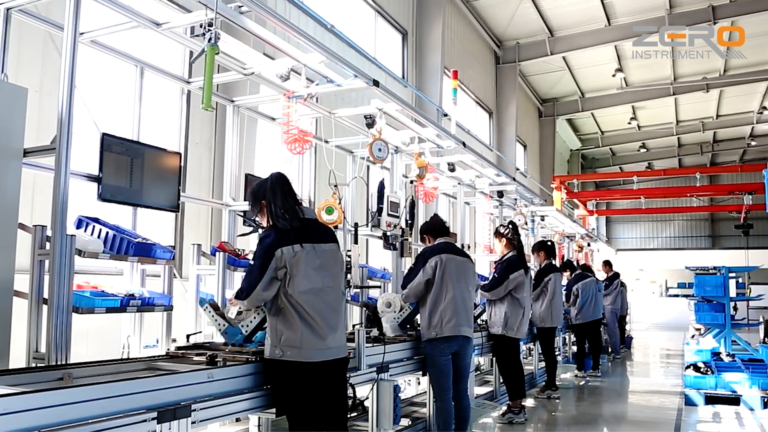
Glycerin flow measurement requires careful consideration of viscosity, electrical conductivity, temperature, concentration, and measurement objectives.
Although electromagnetic flow meters are widely used in industrial liquid measurement, they are generally unsuitable for pure or high-purity glycerin.
For many industrial glycerin transfer applications, oval gear flow meters offer an economical volumetric measurement solution, while Coriolis mass flow meters provide direct mass measurement and advanced process monitoring capabilities.
Selecting the correct instrument based on actual process conditions helps improve measurement reliability, reduce maintenance requirements, and avoid unnecessary equipment costs.
Looking for a Flow Meter for Glycerin?
At Zero Instrument, we provide industrial flow measurement solutions for a wide range of liquid applications, including viscous chemicals, oils, and glycerin.
Our product range includes positive displacement flow meters, Coriolis mass flow meters, electromagnetic flow meters, and other industrial measuring instruments.
For technical selection and quotation, please contact our team with your liquid concentration, viscosity, flow range, temperature, pressure, and pipe size.
Website: www.zeroinstrument.com
Contact: [email protected]