
Selecting instrumentation for hazardous areas involves much more than simply specifying an “explosion-proof” enclosure.
In chemical plants, refineries, tank farms, gas-handling facilities, and other process installations, combustible gases, vapors, or dusts may create potentially explosive atmospheres. Instruments installed in these locations must therefore be selected according to the hazardous-area classification, explosion-protection concept, gas or dust group, temperature class, and required Equipment Protection Level (EPL).
A pressure transmitter suitable for one hazardous area may not necessarily be acceptable in another. The same applies to flowmeters, radar level transmitters, temperature instruments, valve positioners, analyzers, and other field devices.
This guide explains the key principles engineers and purchasers should understand when selecting instrumentation for hazardous areas in chemical-process applications.
1. Start with Hazardous Area Classification
Before selecting any explosion-protected instrument, the hazardous area must first be correctly classified.
Chemical-process applications generally involve two major types of explosive atmospheres:
- explosive gas or vapor atmospheres;
- combustible dust atmospheres.
The higher the probability and duration of an explosive atmosphere being present, the greater the required level of equipment protection.
1.1 Hazardous Areas Containing Gas or Vapor
Gas hazardous areas are commonly classified as Zone 0, Zone 1, and Zone 2.
Zone 0
Zone 0 represents the highest level of gas hazard.
An explosive gas atmosphere is present continuously, for long periods, or frequently.
Typical locations may include:
- vapor spaces inside storage tanks;
- internal gas spaces of process vessels;
- certain enclosed process locations where flammable gases or vapors are continuously present.
Equipment installed in Zone 0 requires a very high level of protection and is normally associated with EPL Ga.
For instrumentation, intrinsically safe protection such as Ex ia is one of the commonly encountered approaches for applications requiring this level of protection.
Zone 1
In Zone 1, an explosive gas atmosphere is likely to occur occasionally during normal operation.
Typical examples include areas around:
- pumps;
- process valves;
- flanges and pipe joints;
- sampling points;
- filling or draining connections;
- process equipment handling flammable fluids.
Zone 1 is extremely common in chemical and petrochemical installations.
Equipment with an appropriate protection level, typically EPL Gb or higher as required by the installation, must be selected.
Zone 2
In Zone 2, an explosive gas atmosphere is not likely to occur during normal operation. If it does occur, it normally exists only for a short period.
This can result from conditions such as:
- seal failure;
- equipment malfunction;
- accidental leakage;
- abnormal process conditions.
Many process areas and locations surrounding piping systems may fall into this classification.
Equipment suitable for EPL Gc or a higher applicable protection level may be used according to the installation requirements.
2. Hazardous Areas Containing Combustible Dust
Dust hazardous areas are generally classified as Zone 20, Zone 21, and Zone 22.
Zone 20
A combustible dust atmosphere is present continuously, for long periods, or frequently.
Typical locations include:
- inside powder storage silos;
- inside dust collectors;
- internal spaces of powder-handling equipment;
- powder conveying systems.
Equipment installed in such locations generally requires EPL Da.
Zone 21
A combustible dust atmosphere is likely to occur occasionally during normal operation.
Typical examples include areas around:
- powder charging points;
- unloading stations;
- bag-filling equipment;
- powder transfer points.
Equipment with an appropriate dust protection level, typically EPL Db or higher where required, should be selected.
Zone 22
A combustible dust atmosphere is not normally present during normal operation and, if it occurs, persists only for a short period.
Typical examples include areas surrounding powder-handling equipment where dust may be released during equipment failure or abnormal operating conditions.
Equipment suitable for EPL Dc or higher, as applicable, is generally required.
3. Understanding Explosion-Protection Markings
The Ex marking on an instrument contains important information about where and how the equipment may be used.
A typical gas-atmosphere marking may look similar to:
Ex db IIB T4 Gb
Depending on the equipment and certification, additional information may also appear on the nameplate.
The main elements engineers should understand include:
- Ex designation;
- type of explosion protection;
- equipment or gas/dust group;
- temperature class or maximum surface temperature;
- Equipment Protection Level (EPL).
Never judge hazardous-area suitability from the word “explosion-proof” alone.
The complete certified marking must be checked.
4. Common Explosion-Protection Concepts for Field Instruments
Several protection concepts are commonly encountered in industrial instrumentation.
4.1 Flameproof Protection — Ex d / Ex db
Flameproof equipment uses an enclosure designed to withstand an internal explosion and prevent it from igniting the surrounding explosive atmosphere.
This protection concept is widely used for:
- pressure transmitters;
- differential pressure transmitters;
- electromagnetic flowmeters;
- vortex flowmeters;
- radar level transmitters;
- valve positioners;
- switches and other field devices.
It is one of the most familiar protection methods in chemical and petrochemical instrumentation.
However, the enclosure, cable entries, covers, flamepaths, and installation accessories must all remain consistent with the certified design.
4.2 Intrinsic Safety — Ex i
Intrinsic safety limits the electrical and thermal energy available in a circuit so that it cannot ignite the specified explosive atmosphere under the defined operating and fault conditions.
Common levels include:
- Ex ia;
- Ex ib;
- Ex ic.
Ex ia provides the highest protection level among these commonly used intrinsic-safety levels.
Intrinsic safety is particularly useful for:
- low-power transmitters;
- sensors;
- analytical probes;
- measurement loops;
- instrumentation installed where opening and servicing field equipment may be necessary.
An intrinsically safe field device must not be considered in isolation.
The complete loop must be evaluated, including:
- field instrument;
- associated apparatus or safety barrier;
- cable parameters;
- power supply;
- entity parameters.
The entire loop must satisfy the applicable intrinsic-safety requirements.
4.3 Increased Safety — Ex e / Ex eb / Ex ec
Increased-safety protection applies additional design measures intended to prevent arcs, sparks, and excessive temperatures under the conditions covered by the protection concept.
It is commonly associated with electrical equipment that does not normally generate ignition-capable sparks during operation.
Its suitability must always be determined from the certified equipment marking and the hazardous-area requirements.
4.4 Non-Sparking Protection
Non-sparking concepts have traditionally been associated with equipment intended for lower-risk gas hazardous areas such as Zone 2.
For new projects, engineers should check the actual certification and protection marking of the equipment rather than relying only on older generic terminology.
5. Gas Groups: IIA, IIB, and IIC
For industrial gas atmospheres, Group II equipment is used, with gases commonly divided into:
IIA → IIB → IIC
IIC represents the more demanding gas group.
Typical examples include:
IIA
Common hydrocarbon-type gases and vapors may fall into this group.
Examples include propane and similar industrial hydrocarbons.
IIB
Examples may include:
- ethylene;
- ethylene oxide;
- certain industrial fuel-gas atmospheres.
IIC
This group includes particularly demanding gases such as:
- hydrogen;
- acetylene.
When multiple flammable gases may be present, equipment should be selected according to the most demanding applicable gas group.
For example, if both propane and hydrogen may be present in the same classified area, selecting equipment suitable only for IIA would not be sufficient.
IIC-rated equipment provides broader gas-group coverage than IIB or IIA equipment, subject to the complete certification and installation requirements.
6. Dust Groups: IIIA, IIIB, and IIIC
Combustible dust atmospheres use Group III classification.
The groups are generally:
IIIA — combustible flyings
IIIB — non-conductive dust
IIIC — conductive dust
Conductive dust requires particularly careful consideration because it can create both explosion and electrical hazards.
A modern dust-protection marking may appear in a form such as:
Ex tb IIIC T135°C Db
The exact marking depends on the certified equipment.
A gas explosion-protection certificate should not automatically be assumed to cover combustible-dust applications. Always verify that the certification specifically covers the intended dust environment.
7. Temperature Classes: T1 to T6
Explosion protection is not only about preventing sparks.
A hot equipment surface can also ignite a flammable atmosphere.
For gas atmospheres, temperature classes define the maximum permitted surface temperature of the equipment:
T1 — 450°C
T2 — 300°C
T3 — 200°C
T4 — 135°C
T5 — 100°C
T6 — 85°C
A very important rule is:
The maximum surface temperature of the equipment must remain below the ignition temperature of the hazardous atmosphere under the applicable conditions.
T4 is frequently encountered in general chemical-process instrumentation, but it should never be selected simply because it is “standard.”
Applications involving substances with lower ignition temperatures may require T5, T6, or another specifically evaluated temperature limitation.
For combustible dust, additional factors such as dust-layer accumulation and its influence on surface temperature must also be considered.

8. Understanding Equipment Protection Level — EPL
Equipment Protection Level provides another important way of matching equipment protection to the hazardous area.
For gas atmospheres:
- Ga — very high level of protection;
- Gb — high level of protection;
- Gc — enhanced level of protection.
For dust atmospheres:
- Da — very high level of protection;
- Db — high level of protection;
- Dc — enhanced level of protection.
A simplified relationship commonly used when reviewing equipment selection is:
Gas
Zone 0 → Ga
Zone 1 → Gb or higher
Zone 2 → Gc or higher
Dust
Zone 20 → Da
Zone 21 → Db or higher
Zone 22 → Dc or higher
However, final equipment selection must follow the applicable project standard, hazardous-area classification documents, certification conditions, and local regulatory requirements.
9. Practical Selection for Gas Hazardous Areas
9.1 Zone 0
Zone 0 requires equipment providing the appropriate very high level of protection, normally EPL Ga.
In instrumentation applications, Ex ia is commonly encountered for devices such as:
- in-tank sensors;
- certain level-measurement probes;
- analytical probes;
- low-power measuring devices.
Always verify that the certification explicitly permits the device to be installed in Zone 0.
9.2 Zone 1
Zone 1 is one of the most common hazardous-area classifications in chemical plants.
Flameproof instrumentation is widely used.
A typical marking might be:
Ex db IIB T4 Gb
If hydrogen, acetylene, or another applicable IIC atmosphere is involved, equipment suitable for IIC may be necessary, for example:
Ex db IIC T4 Gb
Intrinsic-safety solutions may also be used where appropriate, particularly for low-power measurement circuits.
9.3 Zone 2
Zone 2 provides more flexibility in equipment selection, provided that the certified protection concept and EPL are appropriate for the classified area.
Depending on the device and certification, suitable equipment may use different protection concepts.
Although less demanding equipment may be acceptable from a hazardous-area standpoint, selecting a higher protection level can sometimes simplify plant standardization and spare-parts management.
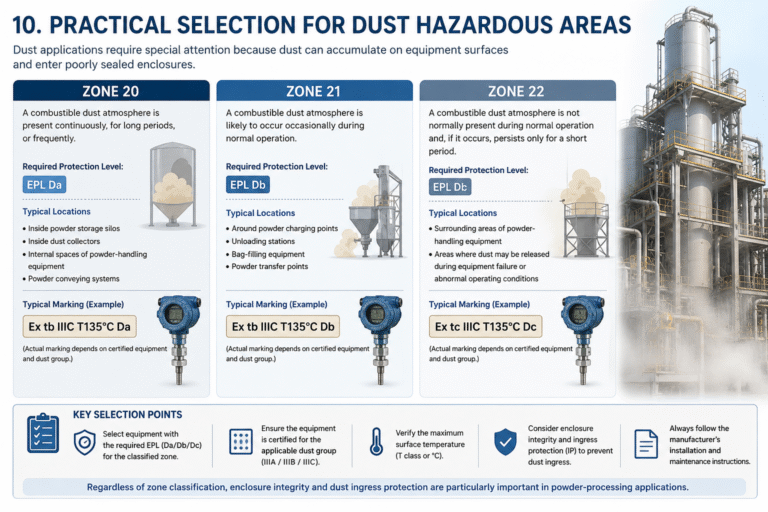
10. Practical Selection for Dust Hazardous Areas
Dust applications require special attention because dust can accumulate on equipment surfaces and enter poorly sealed enclosures.
Zone 20
Equipment must provide the required very high level of dust protection, normally EPL Da.
Zone 21
Equipment typically requires EPL Db or higher.
A certified dust-protection enclosure may carry a marking similar to:
Ex tb IIIC T135°C Db
depending on the actual dust group and certification.
Zone 22
Equipment suitable for EPL Dc or higher may be used as applicable.
Regardless of zone classification, enclosure integrity and dust ingress protection are particularly important in powder-processing applications.
11. Special Environmental Conditions
Explosion protection cannot be selected independently of the actual process environment.
Outdoor Installation
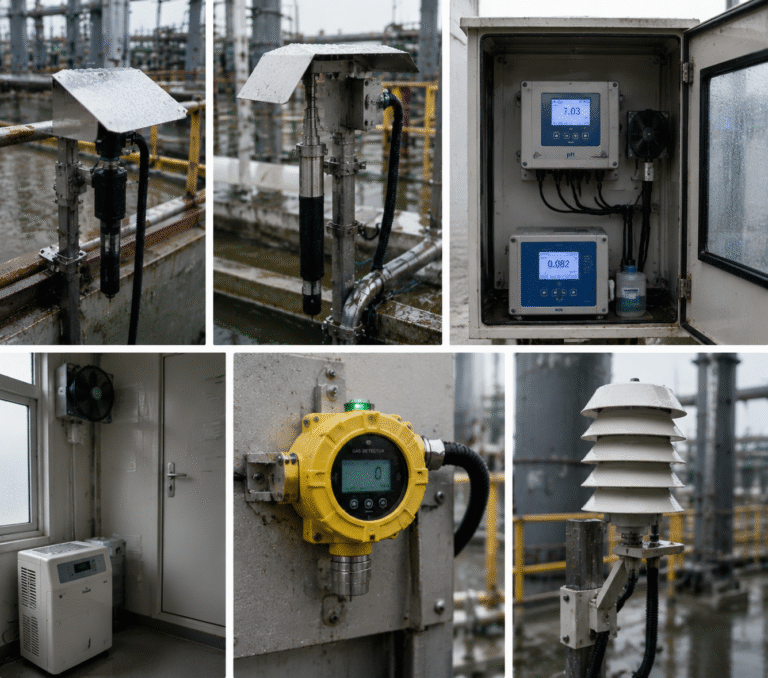
For outdoor instruments, a suitable enclosure ingress-protection rating should be specified in addition to the required Ex certification.
IP66 or higher is commonly considered for demanding outdoor industrial environments, depending on the project specification.
Rain, condensation, humidity, and water ingress can compromise equipment reliability and, in some cases, the integrity of the installation.
Corrosive Environments
Chemical plants frequently contain corrosive gases, liquids, or marine atmospheres.
Suitable enclosure materials or protective coatings should therefore be selected.
316 stainless steel is one commonly used option for aggressive environments.
Corrosion must not be allowed to compromise:
- enclosure wall thickness;
- threaded joints;
- flamepaths;
- fasteners;
- cable entries;
- sealing surfaces.
High Ambient and Process Temperatures
High process temperature and high ambient temperature can affect the temperature classification of field equipment.
Engineers must check the manufacturer’s certified ambient-temperature range and any temperature-class limitations.
Do not assume that a T4 instrument remains T4 under every possible ambient and process condition.
12. Explosion Protection for Common Process Instruments
Now we can apply these principles to actual chemical-process instrumentation.
12.1 Pressure and Differential Pressure Transmitters
Pressure and differential pressure transmitters are among the most widely used field instruments in hazardous process areas.
For a typical Zone 1 hydrocarbon application, a flameproof transmitter with a marking such as:
Ex db IIB T4 Gb
may be suitable, provided that all other certification and process requirements are satisfied.
For hydrogen service, IIC equipment may be required.
Intrinsic-safety versions are also widely used when the complete measurement loop is designed as an intrinsically safe circuit.

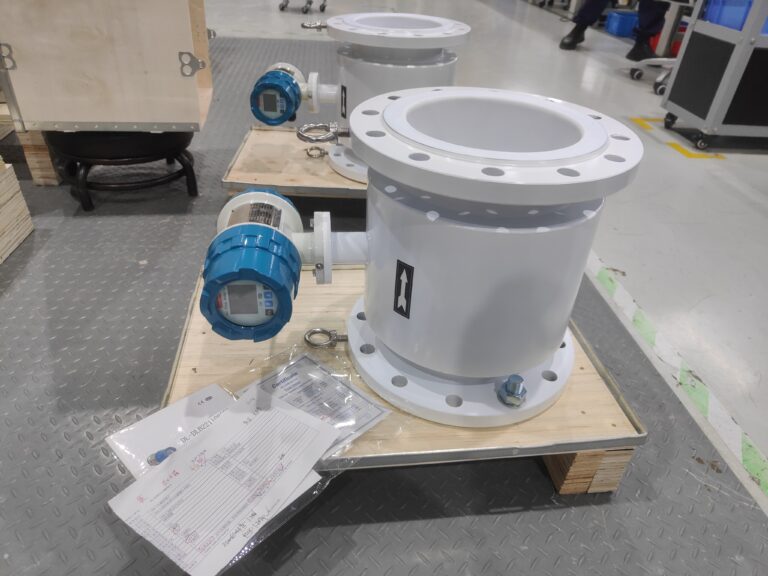
12.2 Flowmeters
Electronic flowmeters such as:
- electromagnetic flowmeters;
- vortex flowmeters;
- turbine flowmeters;
- Coriolis mass flowmeters;
may require hazardous-area certification when installed in classified areas.
Flameproof transmitters are common in Zone 1 applications.
For differential-pressure flow measurement, the primary element itself—such as an orifice plate—contains no electrical circuit. However, associated differential-pressure transmitters and other electrical components must meet the hazardous-area requirements of their installation location.
12.3 Radar and Ultrasonic Level Instruments
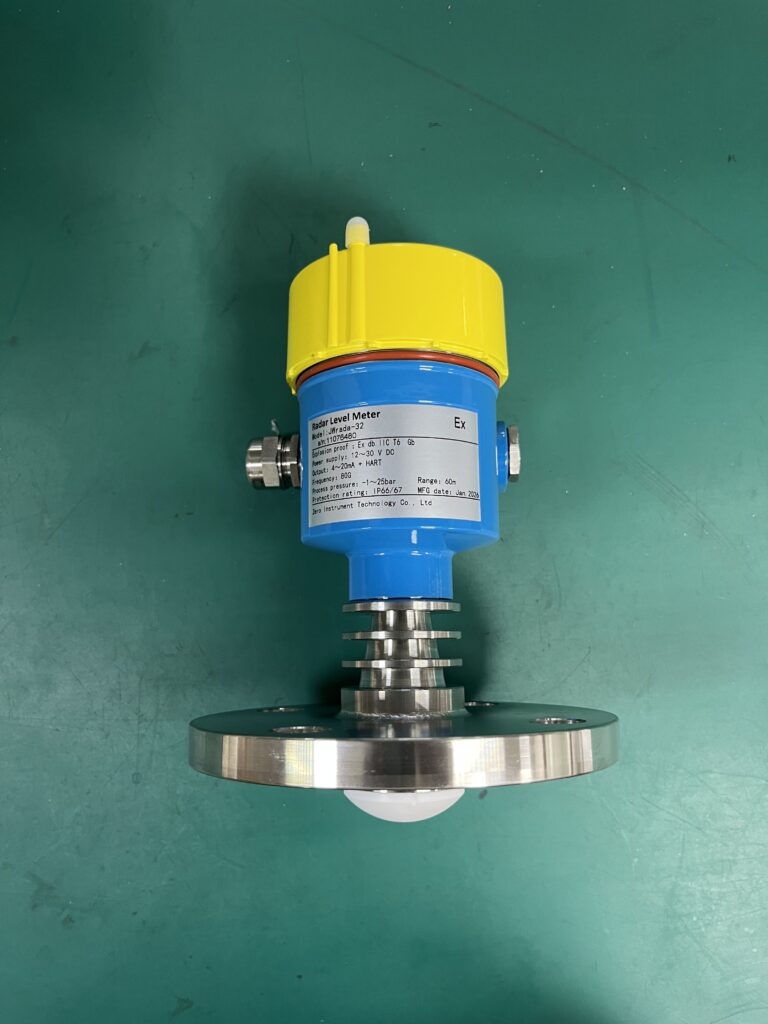
Radar and ultrasonic level transmitters are commonly installed on:
- chemical storage tanks;
- solvent tanks;
- reactors;
- process vessels.
The electronics enclosure and the portion of the instrument exposed to the hazardous atmosphere must be evaluated according to the certified design.
For applications where a measuring element extends into a Zone 0 atmosphere inside a tank, the equipment certification must explicitly cover the required protection level for that part of the device.
Do not assume that a “Zone 1 transmitter” automatically makes every part of the measuring system suitable for Zone 0.
12.4 Control Valves and Valve Positioners
A purely pneumatic control valve does not contain an electrical ignition source by itself.
However, accessories may include:
- smart valve positioners;
- solenoid valves;
- limit switches;
- position transmitters;
- proximity switches.
These electrical devices must have appropriate hazardous-area certification.
Flameproof and intrinsically safe valve positioners are both widely encountered in chemical plants.
12.5 Temperature Instruments
Thermocouple and RTD sensing elements are passive devices and do not normally constitute an electrical ignition source by themselves.
However, this does not mean that a complete temperature assembly can automatically be installed in any hazardous area.
The following must still be considered:
- sensor construction;
- terminal head;
- temperature transmitter;
- cable entry;
- wiring method;
- thermowell or protection tube;
- applicable Ex certification.
Temperature transmitters installed in hazardous areas are commonly available with flameproof or intrinsically safe protection.
12.6 Online Analyzers
Sampling-type analyzers are often designed so that the main analyzer cabinet is installed in a safe area, while only the sample-conditioning or sensing components are located in the hazardous process area.
In-situ analyzers require more careful evaluation.
Depending on the equipment design and application, protection methods may include:
- intrinsic safety;
- flameproof enclosure;
- pressurization or purging.
The complete analyzer system should be evaluated rather than considering only the sensing element.
13. Final Verification Before Purchasing
Never purchase hazardous-area instrumentation based only on a short specification such as:
“Explosion-proof, Zone 1.”
Before placing an order, verify the complete equipment marking and certification.
At minimum, check:
- hazardous-area zone;
- protection concept;
- gas or dust group;
- temperature class or maximum surface temperature;
- Equipment Protection Level;
- ambient-temperature limitations;
- certificate number;
- certification scope;
- exact instrument model covered by the certificate;
- cable-entry and installation requirements.
The nameplate on the delivered instrument should also be checked against the approved technical documentation.
14. Installation and Maintenance Matter Just as Much as Selection
Correct equipment selection alone does not guarantee a safe hazardous-area installation.
Explosion-protected equipment must be installed and maintained according to its certification and manufacturer’s instructions.
For flameproof equipment, particular attention should be paid to:
- flamepath condition;
- enclosure threads;
- cover bolts;
- approved cable glands;
- unused cable entries;
- corrosion;
- sealing surfaces.
Do not modify certified explosion-protected equipment without authorization.
For intrinsically safe systems, verify that the field device, barrier or isolator, cable, and associated apparatus form a compatible intrinsically safe circuit.
Replacing a device or component should never reduce the protection level required by the original design.
15. A Practical Selection Checklist
Before ordering a flowmeter, pressure transmitter, level instrument, temperature transmitter, analyzer, or valve accessory for a hazardous area, confirm the following:
1. What is the hazardous area?
Zone 0, Zone 1, Zone 2, Zone 20, Zone 21, or Zone 22?
2. What creates the explosive atmosphere?
Gas, vapor, or combustible dust?
3. What is the gas or dust group?
IIA, IIB, IIC, IIIA, IIIB, or IIIC?
4. What temperature limitation is required?
T1–T6 for gas atmos