
How to Select the Right Magnetic Flow Meter? Insights from 28 Years of Industrial Instrumentation Experience
Is an Electromagnetic Flow Meter Only Suitable for Water Measurement?
After working in the instrumentation industry for more than 28 years, I have noticed that many customers have a common misunderstanding when they first select an electromagnetic flow meter:
“Isn’t a magnetic flow meter mainly used for water? Can we just choose any model?”
The answer is:
Not exactly.
Electromagnetic flow meters are indeed one of the most widely used flow measurement solutions in industrial applications. They are commonly applied in:
- Water supply systems
- Wastewater treatment plants
- Chemical industries
- Metallurgy
- Paper manufacturing
- Food and beverage
- Mining slurry measurement
However, there is one important point that must be understood:
Not every liquid can be measured by an electromagnetic flow meter.
And:
The same pipe size does not always mean the same flow meter selection.
A professional selection process does not start with:
“How much does it cost?”
It starts with:
“What exactly are you measuring?”
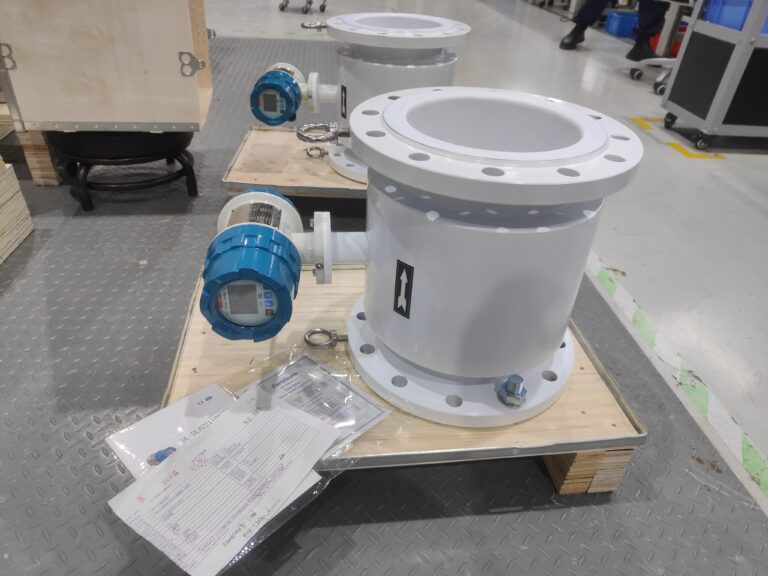
1. Why Are Electromagnetic Flow Meters So Popular?
Electromagnetic flow meters have become one of the most common industrial flow measurement instruments because of their unique advantages.
1. No Mechanical Moving Parts
Unlike traditional mechanical flow meters, electromagnetic flow meters do not have rotating components inside the measuring tube.
This provides several benefits:
- No mechanical wear caused by moving parts
- Lower maintenance requirements
- Suitable for liquids containing suspended solids
For applications such as wastewater, slurry, and industrial process liquids, this is a significant advantage.
2. Low Pressure Loss
The measuring tube of an electromagnetic flow meter normally has no internal obstruction or throttling element.
Under proper selection and installation conditions:
- Additional pressure loss is very small
- Pump energy consumption is not significantly affected
This makes electromagnetic flow meters especially suitable for:
- Large water pipelines
- Cooling water systems
- Municipal water supply
- Wastewater networks
3. Excellent Performance for Dirty Liquids and Slurry Applications
One of the biggest advantages of electromagnetic flow meters is their ability to measure liquids containing suspended particles.
Typical applications include:
- Wastewater
- Mining slurry
- Mud and sludge
- Paper pulp
- Industrial process wastewater
However, this does not mean that every dirty liquid can be measured without consideration.
The following factors must still be evaluated:
- Particle concentration
- Abrasiveness
- Electrical conductivity
- Liner material
- Electrode material
4. Bidirectional Flow Measurement Capability
Electromagnetic flow meters can measure flow in both directions.
This function is especially useful in:
- Complex pipeline networks
- Water distribution systems
- Process circulation systems
In some applications, users need not only to know:
How much fluid flows?
but also:
Which direction does the fluid flow?
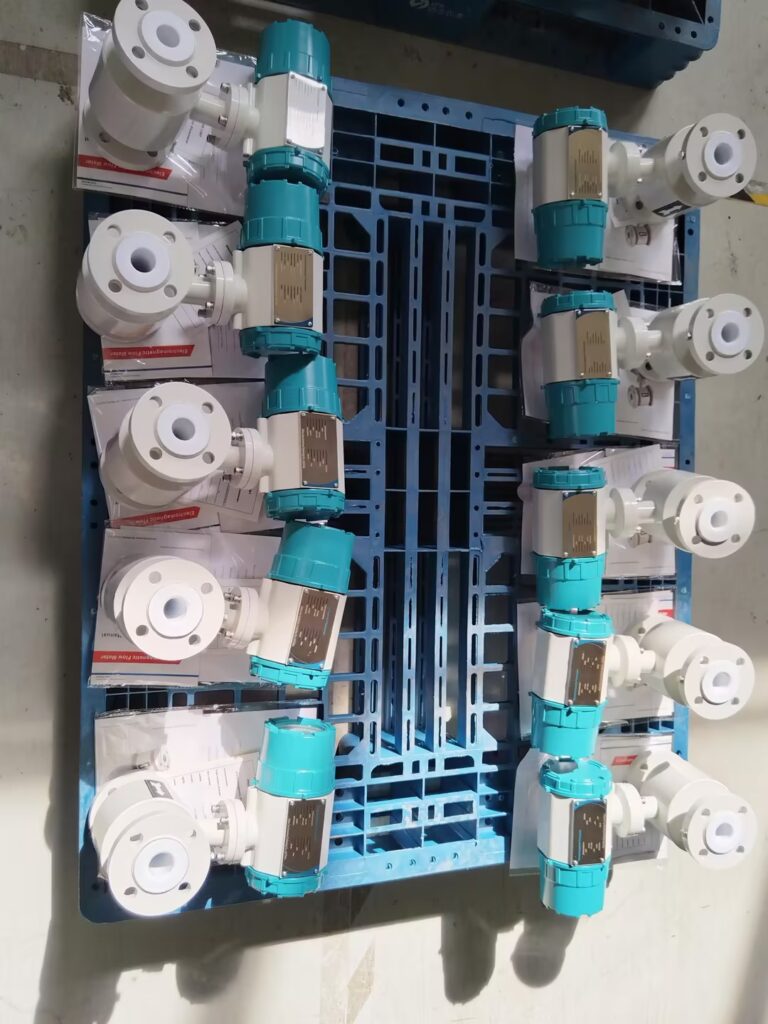
2. The Most Important Requirement: The Medium Must Be Conductive
Before selecting an electromagnetic flow meter, one fundamental principle must be understood:
The measured liquid must have sufficient electrical conductivity.
Electromagnetic flow meters work based on Faraday’s Law of Electromagnetic Induction.
Simply explained:
When a conductive liquid passes through a magnetic field, it generates an induced voltage proportional to the flow velocity.
The transmitter detects this signal and calculates the flow rate.
Suitable Applications:
Electromagnetic flow meters are commonly used for:
✅ Water
✅ Wastewater
✅ Acid and alkali solutions
✅ Salt water
✅ Mining slurry
✅ Industrial conductive liquids
Usually Not Suitable For:
❌ Gas
❌ Steam
❌ Insulating oil
❌ Diesel fuel
❌ Gasoline
❌ Many organic solvents
Therefore:
Do not select an electromagnetic flow meter simply because the product name contains “flow meter”.
The first question should always be:
Is the medium suitable for electromagnetic measurement?
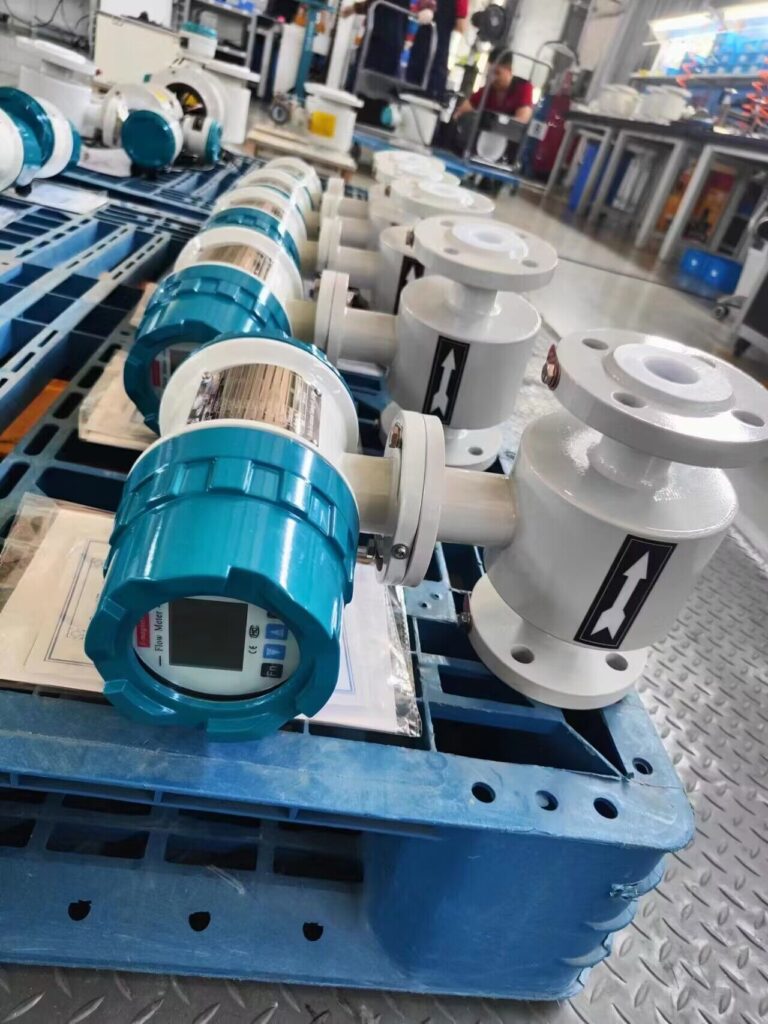
3. The First Step in Selection Is Not DN Size — It Is Process Condition
A common mistake when selecting an electromagnetic flow meter is starting with the pipe diameter.
Many customers send an inquiry like:
“We need a DN100 magnetic flow meter. Please quote your best price.”
However, this information alone is not enough.
A professional selection process should first confirm:
- What is the measured medium?
- What is the operating temperature?
- What is the working pressure?
- What is the normal flow rate?
- What is the maximum flow rate?
- What is the minimum flow rate?
- What is the pipe size?
- What is the electrical conductivity of the medium?
- Does the medium contain solid particles?
- What are the installation conditions?
Without understanding these parameters, providing a price directly may create a high risk of incorrect selection.
A flow meter is not simply a product selected by pipe size.
It is a measurement solution selected according to the actual process conditions.
4. Flow Velocity Is One of the Most Important Selection Factors
An electromagnetic flow meter is not always selected according to the existing pipe diameter.
A larger diameter does not always mean a better choice.
Why?
Because measurement performance is closely related to the actual flow velocity.
For example:
A DN300 pipeline may normally operate at only several tens of cubic meters per hour.
If a DN300 flow meter is selected directly, the actual velocity may be too low.
This can affect:
- Measurement stability
- Accuracy
- Signal quality
Therefore, professional selection should follow this principle:
Select according to flow conditions first, then confirm the suitable diameter.
Not:
Choose the diameter first and simply match the meter.
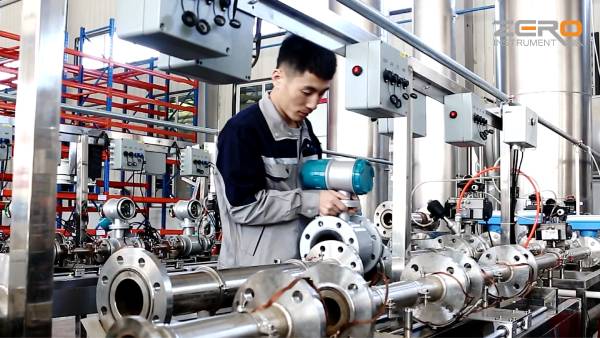
5. Why Can Two DN100 Electromagnetic Flow Meters Have Very Different Prices?
This is a question frequently asked by customers.
The reason is simple:
DN100 only represents the connection size. It does not represent the complete specification.
Two DN100 electromagnetic flow meters may be completely different because of:
Liner Material
Different applications require different liners:
Rubber Liner
Commonly used for:
- Water
- Wastewater
- General industrial applications
Advantages:
- Good abrasion resistance
- Cost-effective solution
PTFE Liner
Commonly used for:
- Chemical liquids
- Corrosive media
- High purity applications
Advantages:
- Excellent chemical resistance
- Wide application range
Electrode Material
The electrode material must match the measured medium.
Common options include:
316L Stainless Steel Electrode
Suitable for:
- Water
- Wastewater
- General industrial liquids
Hastelloy Electrode
Suitable for:
- Strong corrosive chemicals
- Acid and alkali solutions
Tantalum Electrode
Suitable for:
- Highly corrosive chemical applications
Choosing the wrong electrode material may cause:
- Corrosion
- Measurement drift
- Short service life
6. How to Select an Electromagnetic Flow Meter for Different Applications?
6.1 Water Supply, Raw Water, and Cooling Water
Water measurement is one of the most common applications for electromagnetic flow meters.
Main selection considerations:
- Pipe size
- Flow range
- Pressure rating
- Installation conditions
- Protection rating
- Communication requirements
For modern water management projects, customers may also require:
- Remote monitoring
- Data acquisition
- 4G/5G communication
- RS485 Modbus communication
Typical applications:
- Municipal water supply
- Pump stations
- Cooling water systems
- Water treatment plants
6.2 Wastewater and Industrial Wastewater
Electromagnetic flow meters are widely used in wastewater applications.
However, wastewater is not simply “dirty water”.
Different wastewater sources may have very different characteristics.
Important factors include:
- Solid particle content
- Corrosiveness
- Conductivity
- Adhesion characteristics
- Abrasiveness
For example:
Industrial wastewater containing chemicals may require:
- PTFE liner
- Special electrode materials
Wastewater containing abrasive particles may require:
- Wear-resistant liner
- Suitable flow velocity
6.3 Chemical Industry Applications
Chemical applications require more careful selection.
Common measured media include:
- Acids
- Alkalis
- Salt solutions
- Chemical process liquids
The selection must consider:
- Chemical compatibility
- Temperature
- Pressure
- Liner material
- Electrode material
- Flange standard
A small saving on electrode material may result in:
- Corrosion problems
- Unstable measurement
- Reduced service life
6.4 Mining Slurry and Mud Measurement
Mining is one of the areas where electromagnetic flow meters have significant advantages.
Because many slurry applications have:
- Electrical conductivity
- High solid concentration
- Abrasive particles
Key selection factors include:
- Wear resistance
- Liner selection
- Electrode design
- Flow velocity
- Installation method
For high concentration slurry:
A standard water flow meter should never be used directly.
The instrument must be selected according to the actual mining process.
6.5 Paper Industry Applications
Paper manufacturing involves many different liquids:
- Paper pulp
- White water
- Black liquor
- Wastewater
- Chemical solutions
Especially for pulp measurement, selection should consider:
- Fiber content
- Concentration
- Flow velocity
- Pipeline condition
- Possible buildup inside the pipe
Therefore:
Paper industry flow measurement requires more than simply checking the flow rate.
6.6 Food and Beverage Industry
Food and beverage applications require additional considerations.
Besides measurement accuracy, customers usually focus on:
- Hygienic requirements
- Wetted material
- Connection type
- Cleaning method
- Temperature resistance
Typical applications:
- Beverage production
- Dairy processing
- CIP cleaning systems
- Process water measurement
The selection criteria are different from ordinary industrial water applications.
7. Which Industries Are Suitable for Electromagnetic Flow Meter Applications?
Electromagnetic flow meters are widely used in many industries because of their reliability, low maintenance requirements, and excellent performance with conductive liquids.
Typical industries include:
Municipal Water and Wastewater Treatment
Applications:
- Raw water transportation
- Drinking water supply
- Wastewater treatment plants
- Reclaimed water systems
- Pipeline monitoring
Common requirements:
- Large diameter measurement
- Stable long-term operation
- Remote data transmission
- High protection rating
For example:
Large pipeline applications often require:
- IP65/IP67/IP68 protection
- Remote transmitter installation
- RS485 Modbus communication
- 4-20 mA output
Chemical Industry
Typical applications:
- Acid solutions
- Alkali solutions
- Salt solutions
- Chemical process liquids
- Circulating water
Key selection points:
- Chemical compatibility
- Correct liner selection
- Suitable electrode material
- Temperature resistance
- Pressure rating
Metallurgy Industry
Common applications:
- Cooling water
- Circulating water
- Acid washing solutions
- Industrial wastewater
- Slurry measurement
Important considerations:
- Abrasion resistance
- Corrosion resistance
- Stable measurement under harsh conditions
Mining Industry
Applications:
- Mineral slurry
- Tailings
- Concentrate transportation
- Process water
- Recycled water
Important selection factors:
- Solid particle concentration
- Wear resistance
- Liner material
- Electrode material
- Flow velocity
Mining applications often require customized solutions because the operating conditions are much more demanding than clean water measurement.
Paper Industry
Applications:
- Paper pulp
- White water
- Black liquor
- Chemical liquids
- Wastewater
Important factors:
- Fiber content
- Medium concentration
- Pipeline condition
- Possible deposits inside the pipe
Food and Beverage Industry
Applications:
- Production water
- Beverage liquids
- Dairy products
- Cleaning systems
Important requirements:
- Hygienic design
- Food-grade materials
- Sanitary connections
- Cleaning compatibility
Pharmaceutical Industry
Applications:
- Process water
- Purified water
- Pharmaceutical liquids
Selection should consider:
- Material requirements
- Cleanliness standards
- Process regulations
Energy and Power Industry
Applications:
- Cooling water
- Circulating water
- Desulfurization slurry
- Industrial wastewater
Electromagnetic flow meters are commonly used because they can handle large flow rates and harsh industrial environments.
8. Five Situations Where You Should Not Select an Electromagnetic Flow Meter
Although electromagnetic flow meters are widely used, they are not suitable for every application.
The following situations require special attention.
1. Gas Measurement
Electromagnetic flow meters are designed for conductive liquids.
They are generally not suitable for:
- Air
- Natural gas
- Industrial gas
Alternative solutions may include:
- Vortex flow meters
- Thermal mass flow meters
- Differential pressure flow meters
- Coriolis gas flow meters
2. Steam Measurement
Steam is not suitable for normal electromagnetic flow meters.
Steam measurement usually requires:
- Vortex flow meter
- Differential pressure flow meter
- Thermal measurement solutions
Selection depends on:
- Steam pressure
- Temperature
- Flow range
- Accuracy requirements
3. Insulating Oil Measurement
Oil products such as:
- Diesel
- Fuel oil
- Hydraulic oil
usually have very low electrical conductivity.
Therefore, electromagnetic flow meters normally cannot provide reliable measurement.
Other technologies may be considered:
- Turbine flow meters
- Coriolis flow meters
- Positive displacement flow meters
4. Liquids With Extremely Low Conductivity
Even if the medium is liquid, it does not automatically mean it is suitable.
The electrical conductivity must meet the requirement of the flow meter.
Before selection, always confirm:
- Medium conductivity
- Manufacturer’s minimum conductivity requirement
5. Pipelines With Frequent Empty Pipe Conditions
Electromagnetic flow meters require the measuring tube to remain completely filled with liquid.
If the pipeline frequently becomes empty:
Possible problems include:
- Empty pipe alarms
- Unstable output
- Incorrect measurement
Therefore, installation location and pipeline design are critical.
9. Why Many Electromagnetic Flow Meter Problems Are Actually Installation Problems
In many industrial sites, customers initially think:
“The flow meter is broken.”
However, after inspection, the real causes are often:
- Incorrect installation
- Poor grounding
- Electrical interference
- Empty pipe conditions
- Improper pipeline design
1. Ensure Full Pipe Conditions
Electromagnetic flow meters should normally be installed where the pipe remains full.
Avoid installation locations where:
- Air can accumulate
- The pipeline may partially drain
2. Avoid Unfavorable Pump Locations
Installation near pump suction lines may cause:
- Negative pressure
- Air bubbles
- Cavitation effects
These conditions can affect measurement stability.
3. Consider Straight Pipe Requirements
The required straight pipe length depends on:
- Flow meter design
- Pipeline configuration
- Installation conditions
Always follow the manufacturer’s technical recommendations.
Do not simply apply one fixed value to every application.
4. Proper Grounding Is Essential
Grounding is one of the most important factors affecting electromagnetic flow meter performance.
Poor grounding may cause:
- Signal fluctuation
- Unstable output
- Measurement errors
Many “flow meter failures” are actually caused by:
- Grounding problems
- Electrical interference
- Incorrect wiring
10. A Professional Selection Process Should Focus on Four Key Factors
After 28 years working with industrial instrumentation, I have found that electromagnetic flow meter selection can be summarized into four essential factors:
1. Medium
Ask:
What exactly are you measuring?
Consider:
- Conductivity
- Corrosiveness
- Solid particles
- Chemical compatibility
2. Process Conditions
Understand:
- Temperature
- Pressure
- Flow range
- Concentration
- Operating environment
3. Installation Conditions
Check:
- Is the pipe always full?
- Is the installation position suitable?
- Is grounding available?
- Is there electrical interference?
4. Application Purpose
The required configuration depends on the purpose:
Is it used for:
- Process monitoring?
- Production control?
- Trade measurement?
- Water management?
- Automatic control?
Different purposes require different:
- Accuracy levels
- Communication methods
- Certifications
- Data functions
Final Thoughts
After many years in the instrumentation industry, I believe:
Electromagnetic flow meter selection itself is not difficult.
The difficult part is understanding the relationship between:
- Medium
- Process conditions
- Instrument configuration
- Installation environment
- Application purpose
Many selection mistakes happen because people only focus on:
- Pipe size
- Price
- Brand
But a professional engineer looks deeper:
Why this liner?
Why this electrode?
Why this diameter?
Why this installation method?
A good flow meter is not the cheapest instrument.
The real value is:
Can it operate accurately, reliably, and continuously for many years in the actual working environment?
Need Help Selecting the Right Electromagnetic Flow Meter?
Send us your application details:
- Medium:
- Pipe size:
- Flow range:
- Temperature:
- Pressure:
- Power supply:
- Output signal:
- Installation requirement:
Our engineers will recommend the most suitable electromagnetic flow meter solution for your application.
Contact us for technical support and quotation.