
Bus-based instruments (FF, Profibus PA, Modbus, etc.) are increasingly becoming the standard in modern chemical plants. Their core advantages lie in cost savings, signal stability, easy maintenance, flexible expansion, and rich information. They are particularly well-suited for chemical industry scenarios with explosive environments, long distances, strong interference, large numbers of measurement points, and high safety requirements.
1. Wiring and Cost: Significant Savings
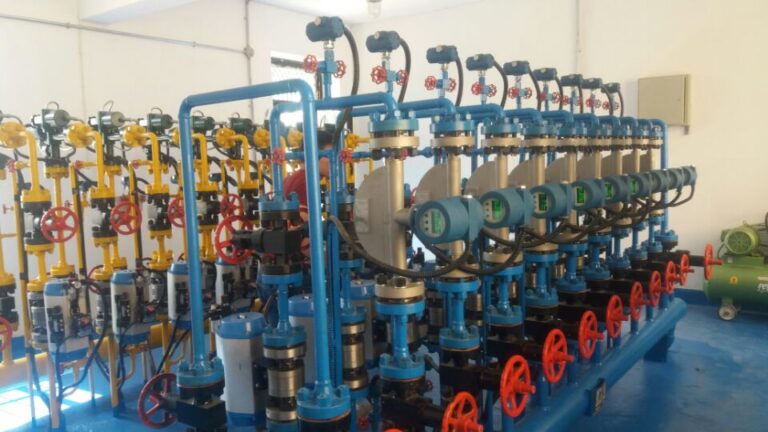
Traditional 4–20 mA instruments require one pair of wires per instrument. In a large plant with thousands of measurement points, this means kilometers of cable, numerous I/O cards, cable trays, and terminal blocks, resulting in long installation times and high labor costs.
Bus-based instruments can connect 8–32 devices on a single twisted pair, reducing cable usage by over 70%, drastically cutting the number of I/O cards, shortening installation time, and lowering labor costs. Overall, the total system cost can be reduced by 30–50%.
Two-wire power and communication: The same line can carry both communication and power, reducing power wiring and improving safety in hazardous areas.
Example: A chemical plant with 2,000 measurement points can reduce cable length from 20 km to under 6 km using FF H1 bus, dramatically reducing installation complexity.
2. Signal Quality: Fully Digital, High Accuracy, and Anti-Interference
Chemical plants often have motors, VFDs, and other strong EM interference sources. Analog signals are prone to drift and errors.
Bus communication is fully digital, uses differential transmission and error checking, and provides stable, drift-free signals. While the instrument’s inherent accuracy remains the same, the effective measurement reliability improves significantly.
- Long-distance transmission: FF H1 can reach up to 1,900 meters, RS485 up to 1,200 meters, supporting large-scale plants.
- High precision data: Eliminates analog drift, enabling accurate monitoring and control.
3. Maintenance and Diagnostics: Smart, Remote, Minimal Downtime
Traditional analog instruments can transmit only a single measurement value, have no self-diagnosis, and require onsite calibration. Troubleshooting can be time-consuming and risky in explosive areas.
Bus instruments offer bidirectional communication, transmitting multiple variables simultaneously: measured values, temperature, pressure, configuration parameters, fault codes, and life warnings.
- Remote operations: Calibration, configuration, diagnostics, and reset can be performed from the control room, reducing maintenance in hazardous areas and increasing efficiency by over 50%.
- Device health management: Early warnings for aging, drift, or corrosion help avoid unplanned shutdowns.
Case: In one chemical plant, remote diagnostics allowed operators to recalibrate 50 devices without entering the hazardous zone, saving over a full day of labor.
4. System Architecture: Distributed, Reliable, and Scalable
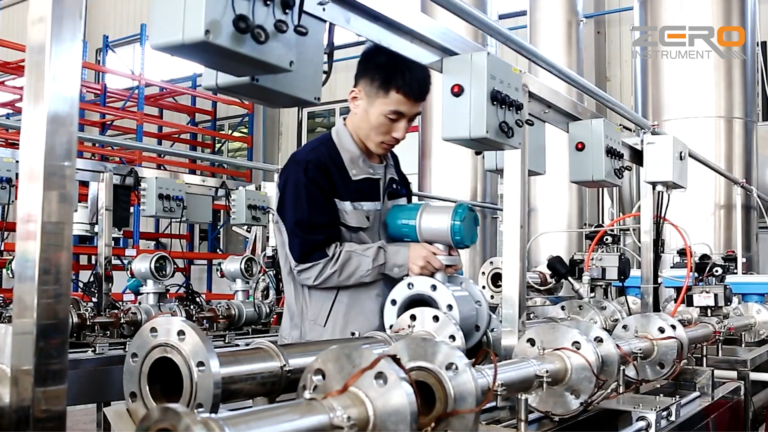
Bus-based instruments enable distributed control, placing some control logic at the field level while the DCS handles monitoring. This improves reliability, as a single device failure does not compromise the entire network.
- Flexible expansion: New instruments can be added directly to the bus without rewiring or adding I/O cards, ideal for upgrades or plant expansion.
- Interoperability: Instruments from different vendors can coexist on the same network with standard protocol support, reducing vendor lock-in risks.
5. Safety and Compliance: Designed for High-Risk Chemical Environments
Bus instruments like FF are intrinsically safe, suitable for flammable and explosive environments.
- Data integrity: All measurements are recorded digitally and are fully traceable, meeting SIS, GAMP, FDA, and other regulatory requirements.
6. Industry Trend: Digital Transformation
The chemical industry is moving toward intelligent digitalization (digital twins, big data, AI), which requires massive, real-time, multidimensional data. Bus-based instruments provide the high-speed data backbone for this transformation.
- Modern DCS/FCS systems natively support bus communication, gradually phasing out traditional 4–20 mA instruments.

In Summary
Bus-based instruments offer fewer cables, lower costs, more stable signals, smarter maintenance, flexible expansion, and full compatibility with hazardous, large-scale, high-interference, high-reliability, and digital chemical plants. They have become the mainstream choice for modern industrial automation.