
In industrial automation, systems may look complex, but most process issues can often be traced back to a few fundamental measurement variables.
To put it simply, if these key parameters are not measured accurately and controlled properly, goals such as process optimization, production safety, equipment protection, and product quality become difficult to achieve.
In most industrial applications, the five most critical parameters are:
- pressure
- temperature
- flow
- level
- position and speed
These may sound basic, but almost every industry depends on them.
From chemical plants and power stations to water treatment and food processing, these parameters form the foundation of process control.
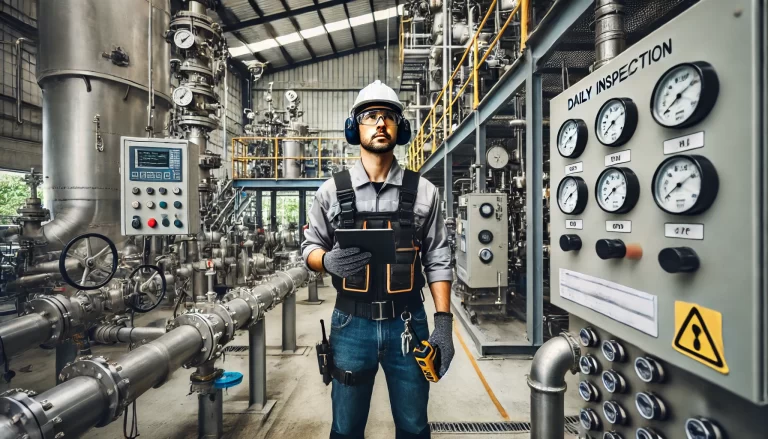
1. Pressure – The First Line of Process Safety
Pressure is one of the most important variables in industrial systems.
It can refer to:
- positive pressure
- vacuum
- differential pressure
- hydraulic pressure
- pneumatic pressure
Pressure measurement is everywhere:
- boilers
- pipelines
- hydraulic systems
- compressors
- process reactors
Why is it so important?
Because poor pressure control may lead to:
- lower equipment efficiency
- unstable process conditions
- product quality deviation
- serious safety risks
For example, in chemical processing, even a small pressure deviation may affect reaction efficiency and final product quality.
In severe cases, overpressure can damage equipment or even cause production accidents.
Common pressure measuring instruments include:
- pressure gauges
- pressure transmitters
- pressure sensors
Strain gauge and piezoelectric sensors are widely used in most industrial applications.

2. Temperature – The Core Variable in Every Process
Temperature is one of the most frequently monitored variables in industrial automation.
It directly affects:
- product quality
- process stability
- equipment lifespan
- reaction efficiency
Industries such as:
- pharmaceuticals
- food processing
- chemical manufacturing
- power generation
all require precise temperature control.
If temperature is too high, it may cause:
- overheating
- electronic board aging
- material degradation
- instrument failure
If temperature is too low, it may lead to:
- unstable signals
- slower response time
- incomplete reactions
- equipment shutdown
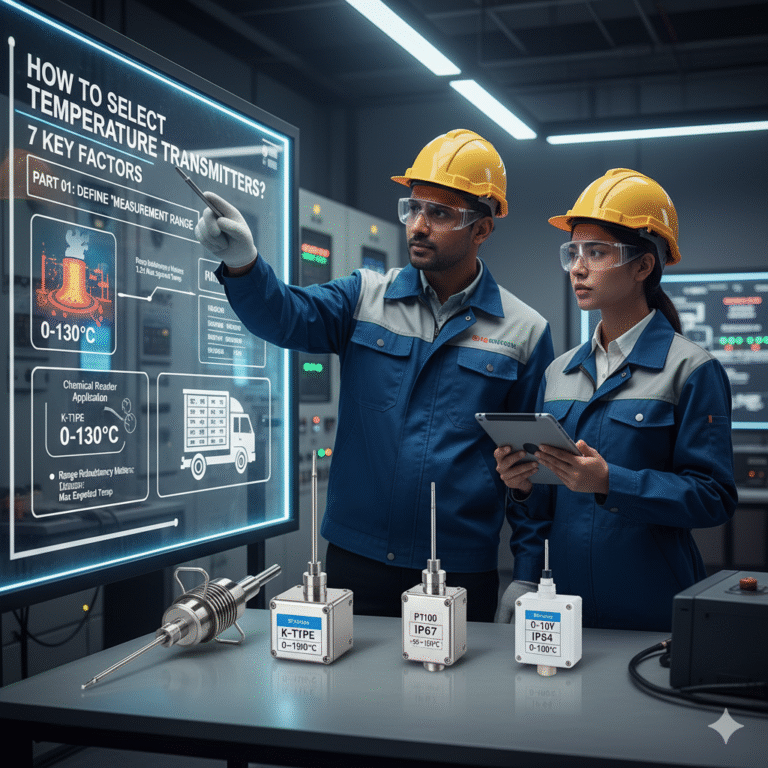
Common temperature measuring instruments include:
- thermocouples
- RTD sensors
- infrared temperature sensors
Thermocouples are widely used because of their wide temperature range and durability.
RTDs are preferred where higher accuracy and long-term stability are required.
3. Flow – The Key to Process Balance
Flow measurement is essential in almost every fluid process.
Simply speaking, flow refers to how fast and how much fluid moves through a pipeline.
Many industrial processes rely heavily on stable flow control, such as:
- mixing
- cooling
- dosing
- chemical reactions
- water treatment
If flow is unstable, the entire process may deviate from design conditions.
For example, in water treatment plants, unstable flow may directly affect purification efficiency and water quality.
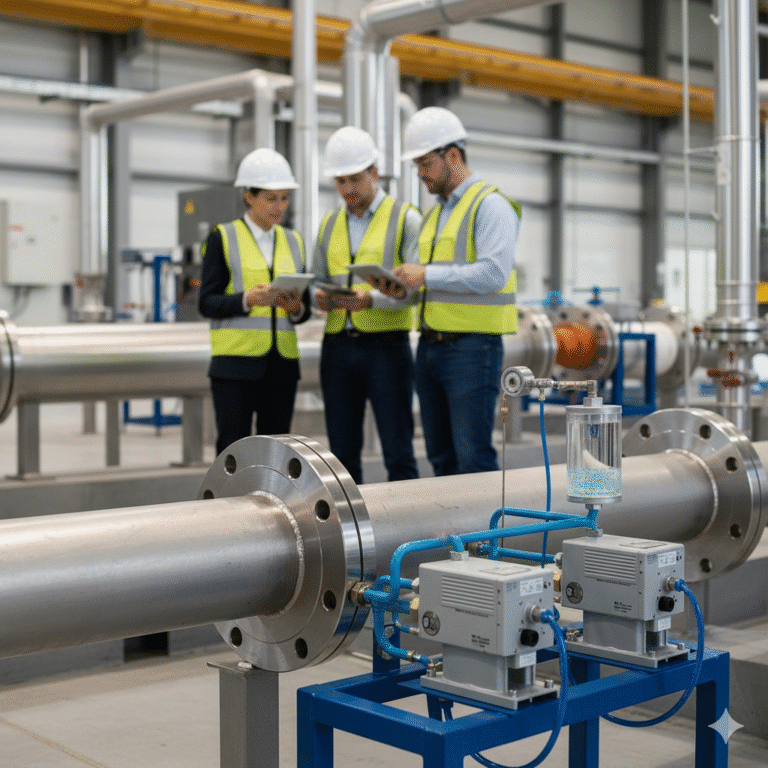
Common flow meters include:
- electromagnetic flow meters
- turbine flow meters
- ultrasonic flow meters
Electromagnetic flow meters are ideal for conductive liquids.
Ultrasonic flow meters are especially useful because they allow non-invasive measurement without direct contact with the medium.
4. Level – Preventing Overflow and Dry Running
Level measurement refers to determining the height of material inside a tank, vessel, or silo.
This includes:
- liquid level
- solid level
It is widely used in industries such as:
- chemical processing
- LNG storage
- pharmaceuticals
- wastewater treatment
- food and beverage
- power plants
Poor level control may cause:
- tank overflow
- pump dry running
- process interruption
- material shortage
- equipment blockage
For solid materials, level measurement becomes more challenging because factors such as:
- material buildup
- bridging
- angle of repose
- dielectric constant
- density
- corrosion
must all be considered.
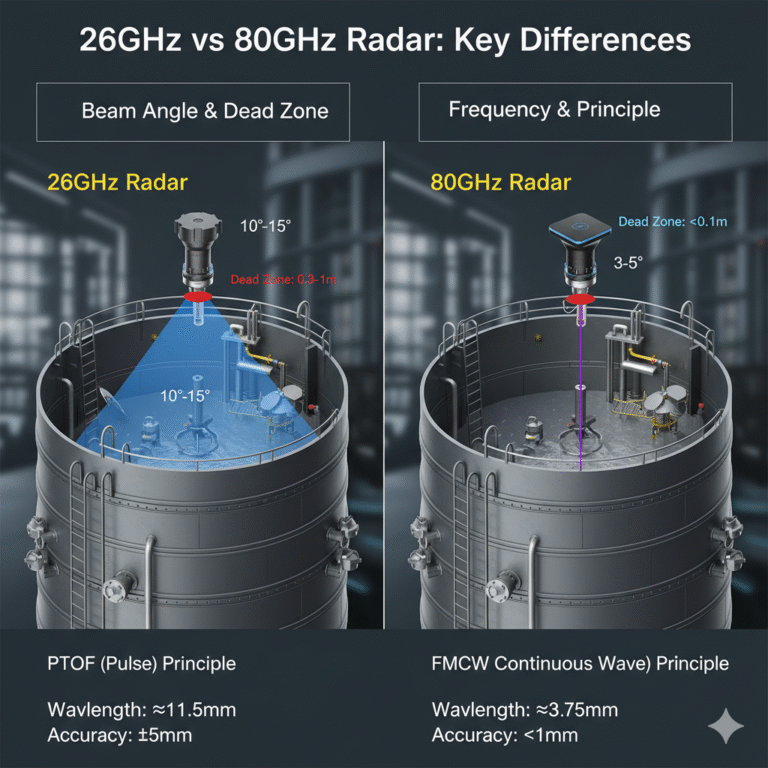
Common level instruments include:
- radar level meters
- ultrasonic level transmitters
- tuning fork level switches
- vibrating rod level switches
Radar level transmitters have become increasingly popular due to their non-contact measurement and strong adaptability to harsh environments.
5. Position and Speed – The Heart of Motion Control
This category is especially important in:
- automation equipment
- robotic systems
- conveyor lines
- CNC machines
- servo systems
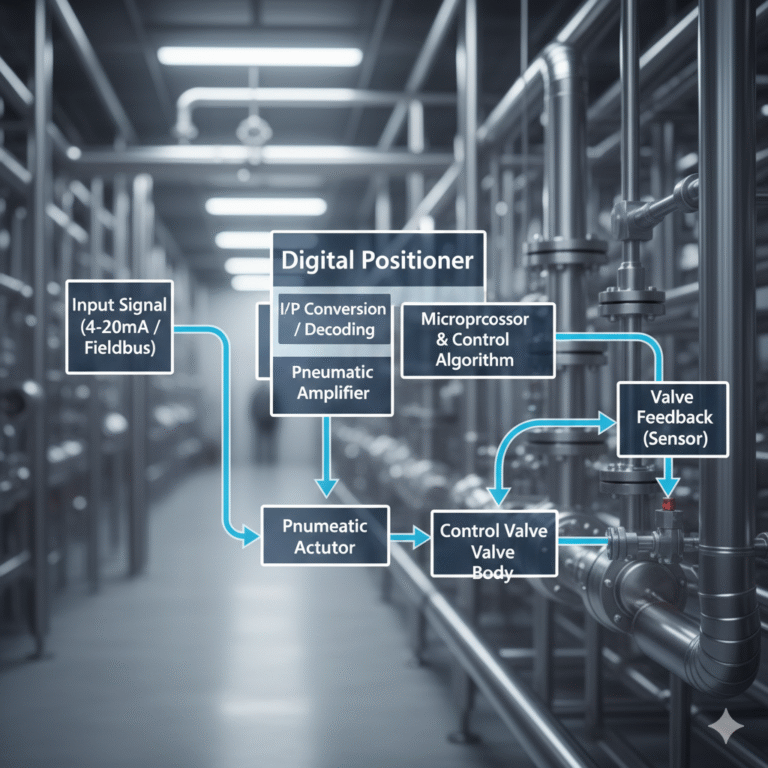
Whenever motion control is involved, precise position and speed feedback is critical.
For example, on an automotive assembly line, inaccurate positioning may lead to incorrect part installation and product defects.
Common measurement devices include:
- encoders
- LVDT sensors
- potentiometers
- tachometers
These instruments provide reliable feedback signals for closed-loop control systems.
Final Thoughts
Pressure, temperature, flow, level, and position/speed are the true foundation of industrial automation.
No matter how advanced the control system is, it ultimately depends on accurate measurement of these basic variables.
Better measurement means:
- higher efficiency
- improved safety
- stable production
- better product quality
For engineers and plant operators, understanding how to select and use the right instruments for these five parameters is essential.