
In industrial plants, you will often hear engineers talk about local instruments and remote instruments.
At first glance, the difference seems obvious:
- A local instrument is installed in the field.
- A remote instrument sends its measurement to the control room.
But this explanation is incomplete.
A pressure transmitter can be installed directly beside a pipeline, display the pressure on its LCD, and simultaneously transmit a 4–20 mA/HART signal to the DCS.
So the real difference is not simply where the instrument is installed.
It is more useful to look at how the measurement is indicated, transmitted, and used.
Lorem ipsum dolor sit amet, consectetur adipiscing elit. Ut elit tellus, luctus nec ullamcorper mattis, pulvinar dapibus leo.
1. What Is a Local Instrument?
A local indicating instrument provides measurement information directly at the point of installation, allowing operators or maintenance personnel to read the process value in the field.
Typical examples include:
- Bourdon tube pressure gauges
- Bimetal thermometers
- Sight glasses
- Magnetic level gauges
- Rotameters
- Local differential pressure indicators
Many traditional local instruments are completely mechanical and require no external power supply.
For example, in a mechanical pressure gauge, process pressure causes deformation of the sensing element. This mechanical movement is transferred to the pointer, allowing the operator to read the pressure directly from the dial.
The measurement is therefore available immediately at the equipment or pipeline.
Typical purpose of local indication
Local instruments are commonly used for:
- Routine operator inspection
- Maintenance and commissioning
- Quick equipment checks
- Comparing field conditions with control-room readings
- Providing indication when remote monitoring is unnecessary
Their greatest advantage is simplicity.
An operator can walk up to a pump, look at the discharge pressure gauge, and immediately understand the operating condition without opening a DCS screen or connecting a diagnostic device.

2. What Is a Remote or Transmitting Instrument?
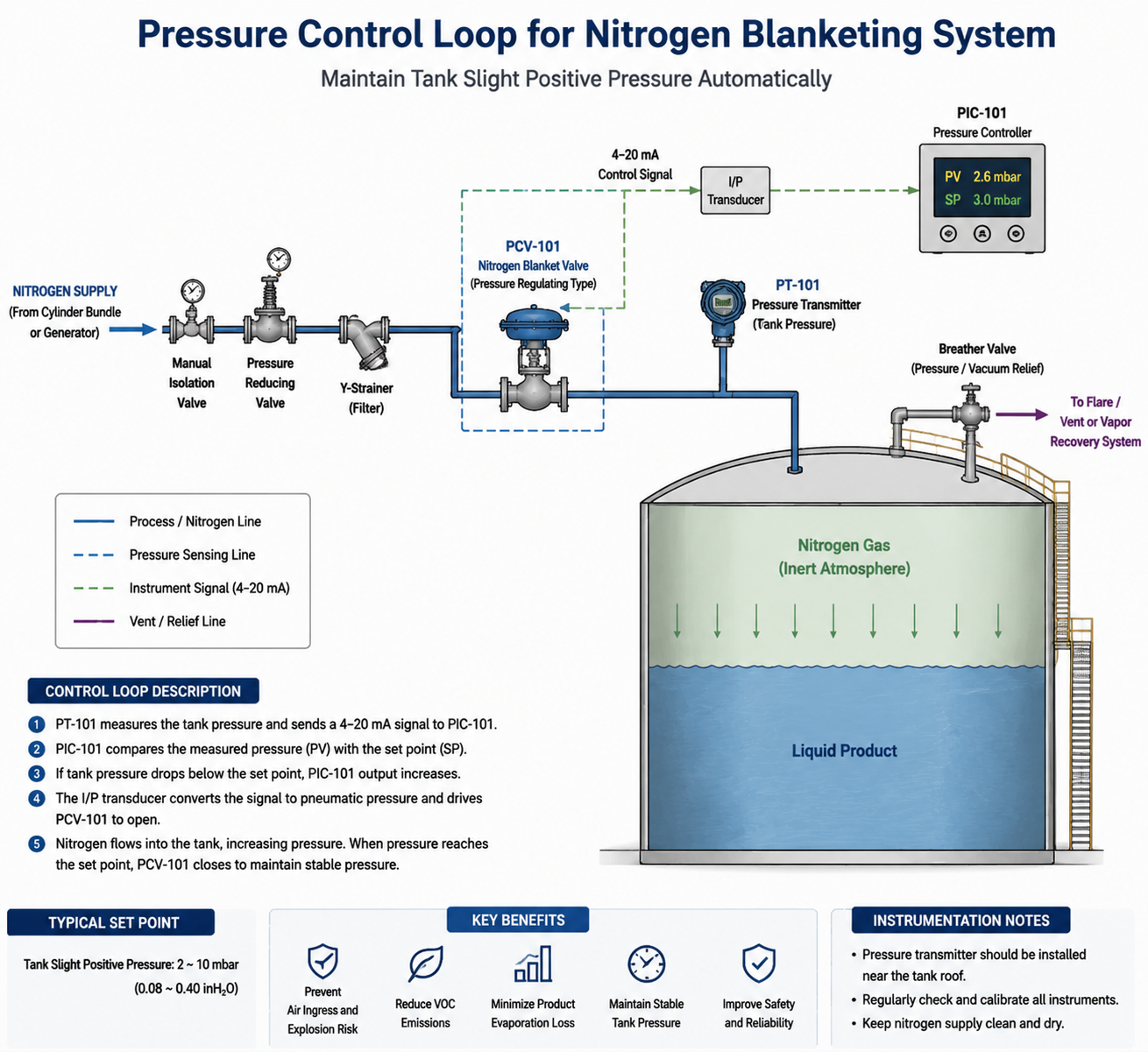
A transmitting instrument, often called a transmitter, converts a measured process variable into a signal that can be sent to another system.
Common signals and communication methods include:
- 4–20 mA
- 4–20 mA + HART
- Pulse/frequency output
- Modbus RTU / RS485
- PROFIBUS
- FOUNDATION Fieldbus
- Industrial Ethernet and other digital protocols
The receiving system may be a:
- PLC
- DCS
- SIS
- SCADA system
- Data acquisition system
- Remote monitoring platform
Typical transmitting instruments include:
- Pressure transmitters
- Differential pressure transmitters
- Temperature transmitters
- Radar level transmitters
- Electromagnetic flowmeters
- Coriolis mass flowmeters
- Vortex flowmeters
Unlike a simple mechanical indicator, the purpose of these instruments is not only to show a value.
Their measurements can also be used for monitoring, trending, alarming, control, calculation, and safety functions.
3. Can an Instrument Be Both Local and Remote?
Yes.
This is one of the most important points to understand.
Local indication and remote transmission are functions, not necessarily two mutually exclusive categories of equipment.
Consider a smart pressure transmitter installed beside a process vessel.
It may have an integral LCD showing:
2.36 MPa
At the same time, it sends a 4–20 mA/HART signal to the DCS.
The field operator can read the pressure locally, while the control-room operator sees the same process variable on the DCS.
The same situation is common with:
- Electromagnetic flowmeters
- Coriolis flowmeters
- Radar level transmitters
- Ultrasonic level transmitters
- Smart pressure transmitters
- Temperature transmitters
Therefore:
Local indication tells you where the value can be viewed. Remote transmission tells you where the measurement signal can go.
An instrument can provide both.
4. Local vs. Remote Instruments: 7 Key Differences
| Comparison | Local Indication | Remote Transmission |
|---|---|---|
| Main purpose | Field observation | Monitoring/control from another location |
| Typical output | Pointer, scale, local display | 4–20 mA, HART, pulse, fieldbus, digital communication |
| Data destination | Field operator | PLC, DCS, SIS, SCADA, etc. |
| Power requirement | Many mechanical devices require no power | Usually requires loop power or external power |
| Installation | Generally simpler | Requires signal wiring/communication and system integration |
| Data recording | Usually manual | Can be automatically logged and trended |
| Maintenance | Mainly instrument itself | Instrument plus signal/communication loop |
The biggest practical difference is not the display.
It is what happens to the measurement after it is generated.
A local pressure gauge may tell an operator that pump discharge pressure is 6.2 bar.
A pressure transmitter can send that same information to the DCS, where it can be:
- Displayed
- Recorded
- Used for alarms
- Used in control logic
- Included in historical trends
- Used by other plant systems
That additional functionality is why remote measurement usually requires more engineering and infrastructure.

5. How Should You Choose Between Local and Remote Measurement?
For a new measurement point, do not start by asking:
“Which instrument is cheaper?”
Start by asking:
“What does the plant need to do with this measurement?”
The following six questions usually lead to the answer.
6. Does the Measurement Need to Enter the PLC or DCS?
This is usually the first question.
If the process variable needs to be:
- Displayed in the control room
- Recorded historically
- Used for process control
- Used for high/low alarms
- Included in calculations
- Transmitted to SCADA
- Used by another automation system
then remote transmission is required.
Typical examples include:
- Reactor temperature
- Feed flow
- Main pipeline pressure
- Tank level
- Boiler steam flow
- Compressor suction/discharge pressure
These measurements often affect the operation of the entire process.
When is local indication enough?
If the value is only needed for field inspection and does not need to enter the control system, a local instrument may be sufficient.
Examples may include:
- Pump discharge pressure for routine inspection
- Cooling-water temperature
- Filter differential pressure indication
- Utility pressure
- Local tank level indication
The final decision should always follow the project’s P&ID, instrument specification, operating philosophy, and plant standards.
7. How Critical Is the Measurement?
Not all measurements have the same importance.
A pressure gauge used only for routine inspection is very different from a transmitter used as part of an emergency shutdown function.
If a measurement participates in a Safety Instrumented Function (SIF), the instrument selection cannot be based only on normal measurement accuracy.
The complete safety function must be considered, including:
- Sensor/transmitter
- Logic solver
- Final element
- Voting architecture
- Diagnostic coverage
- Failure modes
- Proof-test interval
- Required SIL target
It is important to remember that SIL applies to the Safety Instrumented Function as a whole, rather than simply meaning that one transmitter is “SIL-rated.”
Depending on the required safety integrity and system architecture, redundant transmitters may also be required.
8. Is the Plant Normally Manned?
This practical question is often overlooked.
Suppose operators perform field rounds every hour.
In that situation, local instruments can provide tremendous value.
An experienced operator may quickly notice:
- Abnormal pump pressure
- Increasing filter differential pressure
- Unexpected temperature rise
- Abnormal tank level
- Flow instability
before the issue develops into a serious process problem.
But consider an unmanned station, remote pumping facility, or instrument mounted 20 meters above ground.
A local-only display may provide very little operational value if nobody can conveniently read it.
For remote or unmanned installations, remote monitoring is usually much more important.
9. What About Installation Cost?
Remote measurement usually costs more than the instrument itself.
The complete measurement loop may include:
- Transmitter
- Instrument cable
- Junction box
- Cable tray
- Power supply
- I/O card
- Signal isolator
- Intrinsic safety barrier, where applicable
- PLC/DCS configuration
- Engineering and commissioning work
This is why comparing only the purchase price of a pressure gauge and a pressure transmitter can be misleading.
The correct comparison is the total installed cost.
For non-critical measurements with no control or data-recording requirement, local indication can therefore be an economical solution.
However, cost reduction should never override the project’s safety and control requirements.
10. Process and Environmental Conditions Also Matter
Both local and transmitting instruments must be suitable for the process.
Important process conditions include:
- Pressure
- Temperature
- Corrosiveness
- Viscosity
- Solids content
- Crystallization
- Vibration
- Pulsation
For example, a pressure measurement in a highly corrosive service may require:
- Diaphragm seals
- Special wetted materials
- Chemical seals
- Remote seals
- Purging or flushing arrangements
Remote instruments introduce additional considerations because signal integrity and electrical installation also matter.
These may include:
- Electromagnetic interference
- Grounding
- Cable shielding
- Ambient temperature
- Moisture
- Cable degradation
- Lightning and surge protection
11. What About Hazardous Areas?
Hazardous-area applications require special attention.
Instrument selection should consider:
- Hazardous-area classification
- Gas or dust group
- Temperature class
- Equipment protection method
- Required certification
Depending on the project and region, instruments may require certifications such as:
- ATEX
- IECEx
- UL
- CSA
- Other local approvals
A common misunderstanding is that every instrument installed in a hazardous area requires a safety barrier.
That is not correct.
An intrinsic safety barrier or galvanic isolator is typically associated with an intrinsically safe (Ex i) circuit.
Other protection concepts, such as flameproof/explosion-proof equipment, follow different installation requirements.
Always design the complete loop according to the selected protection concept and applicable standards.
12. Do You Need Historical Data?
This is another major difference.
A mechanical local instrument gives you a value right now.
It normally does not tell you what happened:
- Ten minutes ago
- Yesterday
- During the night shift
- Before an alarm
- During a process upset
If the plant requires:
- Historical trending
- Batch records
- Production reports
- Energy monitoring
- Quality records
- MES integration
- Performance analysis
then the measurement must normally be available electronically to the relevant system.
For simple field inspection without automatic data-recording requirements, local indication may still be the simpler solution.

13. Common Mistake #1: “The Transmitter Has a Display, So We Don’t Need a Local Gauge”
Not necessarily.
An LCD on a transmitter provides useful local information, but a separate mechanical indicator may still provide operational or maintenance value.
For example, a critical pump discharge may have:
- One local pressure gauge
- One pressure transmitter connected to the DCS
Why use both?
Because they provide an immediate cross-check.
Suppose the DCS shows:
Discharge pressure = 2.1 bar
but the local pressure gauge shows:
Discharge pressure = 5.8 bar
You immediately know that something needs investigation.
The problem could involve:
- The transmitter
- Impulse line
- Wiring
- I/O channel
- Scaling
- Configuration
- The local gauge itself
Redundant indication does not automatically mean safety redundancy, but it can be extremely useful for troubleshooting and routine operation.
14. Common Mistake #2: “Local Instruments Are Cheap, So We Can Eliminate Them”
This is also poor reasoning.
Local instruments are relatively inexpensive, but their value is not determined by purchase price alone.
They provide operators with immediate information during field rounds.
Typical locations where local indication is often valuable include:
- Pump suction and discharge
- Compressor inlet and outlet
- Heat exchanger inlet and outlet
- Filter upstream and downstream
- Storage tanks
- Utility lines
Whether they are required depends on the project’s design philosophy and plant standards.
The right question is not:
“Can we remove this gauge?”
It is:
“Does the operator or maintenance technician need this information locally?”
15. Common Mistake #3: “Remote Instruments Are Always More Accurate”
No.
Accuracy is determined by the instrument’s design and specified performance—not by whether the value is local or remotely transmitted.
A high-quality precision pressure gauge may have better accuracy than a general-purpose pressure transmitter.
Likewise, transmitters are available in many different accuracy classes.
When selecting an instrument, consider:
- Reference accuracy
- Turndown
- Long-term stability
- Temperature effects
- Repeatability
- Total performance under actual operating conditions
Do not simply assume:
Transmitter = higher accuracy.
16. Common Mistake #4: “Mechanical Local Instruments Don’t Need Calibration”
They do.
Mechanical instruments can suffer from:
- Drift
- Pointer sticking
- Hysteresis
- Mechanical wear
- Corrosion
- Overpressure damage
- Vibration damage
A gauge that displays an incorrect value can sometimes be more dangerous than having no indication at all, because operators may trust the wrong reading.
Calibration and inspection intervals should therefore be determined according to:
- Instrument criticality
- Regulatory requirements
- Service conditions
- Historical performance
- Manufacturer recommendations
- Plant maintenance procedures
17. Common Mistake #5: “Once We Install a Transmitter, the Problem Is Solved”
A transmitter is only one part of the measurement loop.
A typical 4–20 mA measurement may involve:
Process → Sensor/Transmitter → Cable → Junction Box → Barrier/Isolator → I/O Card → PLC/DCS
A problem anywhere in that chain can produce an incorrect reading.
Common causes include:
- Loose terminals
- Cable damage
- Poor grounding
- Incorrect shielding
- Moisture ingress
- Power-supply problems
- Barrier failure
- I/O card failure
- Incorrect scaling
- Configuration errors
When troubleshooting, do not immediately replace the transmitter.
Work through the measurement loop systematically.

18. Local, Remote, or Both? A Quick Selection Guide
| Requirement | Local | Remote | Both May Be Useful |
|---|---|---|---|
| Routine field inspection | ✓ | ✓ | |
| PLC/DCS display required | ✓ | ✓ | |
| Historical trending required | ✓ | ||
| Process control required | ✓ | ||
| Alarm required | ✓ | ||
| Unmanned/remote station | ✓ | ||
| Operator needs field indication | ✓ | ✓ | |
| Critical equipment monitoring | ✓ | ||
| Safety Instrumented Function | ✓ | Depending on design | |
| Simple non-critical utility measurement | ✓ |
This table is only a general guide.
The final instrument configuration should always follow the project’s:
- P&ID
- Instrument index
- Control philosophy
- Cause & effect matrix
- Hazardous-area requirements
- Safety requirements
- Client specifications
19. A Practical Example: Pump Discharge Pressure
Consider a centrifugal pump.
The operator wants to know whether the pump is developing normal discharge pressure.
Option 1: Local pressure gauge only
Suitable when:
- The pump is regularly inspected
- No control-room monitoring is required
- No automatic alarm is needed
- Historical pressure data is unnecessary
Option 2: Pressure transmitter only
Suitable when:
- The pressure must be monitored remotely
- The station is unmanned
- The signal is required by PLC/DCS
- Historical trending or alarms are required
Option 3: Pressure gauge + pressure transmitter
Often valuable for important equipment.
The local gauge gives field personnel immediate indication, while the transmitter provides continuous data to the control system.
This arrangement also makes troubleshooting easier because the two readings can be compared.
20. Another Example: Tank Level Measurement
The same logic applies to tank level.
A storage tank may use a magnetic level gauge for local indication and a radar level transmitter for remote monitoring.
The magnetic level gauge allows an operator standing beside the tank to see the level without accessing the control system.
The radar transmitter can provide:
- Continuous level measurement
- 4–20 mA/HART output
- DCS indication
- High/low alarms
- Historical trends
- Inventory monitoring
These two instruments are not necessarily competing solutions.
In many applications, they perform different functions and complement each other.
Final Thoughts
The difference between local and remote instrumentation is not simply:
“One is installed in the field and the other is installed in the control room.”
Most transmitters are installed in the field too.
A better way to understand the difference is:
Local indication allows people at the equipment to see the process value. Remote transmission allows the measurement to become part of the plant’s control, monitoring, alarm, safety, and data systems.
And modern instruments can often do both.
When selecting an instrument, ask these questions:
- Does the operator need to see the value locally?
- Does the measurement need to enter the PLC or DCS?
- Is historical recording required?
- Is the measurement used for control or alarms?
- Is it part of a safety function?
- Is the installation in a hazardous area?
- Is the station normally manned?
- What happens if the measurement fails?
Once these questions are answered, the choice between local indication, remote transmission, or both usually becomes much clearer.
In industrial instrumentation, the goal is not to install the most sophisticated instrument at every measurement point.
The goal is to provide the right measurement, in the right place, to the right people and systems, with the reliability the process actually requires.