
Introduction
For industrial level measurement engineers, two challenging applications often require special consideration:
high-precision level measurement and extreme high-temperature process conditions.
Many users are confused when selecting radar level transmitters. A common misunderstanding is that a high-frequency radar transmitter can automatically handle high-temperature applications, or that a high-temperature radar can provide the same measurement accuracy as a precision 80GHz radar.
In reality, these two technologies are designed for different purposes.
- 80GHz radar level transmitters focus on high accuracy, narrow beam measurement, strong interference resistance, and complex tank applications.
- High temperature radar level transmitters focus on temperature resistance, steam interference control, and reliable operation under extreme process conditions.
Choosing the wrong radar technology may result in unstable readings, false echoes, frequent maintenance, or even instrument failure.
This article explains the differences between 80GHz radar and high-temperature radar, including their working characteristics, advantages, limitations, and typical applications.
1. 80GHz Radar Level Transmitter: High-Precision Measurement Solution
80GHz radar level transmitters are currently one of the most widely used millimeter-wave radar technologies in industrial applications.
Using FMCW (Frequency Modulated Continuous Wave) technology, 80GHz radar provides a shorter wavelength and narrower beam angle compared with traditional low-frequency radar.
Its main advantages include:
- High measurement accuracy
- Small blind zone
- Excellent interference resistance
- Reliable measurement in complex tanks
Key Parameters of 80GHz Radar Level Transmitter
Typical industrial specifications include:
- Frequency: 76–81GHz millimeter-wave band
- Wavelength: Approximately 3.75mm
- Beam angle: Around 2°–4° narrow beam
- Blind zone: Typically 30–80mm
- Accuracy: Up to ±1mm under suitable installation conditions
- Operating temperature: Typically -40℃ to 200℃ (depending on antenna design)
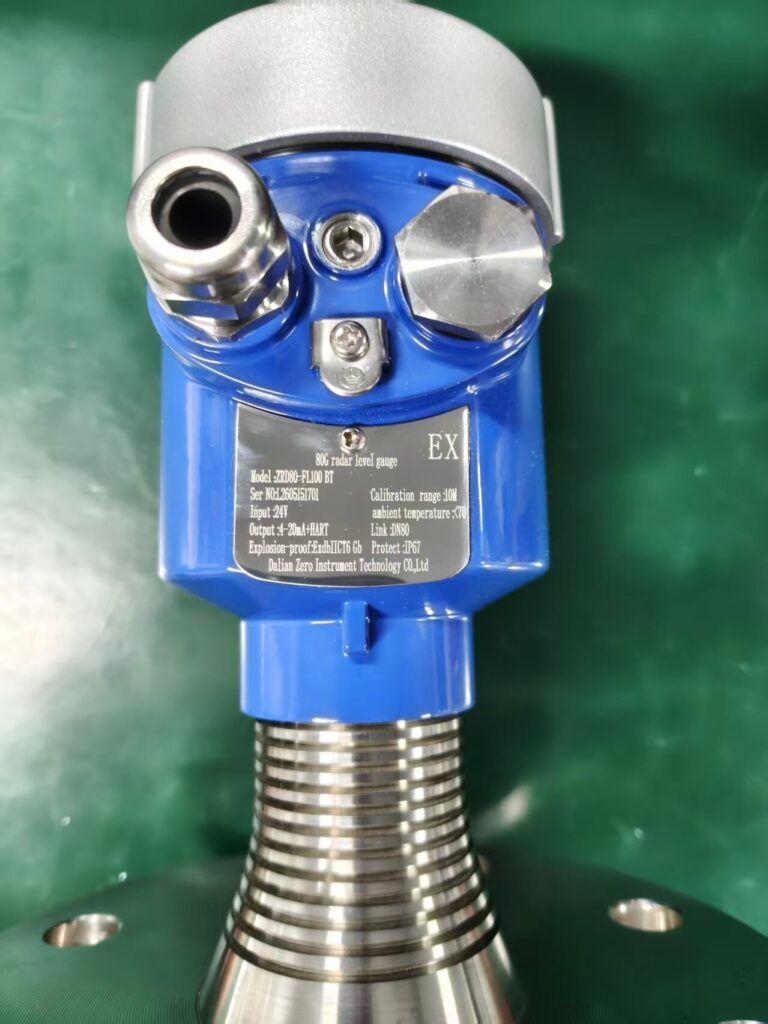
Three Major Advantages of 80GHz Radar
1. Narrow Beam Angle Reduces False Echoes
Traditional radar transmitters usually have wider beam angles, which may cause reflections from:
- Tank walls
- Agitators
- Heating coils
- Internal structures
These unwanted reflections can create false echoes and unstable readings.
The narrow beam of 80GHz radar focuses energy directly toward the material surface, reducing interference from internal tank structures.
It is especially suitable for:
- Agitated reactors
- Small diameter tanks
- Complex process vessels
- Tanks with internal obstacles
2. Small Blind Zone and High Accuracy
The short wavelength of 80GHz radar allows measurement closer to the tank bottom.
This makes it suitable for applications requiring precise level monitoring, such as:
- Batch production
- Material dosing systems
- Inventory management
- Process control
Typical industries include:
- Fine chemical processing
- Pharmaceutical production
- Battery manufacturing
- High-value liquid storage
3. Integrated Lens Antenna Design Reduces Maintenance
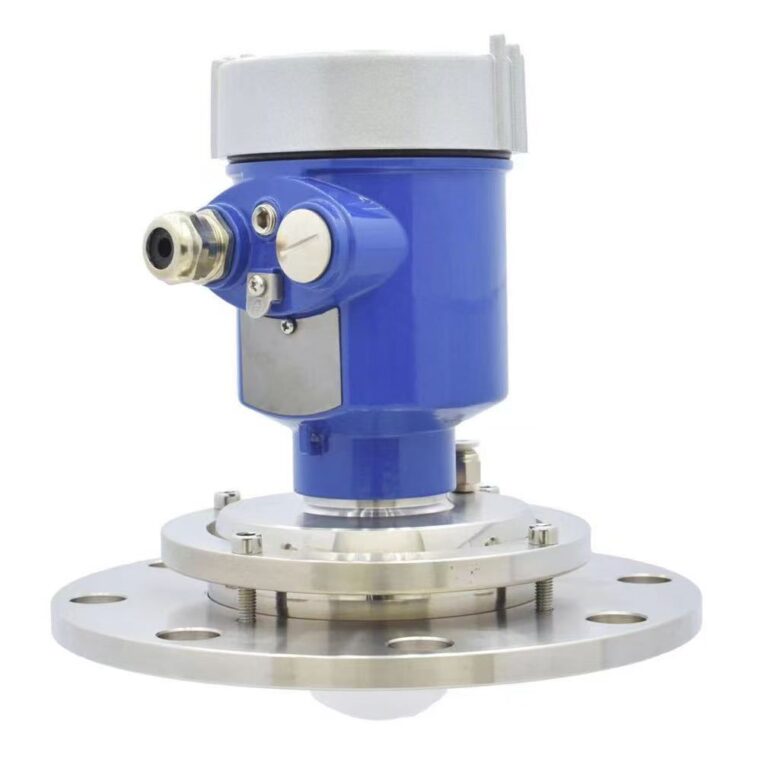
Many modern 80GHz radar transmitters use an integrated lens antenna instead of traditional horn antennas.
Advantages include:
- Smooth surface design
- Reduced material buildup
- Less dust accumulation
- Better resistance to condensation
This helps maintain stable measurement performance with reduced maintenance requirements.
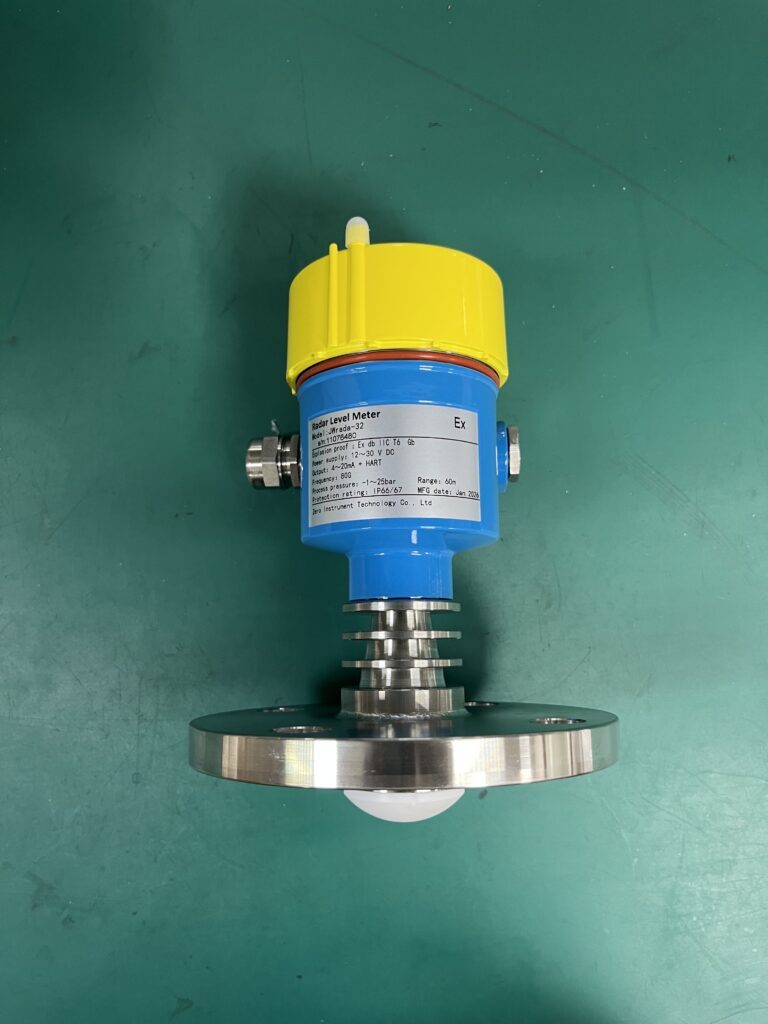
Limitations of 80GHz Radar
Although 80GHz radar provides excellent accuracy, it is not suitable for every application.
Potential limitations include:
1. Limited High-Temperature Capability
Standard 80GHz radar models are generally designed for normal and medium-temperature applications.
For continuous operation above approximately 200℃, special high-temperature designs are usually required.
2. Heavy Dust and Dense Foam Applications
In extremely dusty environments or applications with thick foam layers, radar signal attenuation may increase.
Suitable antenna selection and installation design become critical.
3. Higher Initial Investment
Compared with basic radar technologies, 80GHz radar transmitters generally have a higher purchase cost due to advanced antenna and signal processing technology.
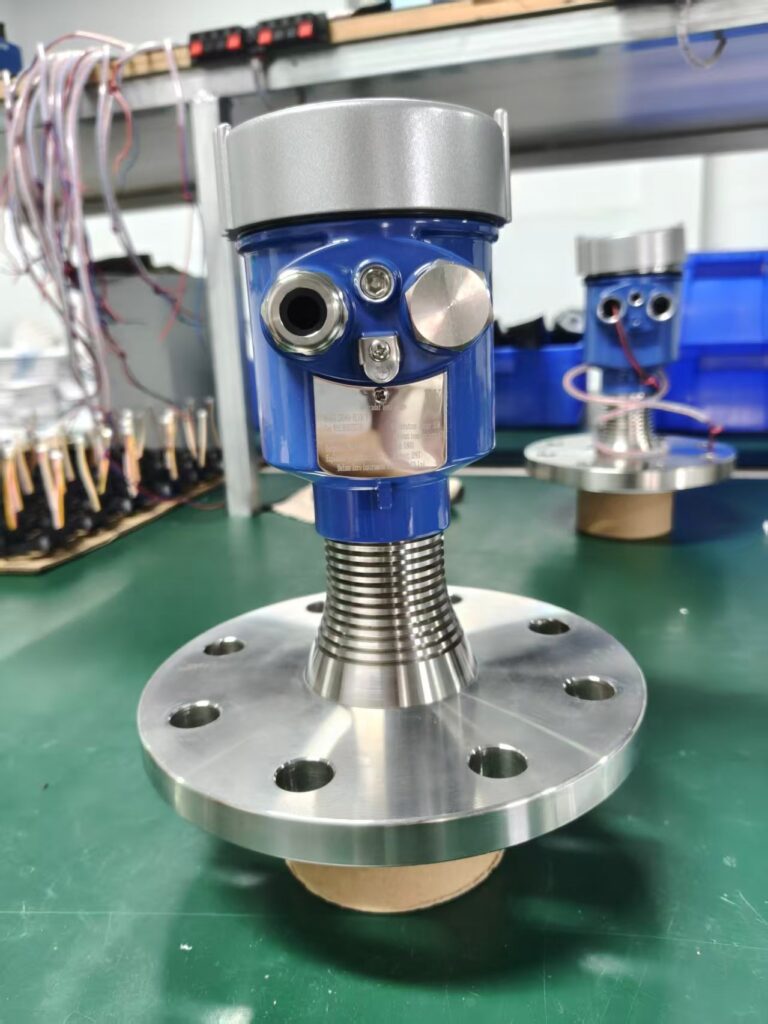
Typical Applications of 80GHz Radar
80GHz radar level transmitters are commonly used in:
- Chemical storage tanks
- Pharmaceutical vessels
- Battery material tanks
- Solvent and NMP storage systems
- Precision inventory measurement
- Small process reactors
- Tanks with agitators or internal structures
2. High Temperature Radar Level Transmitter: Designed for Extreme Conditions
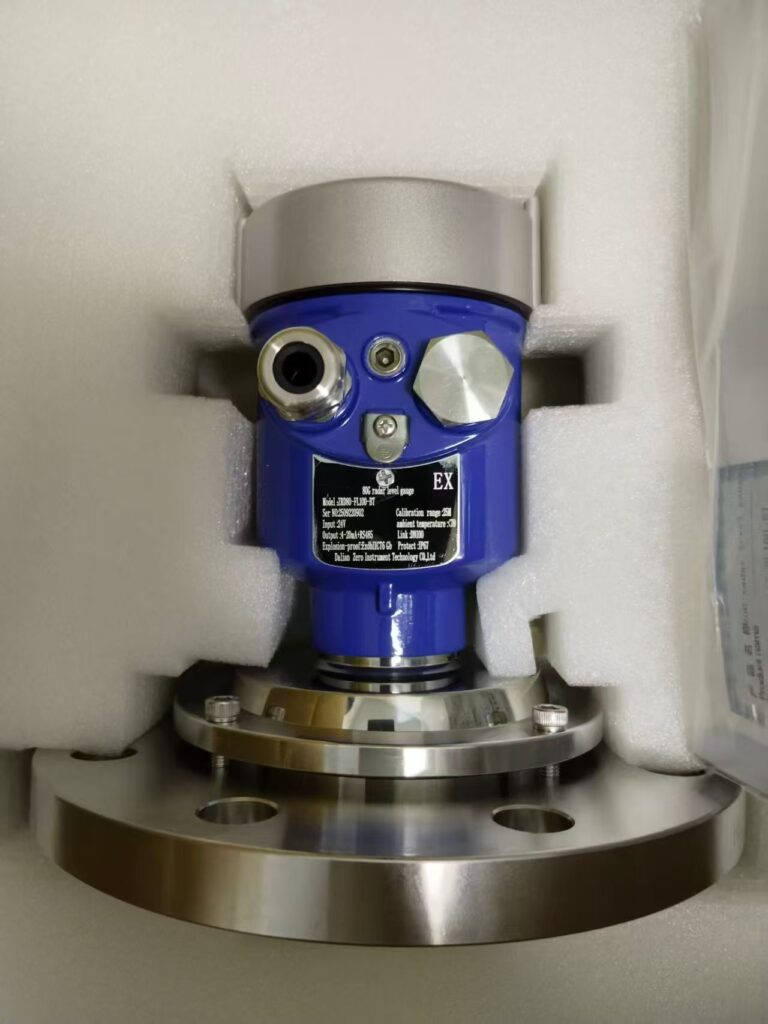
High-temperature radar level transmitters are developed for applications where process temperature is the primary challenge.
Unlike precision measurement applications, their main purpose is:
stable operation under extreme temperature, steam, and thermal stress conditions.
These radar systems are commonly used in:
- Boilers
- Furnaces
- High-temperature reactors
- Distillation equipment
- Metallurgical processes
Key Parameters of High Temperature Radar
Typical specifications include:
- Frequency: Depending on design (many modern models use 80GHz technology)
- Temperature range: Approximately -40℃ to 350℃, with special designs up to 450℃
- Antenna design: High-temperature ceramic antenna or extended antenna structure
- Protection features:
- Thermal insulation design
- Cooling structure
- High-temperature sealing materials
- Condensation prevention
- Typical accuracy: ±2~5mm depending on application conditions
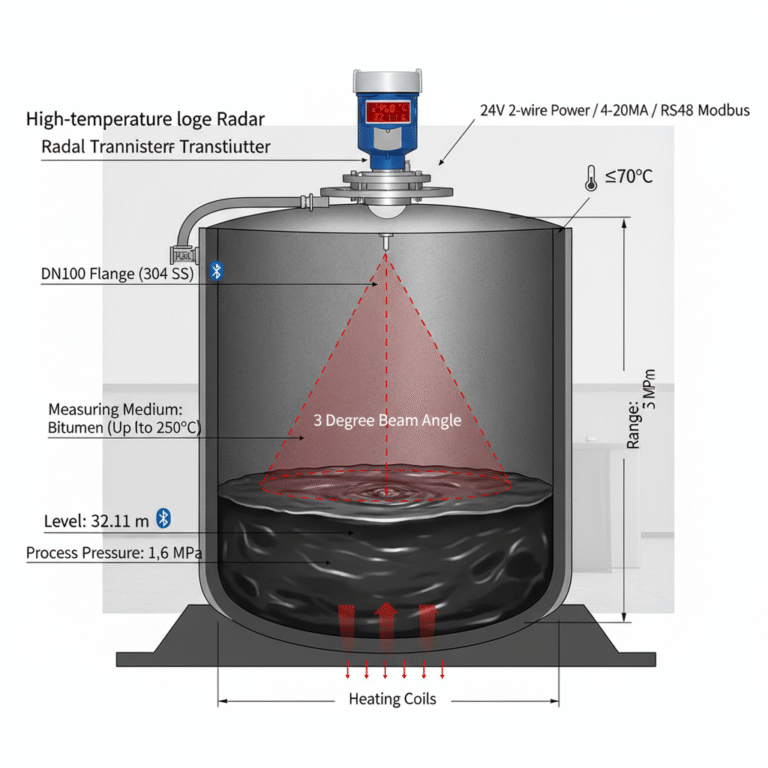
Three Major Advantages of High Temperature Radar
1. Designed for Extreme Temperature Applications
High-temperature radar transmitters use special mechanical structures to protect electronics from excessive heat.
Common solutions include:
- Extended antenna systems
- Heat insulation sections
- Cooling systems
- Special sealing materials
They can operate reliably in:
- High-temperature steam
- Thermal radiation environments
- Continuous production processes
2. Better Performance in Steam and Condensation Conditions
High-temperature processes often contain:
- Hot steam
- Vapor
- Condensation
- Temperature fluctuations
These conditions can affect ordinary radar measurement.
High-temperature radar solutions improve reliability through:
- Optimized antenna design
- Condensation prevention
- Better thermal management
Typical applications include:
- Boiler drums
- Steam systems
- High-temperature chemical reactors
3. Reliable Operation in Harsh Industrial Environments
High-temperature radar transmitters are designed for long-term operation in demanding industries:
- Power generation
- Metallurgy
- Cement production
- Petrochemical plants
- Coal chemical processes
The priority is not only accuracy but also:
- Long service life
- Reduced downtime
- Stable continuous operation
Limitations of High Temperature Radar
High-temperature radar is specialized equipment and also has some limitations.
1. Lower Accuracy Compared with Precision 80GHz Radar
For applications requiring millimeter-level precision measurement, standard high-temperature radar may not be the first choice.
2. More Sensitive to Installation Conditions
Due to high-temperature antenna structures and process connections, correct installation is very important.
Important factors include:
- Nozzle design
- Antenna alignment
- Steam conditions
- Internal structures
3. Higher Cost for Extreme Applications
Special materials and thermal protection designs increase system cost.
3. 80GHz Radar vs High Temperature Radar Comparison
| Item | 80GHz Radar Level Transmitter | High Temperature Radar |
|---|---|---|
| Main purpose | High accuracy measurement | Extreme temperature operation |
| Main advantage | Precision and interference resistance | Temperature resistance and stability |
| Frequency | 76–81GHz | Depends on design, many use 80GHz |
| Accuracy | Up to ±1mm | Usually ±2~5mm |
| Temperature capability | Typically up to 200℃ | 300℃–450℃ with special design |
| Complex tank measurement | Excellent | Moderate |
| Steam resistance | Good | Excellent |
| Best application | Precision process measurement | High-temperature industries |
4. Quick Selection Guide
Choose 80GHz Radar When:
✔ Process temperature is below approximately 200℃
✔ High measurement accuracy is required
✔ Tank contains agitators, coils, or obstacles
✔ Small tanks require reliable measurement
✔ Applications include fine chemical, pharmaceutical, or battery industries
Choose High Temperature Radar When:
✔ Process temperature exceeds 200℃
✔ Large amounts of steam or vapor exist
✔ Equipment operates under thermal radiation
✔ Boiler, furnace, or high-temperature reactor measurement is required
✔ Long-term operational reliability is the priority
Conclusion
Many radar level measurement problems are not caused by product quality issues, but by incorrect technology selection.
For applications requiring high accuracy, narrow beam measurement, and complex tank adaptability, an 80GHz radar level transmitter is usually the better choice.
For applications involving extreme temperature, steam, and harsh industrial conditions, a high-temperature radar level transmitter provides a more reliable solution.
Before selecting a radar level transmitter, always evaluate:
- Medium characteristics
- Temperature
- Pressure
- Tank structure
- Steam and dust conditions
- Required accuracy
Choosing the right radar technology ensures stable measurement performance and reduces maintenance costs.
Need help selecting the right radar level transmitter? Contact our engineers with your process parameters, including medium, temperature, pressure, and tank dimensions.