
How to prevent frozen impulse lines, inaccurate flow measurements, heat tracing failures, pneumatic valve problems, and electrical cabinet condensation during winter operations.
Winter presents serious operational challenges for industrial plants, especially in regions exposed to freezing temperatures, strong winds, and sudden temperature fluctuations.
When temperatures fall, the first sign of trouble is not always a frozen or ruptured pipeline.
Operators may notice that flow rates gradually decrease, pneumatic valves respond more slowly, pressure readings become unstable, pumps require higher starting currents, or moisture begins accumulating inside electrical cabinets.
These seemingly minor changes are often early indications of larger problems.
For industrial facilities handling water, chemicals, steam, compressed air, petroleum products, and other process fluids, effective winterization requires more than simply wrapping pipes with insulation.
It requires a coordinated approach covering process conditions, instrumentation, heat tracing, equipment protection, preventive maintenance, and safe operating procedures.
This article explains the most common winter-related problems in industrial plants and provides practical inspection and troubleshooting recommendations.
1. Understand the Process Fluid Before Evaluating Freezing Risks
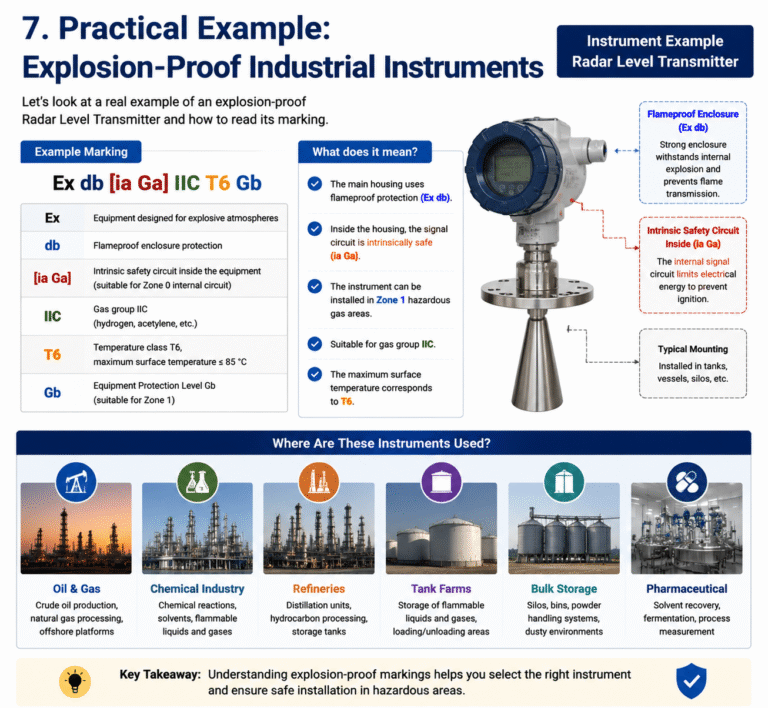
One of the most important principles of winterization is that ambient temperature alone does not determine whether a process system is safe from freezing.
The physical properties of the process medium are equally important.
Different fluids respond differently to decreasing temperatures.
Water and Water-Based Fluids
Water can freeze inside pipelines, valves, instrument connections, and equipment cavities when temperatures fall below its freezing point.
The resulting expansion may damage:
- Flowmeter measuring tubes and liners
- Pressure transmitter impulse lines
- Valve bodies and internal components
- Pump casings and mechanical seal support piping
- Drain connections and small-diameter pipelines
Small branches, dead legs, low points, and equipment that remains idle for long periods are particularly vulnerable.
Oil and High-Viscosity Liquids
Many oils become more viscous as temperatures decrease.
Increasing viscosity can affect pump suction performance, motor loading, pressure losses, mechanical flowmeter operation, and control valve response.
A pipeline may remain completely free of ice while its flow performance deteriorates significantly.
Chemical Solutions and Slurries
Some chemical products crystallize or precipitate when their temperatures fall below specific operating limits.
Slurries and concentrated solutions may become difficult to pump or measure, even without actual freezing.
Engineers should evaluate the fluid’s freezing point, pour point, crystallization temperature, viscosity-temperature relationship, and minimum acceptable operating temperature, as applicable.
Compressed Air
Compressed air creates another winterization challenge.
If residual moisture remains in the air supply, it can condense and freeze inside small pneumatic tubes, filters, regulators, solenoid valves, and drain connections.
Consequently, industrial winterization should begin with a review of process fluid characteristics, operating temperatures, minimum expected ambient conditions, and system behavior during shutdown.
2. Heat Tracing: Electrical Power Does Not Guarantee Freeze Protection
Heat tracing is widely used to maintain process temperatures and prevent freezing.
However, the presence of electrical power does not necessarily mean that a heat tracing system is performing correctly.
A heating circuit may indicate normal power consumption while the downstream pipeline remains below its required temperature.
Electric Heat Tracing
Typical problems include:
- Damaged or disconnected heating cables
- Poor electrical connections
- Incorrect thermostat settings
- Temperature sensor installation errors
- Failed control or switching components
- Inadequate heating capacity
- Wet or damaged thermal insulation
Long heating circuits require particular attention because local cable damage or poor thermal contact can produce uneven temperatures.
A practical inspection should include three measurements:
- Electrical supply and heat tracing circuit condition
- Actual pipe surface temperature
- Ambient temperature and relevant operating conditions
These measurements help determine whether the installed heating system is maintaining the required temperature.
The required maintain temperature should be established from process requirements rather than assumed from ambient conditions alone.
Steam Heat Tracing
Steam tracing systems depend on both an adequate steam supply and effective condensate removal.
Common problems include insufficient steam pressure, blocked steam traps, condensate accumulation, poor tracing arrangements, and damaged insulation.
A steam tracing line may be hot near its inlet but significantly colder downstream.
Routine inspection should therefore include steam supply conditions, steam trap operation, condensate drainage, and pipeline temperature distribution.
Thermal Expansion Warning
Heating a liquid-filled pipeline that is isolated between closed valves may generate excessive pressure through thermal expansion.
Any system requiring heat tracing must retain the pressure protection measures specified in its original design.
3. Winter Problems Affecting Industrial Flowmeters
Flow measurement devices can experience various problems during low-temperature operation.
Some problems originate from changes in fluid properties, while others result from freezing, condensation, or installation conditions.
Electromagnetic Flowmeters
Electromagnetic flowmeters are commonly installed in water treatment plants, chemical facilities, wastewater systems, and industrial utility pipelines.
If liquid remains inside an electromagnetic flowmeter during an extended shutdown, freezing may damage the measuring tube, liner, electrode seals, or associated components.
Potential symptoms include abnormal measurement signals, unstable readings, leakage after thawing, or complete instrument failure.
Recommended preventive measures include:
- Drain the measuring section when the installation and operating procedures permit.
- Maintain appropriate heat tracing or circulation where required.
- Protect the measuring tube and associated connections from freezing.
- Ensure that insulation and heating arrangements are compatible with the instrument manufacturer’s limits.
- Inspect the instrument before restarting after a suspected freezing event.
For remotely mounted electromagnetic flowmeters, exposed sensor connections and cable entries should also be inspected for moisture ingress.
Differential Pressure Flowmeters
Differential pressure flow measurement systems are particularly sensitive to freezing in impulse lines.
Orifice plates, venturi tubes, and other differential pressure primary elements may continue operating mechanically while the pressure transmission system becomes obstructed.
When liquid inside an impulse line freezes, the transmitter may display:
- A constant or frozen reading
- Slow response to actual flow changes
- Unexpectedly high or low differential pressure
- Abnormal signal fluctuations
The differential pressure transmitter itself may be functioning correctly.
Therefore, operators should not immediately assume that the transmitter requires recalibration or replacement.
First inspect impulse lines, manifolds, condensate chambers, heat tracing, and insulation.
Turbine and Positive Displacement Flowmeters
Turbine, oval gear, and other mechanical flowmeters contain moving components.
Low temperatures can increase fluid viscosity and mechanical resistance, potentially influencing meter accuracy and starting performance.
The operating viscosity should remain within the manufacturer’s approved measurement range.
When restarting a cold system, verify that the fluid can move freely and that the meter is not mechanically obstructed.
Vortex Flowmeters
Vortex flowmeters are widely used for steam, gases, and liquids.
In steam applications, poor condensate management can cause unstable process conditions and measurement disturbances.
Winter troubleshooting should consider the actual flow conditions, condensate accumulation, upstream restrictions, and process temperature before concluding that the sensor has failed.
The key principle is simple: a changing flowmeter reading does not always indicate an instrument defect. The process itself may have changed.
4. Pressure and Differential Pressure Transmitters: Prevent Frozen Impulse Lines
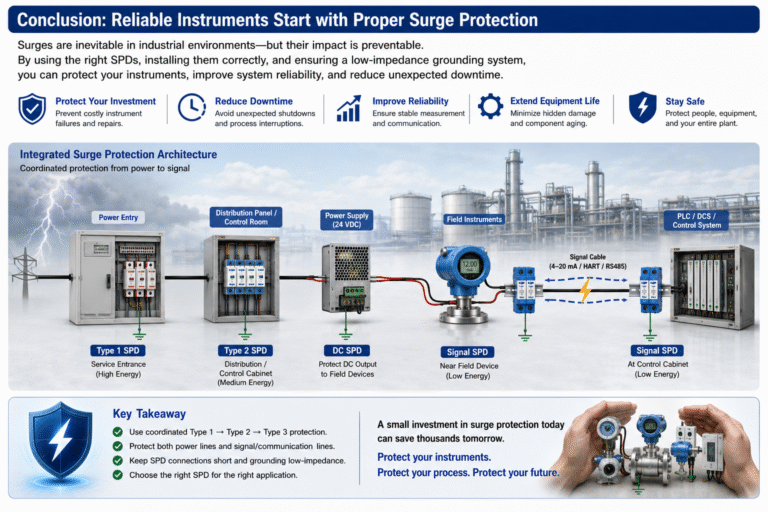
Pressure transmitters are among the instruments most vulnerable to winter-related measurement problems when they use fluid-filled impulse lines.
A transmitter may remain electrically healthy while its pressure connection becomes partially or completely blocked.
As temperatures decrease, water or condensate trapped inside impulse lines may freeze.
This can interrupt pressure transmission between the process and the sensing element.
Typical symptoms include:
- Pressure readings remaining constant despite process changes
- Delayed response to valve operation
- Unexpected differences between local gauges and DCS readings
- Sudden reading changes during thawing
- Abnormal differential pressure trends
Recommended Inspection Procedure
First, compare the transmitter reading with other available process indicators.
Check whether changes in pump operation, tank level, valve position, or flow rate are consistent with the pressure trend.
Next, review the physical installation.
Pay particular attention to:
- Exposed impulse tubing
- Low points where condensate accumulates
- Manifold and drain connections
- Wet or damaged insulation
- Failed tracing systems
- Unprotected transmitter mounting arrangements
A flat pressure trend is not sufficient evidence of a frozen impulse line, but it can be an important warning sign when combined with low ambient temperatures and inconsistent process measurements.
Instrument technicians should follow approved isolation, pressure relief, and maintenance procedures before working on potentially blocked impulse lines.
5. Instrument Air Systems and Pneumatic Valve Problems
Pneumatic control valves rely on a stable supply of clean, dry compressed air.
During winter, moisture inside instrument air systems can create serious operational problems.
An actuator may receive the correct control signal while responding more slowly than expected.
In severe cases, water or ice may prevent a pneumatic component from operating properly.
Common Symptoms
- Pneumatic valves open or close slowly.
- Actuator movement becomes irregular.
- Solenoid valves fail to switch reliably.
- Filter regulators accumulate moisture.
- Several pneumatic valves develop similar problems simultaneously.
When multiple valves exhibit the same behavior, technicians should investigate the common instrument air supply rather than focusing only on individual valve positioners.
Why Pressure Alone Is Not Enough
An instrument air header may maintain normal pressure while carrying excessive moisture.
The pressure dew point is therefore an important indicator of air quality.
ISO 8573-1 provides a framework for specifying compressed air purity classes, including water content.
The required pressure dew point should be selected according to the operating environment, minimum expected temperatures, and equipment requirements.
Routine checks should include air dryer performance, filter and drain condition, dew point monitoring, distribution piping, and outdoor pneumatic connections.
6. Prevent Condensation Inside Electrical and Instrument Cabinets
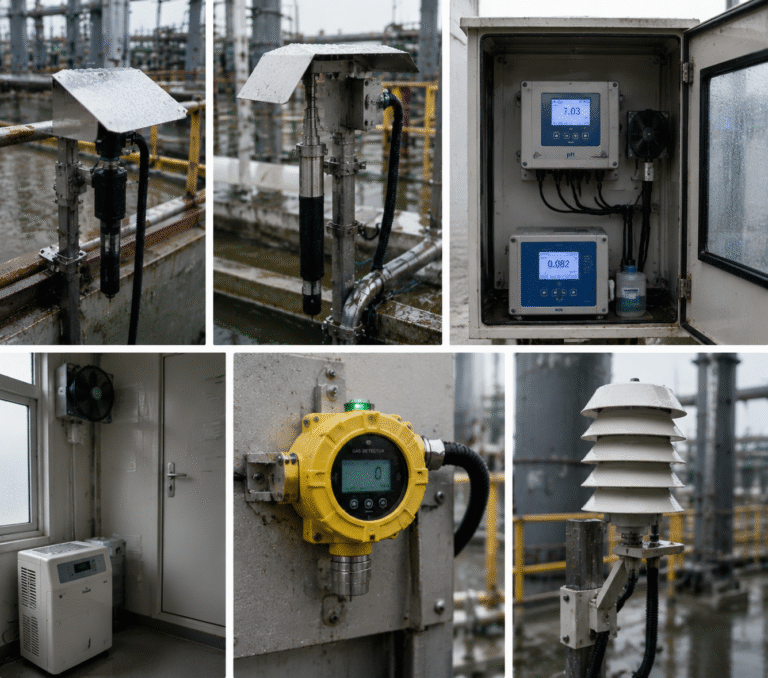
Freezing is not the only winter hazard.
Condensation can damage electrical and electronic equipment even when temperatures remain above freezing.
During nighttime cooling, cabinet surfaces and electrical components may become relatively cold.
When warmer, moisture-containing air contacts surfaces below its dew point, condensation may form.
This problem is commonly encountered in:
- PLC control cabinets
- DCS junction cabinets
- Variable frequency drive enclosures
- Outdoor instrument panels
- Electrical distribution cabinets
- Field terminal boxes
Moisture accumulation can lead to corrosion, reduced insulation performance, terminal deterioration, communication faults, and unexpected equipment failures.
Recommended Preventive Measures
Inspect cabinet heaters, thermostats, humidistats, sealing gaskets, cable glands, and ventilation arrangements.
Verify that anti-condensation heaters operate correctly rather than relying only on their indicator lights.
Check for signs of moisture around cable entrances, terminal blocks, cabinet floors, and internal surfaces.
Cabinet protection should also account for the applicable enclosure rating and the installation environment.
An IP-rated enclosure provides a defined level of protection against ingress under specified test conditions, but its rating alone does not guarantee that internal condensation cannot occur.
Where appropriate, controlled cabinet heating, moisture management, and suitable enclosure ventilation accessories can reduce condensation risks.
7. Pumps, Lubrication Systems, and Hydraulic Equipment in Cold Weather
Low temperatures can significantly affect the mechanical performance of industrial equipment.
Pumps, gearboxes, hydraulic power units, and lubrication systems may require additional attention during startup.
Increased Oil Viscosity
As oil temperature decreases, viscosity generally increases.
Depending on the equipment and lubricant, this can cause:
- Increased starting torque
- Higher motor current
- Slower hydraulic actuator movement
- Increased pressure losses
- Poor lubricant circulation
- Reduced pump suction performance
Operators may notice that equipment runs poorly during initial startup but becomes more stable as the oil warms.
However, this behavior should not automatically be considered normal.
Operating equipment outside its approved temperature or viscosity range may cause mechanical damage.
Preheating and Startup Protection
Where equipment is designed with oil heaters or preheating systems, ensure that the required operating conditions are reached before startup.
Follow the equipment manufacturer’s instructions for cold-start procedures and lubricant selection.
Standby Pumps
Standby pumps deserve special attention because their associated pipelines may remain stagnant for extended periods.
Mechanical seal flushing lines, cooling water connections, drains, bypasses, and small valves can freeze before the main pump casing shows visible problems.
A standby pump may appear available but fail during an emergency changeover.
Winter inspection should therefore include both the main equipment and its auxiliary piping.
8. Inspect Utility Systems as Interconnected Networks
Winter problems frequently affect multiple pieces of equipment at the same time.
This is especially common when the underlying problem originates in a shared utility system.
For example:
- Several pneumatic valves responding slowly may indicate instrument air quality problems.
- Multiple heat tracing circuits losing temperature may indicate a common steam supply or heating control problem.
- Reduced cooling performance across several machines may indicate problems in the circulating water system.
- Repeated frozen drains may indicate inadequate drainage arrangements or insulation.
Industrial facilities should evaluate water, steam, compressed air, cooling systems, fire protection systems, and other utilities as interconnected networks.
Special Attention to Steam Systems
In steam distribution systems, normal upstream pressure does not necessarily guarantee adequate heating at downstream equipment.
Poor condensate removal may reduce heat transfer performance.
More severe condensate accumulation can contribute to water hammer, which may damage pipelines, valves, and equipment.
Unusual impact noises in steam lines require prompt investigation under the plant’s safety procedures.
9. Shutdown and Restart: Critical Stages for Freeze Protection
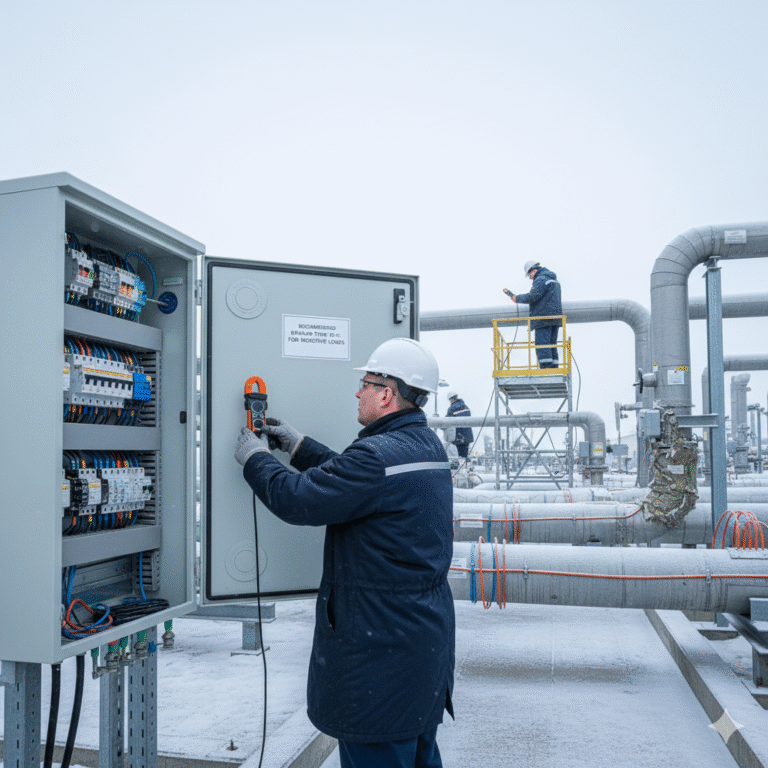
Many winter-related failures occur during shutdown rather than normal continuous operation.
While a system is operating, fluid movement and process heat may keep internal temperatures above freezing.
After shutdown, these protective effects can disappear.
Stagnant liquid gradually loses heat to the surroundings and may eventually freeze.
Before Shutdown
Operators should identify equipment and piping that require winter protection.
Depending on the process and equipment design, appropriate measures may include:
- Draining residual liquid
- Using approved purging and drying procedures
- Maintaining heat tracing
- Providing continuous circulation
- Preserving minimum equipment temperatures
- Protecting vulnerable instruments and auxiliary connections
These measures must be selected according to the actual process conditions.
Draining is not suitable for every installation, and purging operations require approved procedures, particularly when hazardous materials are involved.
Before Restart
Inspect the system for signs of freezing, abnormal pressure, leakage, damaged insulation, and instrument malfunction.
Confirm that valves move correctly and that flow, pressure, temperature, and level measurements respond consistently.
For pumps and hydraulic equipment, verify the required lubrication and preheating conditions.
A restart should not proceed simply because ambient temperatures have increased.
10. Safe Troubleshooting of Frozen Pipelines and Instruments
A frozen pipeline may contain more hazards than the visible ice blockage.
Ice can isolate sections of a system and allow pressure differences to develop.
When thawing begins, trapped fluid may suddenly move, and pressure conditions can change rapidly.
For this reason, frozen pipelines should never be treated as ordinary blocked piping without evaluating the pressure and process hazards.
Before attempting any thawing operation, verify:
- Process fluid identity and associated hazards
- Potential trapped pressure
- Valve positions and isolation boundaries
- Available pressure relief arrangements
- Equipment and piping material limitations
- Approved thawing and maintenance procedures
Do not use open flames or uncontrolled heating methods on frozen process equipment.
Special precautions are necessary when handling steam, pressurized fluids, flammable materials, toxic chemicals, or equipment that could experience thermal expansion.
After the obstruction has been safely removed, inspect the surrounding pipeline and instrumentation for damage.
The next step is to identify why the freezing occurred.
Common underlying causes include damaged insulation, failed heat tracing, trapped condensate, water accumulation in instrument air tubing, and inadequate shutdown procedures.
Simply restoring flow without correcting the cause may lead to repeated failures.
11. Use Operating Trends to Detect Winter Problems Early
One of the most valuable tools for winter maintenance is trend analysis.
A single measurement may not reveal a developing problem.
However, multiple measurements recorded over time can show clear patterns.
For example, a pipeline may operate normally during the day while its flow rate gradually decreases overnight.
A pump may require slightly higher startup current each morning.
A pneumatic valve may take progressively longer to complete the same movement.
These changes may remain within normal alarm limits at first, but their trends can provide early warnings.
Useful parameters to monitor include:
- Ambient and process temperatures
- Pipeline pressure and differential pressure
- Flowmeter readings
- Motor current
- Pneumatic valve response time
- Instrument air pressure dew point
- Heat tracing circuit condition and pipe temperature
- Cabinet temperature and humidity
- Steam tracing and condensate drainage performance
Combining instrument readings with physical inspection provides a more reliable assessment than relying on isolated data points.
Operators should also record visible condensation, frost patterns, unusual equipment noises, and changes in valve movement.
12. Practical Winterization Inspection Checklist
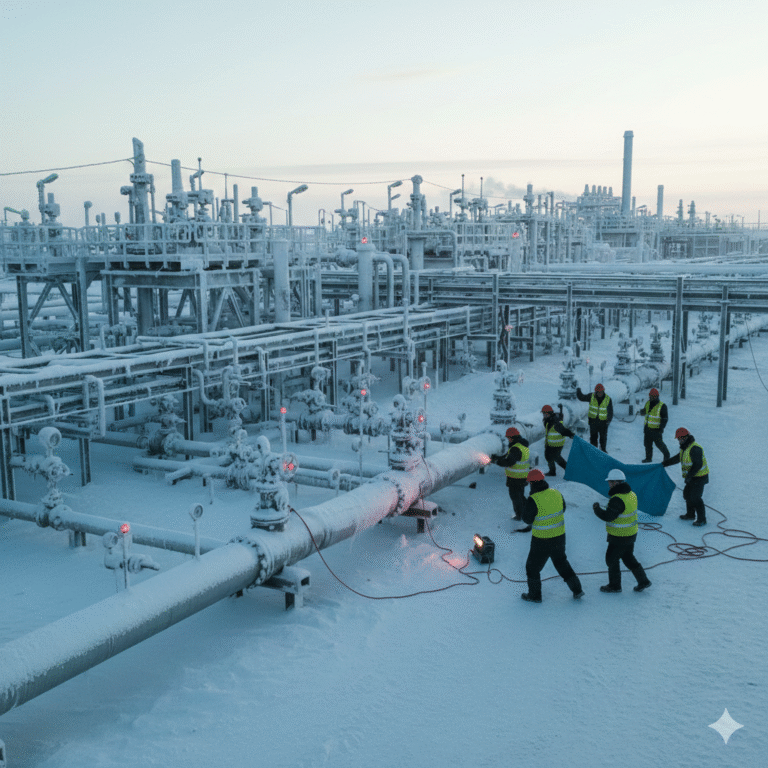
The following checklist can be adapted to the specific requirements of industrial plants.
| Inspection Area | Key Inspection Points |
|---|---|
| Process pipelines | Frozen sections, dead legs, low-point drains, insulation condition |
| Electric heat tracing | Power supply, circuit condition, controller operation, pipe temperature |
| Steam tracing | Steam supply, steam traps, condensate drainage |
| Electromagnetic flowmeters | Residual liquid, freeze protection, sensor and connection integrity |
| DP flowmeters | Impulse lines, manifolds, condensate accumulation |
| Pressure transmitters | Signal response, impulse line protection, pressure consistency |
| Pneumatic valves | Actuator response, air dryness, filter regulators |
| Instrument air | Pressure dew point, air dryer performance, drainage |
| Electrical cabinets | Condensation, heaters, thermostats, cable glands |
| Pumps and hydraulic systems | Oil temperature, viscosity, preheating, auxiliary lines |
| Utility systems | Water circulation, steam distribution, common supply conditions |
| Shutdown equipment | Draining, purging, heating, circulation, restart readiness |
The inspection frequency and acceptance criteria should be established using the facility’s operating conditions, equipment documentation, and risk assessments.
Conclusion: Winterization Begins Before the First Pipeline Freezes
Winter-related equipment failures rarely begin with a completely frozen pipeline or an obvious instrument breakdown.
More often, the warning signs appear gradually.
Flow rates decrease.
Pressure measurements become less responsive.
Pneumatic valves move more slowly.
Pumps require additional starting effort.
Moisture accumulates inside electrical cabinets.
These early symptoms provide opportunities for preventive maintenance before more serious failures occur.
Effective industrial winterization depends on understanding process fluid behavior, verifying heat tracing performance, maintaining dry instrument air, protecting sensitive measurement devices, and preparing equipment for shutdown and restart.
For maintenance engineers and instrumentation technicians, the most important lesson is to evaluate process measurements and equipment conditions together.
Instruments provide the data. Equipment reveals the operating condition. Effective winter maintenance depends on understanding both.
About the Author
Michael Sun
Sales Manager | Dalian Zero Instrument Technology Co., Ltd.
Dalian Zero Instrument Technology Co., Ltd. supplies industrial flow, level, pressure, and temperature measurement instruments for applications including water treatment, chemical processing, oil and gas, power generation, and industrial utilities.
Website: https://zeroinstrument.com