In modern industrial automation systems, control loops are the core of stable and efficient process control.
Whether in a PLC system or a DCS platform, almost every process parameter — such as flow, pressure, temperature, and level — is maintained through a control loop.
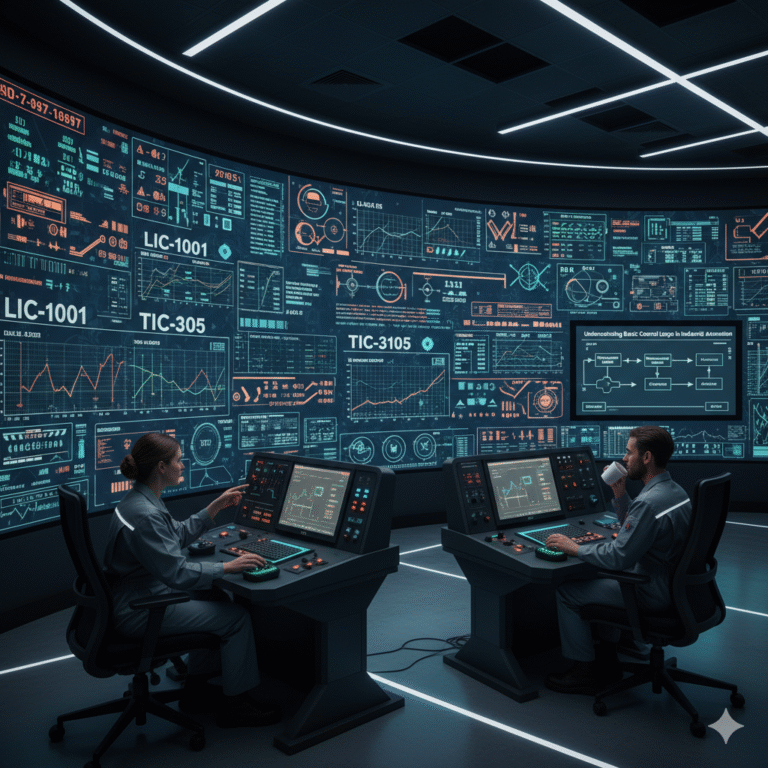
Many people see symbols like LIC-1001, FIC-2002, or TIC-3003 on the screen and feel confused.
In fact, the logic behind a control loop is much simpler than it looks.
This article will help you quickly understand how it works.
What Is a Control Loop?
A control loop is an automatic system used to keep a process variable at the desired target value.
A standard industrial control loop consists of three key parts:
Measuring Element (Sensor / Transmitter)
Controller (PLC / DCS / PID Controller)
Final Control Element (Valve / Pump / VFD)
You can think of it as the human nervous system:
the sensor is the eye
the controller is the brain
the actuator is the hand
This simple structure is the foundation of industrial automation.
Measuring Element: The “Eyes” of the System
The measuring element continuously monitors real-time process conditions.
Typical measured parameters include:
Level
Flow
Pressure
Temperature
Common instrument tags in P&ID drawings include:
LT = Level Transmitter
FT = Flow Transmitter
PT = Pressure Transmitter
TT = Temperature Transmitter
For example:
If the tank level drops to 45%, the level transmitter immediately sends the signal to the control system.
The controller then decides what action should be taken.
Common Field Instruments Used in Control Loops
For industrial automation projects, the most commonly used field devices include:
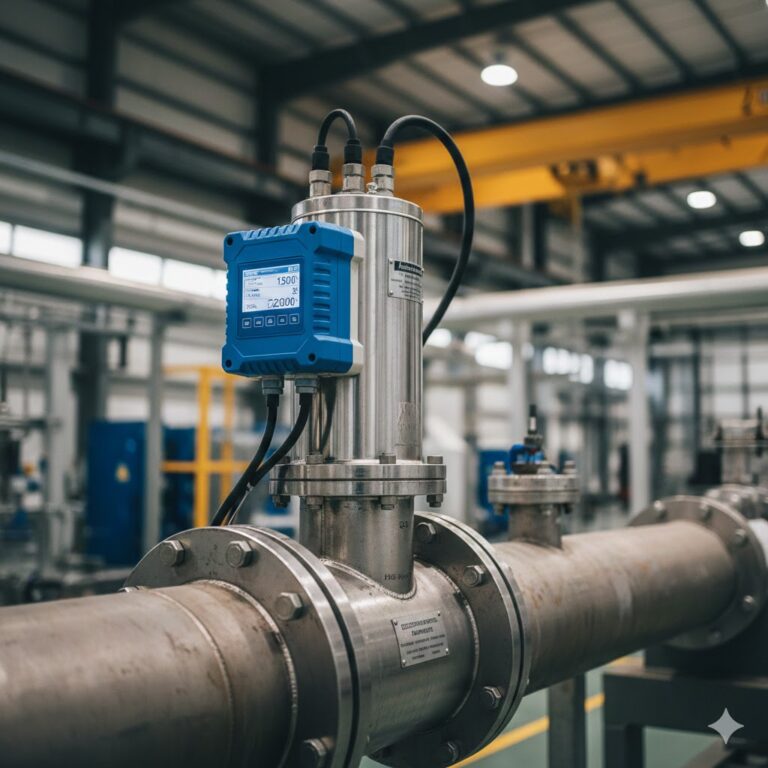
Electromagnetic Flow Meter
Coriolis Mass Flow Meter
Pressure Transmitter
Radar Level Transmitter
Temperature Transmitter
These instruments usually provide outputs such as:
4–20mA
Pulse
RS485 / Modbus
HART
which can be directly connected to PLC or DCS systems.
This is highly relevant for your customers because many overseas buyers specifically ask whether the meter can connect to PLC and read total flow.
Controller: The “Brain” of the System
The controller receives the real-time signal from the transmitter.
It compares the actual value with the target value and automatically calculates the output.
Typical controller tags include:
LIC = Level Indicating Controller
FIC = Flow Indicating Controller
PIC = Pressure Indicating Controller
TIC = Temperature Indicating Controller
The controller’s main task is:
Compare actual value with target value and correct the deviation
This is the basic principle of PID control.
Three Key Variables: SP, PV, and OP
These three terms are the most important concepts in every control loop.
SP — Set Point
The desired target value
Example:
Tank level should remain at 50%
PV — Process Value
The actual measured value
Example:
Current level is 45%
OP — Output
The control action sent to the valve or pump
Example:
Valve opens to 65%
A Simple Real-Life Example
A control loop works exactly like daily life decision-making.
For example:
Target weight = 60 kg (SP)
Actual weight = 62 kg (PV)
Action = eat less / exercise more (OP)
Once customers understand this analogy, they immediately understand how PID works.
This part is very useful for LinkedIn and website engagement.
Final Control Element: The “Hands” of the System
The final control element performs the controller’s command.
Typical devices include:
control valves
motorized valves
pumps
VFD drives
For example:
When liquid level is low, the system may:
open the inlet valve
increase pump speed
This is how the process returns to the target value.
Why Is a Control Loop Important?
A properly designed control loop helps the plant achieve:
stable product quality
reduced manual operation
lower energy consumption
improved process safety
longer equipment life
For example:
Poor level control may lead to:
tank overflow
pump dry running
process shutdown
This section is especially good for customer conversion.
Need Instruments for Your PLC / DCS Control System?
We provide complete industrial instrumentation solutions for automation control loops, including:
electromagnetic flow meters
mass flow meters
pressure transmitters
radar level transmitters
temperature instruments
4–20mA / RS485 / pulse output solutions
For project inquiries and technical support, please contact us.