
If you still think a flow meter is just an “industrial water meter” that only measures flow rate, you may be missing the biggest transformation happening in industrial instrumentation.
Today’s flow meters are evolving from simple measurement devices into intelligent industrial assets. They are becoming connected, self-diagnosing, and increasingly integrated with automation systems, cloud platforms, and artificial intelligence.
The future of flow measurement is not only about measuring how much fluid is flowing.
It is about understanding processes, predicting problems, and helping industries operate more efficiently.
1. Ethernet-APL Will Connect Flow Meters to the Digital Plant
One of the biggest challenges in process industries has always been field-level communication.
Large facilities such as oil refineries, chemical plants, and LNG terminals may contain thousands of instruments distributed across several kilometers. Traditional communication methods often have limitations in terms of bandwidth, distance, and diagnostic capability.
Ethernet-APL (Advanced Physical Layer) is changing this situation.
Simply speaking, Ethernet-APL brings industrial Ethernet communication directly to field instruments.
Compared with traditional fieldbus technologies, Ethernet-APL provides:
- High-speed communication
- Long-distance transmission
- Power and data transmission through a single cable
- Support for hazardous area applications
This means modern flow meters can transmit not only flow values, but also:
- Device status information
- Diagnostic data
- Maintenance recommendations
- Process information
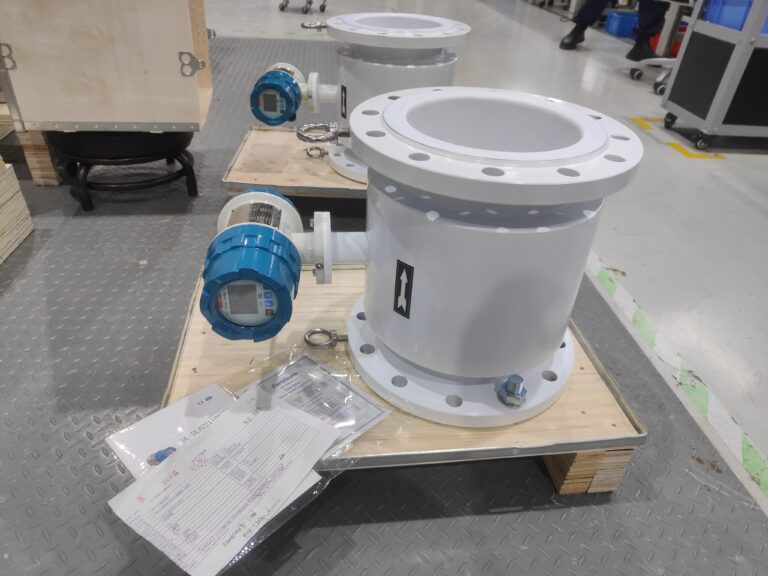
The flow meter is no longer an isolated instrument.
It becomes an intelligent node inside the industrial network.
2. AI Is Making Flow Meters Smarter
Once measurement data becomes available, the next question is:
What can we do with this data?
The answer is artificial intelligence.
AI is changing the role of industrial instruments. Instead of simply measuring and transmitting data, future flow meters will increasingly support intelligent analysis and decision-making.
Several important applications are already developing.
Predictive Maintenance
Traditional maintenance follows a simple rule:
“The instrument fails, then we repair it.”
This approach can lead to unexpected downtime and production losses.
With advanced diagnostics and AI-based analysis, flow meters can continuously monitor their own condition.
They can identify:
- Sensor performance changes
- Signal instability
- Abnormal operating conditions
- Potential equipment problems
Maintenance can then be scheduled before failure occurs.
The industry is moving from:
Reactive maintenance → Predictive maintenance
Intelligent Performance Monitoring
In real industrial applications, measurement accuracy can be affected by many factors:
- Temperature changes
- Pressure variations
- Fluid property changes
- Gas bubbles
- Installation conditions
Future intelligent flow meters will use advanced algorithms to analyze operating conditions and identify measurement deviations.
AI will not replace engineering calibration, but it can help engineers detect problems earlier and make better decisions.
3. Digital Twins Will Change How Flow Meters Are Managed
A digital twin creates a virtual representation of a physical device or process.
For flow measurement systems, digital twins can combine:
- Instrument data
- Process information
- Historical operating records
- Simulation models
Engineers can use digital twins to understand equipment behavior without waiting for real-world failures.
For example:
Before changing process conditions, engineers can simulate:
- Different flow rates
- Temperature changes
- Pressure fluctuations
- Equipment performance
This reduces risk and improves plant reliability.
4. Future Flow Meters Will Become More Application-Specific
The future development of flow measurement will not only focus on communication and software.
The sensor technology itself will continue improving.
Different industries will require specialized solutions.
Electromagnetic Flow Meters
Future electromagnetic flow meters will focus on:
- Better diagnostic functions
- Lower power consumption
- More accurate empty-pipe detection
- Improved electrode monitoring
Coriolis Mass Flow Meters
Future Coriolis meters will continue improving:
- Accuracy
- Compact design
- Pressure loss reduction
- Multi-variable measurement capability
Ultrasonic Flow Meters
Ultrasonic technology will expand in:
- Large pipeline measurement
- Non-invasive applications
- Water management
- Energy monitoring
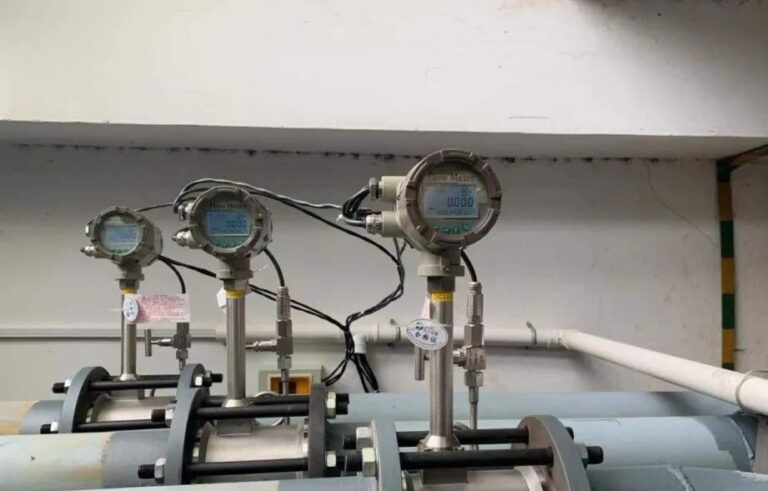
Vortex Flow Meters
Advanced signal processing and intelligent algorithms will improve performance in:
- Steam measurement
- Gas applications
- Variable operating conditions
5. Flow Meters Will Become Part of Autonomous Industrial Systems
Looking ahead, flow meters will not work alone.
They will communicate with:
- Control valves
- Pumps
- PLC systems
- DCS platforms
- Cloud-based monitoring systems
The future industrial process will become more connected.
For example:
A flow meter detects abnormal flow behavior.
The system analyzes the cause.
The control system adjusts operating conditions.
Maintenance teams receive an early warning.
The entire process becomes faster, safer, and more efficient.
6. The Role of Engineers Will Become More Important
As technology becomes more advanced, instrument selection will become more complex.
In the past, choosing a flow meter mainly depended on:
- Pipe size
- Flow range
- Medium type
- Pressure and temperature
In the future, engineers will also need to consider:
- Communication protocols
- Cybersecurity
- Data management
- Predictive maintenance requirements
- Integration with automation systems
A flow meter is no longer just a device installed on
Conclusion: The Flow Meter Is Becoming an Intelligent Industrial Asset
The future of flow meters is not simply about higher accuracy.
It is about connectivity, intelligence, and integration.
Ethernet-APL provides the communication foundation.
AI provides advanced analysis.
Digital twins provide better understanding of industrial processes.
Together, these technologies are transforming flow meters from traditional measuring instruments into intelligent industrial partners.
The next generation of flow meters will not only tell us:
“How much fluid is flowing?”
They will help us understand:
“Why is it flowing this way, what may happen next, and how can we improve the process?”