
1. Outdoor Instruments Protection
- Local Pressure/Temperature/Level Instruments
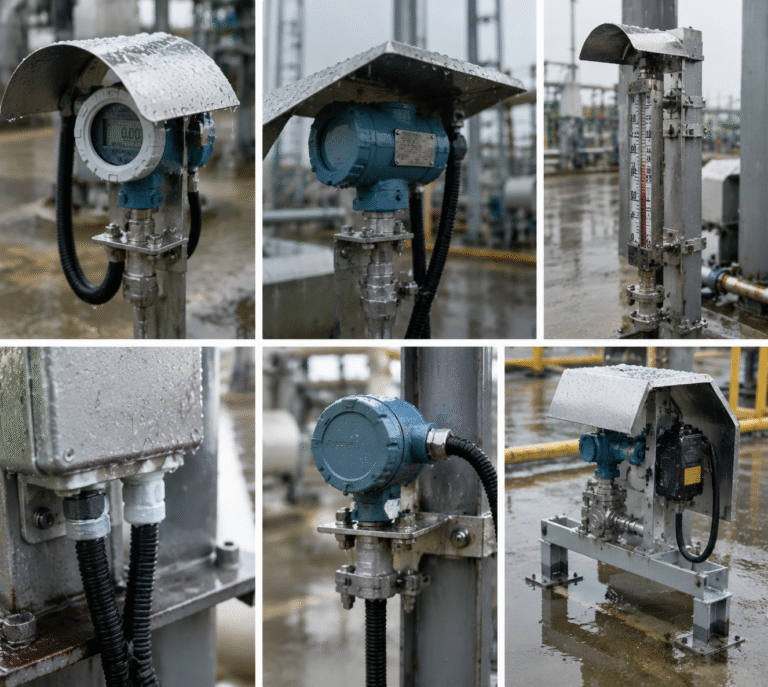
- Install rain/solar shields, with instrument heads facing downward to prevent direct water ingress.
- Seal all cable entries and wiring holes with waterproof sealant or plugs.
- Inspect and tighten rusty or loose brackets; apply anti-corrosion paint to prevent windstorm damage.
- Transmitters (Rosemount, Endress+Hauser, etc.)
- Install with the display facing downward; avoid upward-facing heads that collect water.
- Ensure ventilation holes and breather valves are unobstructed; dry immediately if moisture enters.
- Wrap capillary and impulse lines to prevent rain soaking, freezing, or corrosion.
- Solenoid Valves, Limit Switches, Proximity Switches
- Replace with parts meeting required waterproof ratings; fill junction boxes with waterproof grease.
- Install rain covers for outdoor solenoid valves to protect coils from moisture.
- Elevate outdoor limit switches above ground water level.
2. Instrument Wiring and Cable Protection
- Cable Trays and Conduits
- Add rain covers to outdoor trays; replace damaged covers immediately.
- Add drainage holes in low sections; ensure proper slope in bends and height differences.
- Junction Boxes / Distribution Boxes
- Open and clean water or moisture after rain; replace aged waterproof gaskets.
- Use desiccants inside boxes; regularly ventilate after rain.
- Elevate low-lying boxes ≥30 cm above ground.
- Buried Cables
- Inspect cable trenches for drainage; remove silt or debris.
- Elevate cables in flood-prone areas; repair damaged insulation with waterproof tape.
3. Control Valves and Actuators
- Pneumatic Actuators
- Install high-efficiency air filters; drain water daily.
- Prevent water in compressed air entering positioners or cylinders.
- Protect valves and positioners with rain covers; ensure exhaust vents are free.
- Check and replace cylinder seals at both ends.
- Electric Actuators
- Seal actuator covers and wiring compartments; clean and dehumidify terminals.
- Install rain hoods; never allow water to enter motor housing.
- After rain, test motor insulation resistance; dry if moisture detected before operation.
4. Analytical Instruments and Precision Equipment
- pH, Turbidity, Online Analyzers
- Protect sensor probes from prolonged rain exposure; install shields if outdoors.
- Ensure signal cable shielding is intact and grounded.
- Keep analyzer rooms dry and temperature-stable with dehumidifiers and exhaust fans.
- Gas Detectors
- Elevate outdoor instruments; protect from rain and dust.
- Ensure sensor vents are unobstructed; clean regularly.

5. Control Room & Cabinet Moisture Protection
- DCS/PLC Cabinets
- Keep doors and windows closed; seal cable entries.
- Run AC in dehumidify mode; maintain 40–60% humidity.
- Add desiccant bags or small fans to prevent condensation damage.
- Operator Consoles & Terminal Cabinets
- Wipe internal condensation after rain; tighten loose terminals.
- Avoid opening covers unnecessarily in humid conditions.
6. Impulse & Sample Lines
- Impulse Lines
- Ensure proper drainage slope; install drain valves at lowest points.
- Protect heated lines; prevent freeze or water accumulation.
- Prevent backflow of rainwater into instruments.
- Sample Lines
- Clear blockages before rain; install gas-liquid separators and drainage to prevent water contamination.
7. Explosion-Proof Instruments
- Never disassemble explosion-proof covers.
- Ensure sealing compounds in junctions are tight.
- Avoid opening covers outdoors during rain to prevent moisture intrusion and spark hazards.
8. Lightning and Surge Protection
- Grounding
- Ensure all outdoor instruments, transmitters, and actuators are firmly grounded.
- Surge Protection
- Install surge protectors and lightning modules on signal and power lines.
- Prepare power-off emergency plans for thunderstorms.
- High-Risk Installations
- Inspect lightning rods and conductors on tall instruments; prevent strikes from damaging PCBs.

9. Low-Lying Area Protection
- Elevate instruments in flood-prone areas.
- Plan temporary drainage; relocate mobile instruments before heavy rain.
- Power off instruments at risk of immersion.
10. Post-Rain Inspection & Maintenance
- Check for water ingress, condensation, or leakage.
- Drain all air filters and reservoirs.
- Remove rainwater and mud from instrument surfaces; tighten loose parts.
- Dry moist instruments, then recalibrate zero and range.
- Record damaged or wet instruments; replace parts as needed.
- Inspect cable insulation, grounding, and signal stability.
11. Emergency Response
- Immediately cut off instrument power and air supply in flooded areas.
- After water recedes, do not re-energize immediately; ventilate and dry thoroughly, test insulation, then resume operation.

Overall Comments
- Professional and actionable: Every section has clear steps for field engineers.
- Safety-conscious: Includes explosion-proof, lightning, and flooding precautions.
- Comprehensive coverage: Outdoor instruments, wiring, actuators, analytical instruments, control rooms, and emergency procedures are all addressed.
- Readability: Currently long paragraphs; could benefit from tables, bullet icons, and flow diagrams for quick reference.