When selecting a flow meter, many engineers and buyers face the same question:
Should I choose an electromagnetic flow meter or a Coriolis mass flow meter?
Some people think:
“Magnetic flow meters are cheaper, so they must be the better choice.”
Others believe:
“Coriolis flow meters are more accurate, so they are always the best option.”
But the truth is not that simple.
The correct choice depends on:
What type of medium you are measuring
Required accuracy
Pipe size
Application purpose
Budget requirements
In this article, we will explain the key differences between magnetic flow meters and Coriolis mass flow meters, and help you select the right solution for your application.
1. What Are Magnetic Flow Meters and Coriolis Mass Flow Meters?
Magnetic Flow Meter: Measuring Flow Velocity
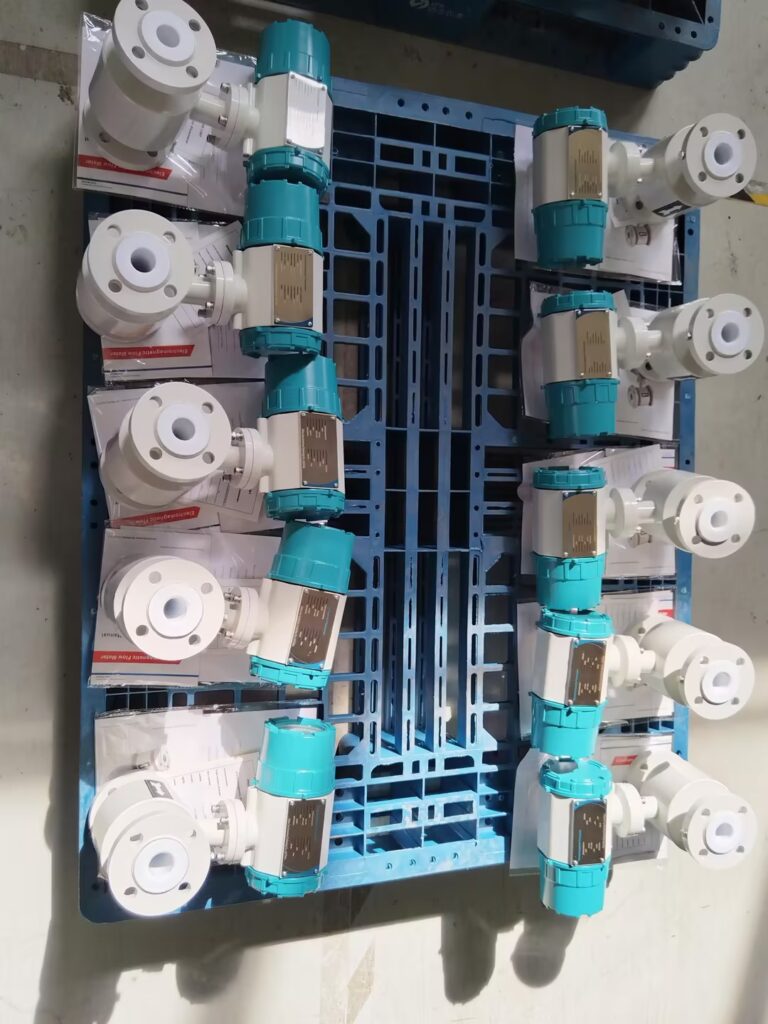
An electromagnetic flow meter (also called a magnetic flow meter) works based on Faraday’s Law of Electromagnetic Induction.
In simple terms:
When a conductive liquid passes through a magnetic field, it generates a voltage signal. This signal is proportional to the velocity of the liquid.
The flow meter measures:
Liquid velocity → Converted into volumetric flow rate
Typical outputs include:
4-20 mA
Pulse output
RS485 / Modbus communication
Magnetic flow meters have no moving parts, which makes them reliable and low maintenance.
Coriolis Mass Flow Meter: Direct Mass Measurement
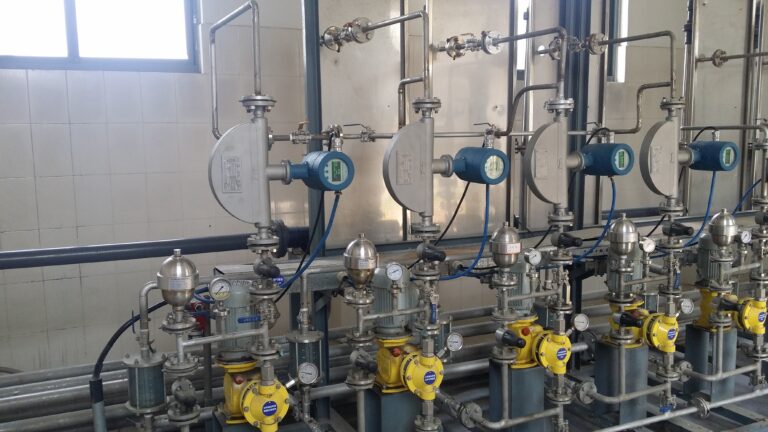
A Coriolis mass flow meter works by detecting the Coriolis effect generated inside vibrating measurement tubes.
Unlike magnetic flow meters, it directly measures:
Mass flow rate
For example:
kg/h
t/h
It can also provide additional measurements such as:
Density
Temperature (depending on model)
Because it directly measures mass, Coriolis flow meters are widely used in applications requiring accurate material balance and custody transfer.
2. When Should You Choose a Magnetic Flow Meter?
Magnetic flow meters have several important advantages.
① Cost-Effective Solution for Large Pipe Sizes
Compared with Coriolis flow meters, electromagnetic flow meters are much more economical, especially for large pipelines.
For applications such as:
Water treatment
Municipal water supply
Cooling water systems
where pipe sizes can reach DN200, DN500, or larger, magnetic flow meters provide excellent cost performance.
② Excellent Performance for Conductive Liquids
Magnetic flow meters are ideal for conductive liquids, including:
Water
Wastewater
Sludge
Acid and alkaline solutions
Pulp and slurry
With proper liner and electrode selection, they can handle many corrosive and abrasive applications.
Common materials include:
PTFE / PFA liner for corrosive chemicals
Rubber liner for wastewater and slurry
Stainless steel or special alloy electrodes for different media
③ Almost No Pressure Loss
Because magnetic flow meters have no obstruction inside the measuring tube:
No moving parts
No additional pressure loss
Low maintenance requirements
This makes them very suitable for continuous industrial operation.
Limitations of Magnetic Flow Meters
The biggest limitation is:
They can only measure electrically conductive liquids.
They are not suitable for:
Oil
Gasoline
Most hydrocarbons
Pure deionized water
Non-conductive liquids
For these applications, another measurement technology should be considered.
3. When Should You Choose a Coriolis Mass Flow Meter?
Coriolis flow meters are selected when accuracy and direct mass measurement are critical.
① Direct Mass Flow Measurement
Because Coriolis meters directly measure mass flow, they are widely used for:
Custody transfer
Precise batching
Chemical dosing
Process control
Examples:
Fuel measurement
Chemical production
Pharmaceutical processes
Food ingredient mixing
② Suitable for Various Types of Fluids
Coriolis flow meters can measure many different media, including:
Conductive liquids
Non-conductive liquids
High-viscosity fluids
Some gases
Applications include:
Oil
Chemicals
Food products
Special process fluids
However, proper selection is still required for applications involving:
Excessive gas bubbles
High solid concentration
Extreme viscosity
③ High Measurement Accuracy
Coriolis flow meters can achieve very high accuracy.
Typical industrial performance:
±0.1%
±0.2%
depending on model and operating conditions.
This makes them suitable for applications where even small measurement errors can create significant economic impact.
4. Limitations of Coriolis Flow Meters
The main disadvantages are:
Higher Cost
Coriolis flow meters are generally much more expensive than magnetic flow meters.
For large pipe sizes, the cost increases significantly.
Higher Installation Requirements
Because the measurement principle depends on tube vibration, installation conditions are important.
Attention should be paid to:
External vibration
Pipe support
Mechanical stress
Proper installation
Incorrect installation may affect measurement stability.
5. Magnetic Flow Meter vs Coriolis Mass Flow Meter Comparison
Comparison
Magnetic Flow Meter
Coriolis Mass Flow Meter
Measuring Principle
Electromagnetic induction
Coriolis effect
Measurement Type
Volumetric flow
Mass flow
Suitable Media
Conductive liquids
Liquids and gases
Conductivity Requirement
Required
Not required
Accuracy
Typically ±0.5%
Typically ±0.1% or better
Pressure Loss
Almost zero
Some pressure loss
Moving Parts
None
None
Large Pipe Application
Excellent
Usually expensive
Maintenance
Low
Low
Cost
Economical
Higher
Typical Applications
Water, wastewater, chemicals
Oil, gas, food, pharmaceuticals
6. How to Choose the Right Flow Meter?
Remember these three simple rules.
Rule 1: Check the Medium
Choose a magnetic flow meter for:
Water
Wastewater
Slurry
Acid and alkaline liquids
Consider a Coriolis flow meter for:
Oil
Fuel
Chemicals
Non-conductive liquids
Gas measurement
Rule 2: Check Your Measurement Purpose
For:
General process monitoring
Water management
Flow control
A magnetic flow meter is usually enough.
For:
Trade settlement
Accurate dosing
Production balance
A Coriolis mass flow meter is usually the better choice.
Rule 3: Consider Pipe Size and Budget
Large pipeline applications:
DN200 and above + water applications
→ Magnetic flow meter is usually the most economical solution.
Small pipe applications with complex fluids:
→ Coriolis mass flow meter may provide better value.
Final Thoughts
Choosing a flow meter is not simply about selecting the most expensive or most accurate instrument.
The best solution depends on:
What you are measuring
How accurate the measurement needs to be
Your installation conditions
Your budget
A properly selected flow meter can provide years of reliable operation and reduce unnecessary maintenance costs.
If you are unsure which flow meter is suitable for your application, provide us with:
Medium type
Pipe size
Flow range
Temperature
Pressure
Required output signal
Our engineers can recommend the most suitable flow measurement solution.