Choosing the wrong cable or conduit in hazardous areas doesn’t just affect signal quality — it can lead to system failure, costly downtime, or even safety risks.
In environments such as oil & gas, chemical plants, and power stations, proper selection is critical.
This guide will help you make the right engineering decisions — not just list specifications.
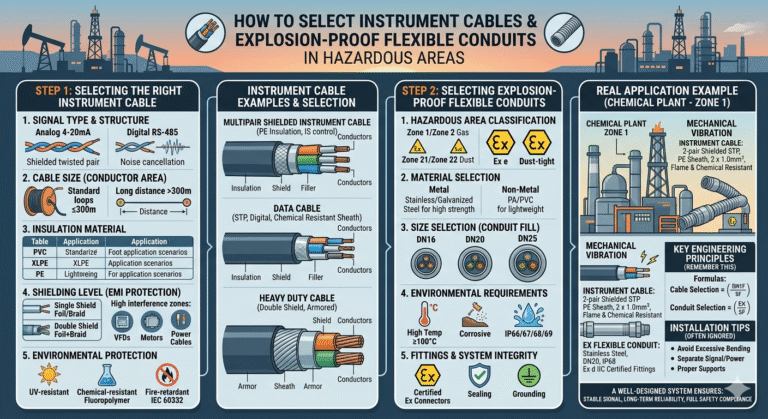
Step 1: Selecting the Right Instrument Cable
Instrument cables are used to transmit low-voltage signals in control and monitoring systems. The key is not just “what cable”, but what fits your actual working condition.
1. Signal Type Determines Cable Structure
Analog Signals (4–20 mA, 0–10 V)
Highly sensitive to electromagnetic interference (EMI)
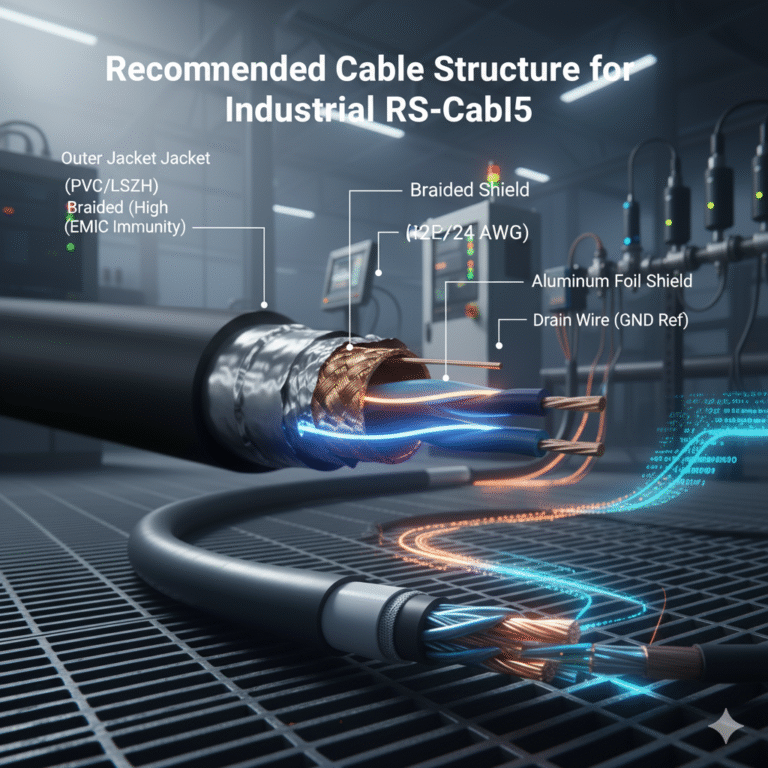
Recommended: Shielded cable (foil or braid)
👉 Best practice: Always use shielding in industrial environments — even if interference seems low.
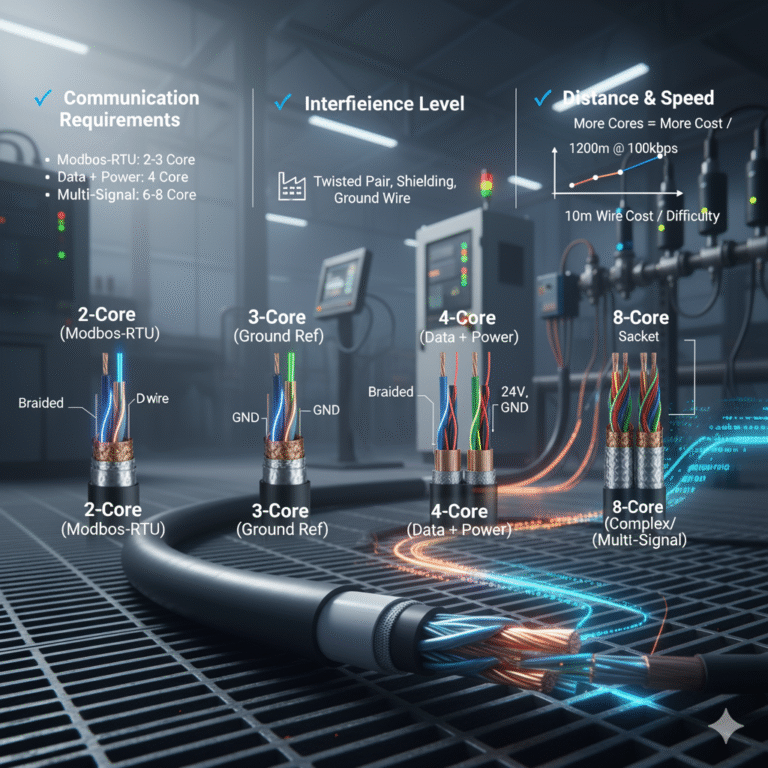
Digital Signals (RS-485, PROFIBUS, Modbus)
Require stable data transmission
Recommended: Shielded twisted pair (STP)
👉 Twisted pair structure helps cancel noise, ensuring communication stability.
2. Cable Size (Don’t Overspec — Don’t Underspec)
Practical Engineering Rule:
Standard loops (≤300 m): 0.75–1.0 mm² is sufficient
Long distance (>300 m): Use larger conductor to reduce voltage drop
👉 Oversizing increases cost without benefit; undersizing leads to signal loss.
3. Insulation Material Selection
Material
When to Use
PVC
General industrial environments
XLPE
Higher temperature & mechanical strength
PE
Long-distance transmission (low capacitance)
👉 If signal stability over long distance matters → choose PE insulation
4. Shielding Level (Critical in Real Projects)
Single Shield (Foil or Braid): Medium interference
Double Shield (Foil + Braid): High EMI environments
👉 Typical high-interference areas:
Near VFDs (variable frequency drives)
Motor control centers
High-power cables
5. Environmental Protection
Always match cable to environment:
Outdoor → UV-resistant sheath
Chemical plant → corrosion-resistant (e.g. fluoropolymer)
Fire risk → IEC 60332 flame-retardant
👉 Environment often matters more than signal type.
6. Standards & Certification
Ensure compliance with:
IEC / UL / CSA standards
Local standards (e.g. GB/T 9330)
👉 In hazardous areas: Use cables compliant with IEC 60079 requirements (Ex applications)