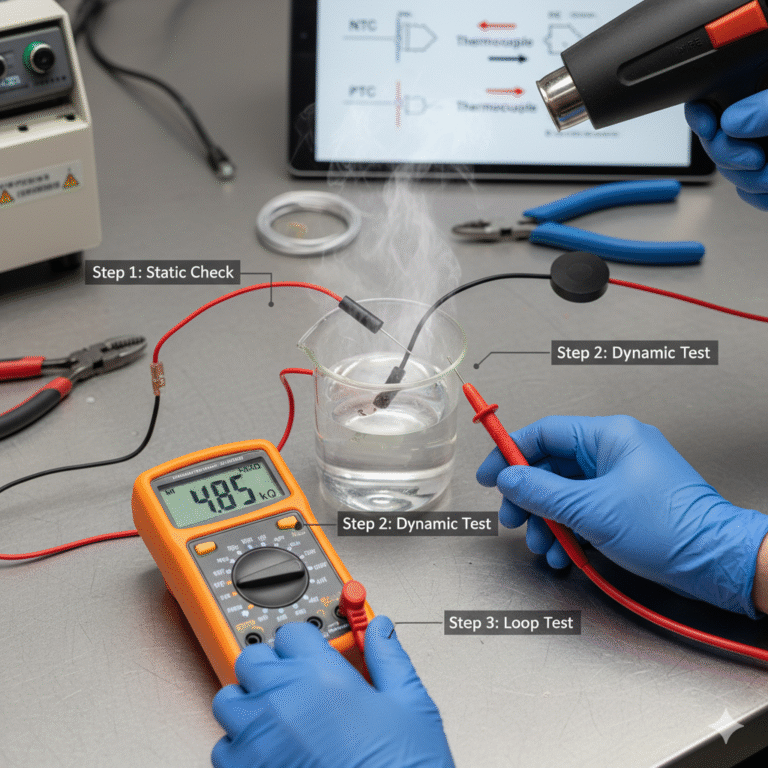
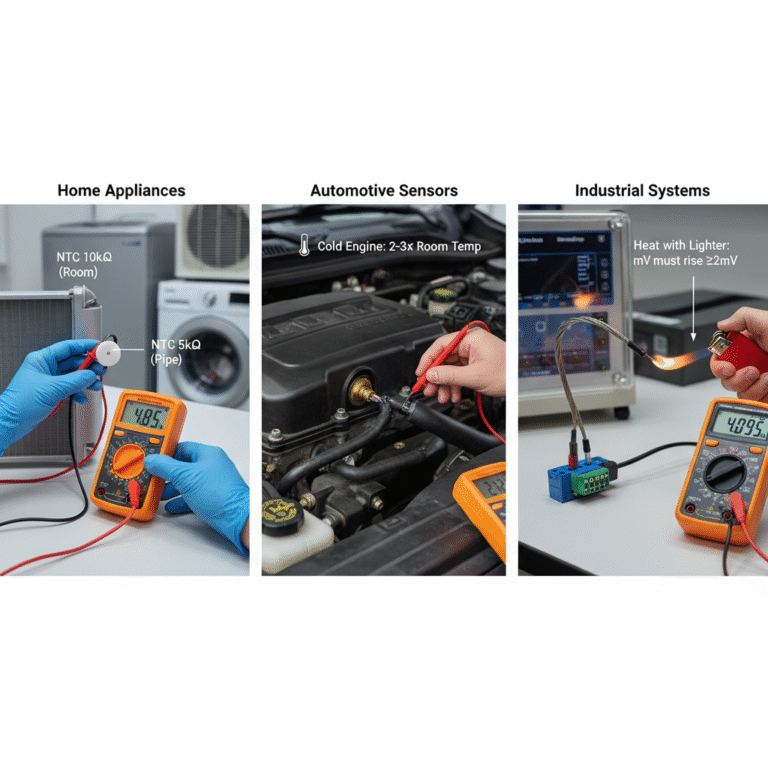
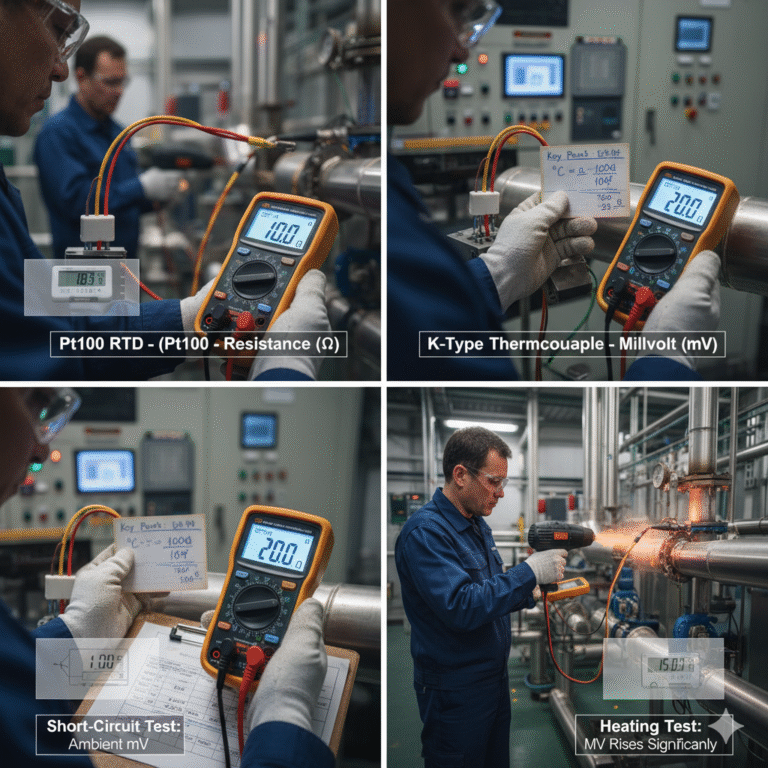
How to Check If a Temperature Sensor Is Faulty (Practical Guide for Engineers) / Instrumentation Introduction: A Hidden Problem That Affects System AccuracyIn many industrial applications, temperature sensors play a critical role in process control.However, a faulty sensor is not always immediately obvious — it can lead to:Inaccurate measurementsUnstable system controlEquipment damage or shutdownThis guide will help you quickly identify whether a temperature sensor is working properly using simple and practical methods. Common Types of Temperature Sensors (And Where They Are Used)Before testing, it’s important to understand the sensor type you are using:1. Thermocouple (Type K, J, E, S)Working principle: Seebeck effectTemperature range: approx. -200°C to 2000°CApplication: furnaces, engines, high-temperature processesNote: Requires cold junction compensation 2. RTD (PT100 / PT1000)High accuracy (up to ±0.1°C)Stable and reliableTemperature range: -200°C to 850°CApplication: laboratories, precision control systems 3. Thermistor (NTC / PTC)High sensitivity and fast responseLower costTemperature range: -50°C to 150°CApplication: HVAC, appliances, automotive👉 In air conditioning systems, NTC thermistors are most commonly used Key Principle – Resistance vs TemperatureUnderstanding how resistance changes is essential:NTC sensor → Resistance decreases when temperature increasesPTC sensor → Resistance increases when temperature increases Method 1 – Basic Resistance Check (Most Common Method)Steps:Power off the systemDisconnect the sensorUse a multimeter (resistance mode)Measure at room temperature (~25°C)Example (10K NTC sensor):Normal value: around 10KΩIf measured value is:<1KΩ or >100KΩ → likely damagedDeviation > ±10% → performance degraded Method 2 – Dynamic Temperature Test (Highly Recommended)1. Ice Water Test (0°C)Immerse sensor in ice waterCheck if resistance matches expected valueExample: PT100 ≈ 100Ω at 0°C 2. Hot Water Test (~50°C)Place sensor in warm waterFor NTC:Resistance should drop significantlyExample: 10K NTC → ~3–4KΩ 3. Rapid Change TestUse a heat source (e.g. hair dryer)Observe resistance change👉 Normal behavior:✔ Smooth and continuous change👉 Fault indication:❌ Sudden jumps❌ No change❌ Signal instability Quick 3-Step Diagnosis (Engineer Shortcut)Instead of complex testing, you can quickly check:✔ Step 1: Check resistance at room temperature✔ Step 2: Apply heat/cold → observe change✔ Step 3: Ensure signal is stable and continuous👉 If any step fails → sensor should be replaced Common Failure CausesChemical corrosion (e.g. acid exposure)High temperature damageMoisture ingressMechanical stress or vibrationAging over time Practical Advice (From Real Projects)Always confirm sensor type before testing (NTC vs PT100 vs Thermocouple)Do not rely on resistance value alone — always test dynamic responseIn critical applications, replace sensors periodically as preventive maintenance Need Help Selecting or Replacing a Temperature Sensor?If you’re unsure whether your sensor is suitable for your application, we can help.👉 We provide:Sensor selection support (NTC / PT100 / Thermocouple)Datasheets and wiring guidanceFast delivery for replacement sensorsCompetitive pricing for industrial projectsFeel free to contact us for technical support or quotation. Share This Story, Choose Your Platform! Contact Us Please prove you are human by selecting the house. Request a Quote