
Flow measurement is one of the most important functions in industrial process control. Whether measuring water in a treatment plant, steam in a boiler system, compressed air in a factory, or chemical liquids in a production line, selecting the correct flow meter directly affects measurement accuracy, process efficiency, and operating costs.
Among the most commonly used industrial flow meters are electromagnetic flow meters, vortex flow meters, and ultrasonic flow meters.
Although all three instruments measure flow rate, their operating principles and application limitations are significantly different.
An electromagnetic flow meter is commonly used for conductive liquids. A vortex flow meter is widely applied to steam, gases, and certain liquids. An ultrasonic flow meter is particularly useful when non-invasive measurement or installation without cutting the pipeline is required.
So, which one should you choose?
This guide explains their working principles, technical differences, typical applications, installation requirements, and important selection considerations.
1. How Does an Electromagnetic Flow Meter Work?
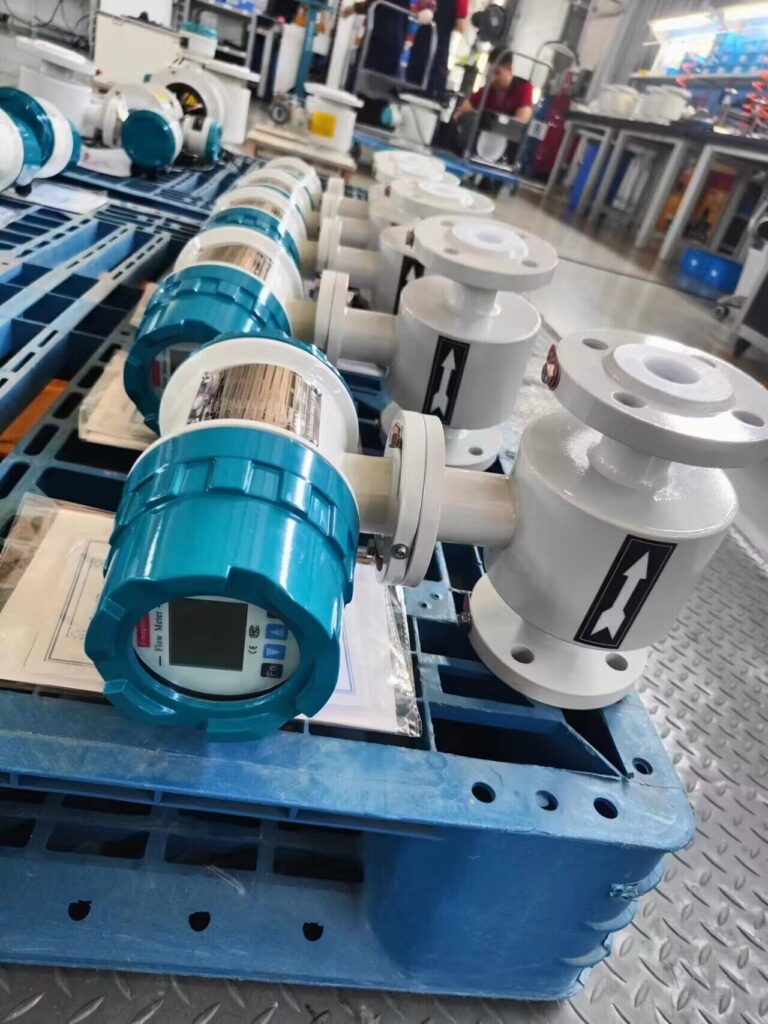
An electromagnetic flow meter, also known as a magnetic flow meter or magmeter, operates according to Faraday’s law of electromagnetic induction.
When an electrically conductive liquid flows through a magnetic field, an electromotive force (EMF) is induced perpendicular to both the magnetic field and the direction of flow.
The flow meter detects this voltage and calculates the average liquid velocity.
The basic relationship is:
E = B * D * v
Where:
- E = Induced electromotive force
- B = Magnetic field strength
- D = Effective distance between electrodes
- v = Average liquid velocity
Once the velocity is determined, the volumetric flow rate is calculated using:
Q = v * A
Where:
- Q = Volumetric flow rate
- v = Average flow velocity
- A = Internal cross-sectional area of the measuring tube
Main Features of Electromagnetic Flow Meters
1. No conventional moving measuring parts
Electromagnetic flow meters do not use mechanical impellers or turbines to measure flow. This reduces mechanical wear and makes them suitable for many demanding liquid applications.
2. Suitable for conductive liquids
Typical applications include:
- Clean water.
- Wastewater.
- Industrial process water.
- Acid and alkali solutions.
- Slurry and mineral processing liquids.
- Food and beverage liquids with sufficient conductivity.
3. Good performance with many particle-containing liquids
Because there are no conventional moving measuring components, electromagnetic flow meters can be suitable for certain slurries and liquids containing suspended solids.
However, electrode selection, liner abrasion resistance, and maintenance requirements must be evaluated.
4. Multiple output options
Common configurations include:
- 4–20 mA.
- Pulse output.
- Frequency output.
- RS485 Modbus RTU.
- HART communication, depending on the model.
What Cannot an Electromagnetic Flow Meter Measure?
Electromagnetic flow meters require sufficient electrical conductivity.
They are generally unsuitable for:
- Most gases.
- Steam.
- Hydrocarbon fuels.
- Non-conductive oils.
- Most organic solvents with insufficient conductivity.
- Ultra-pure water below the instrument’s specified conductivity limit.
The minimum conductivity requirement varies between manufacturers and models. Always check the instrument datasheet against the actual process liquid.
Important Selection Considerations
Electrode Material
Electrode materials must be compatible with the measured liquid.
Common options include:
- Stainless steel 316L.
- Hastelloy.
- Titanium.
- Tantalum.
- Platinum alloys, where available.
Liner Material
The liner protects the measuring tube and must withstand the chemical and mechanical conditions.
Common materials include:
- PTFE.
- PFA.
- Neoprene.
- EPDM.
- Polyurethane.
For example, PTFE or PFA may be suitable for many corrosive chemical applications, while polyurethane can be considered for certain abrasive slurry applications.
The final selection depends on chemical compatibility, temperature, pressure, and abrasion conditions.
Full Pipe Requirement
An electromagnetic flow meter normally requires the measuring tube to remain completely filled with liquid.
If the pipe is partially filled, the measured value may become unstable or incorrect.
Grounding
Correct grounding is important for reliable measurement.
Depending on the pipe material and installation arrangement, grounding rings or other approved grounding methods may be required.
2. How Does a Vortex Flow Meter Work?
A vortex flow meter operates based on the Karman vortex street phenomenon.
When a fluid passes a specially designed obstruction called a bluff body or vortex shedder, alternating vortices are generated downstream.
The frequency of these vortices is related to the fluid velocity.
The flow meter detects the vortex frequency using a suitable sensor and calculates the flow rate.
The basic relationship is:
f = St * v / d
Where:
- f = Vortex shedding frequency
- St = Strouhal number
- v = Fluid velocity
- d = Characteristic width of the bluff body
Within the applicable operating range, the Strouhal number is approximately constant for a given meter design and flow regime.
The velocity can therefore be calculated from the measured vortex frequency.
The volumetric flow rate is then:
Q = v * A
Main Features of Vortex Flow Meters
1. Suitable for liquids, gases, and steam
Depending on the design and operating conditions, vortex flow meters can measure:
- Saturated steam.
- Superheated steam.
- Compressed air.
- Natural gas.
- Nitrogen.
- Other industrial gases.
- Water and certain process liquids.
2. No conventional rotating measuring mechanism
The measurement principle does not depend on an impeller or turbine rotor.
This reduces the need for mechanical moving-part maintenance.
3. Suitable for industrial steam measurement
Vortex flow meters are widely used in boiler systems, steam distribution networks, and industrial energy monitoring.
4. Temperature and pressure compensation options
For steam and gas applications, some models support temperature and pressure compensation to calculate mass flow or standardized flow.
Limitations of Vortex Flow Meters
Vortex flow meters are not suitable for every flow condition.
Their performance can be affected by:
- Very low flow velocity.
- Insufficient Reynolds number.
- Strong pipeline vibration.
- Pulsating flow.
- Poor flow profile.
- Incorrect installation.
- Excessive changes in fluid density or viscosity.
A particularly important issue is the minimum measurable flow rate.
If the fluid velocity is below the instrument’s operating threshold, stable vortex shedding may not occur. The output can become unstable or disappear entirely.
Therefore, selecting a vortex flow meter based only on nominal pipeline diameter is not sufficient.
Vortex Flow Meter for Steam Measurement
Steam measurement is one of the most important applications of vortex flow meters.
However, engineers must distinguish between volumetric flow and mass flow.
A vortex flow meter generally measures the operating volumetric flow rate. To calculate mass flow:
Mass Flow = Volumetric Flow * Density
Where density must correspond to the actual operating conditions.
For saturated steam, density can be determined from the applicable saturated steam properties using pressure or temperature, provided the steam is actually in the saturated state.
For superheated steam, both operating pressure and temperature are required to determine the appropriate density.
A temperature and pressure compensated vortex flow meter can therefore provide a more complete steam measurement solution.
Important selection factors for steam applications:
- Saturated or superheated steam.
- Minimum, normal, and maximum flow rates.
- Operating pressure.
- Operating temperature.
- Steam density.
- Pipeline diameter.
- Required mass flow accuracy.
- Installation space and straight pipe requirements.
3. How Does an Ultrasonic Flow Meter Work?
Ultrasonic flow meters use sound waves to determine fluid velocity.
Unlike electromagnetic and vortex flow meters, certain ultrasonic flow meter designs can measure flow without inserting any components into the pipeline.
There are two common ultrasonic measurement methods: transit-time and Doppler.
3.1 Transit-Time Ultrasonic Flow Meters
Transit-time ultrasonic flow meters measure the difference between the propagation times of ultrasonic signals traveling with and against the direction of flow.
When ultrasonic waves travel downstream, they move with the fluid and arrive slightly earlier.
When they travel upstream, they move against the fluid and arrive slightly later.
The time difference is used to calculate the average flow velocity.
This technology is commonly used for clean or relatively clean liquids with suitable acoustic transmission characteristics.
Typical applications include:
- Clean water.
- Cooling water.
- Circulating water.
- Industrial process water.
- Certain oil applications.
- Temporary pipeline flow measurement.
3.2 Doppler Ultrasonic Flow Meters
Doppler ultrasonic flow meters operate using the frequency shift of ultrasonic signals reflected by suspended particles or gas bubbles in the fluid.
The instrument detects the reflected signal and uses the frequency shift to estimate fluid velocity.
Doppler technology generally requires sufficient suspended particles or bubbles to provide reliable reflections.
Typical applications may include:
- Certain wastewater streams.
- Liquids containing suspended solids.
- Some aerated process liquids.
- Selected industrial slurry applications.
However, not every wastewater or slurry application is suitable.
The concentration, size, and distribution of suspended particles must provide adequate signal reflection.
3.3 Main Features of Ultrasonic Flow Meters
1. Non-invasive measurement
External clamp-on ultrasonic flow meters can be installed on the outside of a pipeline without cutting the pipe or interrupting normal operation.
2. Minimal process interference
Because clamp-on transducers do not contact the liquid, there is no direct obstruction to the flow path.
3. Suitable for pipeline inspection and temporary measurement
Portable ultrasonic flow meters are particularly useful for checking existing flow conditions, conducting energy audits, and comparing measurement results.
4. Flexible installation options
Depending on the design, ultrasonic flow meters are available as:
- Portable clamp-on types.
- Fixed clamp-on types.
- Inline transit-time types.
- Dedicated gas ultrasonic types.
Limitations of Ultrasonic Flow Meters
Ultrasonic flow measurement also has limitations.
For external clamp-on transit-time instruments, performance can be affected by:
- Incorrect pipe material information.
- Incorrect pipe outside diameter.
- Incorrect wall thickness.
- Internal pipe scaling.
- Poor acoustic coupling.
- Air bubbles.
- Excessive suspended solids.
- Incorrect transducer spacing.
- Insufficient straight pipe length.
A pipe that appears suitable from the outside may contain internal deposits or an unsuitable liner that prevents reliable ultrasonic signal transmission.
Therefore, checking pipeline conditions before installation is essential.
4. Electromagnetic vs. Vortex vs. Ultrasonic: Technical Comparison
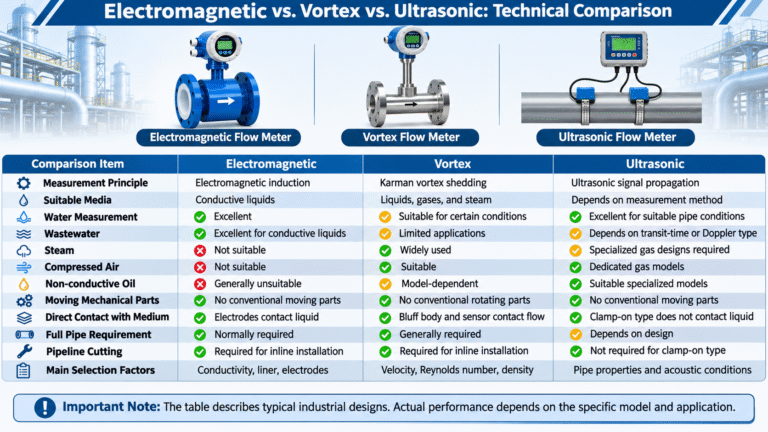
The following table summarizes the main differences between the three flow meter technologies.
| Comparison Item | Electromagnetic | Vortex | Ultrasonic |
|---|---|---|---|
| Measurement Principle | Electromagnetic induction | Karman vortex shedding | Ultrasonic signal propagation |
| Suitable Media | Conductive liquids | Liquids, gases and steam | Depends on measurement method |
| Water Measurement | Excellent | Suitable for certain conditions | Excellent for suitable pipe conditions |
| Wastewater | Excellent for conductive liquids | Limited applications | Depends on transit-time or Doppler type |
| Steam | Not suitable | Widely used | Specialized gas designs required |
| Compressed Air | Not suitable | Suitable | Dedicated gas models |
| Non-conductive Oil | Generally unsuitable | Model-dependent | Suitable specialized models |
| Moving Mechanical Parts | No conventional moving parts | No conventional rotating parts | No conventional moving parts |
| Direct Contact with Medium | Electrodes contact liquid | Bluff body and sensor contact flow | Clamp-on type does not contact liquid |
| Full Pipe Requirement | Normally required | Generally required | Depends on design |
| Pipeline Cutting | Required for inline installation | Required for inline installation | Not required for clamp-on type |
| Main Selection Factors | Conductivity, liner, electrodes | Velocity, Reynolds number, density | Pipe properties and acoustic conditions |
The table describes typical industrial designs. Actual performance depends on the specific model and application.
5. Which Flow Meter Should You Choose for Different Applications?
Understanding the working principle is only the first step.
The most important part of flow meter selection is matching the technology to the actual process conditions.
Application 1: Industrial Water Supply and Circulating Water
For water with sufficient electrical conductivity, electromagnetic flow meters are usually an excellent choice.
They are widely used in:
- Factory water supply systems.
- Cooling water pipelines.
- Municipal water distribution.
- Industrial circulation systems.
- Water treatment plants.
If the pipeline cannot be cut or the process cannot be stopped, a clamp-on ultrasonic flow meter may be a better installation solution.
However, pipe material, wall thickness, internal lining, and signal quality must be verified.
Application 2: Boiler Steam Measurement
For industrial steam pipelines, vortex flow meters are commonly used.
They can measure suitable saturated and superheated steam applications.
Before selecting the instrument, confirm:
- Is the steam saturated or superheated?
- What are the normal and maximum operating pressures?
- What are the operating temperatures?
- What are the minimum, normal, and maximum flow rates?
- Is mass flow measurement required?
- Is temperature and pressure compensation necessary?
If the application requires steam mass flow measurement, the density calculation and compensation method must be properly configured.
Application 3: Existing Pipelines That Cannot Be Shut Down
For old pipelines, temporary measurement, or installations where pipeline modification is difficult, clamp-on ultrasonic flow meters can provide a convenient solution.
Typical applications include:
- Existing water distribution pipelines.
- Cooling water systems.
- Large industrial pipelines.
- Temporary flow surveys.
- Energy consumption assessments.
The major advantage is that the transducers are installed externally.
However, installation suitability must be confirmed before selecting the equipment.
A severely scaled pipeline or unsuitable internal lining may prevent reliable ultrasonic signal transmission.
Application 4: Wastewater, Slurry and Mining Applications
Electromagnetic flow meters are commonly selected for conductive wastewater and slurry applications.
Typical applications include:
- Municipal wastewater.
- Industrial wastewater.
- Mineral slurry.
- Pulp and paper processing.
- Chemical slurry.
- Mining process liquids.
For these applications, material selection is particularly important.
Engineers should evaluate:
- Electrical conductivity.
- Chemical composition.
- Suspended solid concentration.
- Particle size and abrasiveness.
- Electrode corrosion.
- Liner wear resistance.
- Pipe filling conditions.
For highly abrasive slurry, the liner material and mechanical protection may be more important than simply selecting a flow meter with a higher nominal accuracy.
Application 5: Compressed Air Measurement
Compressed air is commonly measured using vortex flow meters or dedicated gas ultrasonic flow meters.
Vortex meters are often selected for industrial compressed air monitoring.
Important parameters include:
- Operating pressure.
- Operating temperature.
- Minimum and maximum flow.
- Pipe diameter.
- Required reference conditions.
- Whether actual or standardized flow is required.
If the output is required in Nm3/h, the reference temperature and pressure must be clearly specified.
Actual volumetric flow and normalized volumetric flow are not interchangeable.
Application 6: Chemical Liquid Measurement
For conductive chemical liquids, electromagnetic flow meters are often a suitable choice.
However, chemical compatibility must be checked carefully.
The electrode and liner materials should be selected according to the chemical composition, concentration, temperature, and operating pressure.
For non-conductive liquids, electromagnetic measurement may not be possible. Other technologies, including suitable ultrasonic or specialized mechanical flow meters, should be evaluated.
6. Flow Meter Selection Matrix
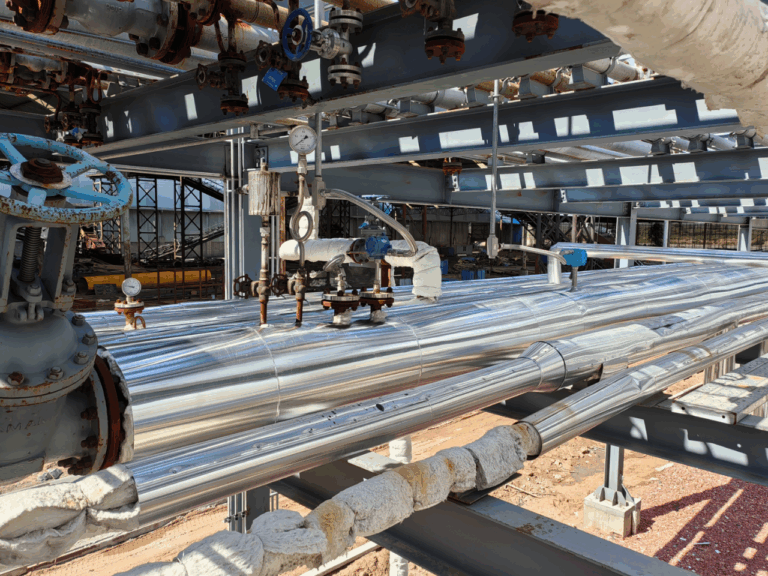
The following table provides a quick reference for common industrial applications.
| Application | Recommended Technology | Important Considerations |
|---|---|---|
| Clean Water | Electromagnetic / Ultrasonic | Conductivity and pipe conditions |
| Wastewater | Electromagnetic | Conductivity, solids and materials |
| Conductive Slurry | Electromagnetic | Abrasion and liner selection |
| Saturated Steam | Vortex | Pressure, temperature and flow range |
| Superheated Steam | Vortex | Density compensation |
| Compressed Air | Vortex / Gas Ultrasonic | Pressure and reference conditions |
| Natural Gas | Vortex / Gas Ultrasonic | Gas properties and operating conditions |
| Non-conductive Oil | Suitable Ultrasonic / Other Technology | Acoustic properties and viscosity |
| Old Pipelines | Clamp-on Ultrasonic | Pipe material and wall thickness |
| Temporary Flow Measurement | Portable Ultrasonic | Installation and signal quality |
| High-Accuracy Water Measurement | Application-dependent | Meter design and calibration |
This is a preliminary selection guide rather than a substitute for detailed engineering calculations.
7. Common Flow Meter Selection Mistakes
Even experienced engineers can encounter measurement problems when important process conditions are overlooked.
Mistake 1: Selecting an Electromagnetic Flow Meter for Non-Conductive Liquids
An electromagnetic flow meter requires sufficient liquid conductivity.
Selecting it for diesel, gasoline, or other non-conductive liquids may result in measurement failure.
Solution: Verify the liquid conductivity against the manufacturer’s minimum requirement.
Mistake 2: Selecting a Vortex Flow Meter Based Only on Pipeline Diameter
A DN100 pipeline does not automatically require a DN100 vortex flow meter.
The actual minimum, normal, and maximum flow rates must be evaluated.
Solution: Calculate the operating velocity and verify the meter’s minimum and maximum flow limits.
Mistake 3: Ignoring Steam Compensation
A vortex flow meter may measure operating volumetric flow correctly while the calculated mass flow remains incorrect because of incorrect density compensation.
Solution: Verify steam conditions and the pressure and temperature compensation configuration.
Mistake 4: Assuming Every Ultrasonic Flow Meter Is Suitable for Wastewater
Transit-time ultrasonic meters generally require suitable acoustic transmission through the liquid.
Doppler meters require sufficient suspended particles or bubbles.
Solution: Select the ultrasonic measurement method according to the actual fluid characteristics.
Mistake 5: Ignoring Installation Conditions
Incorrect straight pipe length, pipeline vibration, poor grounding, and unsuitable transducer mounting can affect measurement performance.
Solution: Follow the specific manufacturer’s installation requirements and check the actual piping layout before ordering.
8. Installation Requirements and Straight Pipe Length
Correct installation is essential for achieving the specified measurement performance.
Different flow meter technologies have different installation requirements.
Electromagnetic Flow Meter Installation
Important considerations include:
- Keep the measuring tube full.
- Avoid installation locations where air accumulates.
- Follow the recommended electrode orientation.
- Provide appropriate grounding.
- Avoid strong electrical interference.
- Ensure adequate straight pipe lengths.
- Check the flow direction.
Vortex Flow Meter Installation
Vortex flow meters are sensitive to flow disturbances.
Important considerations include:
- Install according to the specified flow direction.
- Provide the recommended upstream and downstream straight pipe lengths.
- Avoid excessive pipeline vibration.
- Support the pipeline properly.
- Avoid severe flow disturbances near the meter.
- Follow the manufacturer’s recommendations for reducers, elbows, valves, and other fittings.
Ultrasonic Flow Meter Installation
For clamp-on ultrasonic flow meters:
- Measure the actual pipe outside diameter.
- Confirm wall thickness.
- Identify pipe material.
- Check internal lining.
- Enter the correct liquid properties.
- Apply suitable acoustic coupling compound.
- Install transducers at the calculated spacing.
- Select an appropriate installation location.
Straight pipe length requirements depend on the meter design, upstream disturbances, and required accuracy. Always use the manufacturer’s installation guidelines rather than assuming one universal upstream and downstream distance.
9. Eight Essential Parameters Before Requesting a Flow Meter Quotation
Many buyers initially ask for a quotation using only the pipeline size.
For example:
“Please quote one DN100 flow meter.”
However, pipeline diameter alone is not enough to select a suitable instrument.
Before requesting a quotation, prepare the following information.
| Required Information | Description |
|---|---|
| 1. Measuring Medium | Water, wastewater, steam, air, oil, chemicals, etc. |
| 2. Pipeline Size | DN, actual outside diameter and wall thickness where applicable |
| 3. Operating Pressure | Normal and maximum pressure |
| 4. Operating Temperature | Normal and maximum temperature |
| 5. Flow Range | Minimum, normal and maximum flow rates |
| 6. Fluid Properties | Conductivity, density, viscosity, solids and gas content |
| 7. Installation Conditions | Horizontal, vertical, available straight pipe length, clamp-on or inline |
| 8. Output Requirements | 4–20 mA, pulse, RS485, HART or other communication protocols |
Additional information may be required depending on the technology.
For electromagnetic flow meters:
- Minimum liquid conductivity.
- Electrode material.
- Liner material.
- Required grounding arrangement.
For vortex flow meters:
- Steam type or gas composition.
- Operating density.
- Reynolds number or velocity range.
- Temperature and pressure compensation requirements.
For ultrasonic flow meters:
- Pipe material.
- Outside diameter.
- Wall thickness.
- Internal lining.
- Acoustic conditions.
- Required transducer installation arrangement.
The more complete the technical information, the more accurate the selection and quotation will be.
10. Frequently Asked Questions
Q1: Which flow meter is best for water measurement?
Electromagnetic and ultrasonic flow meters are both suitable for many water applications.
Electromagnetic flow meters are commonly used for conductive water in permanent industrial installations. Clamp-on ultrasonic flow meters are useful when pipeline cutting is not desirable.
Q2: Which flow meter is suitable for steam?
Vortex flow meters are widely used for saturated and superheated steam measurement, provided the flow conditions are within the instrument’s operating limits.
Q3: Can an electromagnetic flow meter measure diesel?
Most conventional electromagnetic flow meters cannot measure diesel because diesel has insufficient electrical conductivity.
A suitable alternative should be selected according to the required accuracy, flow range, and operating conditions.
Q4: Can a clamp-on ultrasonic flow meter measure wastewater?
It depends on the wastewater characteristics and measurement method. Transit-time instruments generally require adequate acoustic transmission, while Doppler instruments require sufficient suspended particles or bubbles.
Q5: Does a vortex flow meter require straight pipe sections?
Yes. Adequate straight pipe sections are normally required to establish a suitable flow profile. The required lengths depend on the meter design and upstream piping configuration.
Q6: Can an ultrasonic flow meter be installed without stopping production?
External clamp-on ultrasonic flow meters can generally be installed without cutting the pipeline or interrupting flow, provided the pipe material and operating conditions are suitable.
Q7: What is the difference between volumetric flow and mass flow?
Volumetric flow measures the volume of fluid passing through a pipeline per unit time. Mass flow measures the mass passing through the pipeline per unit time.
Mass flow is calculated using:
Mass Flow = Volumetric Flow * Density
Density must correspond to the actual operating conditions.
Q8: Which flow meter is best for slurry?
Electromagnetic flow meters are commonly used for conductive slurry applications. Electrode and liner materials must be selected according to the chemical and abrasive characteristics of the slurry.
11. Conclusion
Electromagnetic, vortex, and ultrasonic flow meters are three important technologies in industrial flow measurement.
Each has its own operating principle, advantages, and limitations.
Electromagnetic flow meters are particularly suitable for conductive liquids, including water, wastewater, and many slurry applications.
Vortex flow meters are widely used for steam, compressed air, and other industrial gases, especially when appropriate operating conditions and compensation arrangements are available.
Ultrasonic flow meters provide flexible measurement solutions, particularly when non-invasive installation, temporary measurement, or pipeline modification avoidance is important.
There is no single flow meter that is suitable for every application.
The correct selection depends on the measured medium, flow range, pressure, temperature, fluid properties, pipeline conditions, installation requirements, and output signals.
At Zero Instrument, we supply electromagnetic flow meters, vortex flow meters, ultrasonic flow meters, and other industrial flow measurement instruments for water treatment, chemical processing, power generation, oil and gas, and general manufacturing applications.
Whether you need a magnetic flow meter for wastewater, a vortex flow meter for steam, or a clamp-on ultrasonic flow meter for an existing pipeline, selecting the correct measurement technology is the first step toward reliable industrial flow measurement.
The best flow meter is not necessarily the most expensive one. It is the one that matches the actual process conditions and delivers reliable measurement over the long term.