
Many beginners in industrial automation tend to focus immediately on PLCs, robots, servos, motors, and vision systems—things that seem “high-tech.”
These are, of course, important.
However, in real industrial environments, most problems involve devices not moving, signals fluctuating, motors malfunctioning, modules burning out, or sensors behaving unpredictably. In the end, troubleshooting often comes back to the basic electronic components.
Behind all automated actions, there are power supplies, circuits, signals, drives, isolation, protection, and feedback—and these all rely on the following eight types of components.
Understanding them will make learning PLCs, microcontrollers, motor control, and industrial robots much easier.
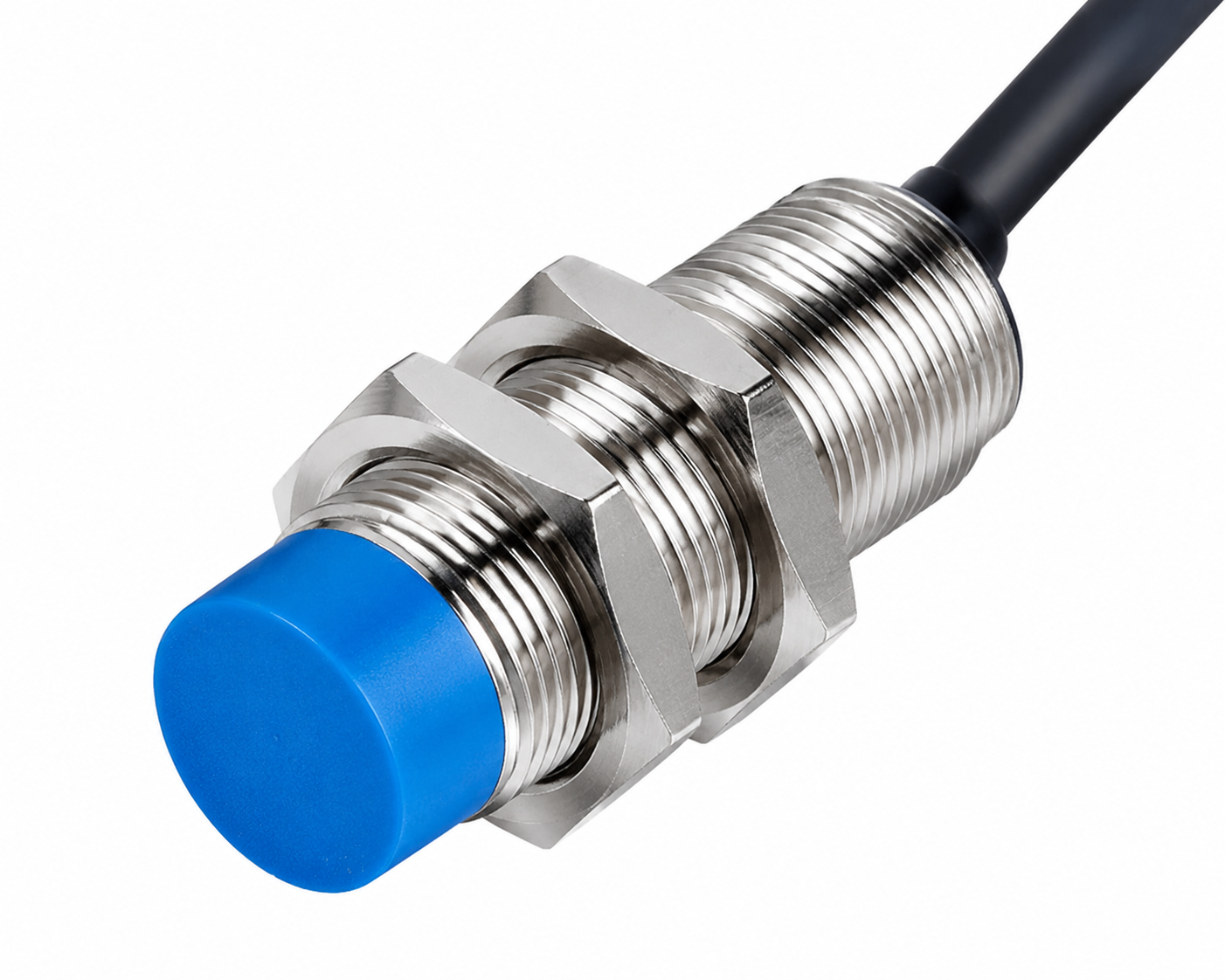
1. Sensors
Sensors convert physical quantities in the field into electrical signals—such as temperature, pressure, liquid level, distance, position, light, or speed.
For an automation system to operate correctly, it first needs to know what is happening on the factory floor. Are the parts in place? Is the temperature too high? Is the pressure sufficient? Has the liquid level reached the limit? Is the device positioned correctly? Sensors provide these signals.
In short, sensors act as the “eyes and ears” of an automated system. Common types include temperature sensors, pressure sensors, proximity switches, photoelectric sensors, infrared sensors, and encoders.
When selecting sensors, don’t just consider whether they can detect a target. Consider detection distance, response speed, accuracy, installation method, output type, and anti-interference ability. Many device instabilities are not due to software errors—they often originate from improper sensor selection or installation.
2. Relays
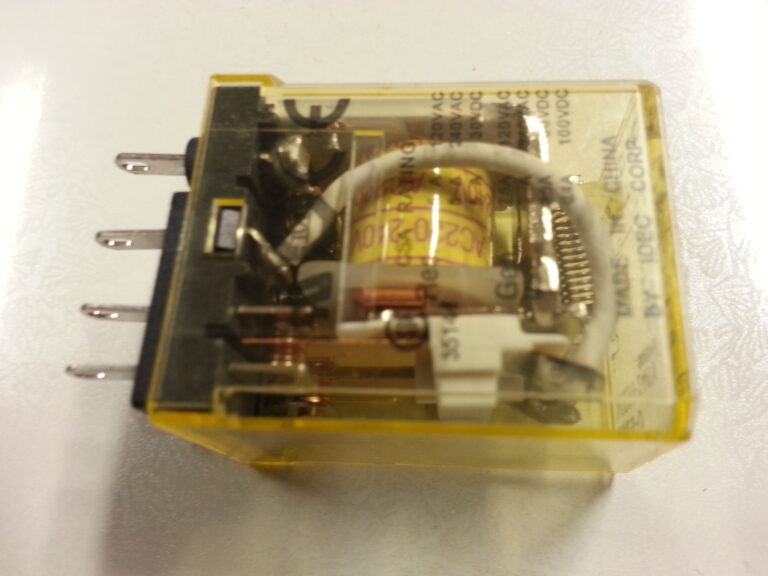
A relay is a switch element that allows a small current to control a larger current or a low-voltage signal to control a high-voltage load.
For example, a PLC output of 24V can trigger a relay to control a 220V lamp, solenoid valve, contactor, or other high-power devices. Relays not only perform on/off switching but also provide electrical isolation, allowing one circuit to control another, often with different voltage or power levels.
By separating the control circuit from the load circuit, safety is improved, and high voltages or currents have less impact on the control system.
Common types include electromechanical relays, solid-state relays, and reed relays. Each has its strengths and weaknesses. For instance, electromechanical relays are simple and intuitive but prone to contact wear. Solid-state relays are suitable for frequent, continuous operation but require attention to heat dissipation and leakage current.
Relays are widely used for start/stop control, interlock protection, alarm outputs, and signal conversion in automation systems.
3. Diodes
A diode is a semiconductor component that allows current to flow in only one direction.
Its most typical use is rectification, converting AC to DC—necessary for many controllers, sensors, and relay modules.
Diodes also serve a protective function. Inductive loads such as relay coils, solenoid coils, or motors can generate high-voltage spikes when power is cut off. Without protection, these spikes may damage control chips or output modules.
A flyback diode is often used to release these reverse-voltage spikes. Common diodes include rectifier diodes for rectification, Zener diodes for voltage regulation, and LEDs for status indication.
4. Capacitors
Capacitors store electrical charge temporarily and release it when needed.
In automation devices, they are often used for filtering, voltage stabilization, energy storage, and anti-interference.
- If the power supply fluctuates, capacitors smooth the voltage.
- On control boards, they can filter high-frequency noise.
- During motor startup, capacitors can provide a burst of energy.
Capacitors often degrade over time. A device may work initially but fail after running for a while, or power may become unstable due to reduced capacitance or bulging capacitors.
Common types:
- Electrolytic capacitors: large capacity, often in power supply circuits
- Ceramic capacitors: small, suitable for high-frequency filtering
- Film capacitors: stable, used in applications requiring high reliability
5. Optocouplers
An optocoupler (also called an optoisolator) uses light to transmit electrical signals.
It consists of a light-emitting device and a photoreceptor. The input converts the electrical signal to light, which travels across an optical barrier and is converted back to an electrical signal at the output—providing electrical isolation.
Optocouplers protect sensitive controllers, PLCs, and microcontrollers from high voltage, high current, variable frequency noise, or motor interference.
They are commonly used in PLC I/O modules, communication interfaces, motor drives, and power control circuits.

6. Transistors
Transistors are semiconductor devices that can amplify signals or serve as switches.
For example, a microcontroller’s output pin may not supply enough current to drive a relay, motor, or buzzer. A transistor can control a larger current with a small input signal—the classic “small signal controls big load.”
Common types: BJT (easy for beginners, used in simple circuits) and FET (used in power control, motor drives, and switch-mode power supplies, with higher efficiency).
Whenever you see terms like “driver circuit,” “switching transistor,” or “MOSFET,” it’s usually related to this category.
7. Inductors
Inductors store electrical energy in a magnetic field and resist sudden changes in current.
They are widely used for filtering, energy storage, and suppressing current fluctuations.
- In switch-mode power supplies, inductors stabilize output.
- In motor drives, they affect current changes and control performance.
- In signal circuits, they help suppress interference.
Common types: air-core inductors, iron-core inductors, and toroidal inductors. Each structure is suited to different frequency ranges, power levels, and losses.
8. Resistors
Resistors limit current, divide voltage, and dissipate energy. They are found in almost every circuit.
Though simple, resistors are crucial:
- Pull-up or pull-down on sensor signals
- Voltage division in circuits
- LED current limiting
- Signal conditioning for analog inputs
Choosing the wrong resistor can cause unstable signals, false triggers, or even damage components.
Common types: fixed, adjustable (potentiometers), and thermistors (resistance varies with temperature for thermal sensing or overheat protection).
When checking resistors in the field, consider power rating, accuracy, temperature coefficient, and operating environment, not just resistance value.

Conclusion
Automation engineers must understand where signals come from, how circuits process them, and what loads are being controlled.
Resistors, capacitors, inductors, diodes, transistors, relays, optocouplers, and sensors may seem basic, but they form the foundation of every automated system.
Mastering these components makes troubleshooting and advanced automation learning much easier.