In industrial automation systems, sensors and instruments need to communicate measurement information to PLCs, DCS systems, and control equipment.
Among all industrial signals, analog signals and digital signals are the two most commonly used signal types.
For beginners in automation and instrumentation, it is sometimes confusing:
What is the difference between analog and digital signals?
Why do most industrial transmitters use 4-20mA signals?
What are DI, DO, AI, and AO in PLC systems?
Which instruments use analog signals and which use digital signals?
Today, we will explain the key differences between analog signals and digital signals, as well as their practical applications in industrial measurement and control systems.
1. What Is a Digital Signal (Switch Signal)?
A digital signal, also called a switch signal, only has two possible states:
ON / OFF
High / Low
1 / 0
In automation systems, digital signals are usually used for simple status detection or equipment control.
For example:
Motor running / stopped
Valve open / closed
Pump start / stop
High-level alarm / low-level alarm
A PLC does not know the exact value of a digital signal. It only recognizes whether the signal exists or not.
Example:
A pressure switch installed on a pipeline:
Pressure < 5 bar → OFF

Pressure ≥ 5 bar → ON
The PLC only receives:
0 or 1
It does not know whether the pressure is 6 bar, 8 bar, or 10 bar.
2. Common Digital Signal Types in PLC Systems
In PLC terminology:
Digital Input (DI)
DI means Digital Input.
It is a signal received by the PLC from field devices.
Typical DI devices include:
Pressure switches
Level switches
Limit switches
Proximity sensors
Flow switches
Relay contacts
Example:
A level switch installed on a storage tank:
Liquid level high → Switch ON

Liquid level normal → Switch OFF
The PLC receives the tank level status through a DI channel.
Digital Output (DO)
DO means Digital Output.
It is a control signal sent from the PLC to external equipment.
Typical DO applications:
Motor start/stop
Solenoid valve control
Alarm activation
Relay control
Example:
PLC sends a DO signal:
DO = ON

↓

Motor starter energized

↓

Motor starts
3. What Is an Analog Signal?
Unlike digital signals, analog signals represent continuously changing values.
Industrial measurement parameters such as:
Pressure
Flow
Temperature
Level
Density
are usually transmitted as analog signals.
Common industrial analog signals include:
4-20mA Current Signal
0-10V Voltage Signal
1-5V Voltage Signal
Among them, 4-20mA is the most widely used signal in industrial instrumentation.
4. Why Is 4-20mA Widely Used in Industry?
Most industrial transmitters use 4-20mA because it has several advantages:
1. Strong Anti-Interference Capability
Current signals are less affected by electrical noise compared with voltage signals.
This makes them suitable for long-distance transmission in industrial plants.
2. Long Transmission Distance
4-20mA signals can normally be transmitted hundreds of meters without significant signal loss.
They are widely used in:
Chemical plants
Oil & gas facilities
Power plants
Water treatment plants
3. Easy Fault Detection
The range starts from 4mA instead of 0mA.
Example:
Pressure transmitter:
Measurement range:
0-10 bar
Signal output:
4mA = 0 bar

12mA = 5 bar

20mA = 10 bar
If the PLC receives:
0mA
it can identify a possible fault:
Cable disconnected
Power failure
Transmitter failure
5. Analog Input (AI) and Analog Output (AO)
In PLC systems:
Analog Input (AI)
AI receives analog signals from field instruments.
Typical AI devices:
Pressure transmitters
Flow meters
Radar level transmitters
Temperature transmitters
Example:
A pressure transmitter:
Pressure transmitter

↓

4-20mA signal

↓

PLC AI module

↓

Pressure value displayed on HMI
Analog Output (AO)
AO sends analog control signals from PLCs to field devices.
6. Examples of Analog Signals in Industrial Instruments
Flow Meter
A flow meter can output:
4-20mA
Pulse output
RS485 Modbus communication
For example:
Electromagnetic flow meter:
0 m³/h

↓

4mA


100 m³/h

↓

20mA
The PLC or DCS system can continuously monitor the flow rate.
Pressure Transmitter
Example:
Range:
0-16 bar
Output:
4mA = 0 bar

20mA = 16 bar
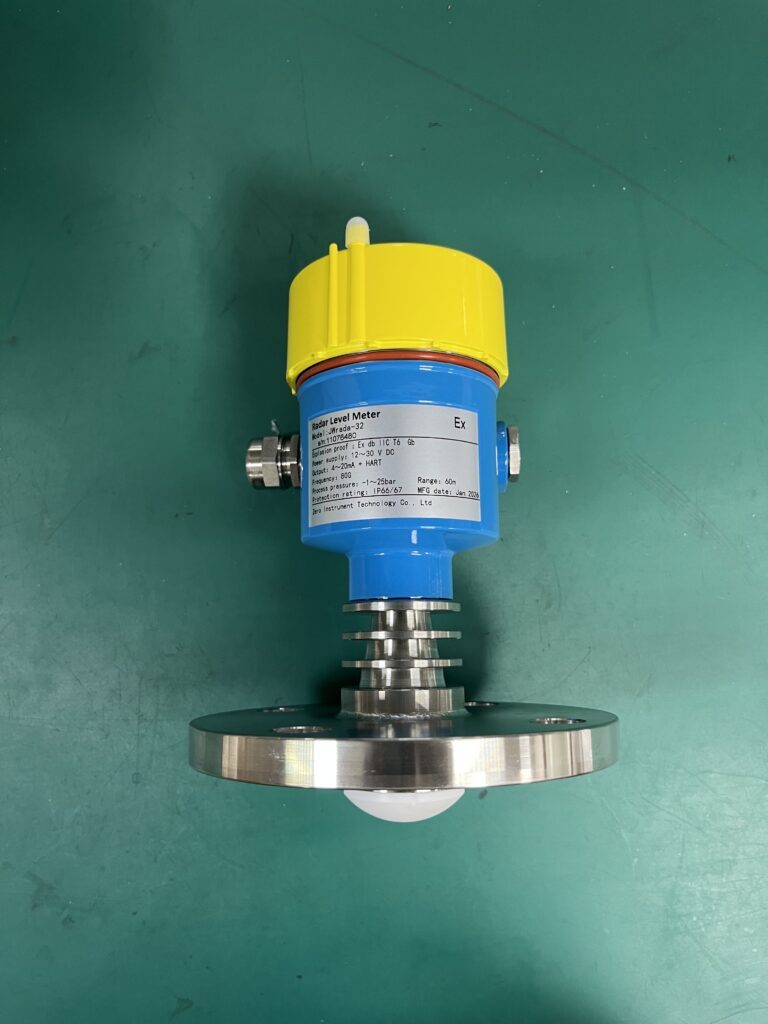
Radar Level Transmitter
Example:
Tank height:
0-10 meters
Output:
4mA = Empty

20mA = Full
7. Can Digital Signals and Analog Signals Be Converted?
Yes.
Signal conversion can be achieved through different modules.
A/D Conversion
A/D means:
Analog to Digital
It converts analog signals into digital data.
Example:
Pressure transmitter

4-20mA

↓

PLC AI module

↓

Digital value inside PLC
D/A Conversion
D/A means:
Digital to Analog
It converts digital values into analog output signals.
Example:
PLC calculation

↓

AO module

↓

4-20mA output

↓

Control valve adjustment
8. Comparison Between Analog and Digital Signals
Item
Digital Signal
Analog Signal
Signal Type
ON/OFF
Continuous value
PLC Interface
DI / DO
AI / AO
Typical Signal
0/1
4-20mA, 0-10V
Application
Status control
Measurement
Examples
Switches, Relays
Flow meters, Transmitters
Information
Two states only
Actual measured value
9. Summary
Digital signals and analog signals are the foundation of modern industrial automation systems.
Digital signals are mainly used for:
Equipment status
Start/stop control
Alarm signals
Analog signals are mainly used for:
Continuous measurement
Process monitoring
Automatic control
In industrial instrumentation, signals such as 4-20mA, AI, AO, DI, and DO are essential communication methods between field instruments and control systems.
Understanding these signal types helps engineers correctly select, install, and troubleshoot industrial equipment such as: