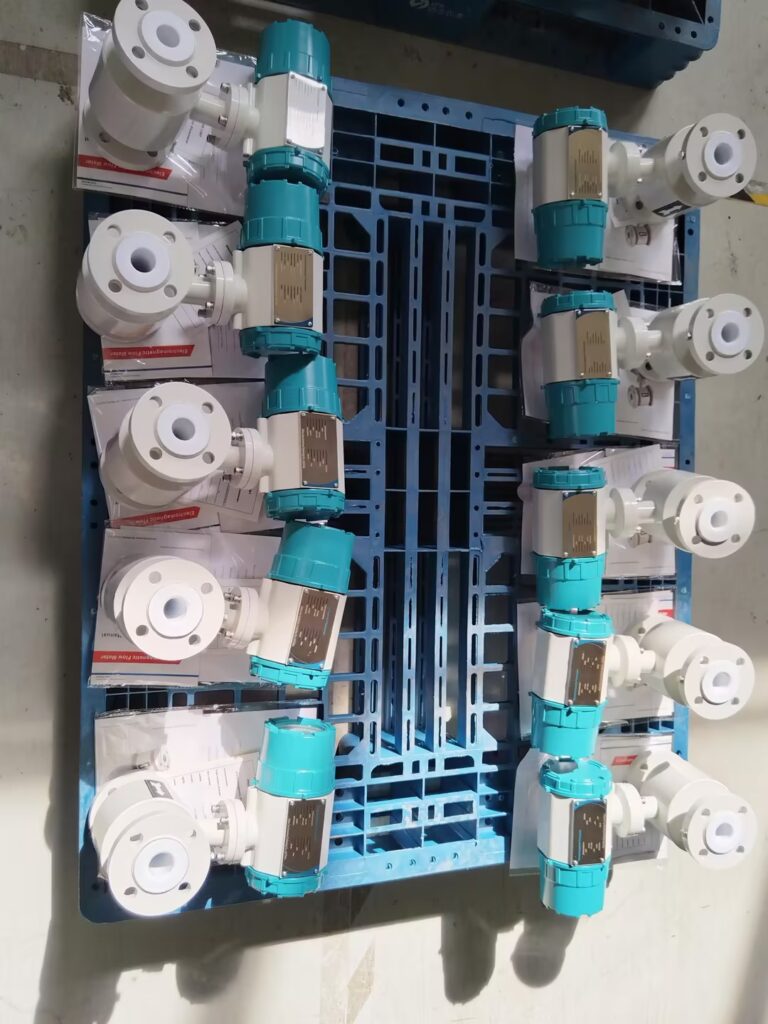
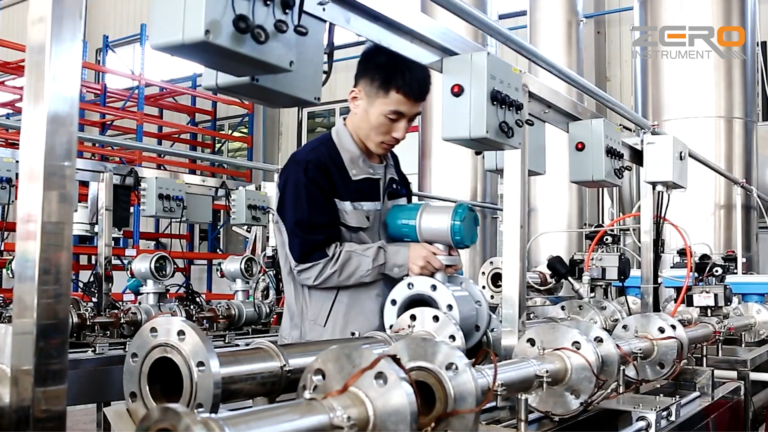
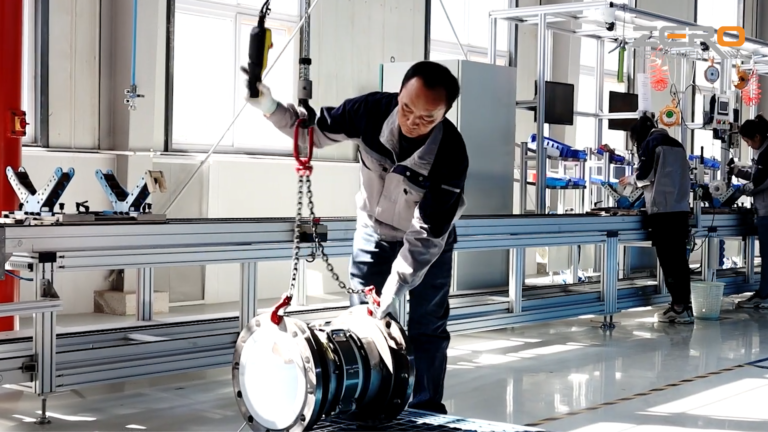
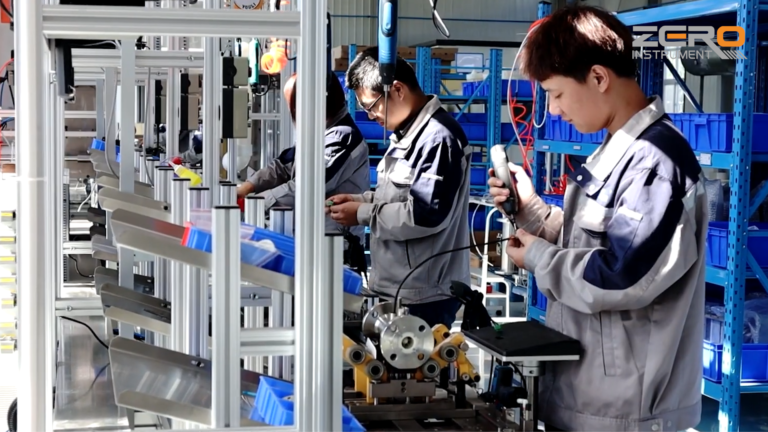
A magnetic flow meter (also called an electromagnetic flow meter or mag meter) measures flow based on Faraday’s Law of Electromagnetic Induction.
Because the measurement signal generated by the electrodes is only at the millivolt level, the instrument is highly sensitive to:
Ground potential differences
Stray currents
Electrical noise
Improper grounding
Static electricity interference
A grounding ring is a critical accessory used to provide a stable electrical reference between the flowing liquid, the sensor, and earth.
Simply speaking:
A grounding ring acts as both a signal protection device and an equipotential bonding bridge for a magnetic flow meter.
1. What Problem Does a Magnetic Flow Meter Grounding Ring Solve?
A magnetic flow meter works by applying a magnetic field across the measuring tube.
When a conductive liquid flows through the magnetic field:
The liquid cuts the magnetic field lines.
A small induced voltage is generated.
The electrodes detect this voltage.
The transmitter converts it into a flow signal.
The generated voltage is extremely small, usually only a few millivolts.
Therefore, any external electrical interference can affect measurement accuracy.
A grounding ring mainly provides three functions:
1. Establishes a Stable Electrical Reference
The grounding ring ensures that:
The liquid potential
The sensor body potential
The earth potential
remain at the same electrical level.
This eliminates measurement errors caused by potential differences.
2. Reduces Electrical Noise and Stray Current Interference
Industrial environments often contain:
Motors
Variable frequency drives (VFDs)
Welding equipment
Power cables
Leakage currents
A properly installed grounding ring provides a low-resistance path for unwanted electrical interference.
The interference is diverted away from the electrode signal circuit.
3. Improves Measurement Stability
Poor grounding may cause:
Unstable flow readings
Zero point drift
Signal fluctuation
Incorrect measurement values
Proper grounding helps the flow meter provide reliable and repeatable measurements.
2. What Does a Grounding Ring Look Like?
A typical magnetic flow meter grounding ring consists of:
A circular metal ring
A center opening matching the pipe diameter
Grounding screws or terminals
Conductive contact surface
During installation, the grounding ring is placed between:
Flow meter flange → Grounding ring → Pipeline flange
The grounding wire connects the ring to the grounding system.
3. Types of Grounding Rings for Magnetic Flow Meters
Grounding rings can be classified according to their structure and application.
1. Standard Grounding Ring
The most common type used for:
Water applications
Wastewater
General industrial liquids
2. Grounding Electrode / Grounding Tab
A small grounding element extends into the measuring tube.
Advantages:
Lower cost
Simple installation
Suitable for:
Conductive metal pipelines
Low-noise environments
3. Corrosion-Resistant Grounding Ring
Used for aggressive chemical applications.
Available materials include:
Titanium
Tantalum
Hastelloy C-276
4. Explosion-Proof Grounding Connection
Used in hazardous areas where equipotential bonding is required.
4. When Is a Grounding Ring Required?
A grounding ring is strongly recommended when any of the following conditions exist:
1. Non-Conductive Pipeline Materials
Examples:
PVC pipes
Plastic pipes
Fiberglass reinforced plastic (FRP) pipes
Concrete pipes
These materials cannot provide a reliable electrical path.
A grounding ring is required to establish a stable reference.
2. Lined Metal Pipes
Even metal pipes may become electrically isolated when they have internal lining materials such as:
Rubber lining
PTFE lining
Plastic coating
In these cases, grounding rings are recommended.
3. Large Ground Potential Differences
Common situations include:
Chemical plants
Electroplating systems
Cathodic protection pipelines
Large industrial facilities
4. Low Conductivity Liquids
When liquid conductivity approaches the minimum operating limit of the flow meter, grounding becomes more important.
Typical examples:
Condensate water
Pure water
Low mineral content liquids
5. Strong Electrical Interference Environment
Examples:
Near frequency converters
Near high-power motors
Near welding equipment
5. When Can a Magnetic Flow Meter Work Without a Grounding Ring?
A grounding ring may not be necessary when all conditions below are satisfied:
✔ Conductive metal pipeline ✔ No insulating liner ✔ Good electrical continuity between pipe sections ✔ Reliable sensor grounding ✔ No significant electrical interference
For example:
A carbon steel pipeline without lining may provide sufficient grounding through the pipe itself.
However, the final decision should follow the manufacturer’s installation requirements and site conditions.
6. How Does a Grounding Ring Work?
The working principle is simple:
The grounding ring contacts the liquid.
The ring connects to earth through a grounding cable.
The liquid potential becomes equal to earth potential.
Electrical interference is discharged safely.
The electrodes measure only the flow-generated signal.
Without proper grounding, the liquid may become electrically floating, causing unstable measurement signals.
7. How to Select Grounding Ring Materials?
Material selection is critical because the grounding ring is directly exposed to the measured medium.
304 Stainless Steel
Suitable for:
Clean water
Neutral liquids
General applications
316L Stainless Steel
Suitable for:
Mild acids
Mild alkaline liquids
Seawater
General chemical applications
Hastelloy C-276
Suitable for:
Strong acids
Chloride environments
Highly corrosive chemicals
Titanium
Suitable for:
Seawater
Chlorine-related applications
Strong corrosion environments
Tantalum (Ta)
Suitable for:
Strong oxidizing acids
Extremely corrosive media
Material Selection Rule:
A grounding ring material should normally be equal to or more corrosion-resistant than the flow meter electrode material.
The grounding ring must remain electrically conductive.
Install grounding rings on both sides of the sensor for maximum stability.
At minimum, one grounding connection should be provided.
Grounding Cable Requirements
Recommended practices:
Use dedicated grounding cable
Avoid sharing grounding lines with motors or frequency converters
Ensure reliable connection to the grounding system
For hazardous areas:
Follow local explosion-proof grounding requirements
Maintain proper equipotential bonding
9. Grounding Ring Installation for Plastic Pipes
For electrically insulating pipelines:
Examples:
PVC
FRP
Rubber-lined pipelines
Recommended installation:
Pipeline
    |
Grounding Ring
    |
Magnetic Flow Meter
    |
Grounding Ring
    |
Pipeline
Both grounding rings should be connected together and connected to earth.
This provides a stable electrical reference for the liquid.
10. Grounding Ring vs Grounding Electrode
Feature
Grounding Ring
Grounding Electrode
Contact Area
Large
Small
Stability
Higher
Lower
Installation Cost
Higher
Lower
Noise Resistance
Excellent
Moderate
Best Application
Plastic pipes, chemical plants, high interference areas
Simple metal pipelines
11. Common Magnetic Flow Meter Problems Related to Grounding
1. Unstable Flow Signal
Possible causes:
Poor grounding
Ground potential difference
Electrical interference
2. Zero Drift
Possible causes:
Floating liquid potential
Improper grounding connection
3. Incorrect Flow Reading
Possible causes:
Corroded grounding ring
Poor electrical contact
Damaged grounding cable
4. False Empty Pipe Alarm
Possible cause:
Grounding failure affecting electrode measurement
5. Surge Damage During Lightning Events
Poor grounding increases the risk of surge damage.
A complete protection system should include:
Proper grounding
Surge protection devices
Correct cable installation
12. Grounding Ring Selection Guide by Application
Application
Recommendation
Carbon steel pipe without lining
Grounding may not be required
Stainless steel pipe with lining
Grounding ring recommended
Plastic / FRP pipe
Grounding ring required
Wastewater and sludge
304 / 316L
Chemical industry
Hastelloy / Titanium / Tantalum
Cathodic protection pipeline
Special grounding arrangement required
Hazardous area
Equipotential bonding required
Final Checklist: Magnetic Flow Meter Grounding
Remember these basic rules:
Metal pipe without lining → direct grounding may be possible Insulated pipeline → grounding rings are required Corrosive medium → choose proper grounding ring material High interference environment → use reliable grounding connection Good grounding → stable magnetic flow measurement
A magnetic flow meter is not difficult to operate, but correct grounding is essential for accurate and reliable measurement.
Need Help Selecting a Magnetic Flow Meter?
Zero Instrument provides electromagnetic flow meters for: