Whether pipeline conditions affected the performance
After investigation, the units were found to be operating under challenging field conditions.
3. Field Findings
During communication and troubleshooting, the following conditions were confirmed:
The pipeline was fully filled with liquid
Flow conditions were normal
The issue appeared suddenly during operation
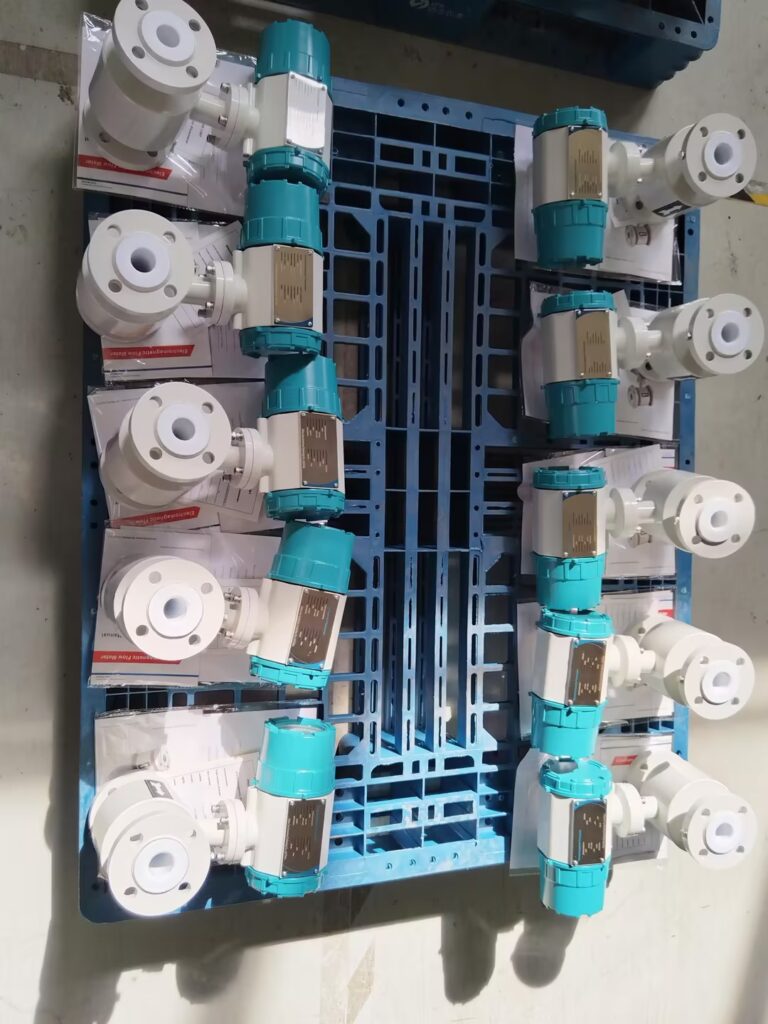
The meters were properly packaged with foam protection during transport
This helped rule out transportation damage as the root cause.
4. Possible Causes of Excitation Alarm
Based on technical analysis and field experience, excitation system failure can be caused by the following factors:
4.1 Strong Pipeline Vibration
Continuous vibration without proper damping can lead to:
Coil insulation fatigue
Internal wire loosening or cracking
Long-term signal instability
4.2 Moisture or Humidity Ingress
In high humidity environments:
Condensation may form inside the transmitter
Insulation resistance may decrease
Coil leakage or short circuit may occur
4.3 Welding or Electrical Interference During Installation
If welding is performed on the pipeline while the meter is installed:
Welding current may induce electrical damage
Excitation coil may be partially burned
Signal circuits may be affected
4.4 Mechanical Shock or Improper Handling
During installation or maintenance:
Dropping or impact may damage internal components
Cable connections may loosen
Coil structure may be affected
5. Why Transportation Is NOT the Main Cause
In this case, the meters were:
Packed with protective foam inside the carton box
Mechanically protected against vibration and impact
Fully sealed sensor structure
Therefore, normal land or sea transportation is not sufficient to cause excitation coil failure.
Excitation faults are almost always related to field installation or operating conditions, not logistics.
6. Recommended Field Inspection
To further confirm the issue, the following checks are recommended:
Measure coil resistance using a multimeter (ohm mode)
Inspect wiring connections between transmitter and sensor
Check for moisture, corrosion, or physical damage
Verify pipeline vibration conditions
These steps can help determine whether the sensor is electrically damaged or affected by installation conditions.
7. Conclusion
Excitation alarms in electromagnetic flowmeters are rare but can occur under harsh field conditions.
In most cases, the root causes are:
Mechanical vibration
Environmental humidity
Electrical interference during installation
Improper handling
Proper installation and environmental control are key to ensuring long-term stable operation.
💡 Final Note
If you encounter similar issues, systematic troubleshooting is essential before concluding product failure. In many cases, the root cause is related to field conditions rather than the instrument itself.