
Selecting a reliable flow meter for large diameter circulating water pipelines (starting from DN400 and extending to DN2000 or even larger) has never been an easy task.
For small and medium pipe sizes (generally below DN400), electromagnetic flow meters are usually the preferred choice because they offer a good balance between accuracy and reliability. If the water quality is relatively clean (such as clean circulating water), the flow velocity is stable, and vibration is minimal, vortex flow meters can also be considered as an economical option. However, for demineralized water with very low conductivity and low flow velocity, neither electromagnetic nor vortex flow meters are suitable.
For large diameter circulating water systems (typically DN400 and above), the most commonly used solutions include:
- Clamp-on ultrasonic flow meters
- Insertion ultrasonic flow meters
- Insertion electromagnetic flow meters
- Full-bore electromagnetic flow meters
1. Preferred Solution: Insertion Ultrasonic Flow Meter
For large industrial circulating water systems, insertion ultrasonic flow meters are generally considered the best overall solution.
They provide the best balance between:
- Installation convenience
- Zero pressure loss
- Cost-effectiveness
- Long-term stability
Two major advantages make them especially suitable for large diameter pipelines:
- Hot-tap installation without shutdown
- Cost is not significantly affected by pipe diameter
These characteristics perfectly match the key requirements of large circulating water systems, where plant shutdowns are undesirable and cost control is critical.
Transit-time ultrasonic flow meters are particularly suitable for industrial cooling water and circulating water applications. Multi-path designs (dual-path or above are recommended) can effectively compensate for distorted flow profiles caused by elbows, valves, or pumps by integrating velocity measurements across the pipe cross-section.
With proper installation conditions, system accuracy can typically achieve within ±1.0%.
In practical petrochemical and power plant applications, dual-path and four-path insertion ultrasonic flow meters are now widely used for large pipeline flow measurement.

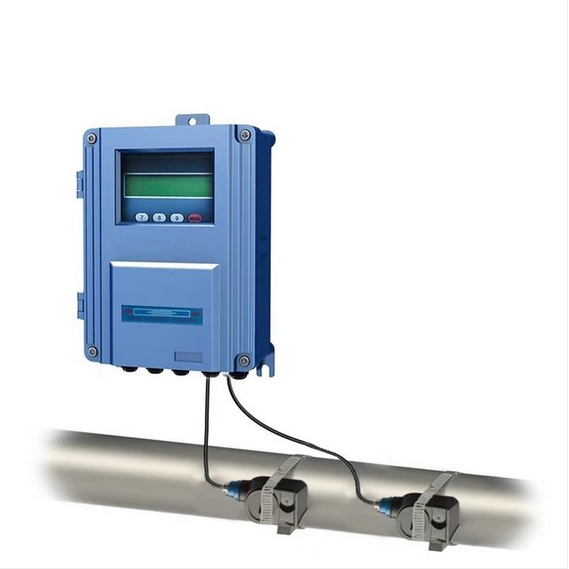
2. Second Choice: Clamp-On Ultrasonic Flow Meter
Clamp-on ultrasonic flow meters are also very popular for large diameter water pipelines.
One of their biggest advantages is that the cost is almost independent of pipe diameter. For very large pipes, they are often far more economical than full-bore electromagnetic flow meters.
Additional advantages include:
- No contact with the medium
- No pressure loss
- No pipe cutting
- Installation without shutdown
The installation process is extremely convenient, making them ideal for temporary measurement, energy management, and non-critical monitoring points.
However, long-term stability can be influenced by:
- Pipe surface condition
- Temperature variation
- Sensor mounting quality
- Environmental vibration
Therefore, clamp-on ultrasonic flow meters are generally recommended for applications where ultra-high accuracy is not mandatory.
It should also be noted that the performance differences between brands can be significant. In real industrial projects, several international brands dominate the high-end large diameter ultrasonic flow meter market due to their superior signal processing and stability.
3. Alternative Solution: Insertion Electromagnetic Flow Meter
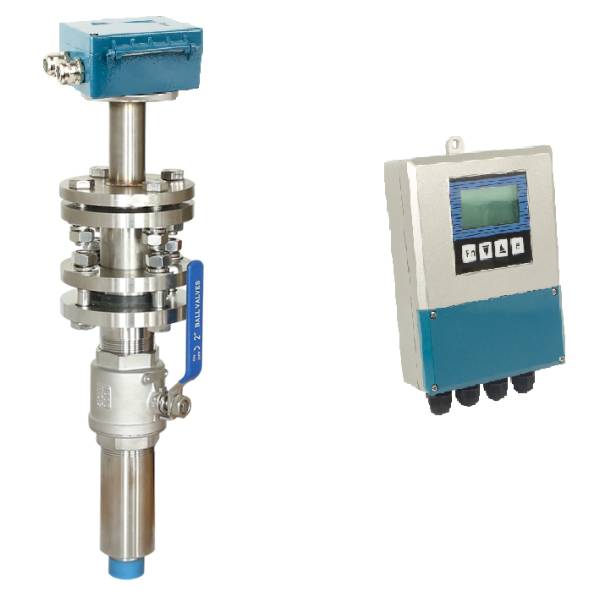
When the circulating water has good conductivity, stable flow conditions, and the site requires stronger resistance to impurities or interference, insertion electromagnetic flow meters can be a reliable alternative.
They also offer several advantages:
- Hot-tap installation
- Lower installation cost
- Suitable for large pipe sizes
- Better immunity to bubbles compared to ultrasonic technology
Although their accuracy is generally lower than full-bore electromagnetic flow meters, they are still sufficient for most industrial monitoring applications.
However, vibration analysis should be carefully considered during selection, especially for:
- High flow velocity
- Very large pipe diameters
- Long insertion structures
Improper structural support may affect long-term stability.
4. Full-Bore Electromagnetic Flow Meter (Special Applications)
Full-bore electromagnetic flow meters are usually selected only under special conditions such as:
- Custody transfer
- High-precision process control
- Strict energy accounting requirements
They provide excellent accuracy and stability, but several disadvantages become very obvious for large diameter pipelines:
- Extremely high cost
- Heavy weight
- Difficult transportation
- Complex installation
- Shutdown required during installation
For DN1000 and larger pipelines, the total project cost can increase dramatically.
In addition, circulating water often contains calcium, magnesium, suspended solids, algae, and scaling materials. Over time, deposits inside the measuring tube may reduce the effective inner diameter, resulting in increased pressure loss and measurement deviation.
For such conditions, designs with self-cleaning capability or easy maintenance access should be considered.
5. Other Options: Annubar (Averaging Pitot Tube) Flow Meter
Annubar flow meters are also used in some large diameter water applications.
Their advantages include:
- Very low pressure loss
- Simple installation
- Lower cost for large pipes
However, their accuracy is relatively limited and they are mainly suitable for general monitoring rather than precise measurement.
Another important concern is that the pressure tapping holes are relatively small and can easily become blocked in circulating water systems containing:
- Suspended solids
- Biological growth
- Sludge
- Corrosion products
Therefore, maintenance requirements should be carefully evaluated before selection.

Key Factors for Large Diameter Circulating Water Flow Meter Selection
1. Pipe Diameter and Water Quality
The two most critical factors are:
- Pipe size
- Water condition
Special attention should be paid to:
- Conductivity
- Suspended solids
- Scaling tendency
- Corrosion
- Air bubbles
- Biological contamination
For low conductivity media such as demineralized water or softened water, electromagnetic flow meters should generally be avoided.
2. Installation Conditions
If plant shutdown is not allowed, the most suitable options are usually:
- Clamp-on ultrasonic flow meters
- Hot-tap insertion ultrasonic flow meters
- Insertion electromagnetic flow meters
For underground chambers or flooded environments, split-type transmitters with IP68 protection are strongly recommended.
3. Accuracy vs. Cost
For energy management or custody transfer applications, many industrial standards require a minimum accuracy class of 2.0 or better.
For high-accuracy applications, the preferred solutions are:
- Electromagnetic flow meters (small and medium sizes)
- Multi-path ultrasonic flow meters (large diameters)
For general process monitoring, more economical solutions may be sufficient.

Real Project Experience Matters
In actual projects, technical requirements and owner preferences often change during procurement stages.
For example, in one petrochemical circulating water project with a 48-inch pipeline, the original design specified a clamp-on ultrasonic flow meter. During procurement review, the owner considered the selected clamp-on meter insufficient in accuracy (approximately 2%) and found that the price difference compared to a premium full-bore electromagnetic flow meter with 0.5% accuracy was acceptable. Eventually, the project specification was revised to use a full-bore electromagnetic flow meter.
This demonstrates that flow meter selection is not purely technical — budget, project philosophy, and owner expectations also play major roles.
Important Installation Considerations
Regardless of the flow meter type selected, the following conditions are essential:
- Adequate straight pipe length
- Full pipe condition
- Correct pipe parameters
- Outer diameter
- Wall thickness
- Pipe material
- Lining condition
These are fundamental requirements for achieving reliable measurement accuracy.

Conclusion
For large diameter circulating water applications in petrochemical plants, power plants, steel mills, and industrial water systems, insertion ultrasonic flow meters (especially dual-path or multi-path designs) currently provide the best overall combination of:
- Accuracy
- Installation flexibility
- Cost-effectiveness
- Reliability
- Long-term performance
Multi-path technology significantly improves measurement stability under complex flow conditions, and even if one path fails, the remaining channels can continue operation temporarily.
However, the final selection should always consider:
- Pipe condition
- Water quality
- Flow profile
- Installation limitations
- Accuracy requirements
- Budget
Only after evaluating all these factors together can the most suitable large diameter circulating water flow meter solution be selected.
Recommended Information for Flow Meter Selection
When selecting a large diameter circulating water flow meter, the following information is highly recommended:
- Pipe size
- Pipe material
- Flow range
- Water conductivity
- Operating pressure and temperature
- Whether shutdown installation is allowed
- Accuracy requirement
- Output signal requirement
- Power supply
- Installation environment
- Cable distance
Professional evaluation of these parameters helps ensure accurate and reliable long-term operation.