
In most industrial plants, proper grounding improves electrical safety and system stability.
But in aluminum electrolysis plants, one incorrect grounding point can create stray DC currents, trigger insulation alarms, distort instrument signals, damage transmitters, or even shut down an entire production line.
That is why aluminum smelters and other non-ferrous electrolysis industries widely use IT ungrounded systems.
For instrumentation engineers, understanding the difference between logic ground, protective earth (PE), and shield ground is critical for maintaining stable and safe operation in electrolysis environments.
Why Electrolysis Plants Prefer Ungrounded (IT) Systems
In electrolysis industries such as:
- Aluminum smelting
- Copper electrorefining
- Zinc electrolysis
- Chlor-alkali plants
- Wet-process metallurgy
the electrolysis circuit carries massive DC current continuously.
If any unintended grounding point appears in the system, it may create:
- stray current paths
- severe electromagnetic interference
- corrosion acceleration
- instrument signal drift
- DC short-circuit risks
- false insulation alarms
Unlike conventional industrial plants, the electrolysis loop itself must remain electrically floating from earth ground.
This is the core reason why IT ungrounded systems are widely adopted in electrolysis facilities.

The Three Grounds That Must Never Be Confused
One of the most common mistakes in electrolysis plants is mixing different grounding systems together.
These three “grounds” serve completely different purposes.
| Ground Type | Function | Grounded to Earth? |
|---|---|---|
| Logic Ground (Signal Ground) | Instrument signal reference | ❌ No |
| Protective Earth (PE) | Personnel and equipment safety | ✅ Yes |
| Shield Ground | Electromagnetic interference suppression | ✅ Single-end only |
In aluminum smelters:
- the electrolysis circuit must remain floating
- the instrument logic ground must remain isolated
- only the protective earth system connects to the plant grounding network
Improper grounding between these systems can create dangerous DC leakage paths.
Logic Ground Handling: Fully Floating and Electrically Isolated
Field Instrument Side
For instruments installed near electrolytic pipelines or tanks:
- pH analyzers
- ORP meters
- conductivity meters
- electromagnetic flow meters
the sensor electrodes must remain electrically isolated from earth.
Recommended Practices
✅ Use isolated instruments with galvanic isolation
✅ Use isolated 4–20mA transmitters
✅ Use isolated RS485 communication
✅ Install insulating pads between instrument housing and metallic structures
✅ Use insulating sleeves and non-conductive mounting accessories
Why Zener Barriers Are Dangerous Here
Many engineers overlook this issue.
Traditional Zener barriers require grounding.
In electrolysis plants, this grounding path may destroy the floating logic ground architecture.
Therefore:
Zener barriers should NOT be used in aluminum electrolysis applications.
Instead, isolated intrinsic safety barriers or signal isolators should be selected.
Recommended isolation voltage:
- ≥1500Vac
or - ≥2500Vdc
DCS and PLC Grounding in Electrolysis Plants
Inside the control room:
- the 24VDC negative terminal should remain floating
- signal grounds should connect to a dedicated floating busbar
- the floating busbar must never connect to PE ground
For redundant power systems:
- all DC negatives should join at one floating reference point only
- multi-point grounding must be avoided
To reduce static accumulation, engineers sometimes install:
- high-value resistors
- bidirectional TVS protection devices
between floating ground and PE.
This allows static discharge without destroying the floating architecture.

Protective Earth (PE) Must Be Grounded — But Isolated from the Electrolysis Loop
Protective earth still plays a critical safety role.
All exposed conductive parts should connect to the plant PE network, including:
- instrument enclosures
- junction boxes
- cable trays
- metal supports
- control cabinets
However:
PE must NEVER electrically connect to the electrolysis circuit.
This includes:
- electrolytic pipelines
- DC busbars
- electrolytic tanks
- conductive process media
Why Insulating Flanges Are Critical
Continuous metallic pipelines can accidentally create grounding paths.
To prevent this:
✅ Install insulating flanges
✅ Use insulating joints
✅ Electrically isolate conductive piping sections
Without proper isolation, stray DC current may flow through the piping system.
This can cause:
- severe interference
- corrosion
- unstable measurements
- insulation alarms
Shield Grounding: Only One End Should Be Grounded
Signal cable shielding is another major issue in electrolysis plants.
Correct Method
Signal Cables
- field side shield → floating
- control room side shield → grounded to shield busbar only
Wrong Method
❌ grounding both ends
This creates ground loops and introduces interference into analog signals.
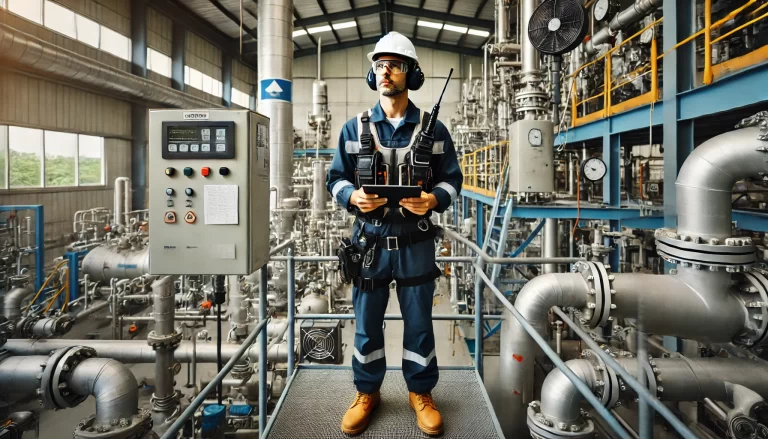
Real Failure Case from an Electrolysis Plant
A magnetic flow meter in an aluminum plant experienced unstable readings and repeated communication failures.
After inspection, engineers discovered:
- the instrument support bracket was unintentionally connected to PE
- the conductive process pipeline contacted the electrolysis loop
- a stray DC current path had formed
Result:
- severe signal fluctuation
- repeated DCS alarms
- insulation monitoring trips
- damaged isolation module
After installing insulating pads and re-isolating the logic ground, the system returned to stable operation.
IT System Insulation Monitoring Is Essential
In electrolysis environments, insulation monitoring is not optional.
Most plants install IT insulation monitoring devices between:
- DC busbars
and - earth ground
These systems continuously monitor insulation resistance.
Typical alarm settings:
| Function | Recommended Value |
|---|---|
| Warning Alarm | 100kΩ |
| Trip Alarm | 50kΩ |
Time-delay filtering is usually added to avoid false alarms caused by electrolyte fluctuations.
Critical Mistakes That Must Be Avoided
| Wrong Practice | Potential Risk |
|---|---|
| Connecting logic ground to PE | Ground loop & stray current |
| Using Zener barriers | Forced grounding path |
| Grounding cable shields at both ends | Signal interference |
| Missing insulating flanges | DC leakage current |
| Grounding any point of electrolysis loop | System instability |
| Independent PE rod for instruments | Dangerous potential difference |
These mistakes are extremely common in electrolysis plants and can lead to long-term instability.
Recommended Instruments for Electrolysis Applications
For aluminum smelters and electrolytic processes, instrumentation should provide:
✅ Galvanic isolation
✅ Floating signal architecture
✅ Isolated RS485 communication
✅ High insulation resistance
✅ Isolated 4–20mA outputs
✅ Anti-stray-current design
Typical instruments include:
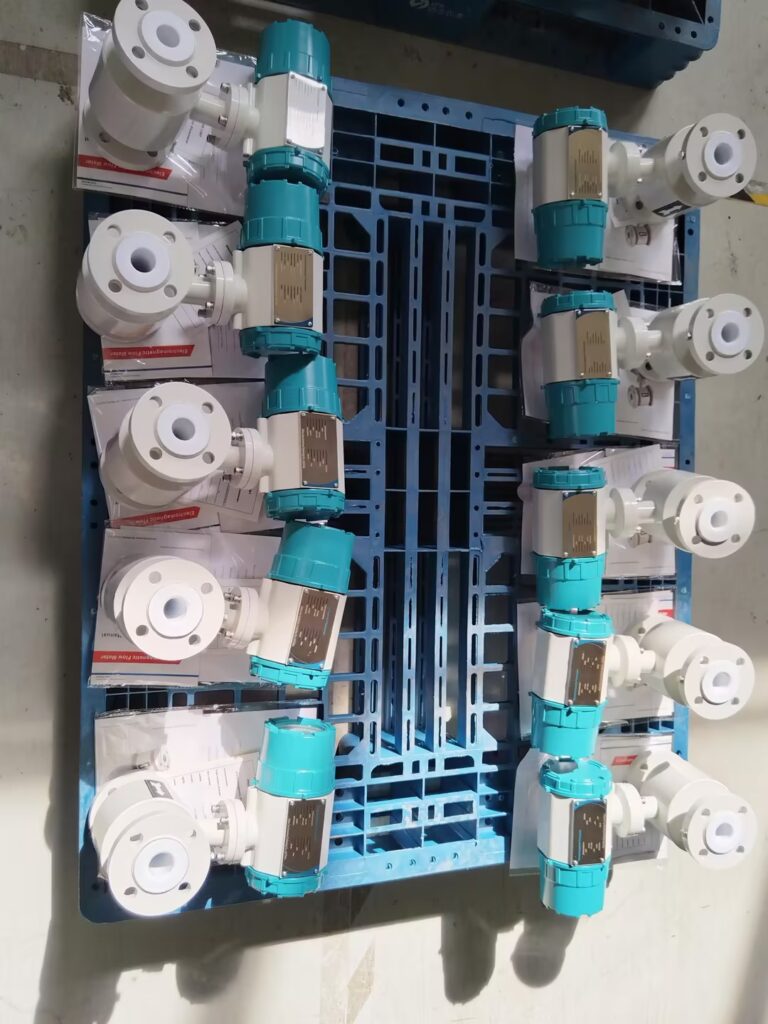
- electromagnetic flow meters
- conductivity analyzers
- industrial pH analyzers
- isolated signal transmitters
- isolated safety barriers
- industrial signal isolators
Final Thoughts
Grounding philosophy in electrolysis plants is fundamentally different from conventional industrial systems.
In aluminum smelting environments:
- floating logic ground is mandatory
- PE grounding remains essential for safety
- shielding must be carefully controlled
- electrical isolation is the key to stability
One incorrect grounding point may introduce stray DC currents throughout the system.
Understanding proper grounding architecture is essential for ensuring:
- stable measurements
- reliable communication
- insulation safety
- long-term plant operation
Need Help with Instrumentation for Electrolysis Plants?
We provide industrial instrumentation solutions for:
- aluminum smelters
- copper electrorefining
- chlor-alkali plants
- wet-process metallurgy
- chemical electrolysis systems
Including:
- isolated electromagnetic flow meters
- industrial pH analyzers
- conductivity transmitters
- isolated RS485 solutions
- anti-interference instrumentation systems
If you are working on an electrolysis project and need technical support or product recommendations, feel free to contact us.