Sulfuric acid (H₂SO₄) is one of the most widely used chemicals in industries such as fertilizer production, petroleum refining, chemical processing, metal treatment, and wastewater systems.
A common question from engineers and buyers is:
Can stainless steel be used for sulfuric acid service?
The answer is:
It depends on acid concentration and temperature.
Many people assume that higher acid concentration always means stronger corrosion.
In fact, this is not always true.
For sulfuric acid, the corrosion behavior of stainless steel is far more complex.
1. The Three Corrosion Zones of Stainless Steel in Sulfuric Acid
The corrosion resistance of stainless steel in sulfuric acid is mainly determined by two key factors:
acid concentration
operating temperature
According to engineering corrosion principles, sulfuric acid service can generally be divided into three zones.
1) Safe Zone (Passivation Zone)
This zone includes:
dilute sulfuric acid below 20%
concentrated sulfuric acid above 90%
low temperature conditions
In this range, stainless steel can form a stable passive oxide film.
Typical grades that may work include:
304
316 / 316L
317
310
Under controlled conditions, the corrosion rate may remain below 0.1 mm/year.
2) Dangerous Zone (Activation Zone)
This is the most critical area.
Typical range:
20%–70% sulfuric acid
This concentration range is often called the:
failure zone of stainless steel
In this range, the passive film is destroyed, and common grades such as 304 and 316 may fail rapidly.
For many systems, corrosion rates can become extremely high.
Standard stainless steel is generally not recommended here.
3) Transition Zone
This zone lies between the safe and dangerous areas.
Corrosion behavior becomes highly sensitive to:
temperature fluctuation
impurities
flow velocity
oxygen content
In some cases, 317 and 310 perform better than 304 and 316.
However, material selection must be evaluated case by case.
2. Can 316 Stainless Steel Be Used?
This is the most searched question.
The answer is:
yes, but only under certain conditions
316 / 316L is widely used in acidic environments, but sulfuric acid is one of the most restrictive applications.
Typical acceptable condition:
>90% sulfuric acid and temperature ≤120°C
In this condition, 316L may be suitable for:
storage tanks
transfer pipelines
static vessels
However, once the temperature rises or the concentration drops into the 20–70% range, rapid failure may occur.
3. Better Material Solutions
For more aggressive sulfuric acid service, higher-grade materials are usually required.
Recommended options include:
High Alloy Stainless Steel
904L
Alloy 20
Nickel-Based Alloys
Hastelloy
Inconel
Lined Solutions
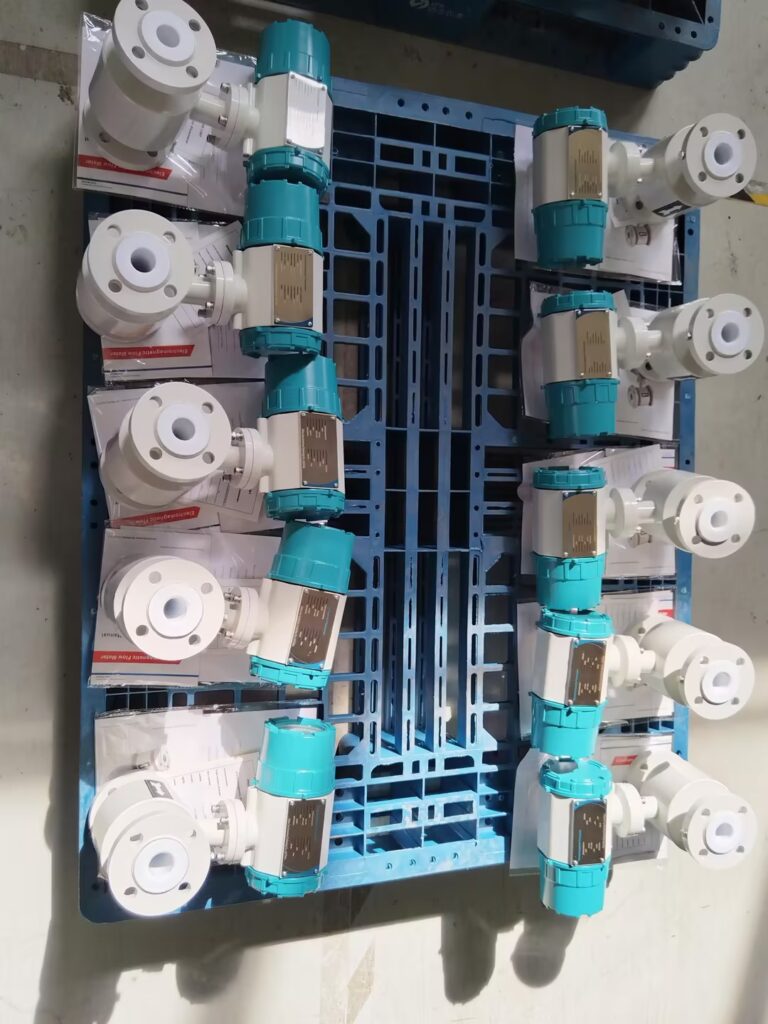
For pipelines and flow measurement systems, PTFE lining is often the best solution.
Examples:
PTFE lined pipes
PTFE lined tanks
PTFE lined electromagnetic flowmeters
This is especially suitable for the 20–70% failure zone.
4. Material Compatibility Table
Material
<20%
20–70%
>90%
304
Good
Not suitable
Limited
316
Good
Not suitable
Suitable ≤120°C
317
Better
Partial
Suitable
310
Better
Partial
Suitable
904L
Excellent
Recommended
Excellent
This table is highly useful for quick engineering reference.
5. Flowmeter Selection for Sulfuric Acid
For sulfuric acid flow measurement, material selection is critical.
Recommended solution:
PTFE-Lined Electromagnetic Flowmeter
Best for:
sulfuric acid
hydrochloric acid
caustic solutions
corrosive wastewater
Suitable lining:
PTFE
PFA
Electrode options:
Hastelloy C
Tantalum
titanium
This is often the most cost-effective industrial solution.
6. Conclusion
Stainless steel can resist sulfuric acid, but only under the correct concentration and temperature conditions.
The most dangerous misconception is:
assuming 316 works for all sulfuric acid conditions
This is often wrong.
For the 20–70% concentration range, PTFE-lined equipment or higher alloy materials should be considered.