How to Select Instrument Cables and Explosion-Proof Flexible Conduits in Hazardous Areas - Just Measure it

How to Select Instrument Cables and Explosion-Proof Flexible Conduits in Hazardous Areas

Choosing the wrong cable or conduit in hazardous areas doesn’t just affect signal quality —
it can lead to system failure, costly downtime, or even safety risks.

In environments such as oil & gas, chemical plants, and power stations, proper selection is critical.

This guide will help you make the right engineering decisions — not just list specifications.

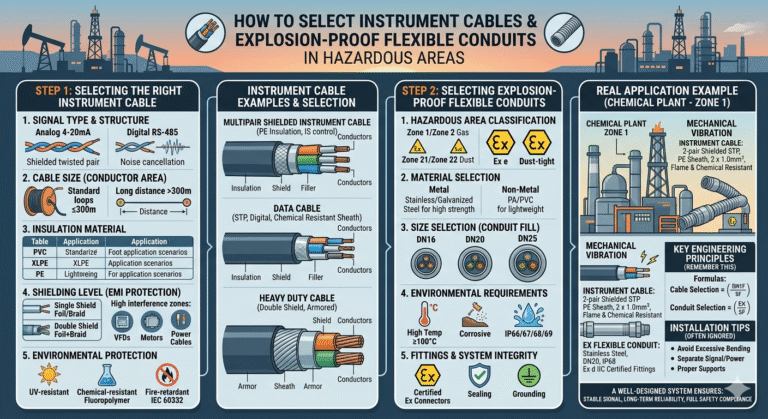
Step 1: Selecting the Right Instrument Cable

Instrument cables are used to transmit low-voltage signals in control and monitoring systems.
The key is not just “what cable”, but what fits your actual working condition.

1. Signal Type Determines Cable Structure

Analog Signals (4–20 mA, 0–10 V)

  • Highly sensitive to electromagnetic interference (EMI)
  • Recommended: Shielded cable (foil or braid)

👉 Best practice: Always use shielding in industrial environments — even if interference seems low.

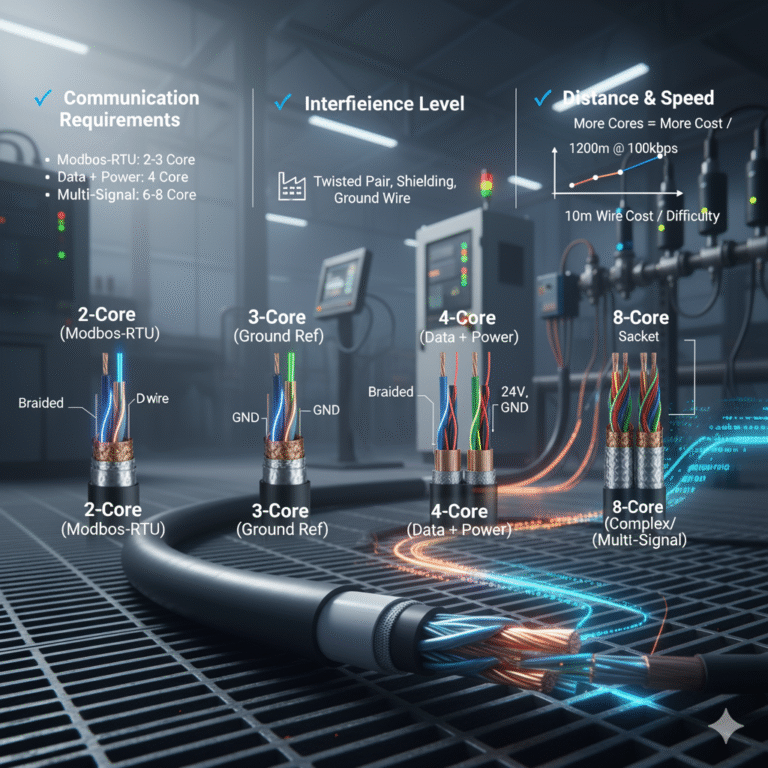
Digital Signals (RS-485, PROFIBUS, Modbus)

  • Require stable data transmission
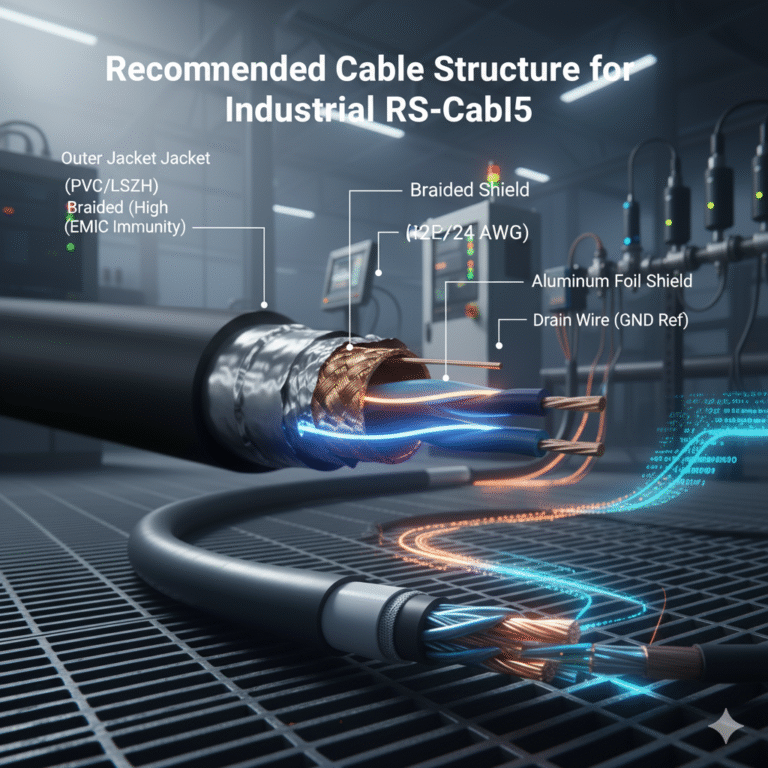
  • Recommended: Shielded twisted pair (STP)

👉 Twisted pair structure helps cancel noise, ensuring communication stability.

2. Cable Size (Don’t Overspec — Don’t Underspec)

Practical Engineering Rule:

  • Standard loops (≤300 m): 0.75–1.0 mm² is sufficient
  • Long distance (>300 m): Use larger conductor to reduce voltage drop

👉 Oversizing increases cost without benefit; undersizing leads to signal loss.

3. Insulation Material Selection

MaterialWhen to Use
PVCGeneral industrial environments
XLPEHigher temperature & mechanical strength
PELong-distance transmission (low capacitance)

👉 If signal stability over long distance matters → choose PE insulation

4. Shielding Level (Critical in Real Projects)

  • Single Shield (Foil or Braid): Medium interference
  • Double Shield (Foil + Braid): High EMI environments

👉 Typical high-interference areas:

  • Near VFDs (variable frequency drives)
  • Motor control centers
  • High-power cables

5. Environmental Protection

Always match cable to environment:

  • Outdoor → UV-resistant sheath
  • Chemical plant → corrosion-resistant (e.g. fluoropolymer)
  • Fire risk → IEC 60332 flame-retardant

👉 Environment often matters more than signal type.

6. Standards & Certification

Ensure compliance with:

  • IEC / UL / CSA standards
  • Local standards (e.g. GB/T 9330)

👉 In hazardous areas:
Use cables compliant with IEC 60079 requirements (Ex applications)

Step 2: Selecting Explosion-Proof Flexible Conduits

Explosion-proof flexible conduits protect cables in hazardous environments with gas, vapor, or dust.

1. Match Hazardous Area Classification

AreaRequirement
Zone 1 / Zone 2 (Gas)Ex d or Ex e
Zone 21 / Zone 22 (Dust)Dust-tight sealing

👉 Never mix non-certified fittings in Ex systems.

2. Material Selection

Metal Conduit (Stainless Steel / Galvanized Steel)

  • High mechanical strength
  • Suitable for high temperature / impact

Non-Metal Conduit (PA, PVC)

  • Lightweight
  • Better corrosion resistance

👉 Harsh industrial site → always prioritize metal conduit

3. Size Selection (Simple Rule)

  • Avoid overfilling
  • Leave enough space for installation

Typical sizes:

  • DN16 / DN20 / DN25

👉 Overfilled conduit → heat buildup + installation difficulty

4. Environmental Requirements

  • High temperature → ≥100°C rating
  • Corrosive environment → stainless steel
  • Protection level → IP66 / IP67 / IP68 / IP69

👉 IP rating must match actual exposure, not just specification.

5. Fittings & System Integrity

  • Use certified explosion-proof connectors
  • Ensure proper sealing and grounding

👉 A conduit system is only as strong as its weakest connection.

Real Application Example (Chemical Plant – Zone 1)

Project Condition

  • Hazardous area: Zone 1
  • Corrosive chemicals
  • Mechanical vibration present

Recommended Solution

Instrument Cable:

  • 2-pair shielded twisted cable
  • PE outer sheath
  • 2 × 1.0 mm²
  • Flame-retardant & chemical-resistant

Explosion-Proof Conduit:

  • Stainless steel flexible conduit
  • DN20
  • IP68 protection
  • Ex d IIC certified fittings

👉 This combination ensures:

  • Signal stability
  • Mechanical protection
  • Full compliance with safety standards

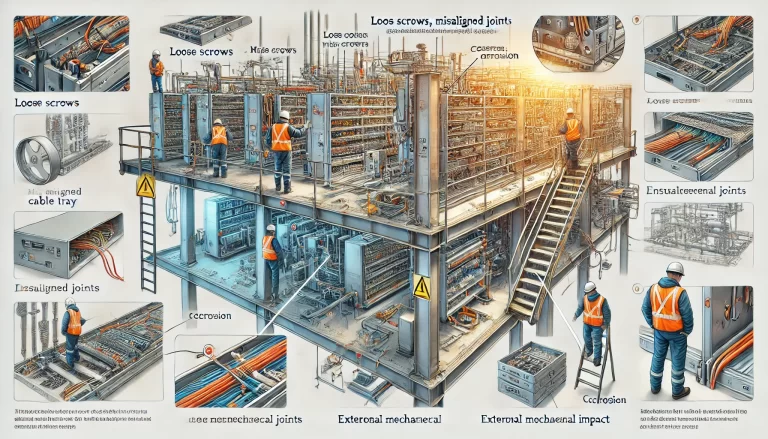
Installation & Maintenance Tips (Often Ignored)

Installation

  • Avoid excessive bending
  • Separate signal and power cables
  • Use proper supports to reduce stress

Maintenance

  • Inspect for physical damage
  • Check sealing and grounding
  • Verify shielding performance

👉 Most failures come from installation, not product quality.

Key Engineering Principles (Remember This)

Cable Selection =

Signal Type + Distance + Interference + Environment

Conduit Selection =

Hazardous Area + Mechanical Protection + Corrosion Resistance

Final Thought

In hazardous areas, selection is not about choosing “the best product” —
it’s about choosing the right combination for your specific application.

A well-designed system ensures:

  • Stable signal transmission
  • Long-term reliability
  • Full safety compliance
Share This Story, Choose Your Platform!

Contact Us

    Please prove you are human by selecting the star.
    Translate »