
In industrial environments, especially during the installation of radar level gauges, level switches, or other instrumentation devices, you will often come across the abbreviation SORF. Many engineers encounter this term on technical drawings or in technical specifications, such as “DN80 SORF PN16” or “2” 150LB SORF”. But what exactly is a SORF flange? Why is it frequently used in level instrument installations?
This article will systematically introduce SORF flanges, including their structure, principles, and practical applications in level instrumentation.
1. What is a SORF Flange?
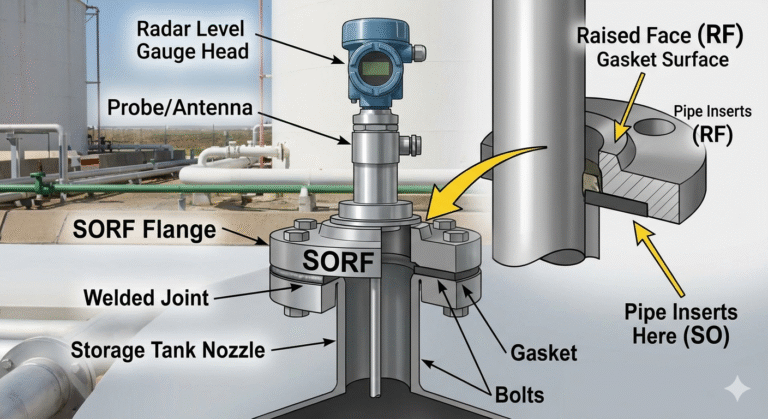
SORF stands for Slip On Raised Face Flange, which is a common type of industrial pipeline flange. The name itself carries two primary meanings:
SO (Slip On): Refers to the slip-on type flange, where the pipe or equipment can be inserted directly into the flange hole before being welded into place.
RF (Raised Face): Refers to the raised face sealing surface, which is slightly higher than the flange body and is designed to hold a gasket for a reliable seal.
In simple terms, a SORF flange is a slip-on flange with a raised sealing surface designed to ensure a tight seal when used with gaskets.
2. Structural Features of a SORF Flange
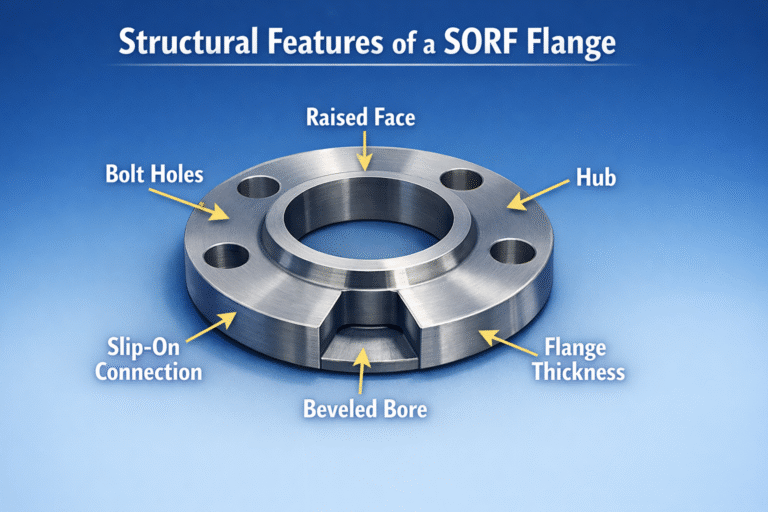
Compared to other flanges, SORF flanges are known for their simplicity, easy installation, and cost-effectiveness, making them common in industrial applications. Key structural features include:
Slip-On Structure: The pipe or equipment interface is directly inserted into the flange hole and then welded into place.
Dual-Sided Welding: Both the outer and inner sides of the flange are welded, enhancing the strength of the connection.
Raised Face Sealing: The raised sealing surface creates a stable compressive area with the gasket, ensuring a reliable seal.
Low Cost: The manufacturing process for SORF flanges is simpler than that of Weld Neck Flanges (WNRF), resulting in lower production and installation costs.
3. Differences Between SORF and Other Common Flanges
In industrial applications, particularly for instrumentation and level measurement systems, the most common flange types include:
| Flange Type | English Abbreviation | Features |
|---|---|---|
| SORF | Slip On Raised Face | Slip-on flange with raised sealing face |
| WNRF | Weld Neck Raised Face | Weld neck flange with raised face for stronger connection |
| BLRF | Blind Raised Face | Used to close pipe ends |
Among these, SORF flanges are the most widely used, thanks to their:
Easy Installation
Cost-Effectiveness
Reliable Sealing
High Standardization
4. Application of SORF Flanges in Level Instrumentation
In level measurement systems, flanges are not only connectors but also key components that ensure stable measurements. Many devices, such as:
Radar level gauges
Tuning fork level switches
Vibration rod level switches
Float level switches
Capacitive level switches
often use SORF flanges for installation. The flange connection ensures:
Stable Installation
Leak-proof Sealing
Easy Maintenance and Disassembly
In industrial storage tanks, reaction vessels, or pipeline systems, SORF flanges are commonly used in level measurement systems to guarantee a solid and reliable connection for the instruments.

5. Why is SORF Flange Commonly Used in Level Instrumentation?
The choice of flange type during the installation and selection of level measurement equipment often involves a comprehensive evaluation of factors such as installation location, site conditions, sealing requirements, and overall project costs. For devices like radar level gauges, liquid level switches, and bulk material level switches, choosing the right flange connection is not just about installation convenience—it also directly affects the system’s stability and ease of maintenance.
Key Reasons for the Widespread Use of SORF Flanges:
Simple Installation: The slip-on design allows for easy alignment and installation, with relatively low requirements for axial alignment compared to weld-neck flanges. This makes it easier to position and adjust instruments like radar level gauges and level switches on tank tops or sidewalls.
Reliable Sealing: The raised face (RF) design ensures a tight and stable seal, preventing leakage of the measured medium. This is crucial for applications like tank level measurement or powder material level detection, where leaks could compromise accuracy.
Cost-Effectiveness: The manufacturing process for SORF flanges is simpler and more affordable than for weld-neck flanges (WNRF), making them a cost-effective choice in large-scale installations, where many measurement devices are used.
Standardization: SORF flanges are highly standardized and recognized by various international standards, such as ASME B16.5, DIN standards, JIS standards, and GB/T standards in China. This allows for better interchangeability between devices from different manufacturers and simplifies procurement and maintenance.

6. Common SORF Flange Specifications in Level Instrumentation
The flange size for level instrumentation is generally determined by the tank or equipment interface. Common SORF flange specifications include:
DN50 SORF
DN80 SORF
DN100 SORF
Pressure ratings typically include:
PN16
PN25
150LB
300LB
For example:
DN80 PN16 SORF
2″ 150LB SORF
These specifications are commonly found in radar level gauges and liquid level switches.
7. Considerations When Selecting SORF Flanges for Level Instruments
When choosing a SORF flange for installation, the following factors should be considered:
Medium Type: Consider the chemical properties, viscosity, and particulate matter of the medium to choose the right flange material.
Temperature and Pressure: For high-temperature or high-pressure environments, it may be necessary to use Weld Neck Flanges (WNRF).
Installation Space: If space on the tank top is limited, ensure that the flange size and instrument structure are compatible.

8. Conclusion
The SORF flange (Slip On Raised Face Flange) is a type of flange with a raised sealing surface that offers a simple structure, easy installation, and cost-effectiveness. Due to these advantages, SORF flanges are widely used in industrial pipeline and equipment connections, particularly in level measurement systems.
In radar level gauges, liquid level switches, and bulk material level switches, SORF flanges provide not only stable mechanical connections but also a reliable seal, ensuring long-term operation. The SORF flange’s advantages in terms of installation, sealing, cost, and standardization make it one of the most common flange connection types in industrial applications.