
Vortex flow meters are widely used for steam flow measurement because of their stable performance, simple structure, and low maintenance requirements. However, in many industrial applications, users may notice that the flow reading fluctuates significantly when measuring steam.
In most cases, this phenomenon is not caused by instrument failure. Instead, it is usually related to steam characteristics, installation conditions, or incorrect instrument settings.
This article explains the main causes of steam flow fluctuations and practical solutions based on field experience.
1. Main Causes of Steam Flow Fluctuation
1.1 Unstable Steam Flow Field
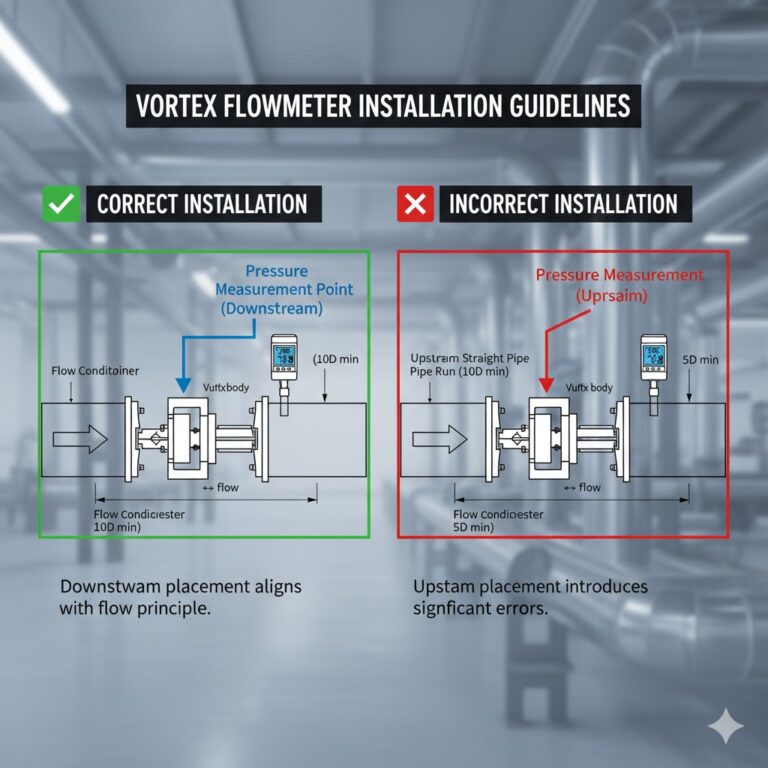
Steam flow inside pipelines can easily become unstable due to pressure and temperature variations, which may create turbulence or irregular vortices. When the velocity distribution becomes uneven, the vortex frequency detected by the sensor becomes unstable, causing fluctuations in the output signal.
Flow disturbance can also occur when the upstream pipeline contains components such as:
Elbows
Valves
Pumps
Sudden pipe diameter changes
If the straight pipe length is insufficient (typically less than 15D upstream or 5D downstream, where D is the pipe diameter), the distorted flow field can significantly affect measurement stability.
1.2 Steam Phase Change and Condensation
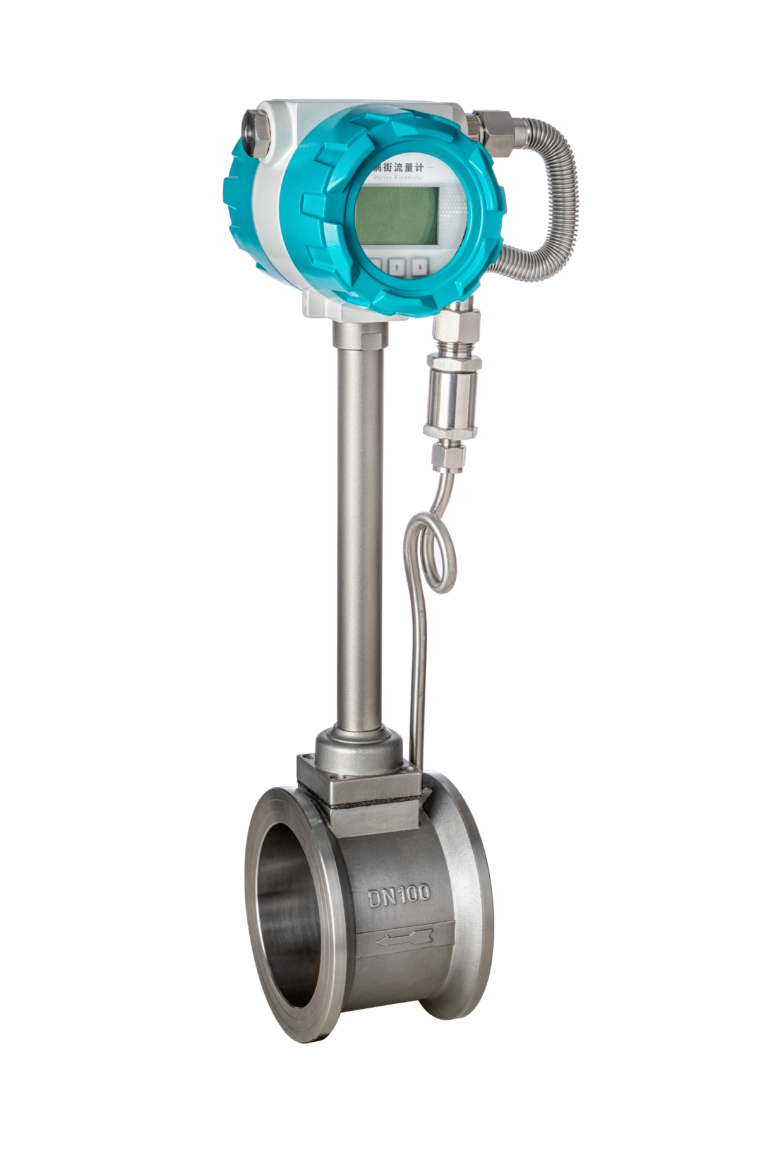
Steam is highly sensitive to pressure and temperature changes. In saturated steam systems, pressure drops may cause flash evaporation, while temperature decreases can produce condensation water.
These conditions can lead to sudden changes in:
Fluid density
Flow velocity
Vortex formation stability
Additionally, if non-condensable gases (such as air) exist in the pipeline, gas pockets may interfere with vortex formation and produce unstable signals.
1.3 Improper Sensor Installation
Incorrect installation of the vortex sensor can also lead to measurement instability. For example:
Sensor installed off-center
Sensor not perpendicular to pipe axis
Improper insertion depth (for insertion type meters)
These issues may cause errors in vortex detection and lead to unstable measurement signals.
Another common problem is sensor contamination. Rust, scale, or impurities in steam pipelines can accumulate on the probe surface, reducing the sensitivity of the sensor.
1.4 Incorrect Instrument Parameter Settings
Improper configuration of instrument parameters can also cause unstable readings.
Typical problems include:
Insufficient damping setting
If the damping time is too small (for example less than 2 seconds), the meter cannot filter short-term signal fluctuations, causing unstable output.
Improper measuring range
If the actual steam flow is close to the lower limit of the measuring range (below about 10% of full scale), the vortex frequency becomes very low and the signal-to-noise ratio decreases.
2. Practical Solutions
2.1 Improve Flow Field Stability
To ensure accurate vortex formation, proper installation conditions are essential.
Recommended measures include:
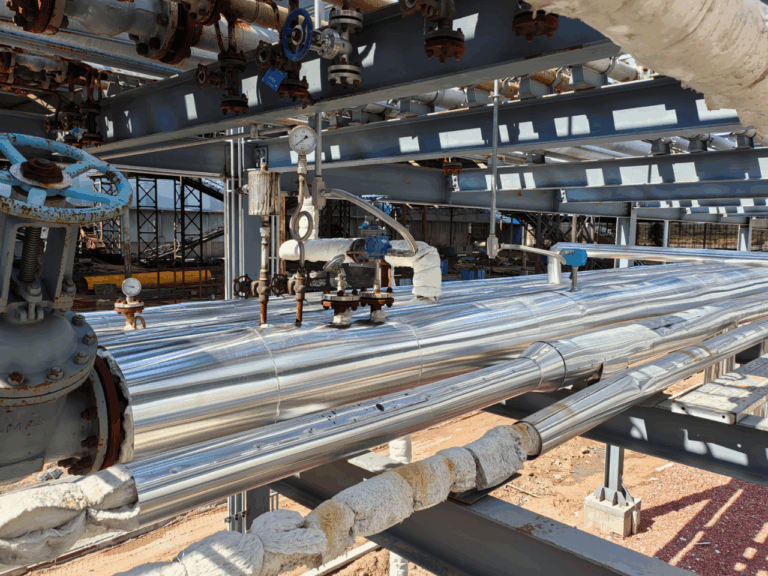
Maintain ≥20D upstream straight pipe length
Maintain ≥5D downstream straight pipe length
Install flow straighteners when space is limited
Avoid installing the meter close to pumps or control valves
These measures help ensure a uniform and stable flow profile.
2.2 Prevent Condensation and Gas Accumulation
For steam systems, moisture and gas removal are very important.
Recommended practices include:
Install a steam trap about 5D upstream of the flow meter
Install air vents at high points of the pipeline
Use a pressure control valve if steam pressure fluctuates significantly (preferably within ±5%)
Removing condensate and gas pockets greatly improves measurement stability.
2.3 Ensure Proper Installation and Maintenance
The sensor must be installed accurately and securely.
Important installation requirements include:
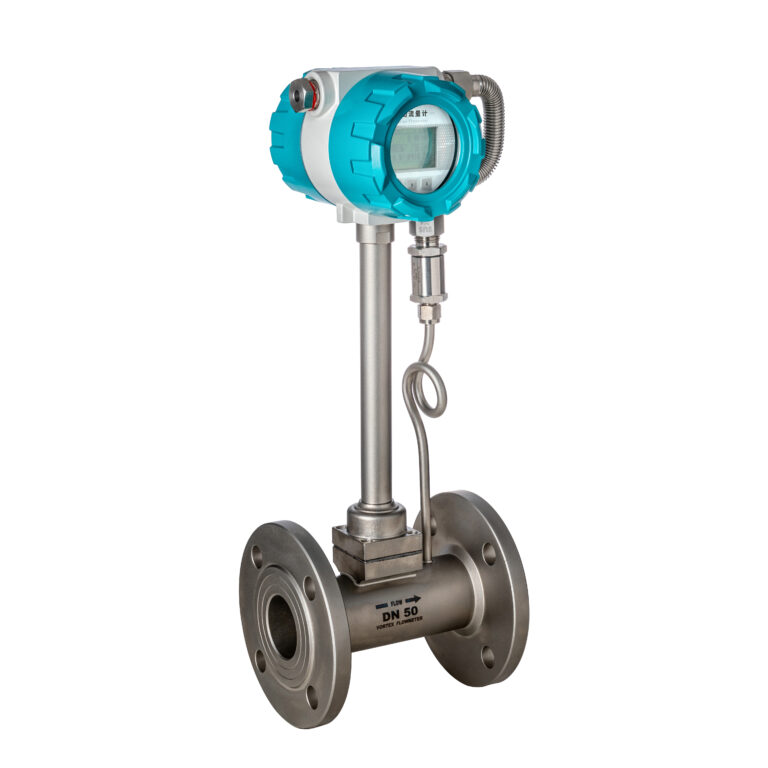
Sensor aligned with pipe centerline
Installation perpendicular to pipeline
Proper probe insertion depth (typically half of pipe radius for insertion type)
Regular maintenance is also recommended. The sensor should be inspected and cleaned every 3–6 months to remove scale or deposits.
2.4 Adjust Instrument Parameters
Adjusting instrument parameters can effectively reduce signal fluctuations.
Recommended settings:
Set damping time to 3–5 seconds to smooth short-term fluctuations
Select a measuring range where normal flow is 30–80% of full scale
This ensures both measurement stability and response speed.
2.5 Improve Anti-Interference Capability
Electrical interference can also cause signal instability.
Recommended measures:
Proper grounding of the sensor body
Shielded signal cables with single-point grounding
Maintain grounding resistance below 4 Ω
For high-temperature steam applications (above 250°C), it is also recommended to use high-temperature resistant sensors made of materials such as 316L stainless steel or ceramic probes.
Conclusion
Large fluctuations in vortex flow meter readings during steam measurement are usually caused by a combination of factors such as:
Unstable flow conditions
Steam phase changes
Improper installation
Incorrect parameter settings
By improving pipeline installation conditions, removing condensate and gas, optimizing instrument settings, and performing regular maintenance, the fluctuation range can typically be reduced to within ±2%.
If the problem still cannot be solved, it may be necessary to consider:
Using high-performance vortex meters with dual sensors, or
Switching to differential pressure flow meters (such as orifice plates with condensate pots), which are sometimes better suited for steam applications.