When it comes to flow measurement in industrial systems, two widely used technologies are vortex flow meters and differential pressure (DP) flow meters. Both have proven reliable across industries, especially for steam, gas, and liquid applications. However, they differ significantly in principle, performance, installation requirements, and cost.
This article compares vortex vs. differential pressure flow meters to help you make an informed selection.
⚙️ 1. Working Principle
🔸 Vortex Flow Meter
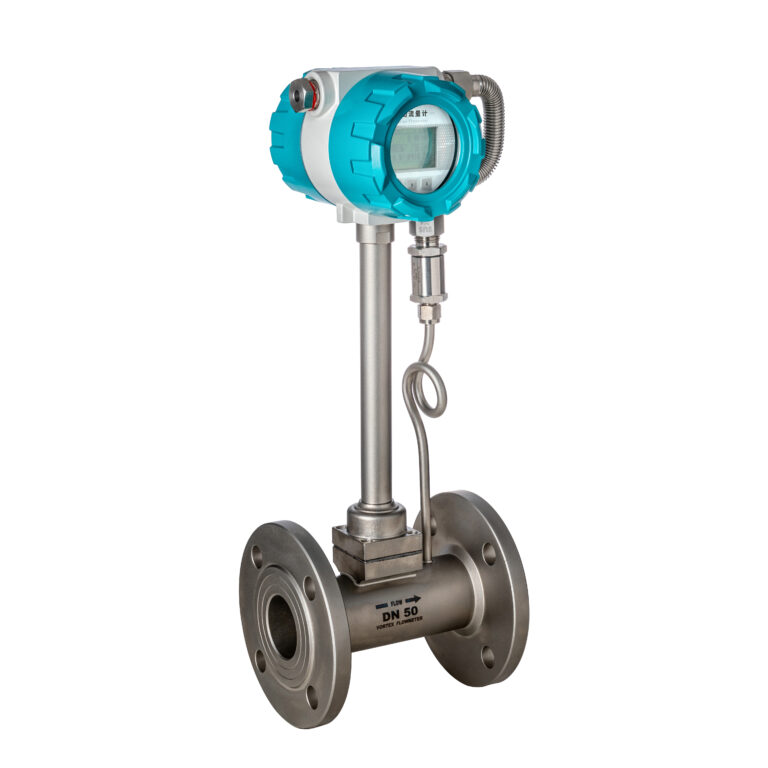
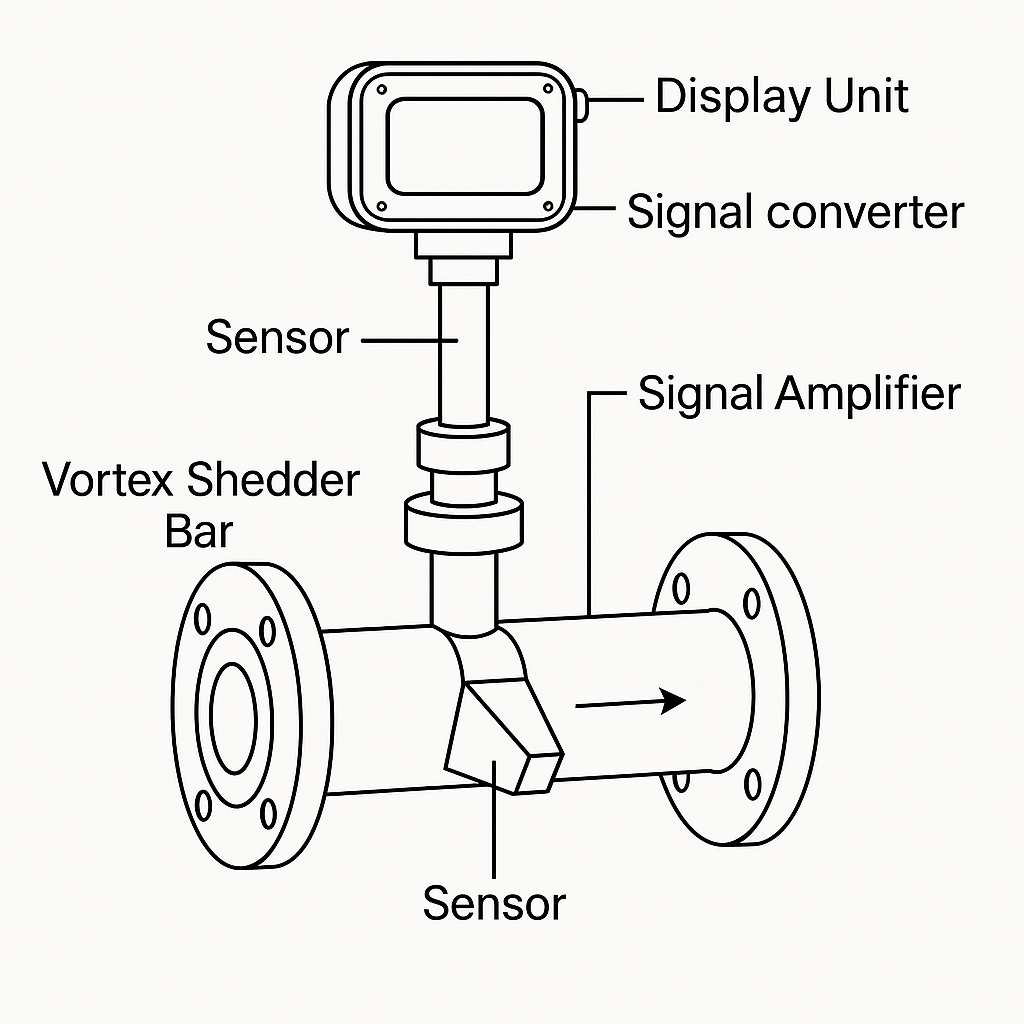
Measures flow by detecting the frequency of vortices shed from a bluff body placed in the fluid stream.
Output: Frequency / 4–20 mA / Pulse
Best for: Steam, clean gases, liquids
🔹 Differential Pressure Flow Meter
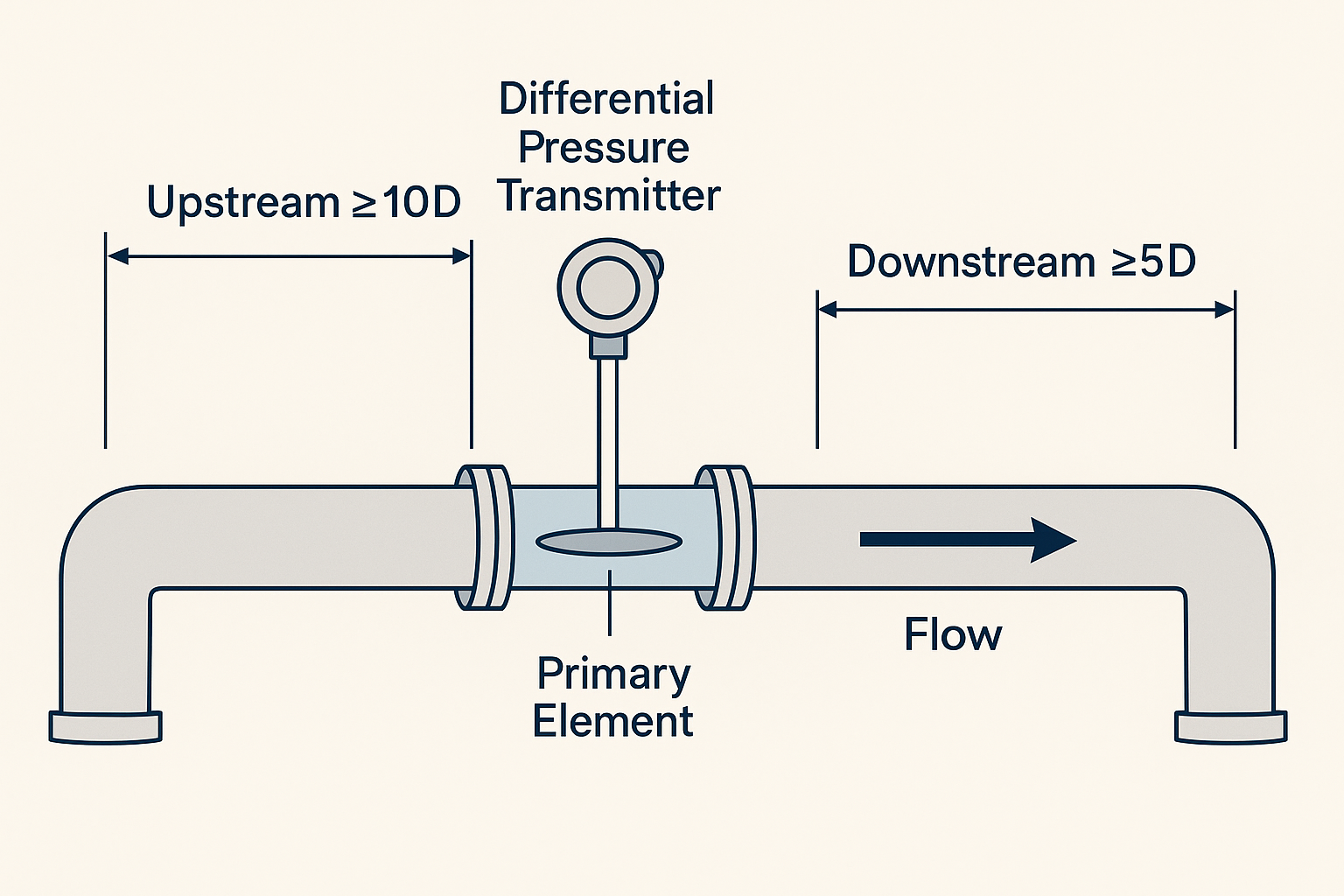
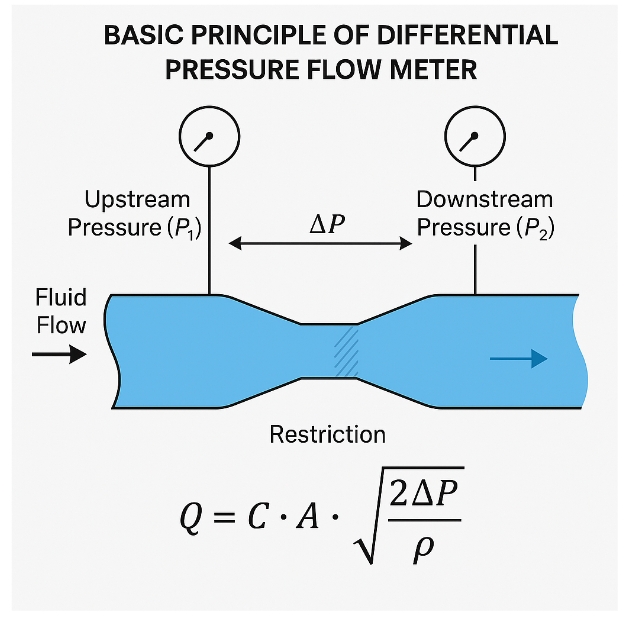
Measures flow rate by detecting the pressure drop across a restriction (e.g., orifice plate, venturi, or flow nozzle) in the pipeline.
Output: Pressure signal, often with transmitter
Best for: High-pressure systems, wide flow ranges
📊 2. Performance Comparison
Feature
Vortex Flow Meter
Differential Pressure Flow Meter
Accuracy
±0.75% to ±1.0%
±0.5% to ±2.0% (depends on type)
Repeatability
High
High
Response Time
Fast (1–2 seconds)
Moderate (depends on damping)
Rangeability (Turndown Ratio)
~10:1
Up to 3:1 (standard), 10:1 (with smart DP)
Sensitivity to Flow Profile
Medium
High (requires careful installation)
🏭 3. Installation Requirements
Factor
Vortex
Differential Pressure (Orifice Example)
Straight-run piping
15–30 × DN (upstream)
10–40 × DN (more for elbows/reducers)
Pressure Taps
Not needed
Required (2 or 3-point tapping)
Mounting Position
Horizontal or vertical
Must align with pressure port orientation
Maintenance
Low (no moving parts)
Medium (impulse lines prone to clogging)
💡 DP meters with impulse tubes often require periodic purging, especially in dirty or wet media.
💸 4. Cost Consideration
Item
Vortex Flow Meter
DP Flow Meter (Orifice + Transmitter)
Initial Instrument Cost
$$
$$$ (transmitter adds cost)
Installation Cost
Moderate
High (tapping, impulse tubing, manifolds)
Maintenance Cost
Low
Medium to High
🔍 5. Suitable Media and Conditions
Application Scenario
Recommended Type
Saturated or superheated steam
✅ Vortex or ✅ DP
High-viscosity liquids
❌ Vortex, ✅ DP (carefully)
Wet or dirty steam
⚠️ Both need conditioning
Very low flow (low Reynolds number)
❌ Vortex, ✅ DP with smart transmitter
Large pipelines
✅ Vortex (insertion type) or ✅ DP with averaging pitot
📌 6. Diagnostics and Smart Features
Vortex meters with digital electronics support self-diagnostics, Modbus/HART communication, and built-in temperature compensation.
DP flowmeters with smart transmitters can offer real-time diagnostics, square-root extraction, and integration into safety systems.
✅ Conclusion
If you need…
Go with…
Easy installation + low maintenance
✅ Vortex Flow Meter
Precise low-flow measurement + proven standard
✅ Differential Pressure
Budget-friendly steam measurement in mid-range
✅ Vortex Flow Meter
High-pressure system with strong engineering support
✅ DP Flow Meter
Both technologies are mature and reliable, but your choice should depend on process conditions, maintenance ability, and integration needs. When properly selected and installed, both can deliver accurate and stable flow measurement over many years.