
Overview
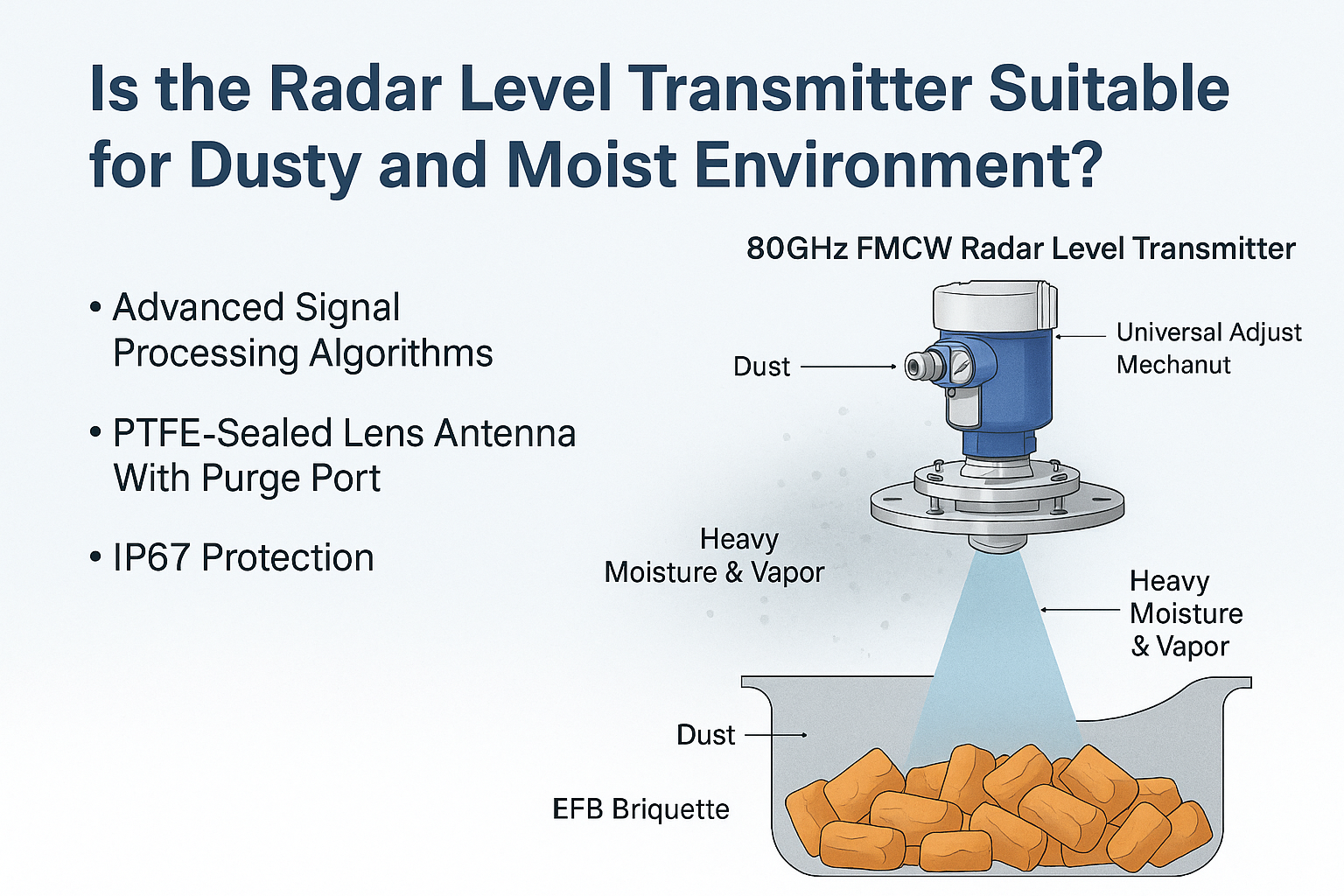
Radar level transmitters are instruments that use microwaves to measure liquid levels based on the time or frequency of microwave propagation through air. They offer non-contact, high-precision measurement that is unaffected by temperature and pressure, making them widely applicable across various industrial sectors.
1. Concept and Role of Dielectric Constant
The dielectric constant, also known as the relative permittivity, is a physical quantity that measures the ability of a medium to store an electric field. It is the ratio of the capacitance of a medium relative to the capacitance of a vacuum. A higher dielectric constant indicates that the medium can store more energy from an electric field.
In industrial processes, the dielectric constant of the measured medium plays a significant role in guided-wave radar measurements. The dielectric constant can be categorized into three groups based on its electrical properties:
Non-polar substances (εr < 2.8)
Weakly polar substances (2.8 ≤ εr ≤ 3.6)
Polar substances (εr > 3.6)
For example, in petrochemical plants, liquefied petroleum gas, oil, gasoline, and other hydrocarbons typically have a dielectric constant between 1.4 and 4.0, while alcohols, organic solvents, and oil-water mixtures fall between 4.0 and 10.0. Conductive liquids such as water-based solutions and weak acids or alkalis have a dielectric constant greater than 10.0.
2. Impact of Dielectric Constant on Radar Level Transmitters
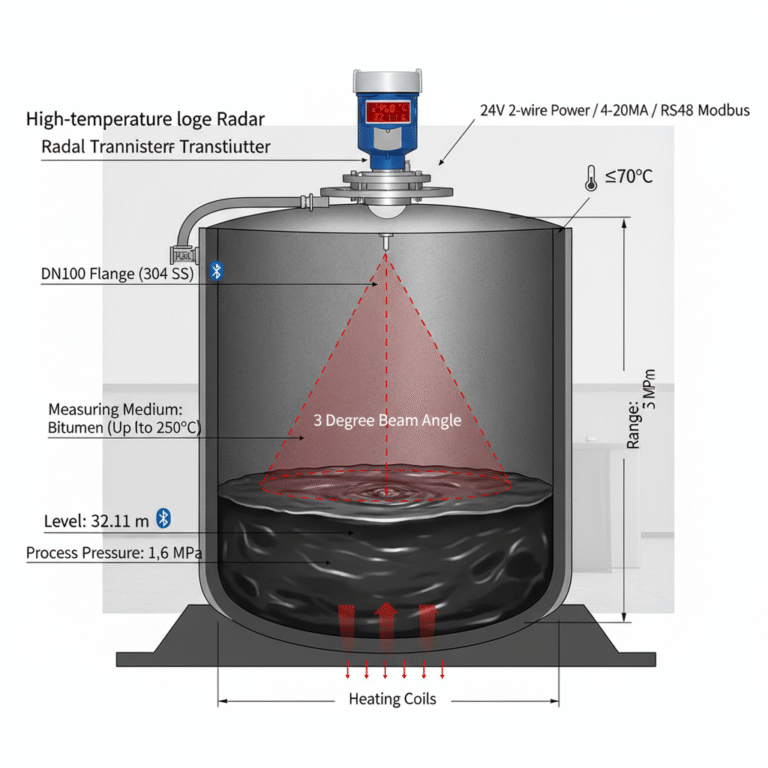
The dielectric constant is one of the key parameters that affects the accuracy of radar level measurement. In radar level transmitters, the dielectric constant is used to describe the electrical properties of the measured liquid. Since different liquids have different dielectric constants, the variation in the dielectric constant can be used to indirectly determine the liquid level.
1️⃣ Reflectivity: The higher the dielectric constant, the greater the microwave reflection at the surface of the substance. This results in a stronger echo signal, leading to more accurate measurements. Conversely, a lower dielectric constant reduces the reflection, resulting in a weaker signal and less reliable measurement. Therefore, radar level transmitters are more suitable for measuring liquids with high dielectric constants, such as water, alcohol, and glycerin.
2️⃣ Propagation Speed: Changes in the dielectric constant can affect the speed at which microwaves propagate through the medium, influencing the accuracy of the measurement. Therefore, radar level transmitters must be calibrated and compensated according to the dielectric constant of the medium being measured to minimize errors.
3️⃣ Interference: If the dielectric constant is unevenly distributed within the medium, it may cause multiple reflections and refractions of microwaves inside the material. This can interfere with the recognition and processing of echo signals. To improve measurement stability and reliability, radar level transmitters must employ signal processing techniques, such as filtering, averaging, and suppression.
3. Solutions to Mitigate the Impact of Dielectric Constant
To address the impact of dielectric constants on radar level transmitters, the following methods can be implemented:
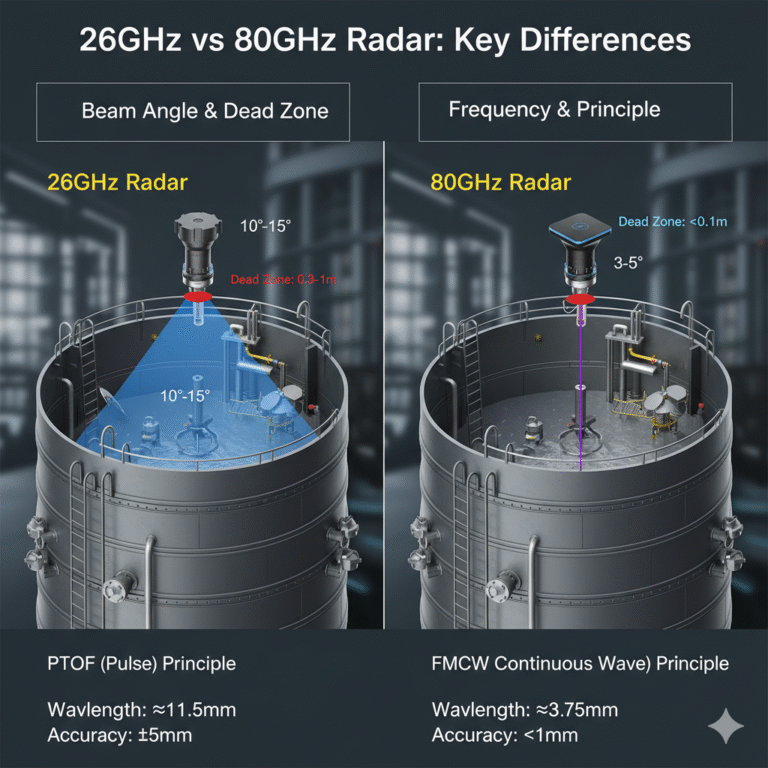
Selecting Appropriate Antennas and Frequencies: Choose suitable antennas and frequencies to enhance the radar signal’s penetration capabilities.
Using Compensated Level Transmitters: Employ level transmitters with compensation features that automatically adjust for the dielectric constant’s effect on the signal.
Expanding the Measurement Range: For high dielectric constant liquids, increase the measurement range to avoid exceeding the sensor’s capacity.
Adding Thin Film to the Liquid Surface: Adding a thin film layer to the surface of the liquid can improve measurement precision and stability.
Conclusion
The dielectric constant is a critical factor influencing the measurement accuracy of radar level transmitters. In practical applications, selecting the appropriate radar level transmitter based on the dielectric constant of the measured liquid and applying the appropriate mitigation strategies will ensure improved measurement precision and stability.