
What Needs to Change and Why It Matters
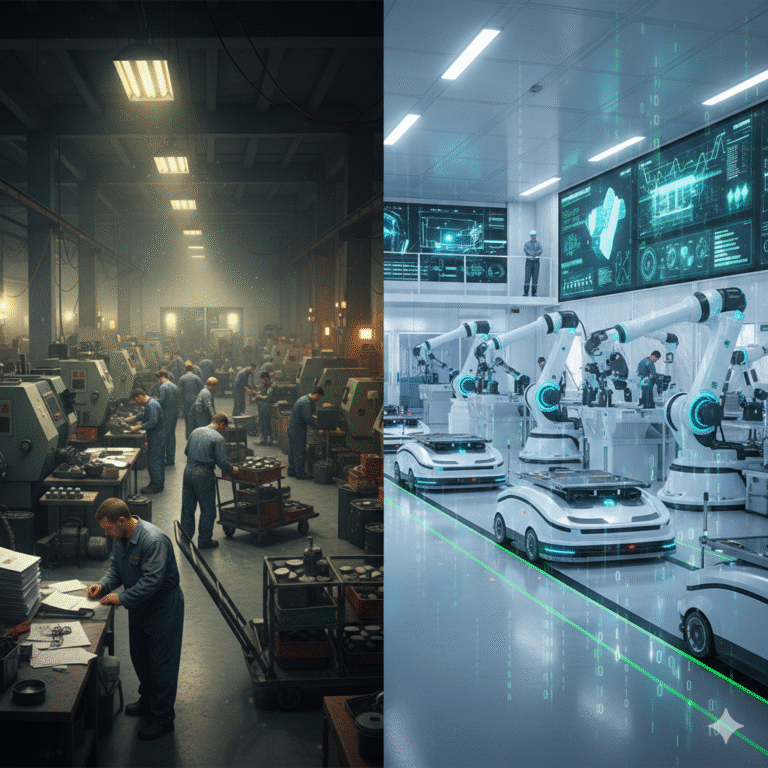
The wave of industrial intelligence is no longer a trend—it is a reality.
In many facilities, labor-intensive operations, manual decision-making, and fragmented processes are still quietly eroding efficiency and profitability.
The core question is no longer whether to transform, but how quickly transformation can be achieved.
1. Two Dimensions of Industrial Intelligence
Industrial modernization generally consists of two pillars:
(1) Full-process production intelligence
(2) Intelligent business and management systems
This discussion focuses on the production side, where digitalization and automation directly influence safety, throughput, quality, and cost.
2. From Automation to Intelligence Across the Entire Process
A modern production chain typically includes:
Raw material entry and storage
Metering and dosing
Manufacturing and reaction processes
Product filling, packaging, storage, and loading
Internal logistics and external dispatching
Along the way, numerous sub-disciplines are involved—process control, quality assurance, environmental protection, predictive maintenance, and safety monitoring.
(1) Smart Material Reception and Storage
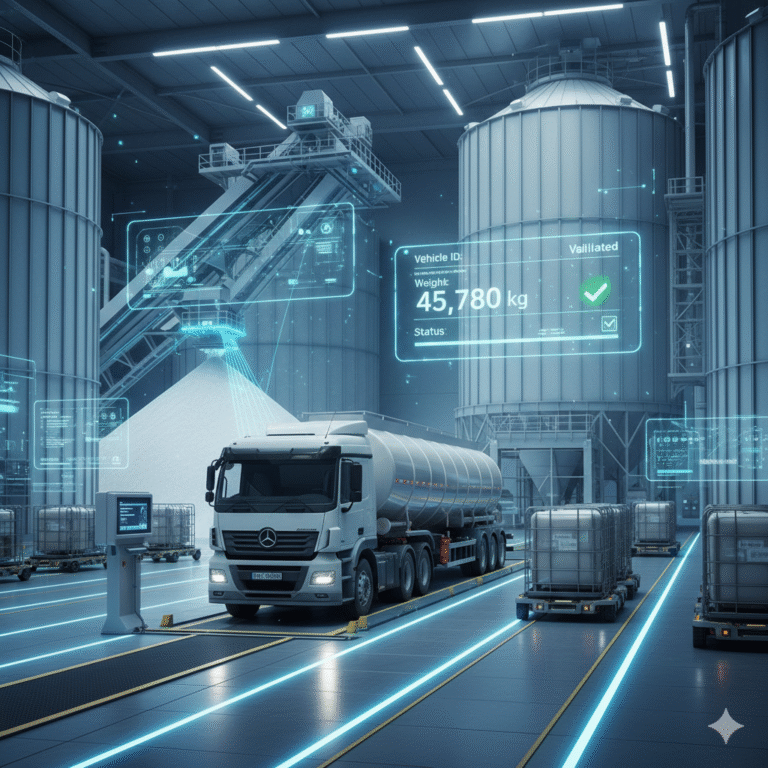
Unattended weighbridges and automated weighing systems eliminate manual intervention, reduce risk of error or fraud, and increase throughput.
Vehicle recognition, workflow integration, and real-time validation significantly shorten cycle time and remove queuing bottlenecks.
Bulk material handling systems such as stackers/reclaimers, guided by 3D vision and optimization strategies, enable storage, blending, and reclamation without continuous on-site operators.
(2) Automated Sampling and Quality Analysis
For materials where online measurement remains difficult, robotic sampling, preparation, and laboratory automation ensure representative samples while reducing manual labor and human bias.
(3) Raising Automatic Control Coverage
Improving the rate of automatic control is foundational.
Control loops that can operate under PID regulation should remain in automatic mode
Loops not yet suitable for automatic operation require joint refinement between operations and control engineers
In many facilities, control coverage remains below 70%, especially in specialty chemicals—leaving significant space for improvement.
Beyond basic PID, advanced process control (APC) can stabilize complex, multivariable systems, eliminate manual intervention, and enable partially or fully unattended production lines.
(4) Predictive Maintenance and Asset Health
Continuous monitoring of vibration, temperature, load, and corrosion allows early detection of abnormal operating conditions.
Machine-learning-enhanced analytics support fault diagnosis, optimize maintenance timing, and extend asset life while avoiding unscheduled downtime.
(5) Smart Inspection and Safety Assurance
Robotics, video analytics, acoustic sensors, and edge AI dramatically reduce the need for routine human patrols.
Personnel tracking, geofencing, electronic permits, and integrated safety systems improve compliance and ensure safe execution of maintenance activities.
(6) Automated Packaging, Storage and Dispatch
Solid, liquid, and gaseous products can be filled, packaged, palletized, warehoused, and loaded automatically.
Integration with ERP, warehouse systems, logistics platforms, and weighbridges enables hands-free movement from order creation to final shipment.

3. Intelligence as the Foundation of Digital Transformation
Smart systems convert physical operations into reliable streams of real-time data.
Once the process is measurable, controllable, and connected, digital platforms such as MES can orchestrate planning, scheduling, traceability, and optimization.
In other words:
Automation → Intelligence → Digital Operations → Smart Decisions
Intelligent transformation is not a one-time upgrade—it is the foundation that enables enterprises to safely scale output, enhance resilience, and remain competitive in a rapidly evolving industrial landscape.

Conclusion
Industrial intelligence touches every part of the value chain.
With ongoing advancements in automation, artificial intelligence, robotics, and cyber-physical systems, facilities that embrace transformation will realize higher efficiency, reduced risk, and differentiated capabilities—while those delaying the shift risk being left behind.