Radar level transmitters are widely used for continuous liquid measurement under demanding high-temperature operating conditions. Below is a concise technical overview.
Working Principle
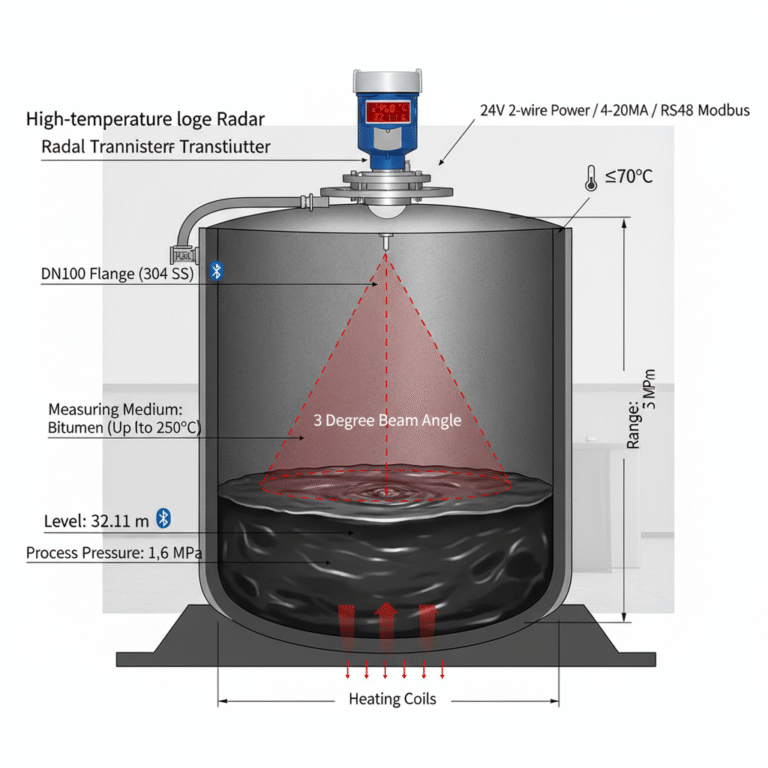
A high-temperature radar level transmitter operates based on high-frequency microwave pulse technology. The transmitter emits microwave pulses toward the surface of the liquid. These pulses travel at the speed of light, reflect from the liquid surface, and are received by the radar sensor.
By precisely measuring the time of flight between transmission and reception—combined with the known propagation velocity—the instrument calculates the distance to the surface and accurately determines liquid level, regardless of process pressure or temperature.
Key Performance Features
High-temperature radar level transmitters offer:
✔ Non-contact measurement No physical contact with hot or corrosive media, ensuring high reliability and long service life.
✔ Wide temperature capability
Standard designs: –40°C to 250°C
Enhanced high-temperature models: 300°C–1200°C This allows use in extremely harsh thermal environments.
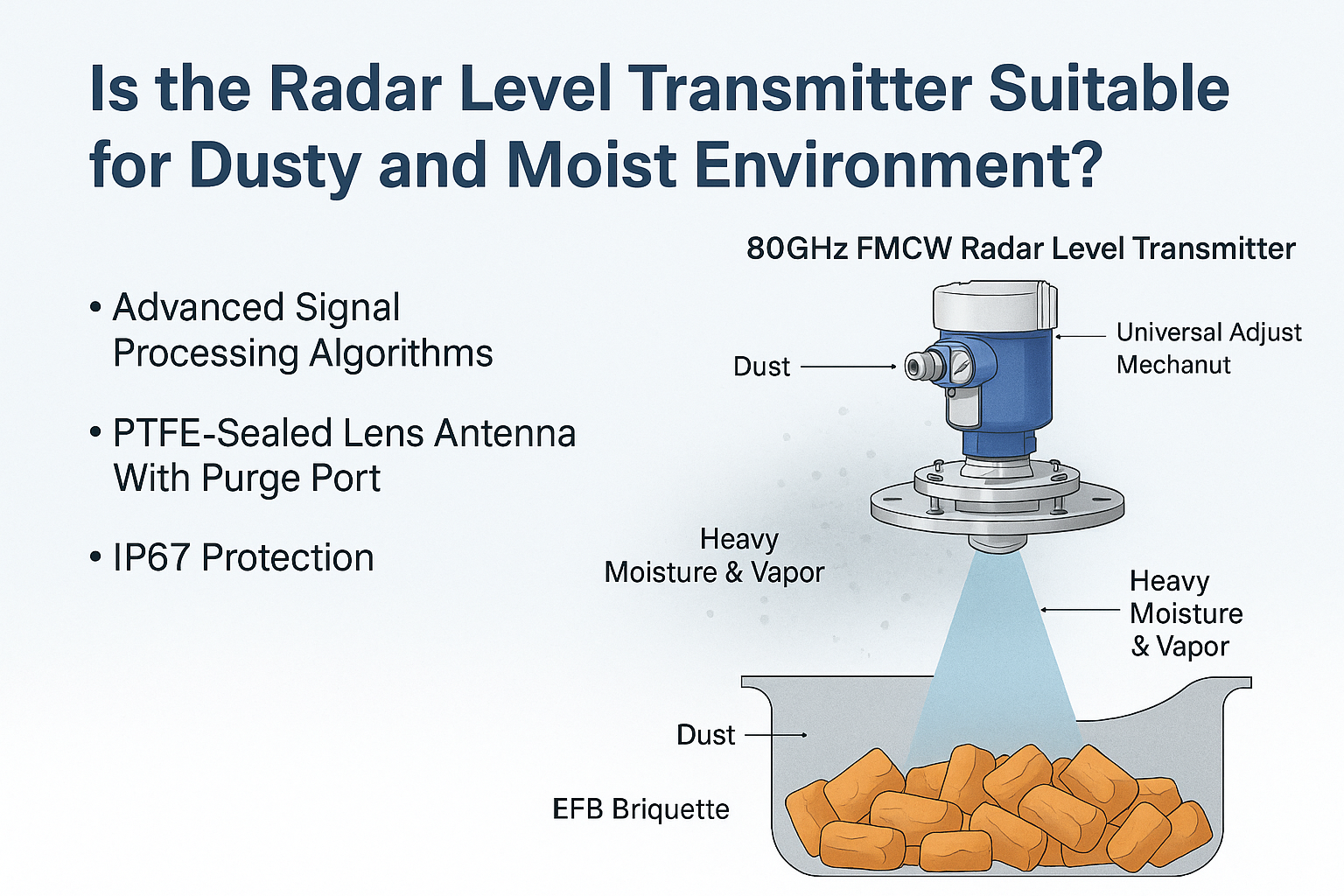
✔ Strong interference resistance Advanced signal processing enables reliable reading even in the presence of:
Heavy steam
Condensation
Dust
Foaming surfaces
✔ Chemical and mechanical durability Optional materials such as Hastelloy, PTFE, ceramic lenses, and isolated antenna systems further enhance resistance to corrosive conditions.
Common Types
High-temperature radar sensors are available in several configurations depending on process conditions:
1. Standard High-Temperature Radar
Optimized housing and sealing structure
Suitable for most applications up to ~200°C
2. Ultra-High Temperature Radar
Reinforced thermal isolation and cooling design
Applicable for 350°C and above
Ideal for reactors, thermal oil circuits, molten salt, etc.
Uses a probe (rod or cable) to guide microwave signals
Excellent performance in vapor, foam or narrow vessels
Example: Shanghai Xingshen RF2030 model, rated up to 520°C
Suitable for high-pressure steam service
Typical Application Industries
High-temperature radar level measurement is widely applied in heavy-duty industrial sectors, including:
Chemical processing – molten salt reactors, polymerization tanks
Metallurgy – blast furnace slag trenches and molten metal feed
Energy and utilities – boiler drum water level monitoring, steam systems
Environmental waste treatment – incinerator ash and molten residue tanks
Radar technology ensures stable level monitoring in environments where mechanical floats or differential pressure devices cannot survive.
Selection Considerations
When choosing a high-temperature radar level transmitter, evaluate the following:
Temperature rating Select a sensor with at least 20% safety margin beyond maximum process temperature.
Medium characteristics Consider corrosion, vapor content, dielectric constant, and build-up tendencies.
Antenna and wetted materials Options include Hastelloy C, ceramic or PTFE protection depending on chemistry.
Process and installation conditions Pressure class, nozzle size, insertion length, horn vs. lens antenna type.
Electronic and communication options Ensure compatibility with plant control requirements: 4–20 mA / HART / Modbus / Profibus.
IP rating & diagnostics High IP sealing, signal filtering algorithms, and echo curve diagnostics improve reliability in harsh conditions.
✔ Conclusion
High-temperature radar level transmitters provide robust, accurate, and maintenance-free level monitoring across industries where traditional instruments fail. With correct type selection and material configuration, radar offers long-term reliability even in high-temperature, high-pressure, and corrosive environments.