Flow Meter Calibration Intervals and Technical Guidelines - Just Measure it

Flow Meter Calibration Intervals and Technical Guidelines

Accurate and reliable flow measurement requires periodic calibration. However, calibration intervals vary significantly depending on the instrument type, process medium, operating conditions, and industry compliance requirements.
This document provides a comprehensive, instrument-specific overview of recommended calibration periods, key technical checkpoints, calibration methods, and adjustment rules widely adopted in water treatment, chemical, oil & gas, and industrial process applications.

1. Differential Pressure Flow Meters

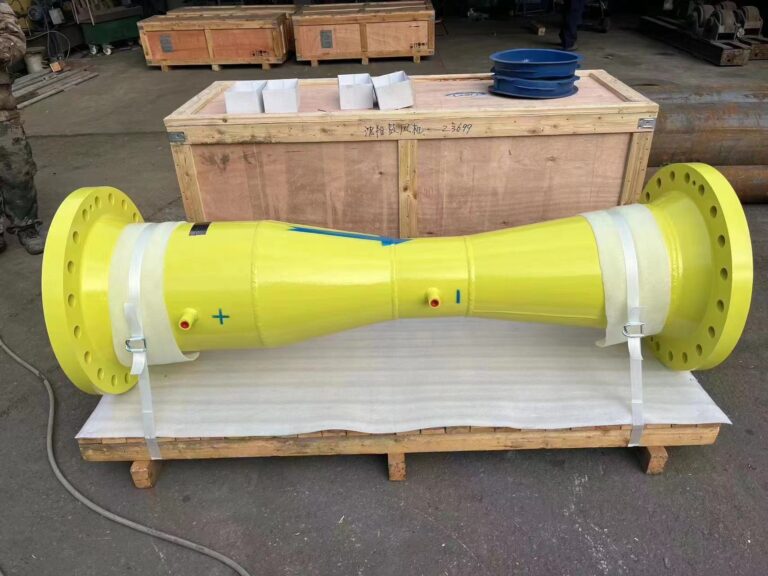
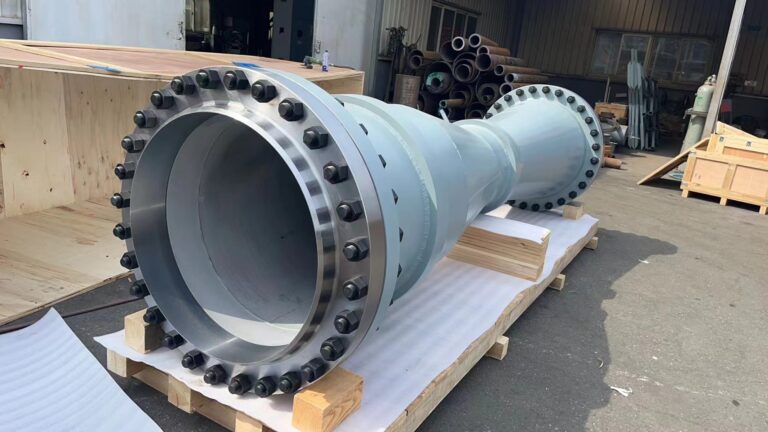
(Orifice plates, Venturi, V-cone flow meters)

Recommended Calibration Interval

  • Normal service (clean media, stable temperature/pressure): 12–24 months

  • Harsh service (corrosive/dirty media, high temperature/pressure): 6–12 months

  • Custody transfer / safety-critical loops: Every 6 months (mandatory in many jurisdictions)

Key Calibration Parameters

  • DP–flow linearity

  • Zero drift

  • Span accuracy

  • Orifice/V-cone wear (edge erosion ≥0.1 mm requires replacement)

Calibration Methods

1) Field calibration

  • Parallel comparison with a certified DP device

  • Reference measurement using a portable ultrasonic flow meter

2) Laboratory calibration

  • Use a certified pressure calibrator (deadweight tester or piston gauge)

  • Inspect orifice edge, plate flatness, surface condition

Important Notes

  • Remove fouling, scaling, or deposits before testing

  • Ensure pipeline isolation and safe depressurization

2. Ultrasonic Flow Meters

(Clamp-on, insertion, and inline types)

Recommended Calibration Interval

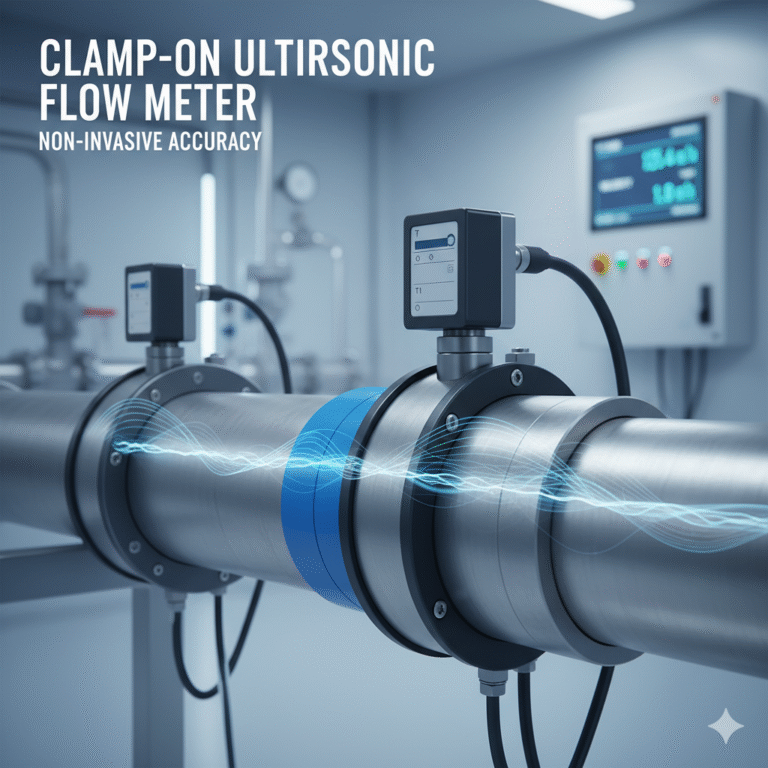
  • Clamp-on: 12–18 months (couplant aging affects transmission)

  • Insertion / Inline:

    • Clean liquids: 12–24 months

    • High solids/viscosity media (slurry, oils): 8–12 months

Key Calibration Parameters

  • Transit-time accuracy

  • Zero stability

  • Signal quality

  • Pipe diameter/material compensation (inline type)

Calibration Methods

1) Field calibration

  • Volumetric method (gravimetric/volumetric tank)

  • Master meter method using a certified electromagnetic or turbine meter

  • Reapply couplant and ensure good acoustic coupling for clamp-on units

2) Laboratory calibration

  • Calibration on accredited flow benches

  • Confirm influence of pipe thickness, roughness, and sensor positioning

Important Notes

  • Ensure no air bubbles in pipe

  • Clean outer pipe surface for clamp-on installation

3. Electromagnetic Flow Meters

Recommended Calibration Interval

  • Normal conductive media (water, acids, alkali): 18–24 months

  • Harsh media (slurry, pulp, magnetic particles): 12 months

  • Billing / environmental monitoring: 6–12 months (often legally required)

Key Calibration Parameters

  • Electrode insulation resistance

  • Excitation current stability

  • Full-scale accuracy (typically ±0.5% to ±1.0%)

Calibration Methods

1) Field calibration

  • Master meter comparison at multiple flow points (20%, 50%, 80%)

  • Offline verification by removing sensor and testing on accredited equipment

2) Operational checks

  • Run “zero-point verification” with no flow

  • If zero drift exceeds tolerance, recalibration is mandatory

Important Notes

  • Grounding resistance should be ≤4 Ω to avoid EMI

  • Clean electrode surface without scratching the liner (especially PTFE liners)

4. Turbine Flow Meters

Recommended Calibration Interval

  • Clean, low-viscosity liquids or gases: 12 months

  • Heavy oils / media with particulates: 6–8 months

  • Gas turbine meters: 12 months (check temp/pressure compensation)

Key Calibration Parameters

  • Rotor speed linearity

  • Bearing friction and wear

  • Pressure loss characteristics

  • K-factor stability (critical for accuracy)

Calibration Methods

1) Laboratory calibration

  • Liquid standard benches / sonic nozzle rigs

  • Recalculate K-factor; deviation > ±0.3% requires correction

2) Field inspection

  • Check for rotor damage, bearing looseness, fouling

  • Rotor must spin freely with no friction or abnormal noise

Important Notes

  • Verify upstream/downstream straight-run requirements (e.g., ≥10D / ≥5D)

  • Temperature and pressure compensation modules must be validated

5. Vortex Flow Meters

Recommended Calibration Interval

  • Gases/steam: 18–24 months

  • Liquids (clean media): 12–18 months

  • High-temperature steam (>300°C): 12 months

Key Calibration Parameters

  • Frequency–flow linearity

  • Sensor sensitivity and signal conditioning

  • Zero drift and noise filtering

Calibration Methods

1) Field calibration

  • Use a certified reference vortex or electromagnetic meter

  • For steam: record pressure & temperature to recalculate standard flow

2) Laboratory calibration

  • Test vortex shedding frequency under controlled flow conditions

  • Replace damaged piezoelectric sensors before calibration

Important Notes

  • Clean the bluff body to remove scale deposits

  • Avoid damaging the sharp edges of the vortex generator

6. Calibration Interval Adjustment Rules

1. Condition-based adjustment

If a flow meter experiences two or more failures within one cycle, shorten the interval by 50%.

2. Process change adjustment

If the medium or operating conditions change significantly (e.g., clean water → sludge), shorten interval by 30–50%.

3. Industry regulations

  • Chemical plants
    Must comply with standards such as GB 50093-2013, limiting safety-loop instrument calibration to ≤12 months.

  • Oil & gas / natural gas custody transfer
    Follow JJG 1037-2008 and similar standards requiring calibration every 6 months.

Conclusion

Regular calibration is essential for ensuring stable, accurate, and compliant flow measurement in industrial applications. By following the recommended intervals and technical guidelines provided in this document, users can significantly reduce measurement uncertainty, extend instrument life, and comply with industry standards.

If you require calibration services, factory verification, or third-party traceable certificates, we are available to support your specific application.

Share This Story, Choose Your Platform!

Contact Us

    Please prove you are human by selecting the truck.
    Translate »