
Electromagnetic flowmeters operate based on Faraday’s law of electromagnetic induction and are used exclusively for conductive liquids (conductivity ≥ 5 μS/cm). In the chemical industry, the core focus of selection revolves around medium compatibility, operating conditions, accuracy/signals, installation/explosion-proof requirements, and structural/functions. Below are practical selection rules specifically for chemical industry scenarios.
1. Prerequisites: Determining Medium Conductivity (Critical Check)
Basic Requirements (Standard Type)
Required: Conductivity ≥ 5 μS/cm (tap water typically 100–500 μS/cm, acid/base solutions ≥10 μS/cm).
Not Suitable: Pure water, oils, organic solvents, alcohol, gasoline (non-conductive, no signal).
Low Conductivity Medium: For low-conductivity fluids like slurries, sewage, or weak electrolytes, use capacitive or high-frequency excitation types, which can measure down to 0.1 μS/cm.
Quick Assessment for Chemical Media
Suitable: Water, acid/base salt solutions, slurry, paper pulp, sewage, and solid-liquid mixtures.
Not Suitable: Pure steam, oils, organic solvents, high-purity water (requires specific conductivity-based flowmeters).
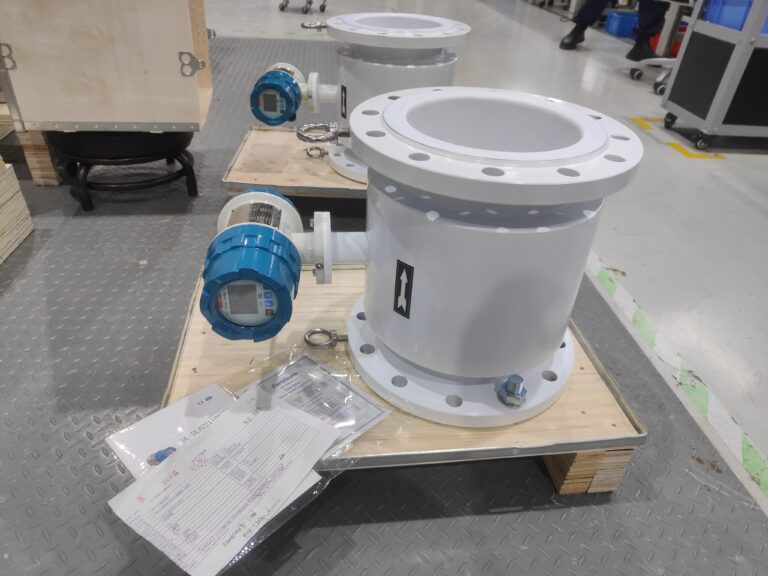
2. Core Selection Criteria: Liner and Electrodes (Critical for Chemical Use)
(1) Liner Material Selection (Based on Corrosion/Temperature/Wear Resistance)
PTFE/PFA (Polyfluoroethylene) – First Choice for Chemicals
Properties: Highly resistant to strong acids, bases, high temperatures, non-stick, and aging.
Temperature Range: -20 to 180°C (PFA up to 260°C).
Suitable for: Sulfuric acid, hydrochloric acid, nitric acid, sodium hydroxide, highly corrosive media, sanitary applications.
Not Suitable for: Abrasive environments (solid content ≥5%).
Polyurethane Rubber (PU) – Best for Abrasive Applications
Properties: Exceptional wear resistance, resistant to particle erosion.
Temperature Range: -10 to 80°C.
Suitable for: Mine slurry, coal slurry, sewage, high solid content fluids.
Not Suitable for: Strong corrosion or high temperatures.
Chloroprene/Butyl Rubber (CR/BR) – Cost-Effective Option
Properties: Good general corrosion resistance, cost-effective.
Temperature Range: -10 to 80°C.
Suitable for: Recirculating water, clean water, neutral sewage, non-corrosive media.
Not Suitable for: Strong acids or high temperatures.
Ceramic (Al₂O₃) – Best for High Wear and High Temperature
Properties: Highly resistant to wear, corrosion, and high temperatures.
Temperature Range: -20 to 250°C.
Suitable for: High solid content, extreme wear, and high-temperature media.
Not Suitable for: Brittle, poor impact resistance, and high cost.
Liner Selection Mnemonic
Strong Corrosion → PTFE
High Wear → PU
General Water → Rubber
High-Temperature Wear → Ceramic
(2) Electrode Material Selection (Based on Medium Corrosiveness)
316L Stainless Steel (Standard)
Suitable for: Clean water, recirculating water, neutral sewage, weakly corrosive fluids.
Not Suitable for: Hydrochloric acid, sulfuric acid, chloride-containing media (prone to pitting).
Hastelloy C-276 (HC) – Preferred for Strong Corrosive Fluids
Suitable for: Nitric acid, mixed acids, oxidizing acids, medium-strength corrosion.
Not Suitable for: Concentrated hydrochloric acid, high-temperature hydrofluoric acid.
Titanium (Ti) – Ideal for Chloride-Containing Media
Suitable for: Seawater, brine, sodium hypochlorite, chloralkali, ammonia.
Not Suitable for: Concentrated hydrochloric acid, hydrofluoric acid, dry chlorine gas.
Tantalum (Ta) – Ultimate for Corrosion Resistance
Suitable for: Concentrated hydrochloric acid, concentrated sulfuric acid, aqua regia, high-temperature strong corrosive media.
Not Suitable for: Hydrofluoric acid, fluorides, high-temperature alkaline solutions.
Platinum (Pt) – For Ultra-High Temperature/Sanitary Applications
Suitable for: Ultra-high temperatures, strong corrosives, food, pharmaceutical, sanitary-grade applications.
Not Suitable for: Extremely expensive.
Electrode Selection Mnemonic
Clean Water → 316L
Nitric/Mixed Acid → HC
Brine/Chloride → Ti
Concentrated Acid/Sulfuric Acid → Ta
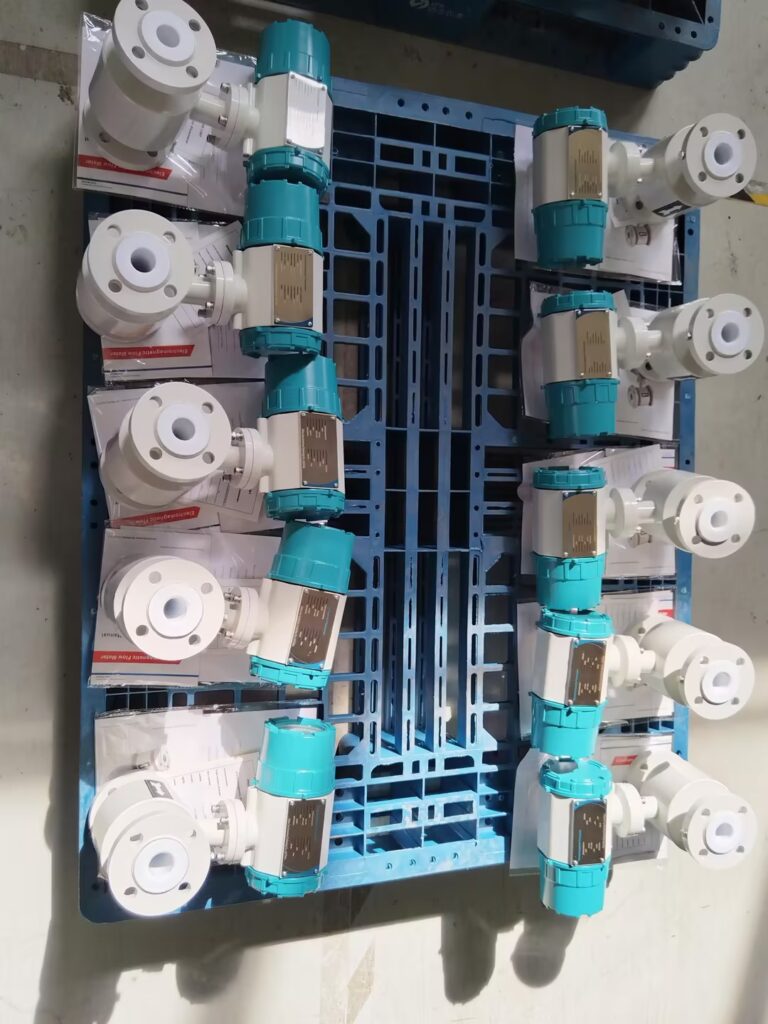
3. Matching Operating Conditions: Temperature/Pressure/Flow Rate/Diameter
(1) Temperature Range
Standard: -20 to 120°C (rubber liner).
High Temperature: -20 to 180°C (PTFE/PFA).
Ultra-High Temperature: Up to 260°C (PFA/Ceramic).
Selection Rule: Liner temperature resistance ≥ maximum medium temperature, with a 10°C margin.
(2) Pressure Rating (Common for Chemical Applications)
Standard: DN300 and below: 1.6 MPa; DN350 and above: 1.0 MPa.
High Pressure: 2.5/4.0/6.4/10 MPa (flange type, customized).
Selection Rule: Nominal pressure ≥ pipe design pressure, strictly avoid overpressure.
(3) Flow Rate and Diameter (Core Matching)
Ideal Flow Velocity: 1.0–3.0 m/s.
Acceptable: 0.3–10 m/s (below 0.3 m/s: weak signal; above 10 m/s: excessive wear).
Chemical Industry Control: 1.5–2.5 m/s (balanced precision and lifespan).
Diameter Selection Principle:
Preferred: Flowmeter diameter = pipeline diameter (DN15–DN3000).
Low Flow (≤0.5 m/s): Reduce diameter one size (e.g., DN100 → DN80) to increase flow velocity.
High Flow (≥4 m/s): Increase diameter one size to reduce wear.
Verification: Maximum flow ≤ 80% of full-scale capacity, leaving 20% margin.
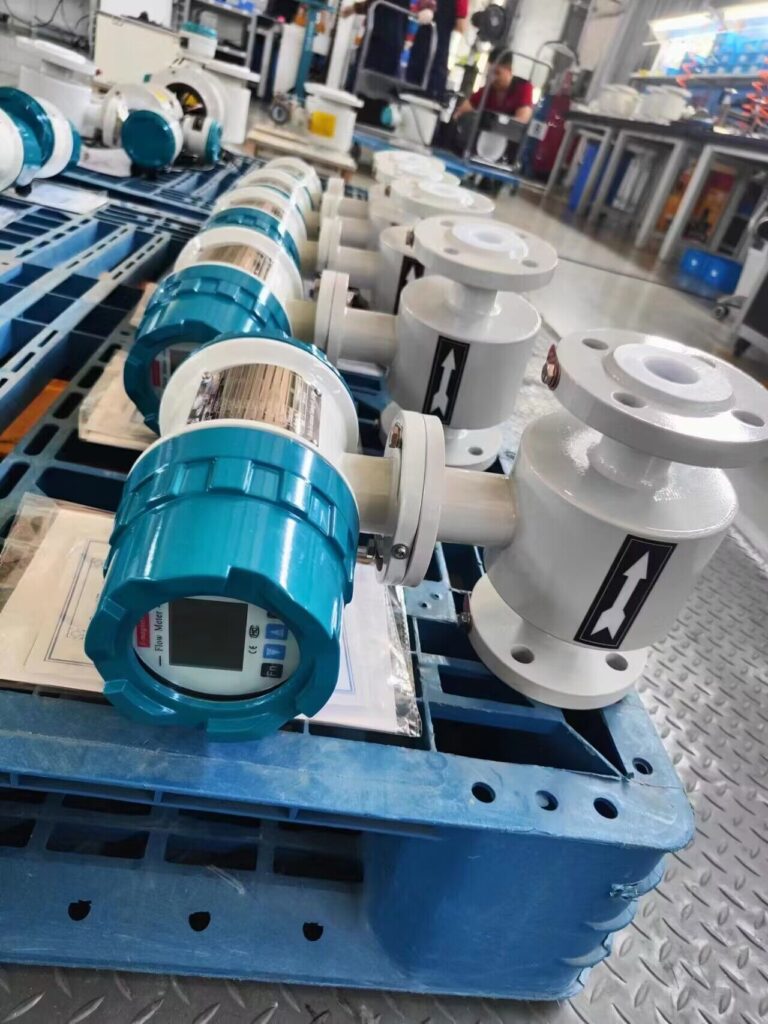
4. Accuracy and Signal: Select Based on Application
(1) Accuracy Levels (Chemical Scenarios)
Trade Settlement/Precise Measurement: ±0.2%–±0.3% R (high accuracy type).
Process Control/Proportioning: ±0.5% R (mainstream).
Monitoring/Sewage: ±1.0% R (economical type).
(2) Excitation Method (Signal Stability)
Low-Frequency Square Wave (Mainstream): Strong anti-interference, no polarization, suitable for solid-containing/slurry media.
Industrial Frequency Excitation: Weak anti-interference, obsolete.
High-Frequency Excitation: Suitable for low conductivity media (≥0.1 μS/cm).
(3) Output Signals (Chemical DCS/PLC)
Analog: 4–20 mA (two-wire/four-wire, transmission ≤ 1 km).
Digital: HART, Modbus-RTU, Profibus-DP, FF (chemical mainstream).
Pulse: For cumulative measurement (1 Hz = 1 m³).
Selection Rule: Ensure compatibility with control system protocol, preferably with HART (remote diagnostics).
(4) Key Functions (Essential for Chemicals)
Air Detection: Avoid errors due to non-full pipe conditions (common in chemical pipelines).
Low Signal Elimination: Eliminate zero-point drift (eliminate signals <5% full-scale).
Bidirectional Measurement: For bidirectional flow measurement in chemical circulation/return.
Electrode Pollution Alarm: Scale buildup/corrosion warning.
Explosion-Proof: Exd II BT4/Exia II CT4 (common in hazardous areas).
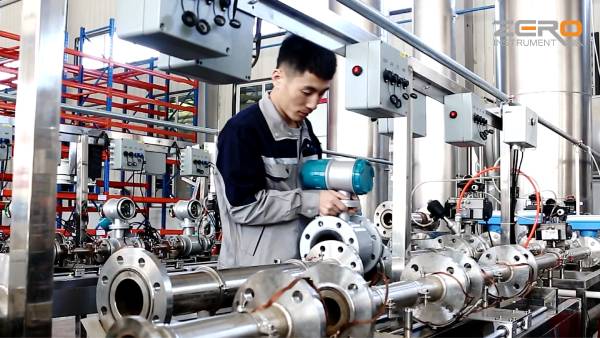
5. Installation and Environment: Adaptation to Chemical Site
(1) Installation Location (Mandatory Requirements)
Full Pipe Installation: Must be installed in a full pipe, strictly avoid partial pipe installations (vertical installation must be from bottom to top).
Straight Pipe Sections: Upstream ≥ 5 DN, downstream ≥ 3 DN (DN = diameter), avoid elbows, valves, reducers, and pump outlets.
Interference-Free: Keep away from motors, inverters, and strong magnetic fields (≥1 m).
Avoid Vibration: Use anti-vibration models and fix supports.
(2) Protection and Explosion-Proof
Protection Rating:
Indoor Dry: IP65.
Outdoor/Wet/Submerged: IP68 (submersible type).
Explosion-Proof Rating:
Hazardous Areas (Zone 1/2): Exd II BT4 (flameproof) or Exia II CT4 (intrinsically safe).
Ordinary Areas: No explosion-proof required.
(3) Grounding (Electromagnetic Flowmeter Lifeline)
Must Ground: Sensor/transformer/pipeline must be grounded separately with ground resistance <10Ω.
Insulated Pipelines: Add grounding rings/ground electrodes to eliminate static interference.
Chemical Industry Caution: Never share a ground with electrical equipment (can introduce interference).
6. Structure and Connection: Common Chemical Industry Forms
(1) Connection Types
Flange Connection (Mainstream): DN15–DN3000, preferred for chemicals.
Clamp Connection: Sanitary (food/pharmaceutical).
Threaded Connection: Small diameters (DN15–DN50).
Insertion Type: Large diameters (DN500 and above), retrofitting.
(2) Sensor Structure
Integrated Type: Sensor + transmitter integrated, low cost, easy installation.
Split Type: Sensor on-site, transmitter in the control room (high temperature/corrosion/explosion-proof areas).
Selection Rule: Choose split type for high temperatures (>80°C), strong corrosion, or hazardous areas.
7. Chemical Industry Selection Process (Practical Flow)
Determine Medium: Conductivity ≥ 5 μS/cm, exclude insulating media.
Select Liner: Based on corrosion/temperature/wear (PTFE/PU/rubber/ceramic).
Select Electrodes: Based on medium corrosiveness (316L/HC/Ti/Ta).
Set Diameter: Based on flow velocity 1.0–3.0 m/s, verify max flow ≤ 80% of full scale.
Set Temperature and Pressure: Liner temperature ≥ medium temperature, nominal pressure ≥ design pressure.
Set Accuracy: Trade 0.2%, control 0.5%, monitoring 1.0%.
Set Signals: 4–20 mA + HART/Modbus, match DCS.
Set Functions: Air detection, low signal elimination, bidirectional, explosion-proof.
Installation: Full pipe, straight pipe, grounding, protection.