
Flow meter Archives - Page 40 of 93 - Just Measure it

Flow meter

Quick differentiation between common instrument electrical interfaces M20×1.5 and 1/2″NPT

The electrical interfaces of field instruments have many specifications and sizes depending on the manufacturer and application scenarios… Domestic and foreign, metric, imperial, sealed and non-sealed, who is not confused when encountering them? This article mainly introduces the two specifications of M20×1.5 and 1/2″NPT that are often encountered by instrument engineers and are easily confused. […]
Quick differentiation between common instrument electrical interfaces M20×1.5 and 1/2″NPT Read More »

Why do flowmeters require low flow cutoff? What is the appropriate low flow cutoff value?

When there is no medium flow, the flow meter may produce small flow fluctuations due to some reasons, such as pipe vibration, installation stress, electromagnetic interference, or medium disturbance caused by changes in working conditions. The flow meter sensor is prone to introduce false interference signals. Measured values, these “false flow” cannot truly reflect the

Why do flowmeters require low flow cutoff? What is the appropriate low flow cutoff value? Read More »

Many instrument workers do not pay attention to the precautions when using signal tubes!

When electrical instrument workers (especially maintenance electricians, instrument workers, etc.) perform control panel wiring, troubleshooting, and maintenance, the most indispensable thing is the line number tube. In the process of wiring electrical instruments, wire tubes are an indispensable and important component. Mature wiring technology is certainly inseparable from wire number tubes, but in actual application,

Many instrument workers do not pay attention to the precautions when using signal tubes! Read More »

What do the units %LEL, %VOL, PPM and mg/m3 displayed by the gas detector/gas detector mean? Common unit conversion relationships and interpretation of common terms

Toxic and flammable gas leaks pose a constant threat to industrial plants, their employees, and those who live nearby. Continuous, reliable operation of equipment and your familiarity with gas detection systems are also critical. There are some common units and common terms involved when using gas detectors. Do you know what they are?    Common

What do the units %LEL, %VOL, PPM and mg/m3 displayed by the gas detector/gas detector mean? Common unit conversion relationships and interpretation of common terms Read More »

What should you do when chemical instrumentation suffers physical corrosion or chemical corrosion?

An important feature of modern chemical production is the large-scale and highly automated production equipment. Automation is the basic condition and important guarantee for the safe operation, smooth operation and improvement of efficiency of production equipment. However, with the development of production and the improvement of automatic control level, the corrosion problem of chemical instruments

What should you do when chemical instrumentation suffers physical corrosion or chemical corrosion? Read More »

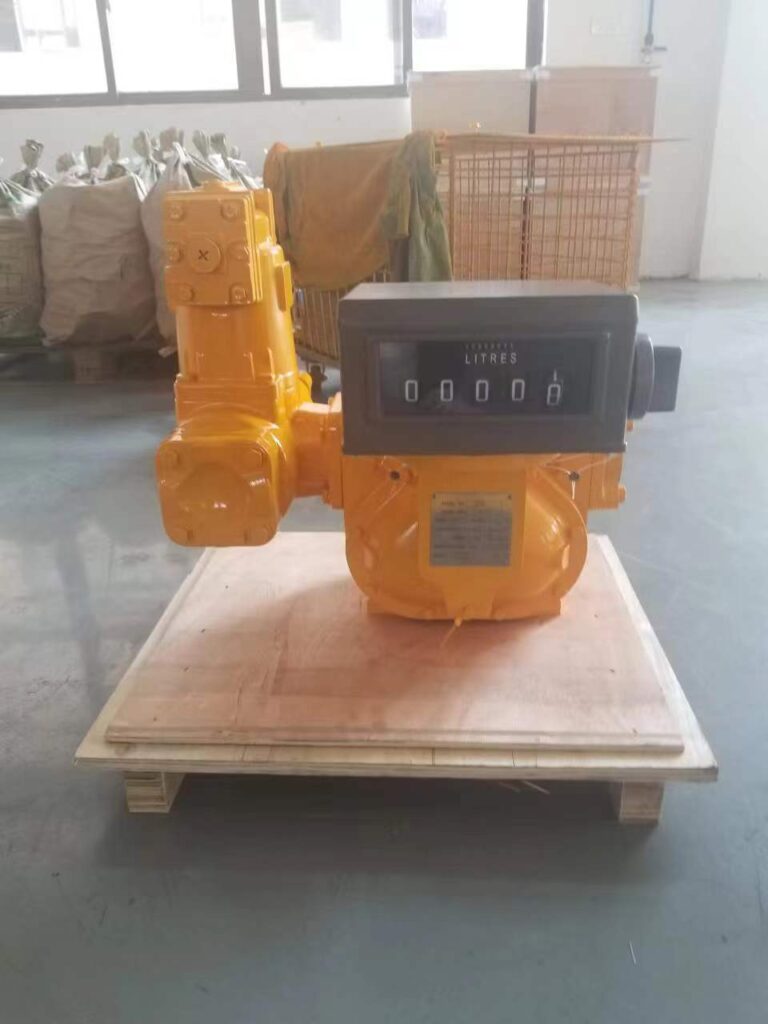
positive displacement flow meter Counter with strainer and air eliminator

M series meter is a positive displacement meter for liquids. They are designed for liquid metering both in transfer and process control applications. Thanks to their design they are easy to keep and can suit a wide range of applications, The meter consists of a housing where two bladed displacement rotors and a central single

positive displacement flow meter Counter with strainer and air eliminator Read More »

Considering that the anti-explosion protection class of flowmeters is II 2G Exdb IIB/IIC T*Gb, ATEX, is there a need to use a barrier between the PLC and the transmitter?

The anti-explosion protection class II 2G Exdb IIB/IIC T* Gb, ATEX indicates that the flowmeter is suitable for use in areas where there is a risk of explosion due to gases (Zone 1, for example). This classification means the device is designed to prevent ignition of surrounding explosive atmospheres and is constructed to a high

Considering that the anti-explosion protection class of flowmeters is II 2G Exdb IIB/IIC T*Gb, ATEX, is there a need to use a barrier between the PLC and the transmitter? Read More »

Why Modbus needs to be converted to ProfiNET

Modbus and ProfiNET represent different stages of development of industrial communications, each with its own advantages and disadvantages. Modbus is simple and easy to use, suitable for small systems; ProfiNET is efficient and stable, suitable for large and complex networks. Converting Modbus to ProfiNET can improve system performance and scalability. In actual scenarios, the production

Why Modbus needs to be converted to ProfiNET Read More »

Translate »