
Pump Outlet, Compressor Outlet and Common Industrial Applications Explained
A fluid system does not warn you before it starts flowing backward.
When reverse flow occurs, it can damage pumps, contaminate process materials, disturb production operations, and even create serious safety risks.
A check valve (non-return valve) is a simple but critical component installed in piping systems to allow flow in one direction while preventing reverse flow.
Although check valves are relatively inexpensive, incorrect installation or improper selection can lead to:
- Pump damage
- Water hammer
- Equipment failure
- Process contamination
- Unexpected downtime
So, where exactly should a check valve be installed?
1. Why Are Check Valves Important?
The main purpose of a check valve is to automatically stop reverse flow without requiring external control.
Unlike control valves, check valves operate according to the pressure difference between the inlet and outlet.
When the upstream pressure is higher than the downstream pressure:
→ The valve opens and allows flow.
When the flow direction reverses:
→ The valve closes and prevents backflow.
Common applications include:
- Pump discharge pipelines
- Compressor outlet lines
- Boiler feed water systems
- Chemical transfer pipelines
- Fuel gas systems
- Water treatment systems
- Fire protection systems
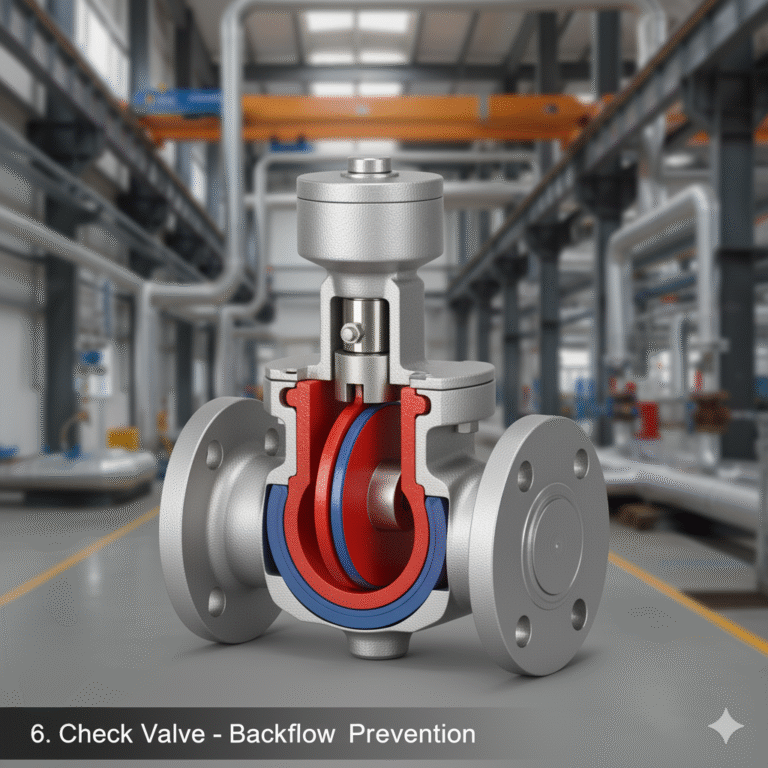
2. Common Locations Where Check Valves Are Installed
2.1 Pump Discharge Pipeline
One of the most common applications is at the pump outlet.
A typical arrangement is:
Pump → Check Valve → Isolation Valve → Process Pipeline
The check valve protects the pump by preventing:
- Reverse rotation of the pump shaft
- Backflow into the pump casing
- Pressure shock caused by sudden flow reversal
For centrifugal pumps, installing a check valve on the discharge side is especially important because the pump cannot stop reverse flow by itself after shutdown.
Installation considerations:
- The check valve should be installed close enough to protect the pump.
- Avoid installing it immediately at the pump outlet if severe turbulence or vibration exists.
2.2 Compressor Outlet Pipeline
Check valves are commonly installed at compressor discharge lines.
The main purpose is to prevent:
- High-pressure gas flowing back into the compressor
- Reverse rotation after shutdown
- Pressure equalization between different systems
For reciprocating and centrifugal compressors, the correct check valve selection is important because rapid closing performance may be required.
2.3 Utility and Process Connection Lines
Check valves are often installed where one system connects to another system.
Examples:
- Instrument air supply
- Nitrogen blanketing systems
- Cooling water systems
- Steam systems
- Chemical injection lines
The valve prevents contamination or reverse flow from the process side into the utility system.
2.4 Boiler Feed Water and Steam Systems
In boiler systems, check valves are installed to prevent:
- High-pressure steam or water flowing backward
- Damage to pumps and auxiliary equipment
- Unsafe operating conditions
The selection must consider:
- Pressure rating
- Temperature rating
- Flow velocity
- Valve closing characteristics
3. Check Valve Installation Direction
All check valves have a flow direction arrow marked on the valve body.
The arrow must always point toward the normal flow direction.
Incorrect installation may cause:
- The valve cannot open
- Excessive pressure loss
- Loss of backflow protection
Before installation, always confirm:
- Valve size and pressure rating
- Flow direction
- Installation orientation
- Compatibility with the process fluid

4. Installation Requirements for Different Check Valve Types
Different check valve designs have different installation requirements.
| Check Valve Type | Recommended Installation |
|---|---|
| Swing Check Valve | Usually installed on horizontal pipelines; some designs allow vertical installation |
| Lift Check Valve | Normally installed on vertical pipelines with upward flow |
| Wafer Check Valve | Compact design; suitable for space-limited applications |
| Dual Plate Check Valve | Flexible installation direction; commonly used in water and process systems |
| Spring Loaded Check Valve | Suitable where fast closing response is required |
Always follow the manufacturer’s installation instructions because internal design differences can affect performance.
5. Installation Sequence with Other Valves
Pump Outlet Example
A common arrangement:
Pump → Check Valve → Isolation Valve → Pipeline
The isolation valve allows maintenance personnel to isolate the check valve during inspection or replacement.
In some systems, the arrangement may vary depending on:
- Maintenance requirements
- Space limitations
- Piping standards
- Pump manufacturer’s recommendations
6. Common Check Valve Installation Mistakes
1. Installing the Valve Backward
This is one of the most common mistakes.
Always check the flow arrow before installation.
2. Selecting the Wrong Valve Type
Different applications require different designs.
Examples:
- Large water pipelines → Wafer or dual plate check valves
- High-temperature systems → Metal-seated designs
- Compressor applications → Fast-closing check valves
3. Installing Too Close to Turbulent Flow Sources
Avoid installing check valves directly after:
- Elbows
- Tees
- Pumps with strong vibration
Excessive turbulence may cause:
- Valve disc vibration
- Noise
- Premature wear
4. Ignoring Maintenance Space
Provide enough clearance around the valve for:
- Inspection
- Removal
- Replacement
Large check valves may also require independent pipe support to avoid excessive mechanical stress.
7. Final Installation Checklist
Before commissioning, confirm:
✓ Correct valve type and size
✓ Correct pressure and temperature rating
✓ Flow direction is correct
✓ Valve opens freely
✓ Pipeline is clean and free from debris
✓ Sufficient maintenance space is provided
✓ Installation follows manufacturer recommendations

Conclusion
Although a check valve is a small component, it plays a critical role in protecting industrial piping systems.
Correct installation can prevent:
- Pump damage
- Reverse flow
- Equipment failure
- Production interruptions
Selecting the right check valve type and installing it in the correct location ensures safer and more reliable operation of industrial processes.