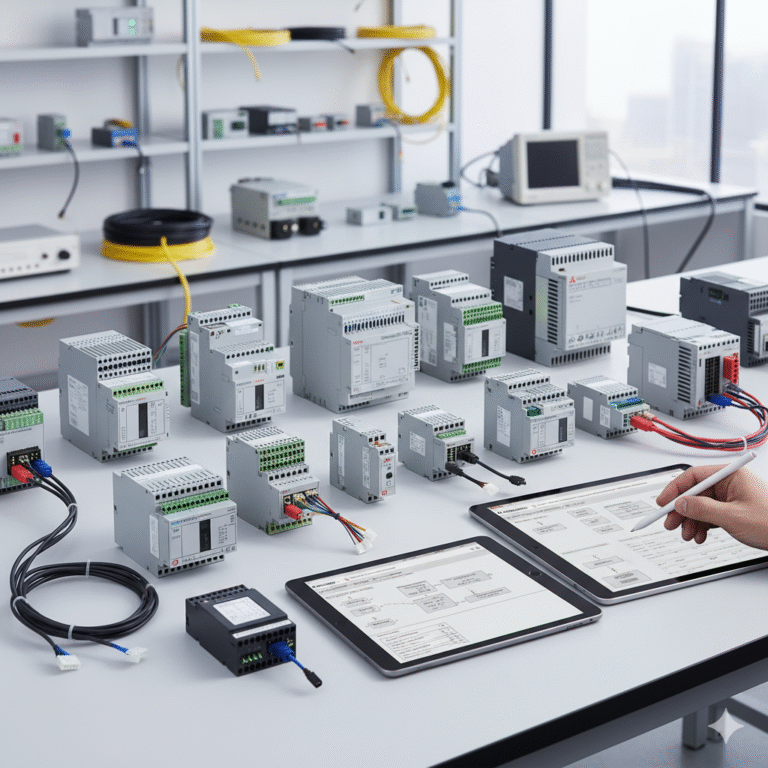
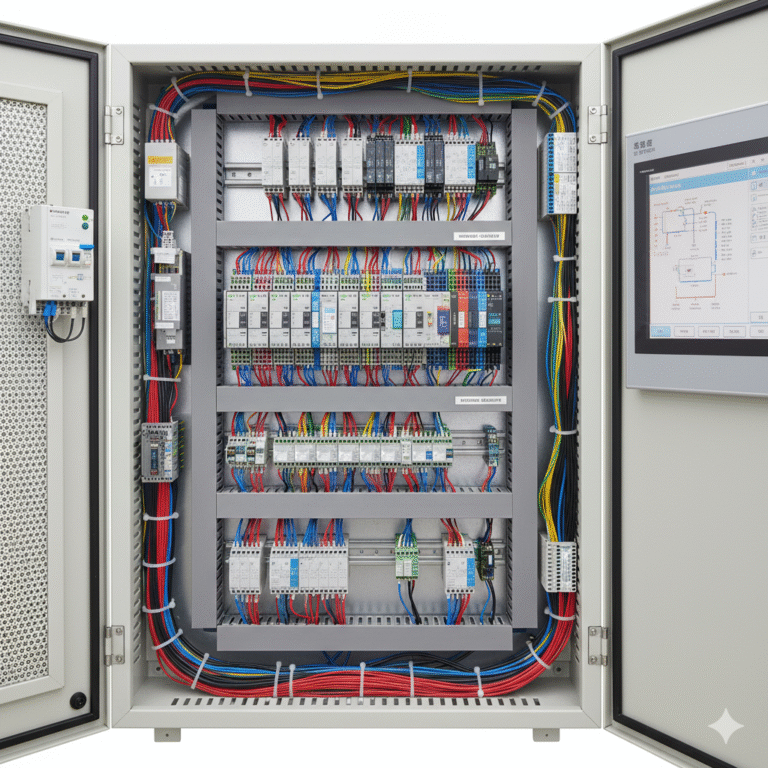
Choosing the Wrong PLC? Here’s What Will Go Wrong Later / PLC Introduction: A Problem That Doesn’t Show Up at the BeginningIn many automation projects, PLC selection seems simple at first:Enough I/O points ✔Acceptable price ✔Familiar brand ✔Everything looks fine.But in real projects, we often see a different story:👉 The PLC works during initial commissioning…👉 But problems start appearing during expansion, maintenance, or batch deliveryTypical issues include:No room for additional I/O when the system expandsCommunication modules cannot be added laterA single I/O failure requires replacing the entire unitNo space left in the cabinet for upgradesSystem cost becomes difficult to optimize in mass productionCustomers complain about non-standard maintenance👉 The root cause is often NOT the PLC performance —👉 but the wrong PLC structure selected at the beginning PLC Is Not Just About “Working” — It’s About the Whole System LifecycleChoosing a PLC is not just about whether it can run today.It directly affects:Future expansionMaintenance efficiencySystem scalabilityProject delivery costCustomer acceptanceFrom a structural perspective, PLCs are typically divided into three types:Compact (Integrated) PLCModular PLCEmbedded PLC👉 There is no “best” PLC👉 Only the most suitable one for your application 1. Compact PLC (All-in-One)Compact PLCs integrate:CPUPower supplyI/Ointo a single unit.Best suited for:Small machinesSimple control logicCost-sensitive applicationsLimited cabinet spaceExamples:Small packaging machinesConveyor systemsPump controlHVAC systemsAdvantages:Easy to install and maintainFaster commissioningLower costLimitations:Limited expansion capabilityRestricted communication options👉 Important:Even if current I/O is sufficient, always ask:Will the system need expansion later?If yes, choosing a compact PLC “just enough for now” can become a problem. 2. Modular PLC (Flexible & Expandable)Modular PLCs consist of:CPU modulePower moduleI/O modulesCommunication modulesFunction modulesAll assembled based on project requirements.Best suited for:Large production linesMulti-station systemsProcess controlDistributed I/O systemsAdvantages:Highly flexibleEasy to expandModules can be replaced individuallyBetter for minimizing downtimeTypical applications:Automated production linesSystems with HMI, drives, robotsSCADA / MES integrated systemsConsiderations:Higher costMore cabinet space requiredMore complex configuration and wiring👉 Using a modular PLC for a simple system can lead to:👉 Overdesign and unnecessary cost 3. Embedded PLC (OEM & Integrated Systems)Embedded PLCs are not standalone units.They are:👉 Integrated into equipment as control boards or modulesBest suited for:OEM equipment manufacturersCompact intelligent devicesMass production machinesExamples:CNC machinesSpecialized industrial equipmentSmart automation modulesAdvantages:Compact sizeHigh integrationReduced external wiringPotential cost reduction in mass productionChallenges:Higher design and testing requirementsNeed for EMC, reliability validationSpare parts and service depend on manufacturer👉 Important:Embedded PLC is not simply a “cheaper PLC”For small projects:👉 Total cost (development + support) may actually be higher Key Factors for PLC Selection (What Really Matters)1. I/O Points (With Margin)Always consider:Digital inputs / outputsAnalog inputs / outputs👉 Recommended:Reserve 10%–30% spare capacity 2. Communication RequirementsModern PLCs rarely work alone.They often connect to:HMIVFDsServo drivesRobotsSCADA / MESSmart instruments (flow, level, pressure)👉 Check support for:EthernetRS-485ModbusPROFINETEtherNet/IPEtherCAT👉 More communication = higher PLC requirements 3. Control ComplexitySimple start/stop → Compact PLC is enoughMotion control / PID / data logging → Higher-level PLC requiredCheck:CPU performanceMemoryScan cycleFunction modules 4. Maintenance StrategyIn real production:👉 Downtime = lossCompact PLC → may require full unit replacementModular PLC → replace only the faulty module👉 For critical systems, modular PLC is usually preferred 5. Project Scale & Customer PreferenceSingle project → standard PLC is easierMass production → consider cost, standardization, supply chain👉 Some customers prefer standard PLCs because:Spare parts are easy to findMaintenance is faster Common Mistakes in PLC Selection❌ “If I/O is enough, it’s fine”Not true — communication, expansion, and performance matter. ❌ “Modular PLC is always better”Not necessarily — it may increase cost unnecessarily. ❌ “Compact PLC cannot expand”Some can — but with limitations. Always check specifications. ❌ “Embedded PLC is cheaper”Only in large-scale OEM production. Not always for small projects. Why This Matters in Real ProjectsIn many of our projects involving:Flow metersLevel transmittersPressure instruments👉 PLC selection directly affects:System reliabilityIntegration complexityFuture scalabilityA mismatch between system requirements and PLC structure can lead to:👉 Long commissioning time👉 Difficult upgrades👉 Higher maintenance cost Final ThoughtPLC selection is not just choosing a controller.👉 It is defining the control architecture of your entire systemCompact PLC → simple & cost-effectiveModular PLC → flexible & scalableEmbedded PLC → integrated & optimized for OEM👉 The right choice depends on:Application scaleControl complexityExpansion needsMaintenance strategy Need Help Choosing the Right PLC?If you are:Not sure which PLC type fits your projectPlanning system expansion or upgradeIntegrating flow, level, or pressure instruments👉 Feel free to contact us.We can help you:Review your applicationRecommend a suitable PLC structureAvoid costly mistakes in later stages Share This Story, Choose Your Platform! Contact Us Please prove you are human by selecting the heart. Request a Quote