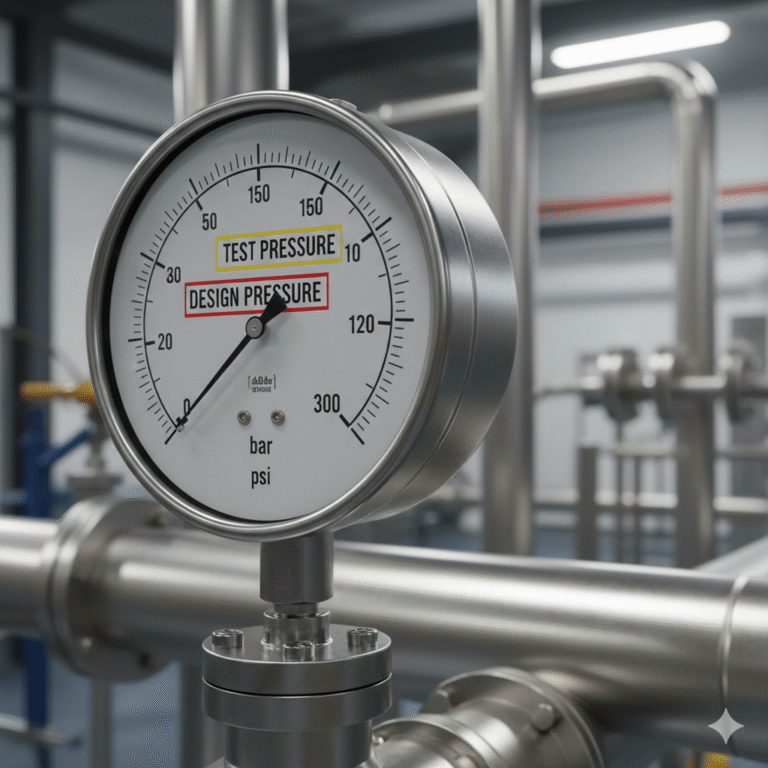
Absolute pressure measurement refers to the pressure of a medium relative to absolute vacuum (0 pressure reference), which is different from gauge pressure that is referenced to atmospheric pressure.
Absolute pressure transmitters are widely used in vacuum systems, sealed tanks, gas pipelines, distillation towers, and process pressure monitoring applications where accurate pressure measurement relative to vacuum is required.
1. Working Principle of Absolute Pressure Measurement
The core component of an absolute pressure transmitter is the pressure sensing element, which may be capacitive, piezoresistive, or strain-gauge based.
The measurement principle is based on:
pressure acting on the sensing element → mechanical deformation → electrical signal conversion
Structure Characteristics
Inside the sensor, one side of the sensing diaphragm is exposed to the process medium pressure, while the other side is sealed against a vacuum reference chamber (0 absolute pressure).
This vacuum chamber provides a stable zero reference.
Signal Conversion
When process pressure acts on the sensing element, it causes physical deformation, such as:
diaphragm displacement
capacitance change
resistance variation of strain gauges
The deformation is proportional to the applied absolute pressure.
The internal electronics convert this change into a standard output signal such as:
4–20 mA
HART
RS485 Modbus
Pressure Formula
The relationship is:
Pabsolute=Pgauge+Patmospheric
However, for an absolute pressure transmitter, this calculation is handled internally because the reference is already absolute vacuum.
2. Calibration Procedure for Absolute Pressure Transmitters
Proper calibration requires a vacuum calibration device or pressure calibrator capable of generating absolute pressure.
Step 1 – Preparation
Before calibration:
isolate the transmitter from the process line
release all process pressure
ensure the pressure port is clean
connect to a vacuum calibrator
connect 24V DC power supply
connect HART communicator
Step 2 – Zero Calibration
Apply:
This simulates absolute vacuum.
At this point, the output should be:
Perform zero calibration using the communicator.
Step 3 – Span Calibration
Apply the full-scale pressure.
For example, for a 0–1 MPa abs transmitter, apply:
The output should be:
Then perform span calibration.
Step 4 – Linearity Check
Check the following points:
25%
50%
75%
100%
Typical allowable error:
±0.5% FS
3. Common Fault Symptoms and Troubleshooting
This section is the most useful for customer search traffic.
1) Reading Too High or Too Low
Possible causes:
zero drift
span drift
residual medium inside pressure chamber
vacuum reference chamber leakage
Solutions:
recalibrate zero and span
clean the sensing chamber
check vacuum chamber integrity
return for repair if leakage is confirmed
2) Reading Fluctuates Severely
Possible causes:
unstable process pressure
loose sealing
damping setting too low
Solutions:
install pulsation damper
tighten fittings
increase damping to 3–5 seconds
3) No Signal Output
Possible causes:
power supply failure
wrong wiring
damaged sensing element
failed electronic board
Solutions:
check 24V DC supply
verify wiring polarity
test with calibrator
replace module if necessary
4) Output Does Not Change with Pressure
Possible causes:
clogged pressure port
diaphragm stuck
medium solidification
Solutions:
clean pressure port
use suitable solvent
replace diaphragm if permanently deformed
4. Typical Industrial Applications
Absolute pressure transmitters are commonly used in:
vacuum pumps
vacuum furnaces
distillation columns
gas storage tanks
sealed reactors
compressed gas systems
5. Need Help Selecting the Right Absolute Pressure Transmitter?
If you need assistance selecting an absolute pressure transmitter for your application, please share:
pressure range
process medium
temperature
process connection
output signal
hazardous area requirement
Our engineering team can recommend the most suitable model for your project.