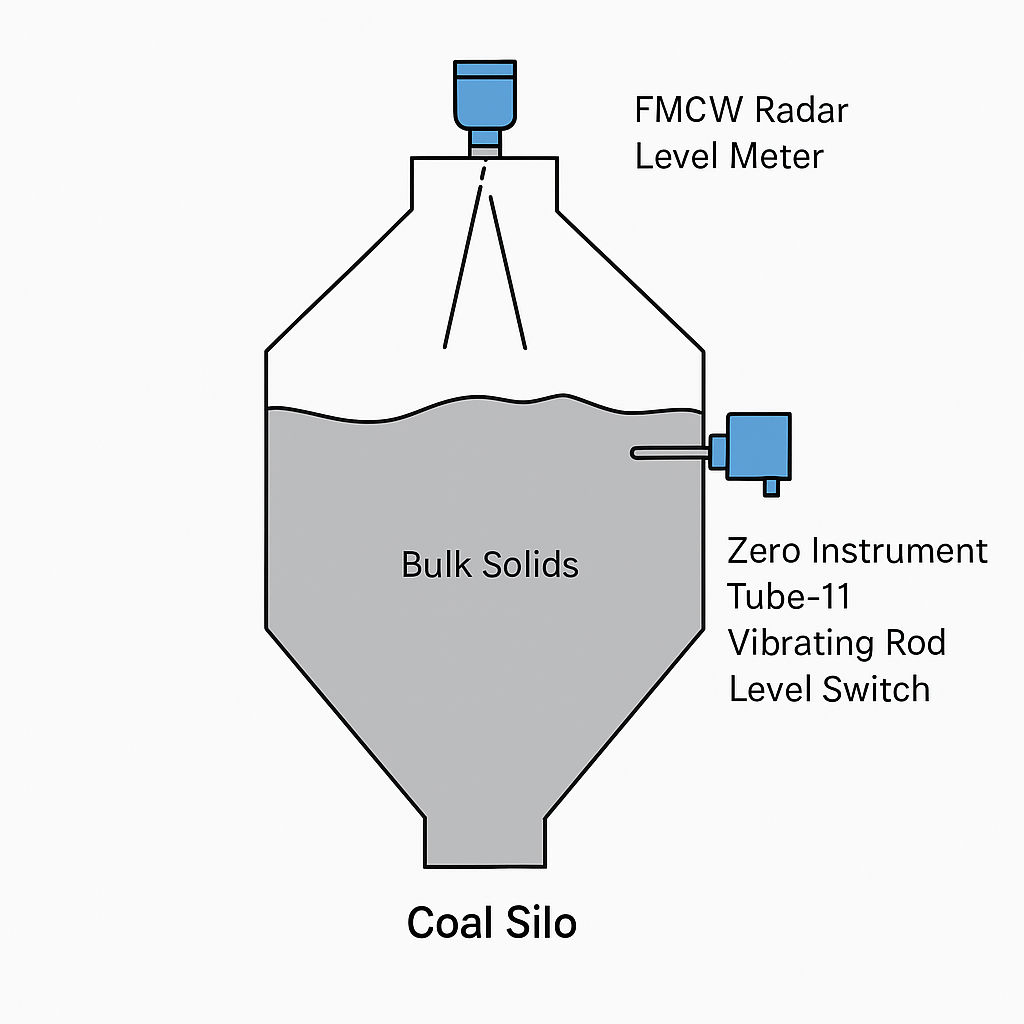
Radar level transmitters are widely used in various industrial applications, utilizing microwave-based distance measurements to assess the liquid level in tanks and containers. Among all the selection parameters, the dielectric constant (εr) of the medium is one of the most critical factors influencing radar performance.
1. What is Dielectric Constant and Why is it Important?
Dielectric constant, also known as relative permittivity, indicates a material’s ability to store electrical energy in an electric field. The higher the dielectric constant, the stronger the reflection of microwave energy, leading to more reliable level measurements. From a process perspective, the dielectric constant of the measured medium directly impacts radar performance. Materials are typically categorized into three types:
Non-polar (εr < 2.8)
Weakly polar (2.8 ≤ εr ≤ 3.6)
Strongly polar (εr > 3.6)
2. How Dielectric Constant Affects Radar Measurement
A lower dielectric constant → Weaker reflection → Unstable measurements.
Radar works best with liquids like water, alcohols, and ethylene glycol.
2. Propagation Speed
Microwave speed changes with dielectric constant. If not compensated, these variations can cause reading errors. High-precision applications require accurate calibration.
3. Signal Interference
Changes in the dielectric constant inside a tank (due to mixing, impurities, or foam) can cause radar signals to scatter or reflect multiple times, generating false echoes. Modern radar systems employ echo filtering, suppression, and averaging to stabilize results.
3. Radar Types and Their Dielectric Constant Requirements
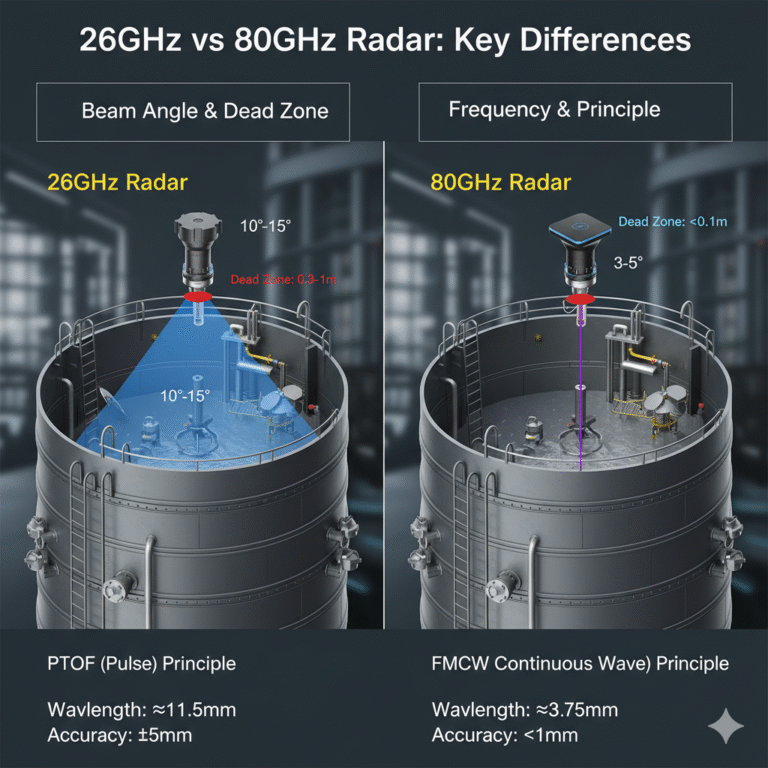
Best suited for high-frequency radars (e.g., 80 GHz) to enhance performance in low-reflection media.
2. Guided Wave Radar (Rod/Cable)
Suitable for small containers, viscous media, or low εr liquids.
Can measure media with εr as low as 1.4.
The probe directly guides microwave energy to the liquid surface, enhancing echo reliability.
Limitation: Media that adhere or crystallize on the probe may block energy transmission.
4. Practical Selection Considerations
1. Layered or Multi-phase Media
When two layers of media (e.g., oil/water) exist, the radar can only detect the interface if the dielectric constant difference is significant. For example:
Water εr ≈ 80 vs. Oil εr ≈ 2 → Clear interface. If the dielectric constants are close, the interface cannot be reliably measured.
2. Impact of Gas Phase
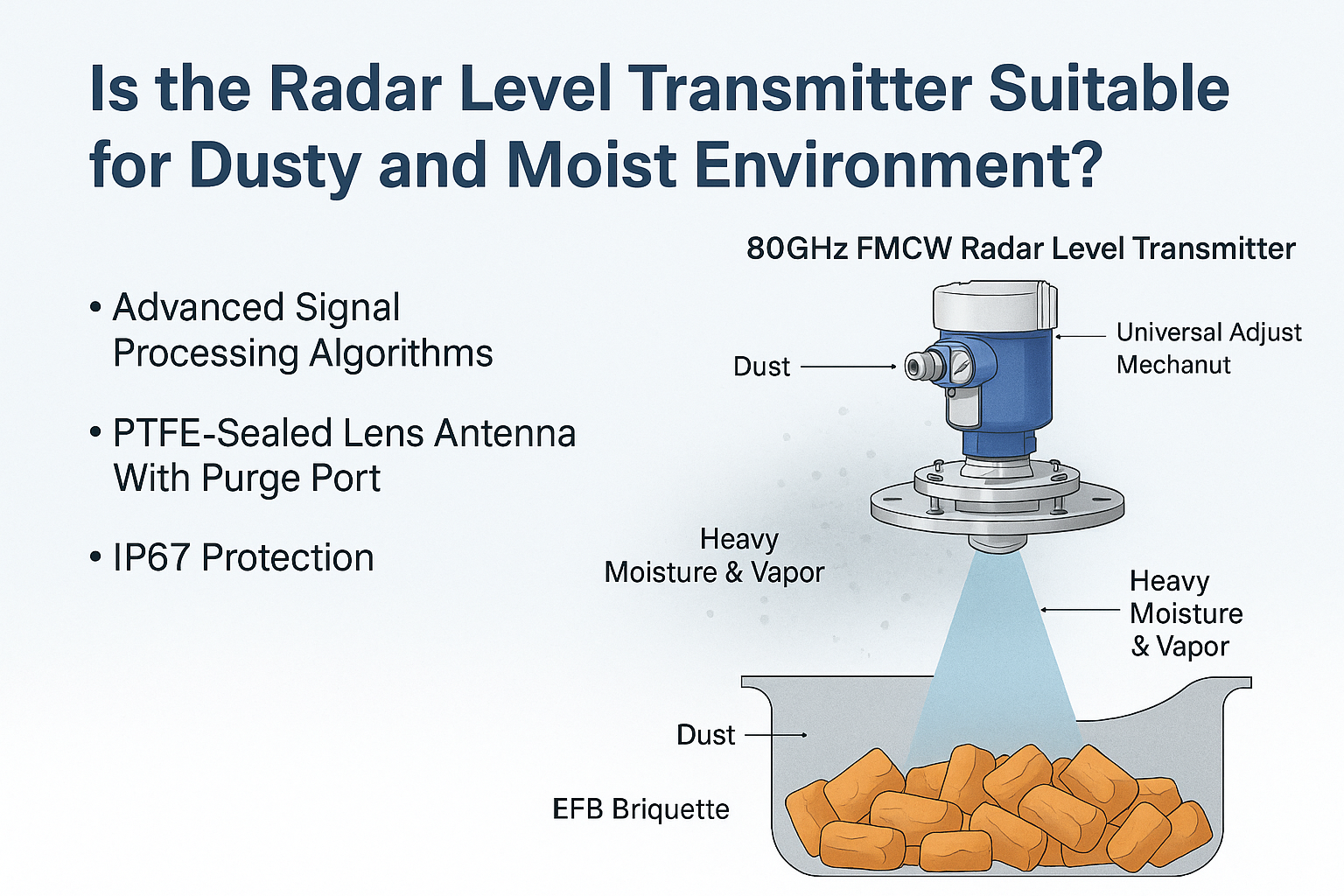
High humidity steam, water vapor clouds, or corrosive gases can absorb or scatter radar signals. Solutions include:
Sealed antennas
Air purging
PTFE/PP antenna covers
3. Temperature and Pressure Effects
At extreme temperatures or pressures, the dielectric constant may shift. For example, the εr of honey decreases with rising temperature. Always assess εr under actual operating conditions rather than at room temperature.
5. Engineering Selection Guide (Quick Reference)
Application
Recommended Radar
Standard industrial liquids (εr ≥ 10)
Non-contact radar
Low dielectric constant media (LPG, gasoline, εr < 2)
Guided wave radar or 80 GHz
Oil-water interface
Allowed εr difference ≥ 5
Viscous or foaming liquids
Guided wave radar (with suitable probe)
6. Dielectric Constants of Common Substances (Excerpt)
For a complete dielectric constant reference table, feel free to contact us via private message or scan the QR code.
7. Conclusion
The dielectric constant of the medium is one of the most decisive factors affecting radar level measurement performance. Choosing the correct radar type—along with calibration and proper installation—ensures stable operation and long-term accuracy in demanding industrial applications.