
Complete control systems are the core units in industrial production, with the PLC serving as their “brain.” The stable operation of equipment like compressors, pump sets, and sewage treatment plants depends on it. Choosing the wrong PLC, improper installation, or inadequate maintenance can lead to system failures. In this article, we’ll discuss the essential technical points of PLCs in control systems to help you avoid common pitfalls.
What is a Complete Control System?
A complete control system typically refers to a fully integrated control device provided by the supplier. This system includes a PLC, I/O modules, power supply, control cabinet (or control panel), terminal blocks, and other electrical components. It usually consists of multiple pieces of equipment that coordinate to perform a specific task continuously or automatically. Common applications include compressors, pump sets, sewage treatment, torches, PSA, analysis shelters, chemical dosing, filters, and measurement equipment.
For equipment that requires independent control with complex tasks (such as sequence or logic control), it is generally best to have an inbuilt PLC control system.

Key Technical Points
Design Principles and Requirements
Advanced, Mature, and Reliable: The PLC must use advanced technology with a mature and reliable design. The hardware should be durable, and the software should be safe and reliable.
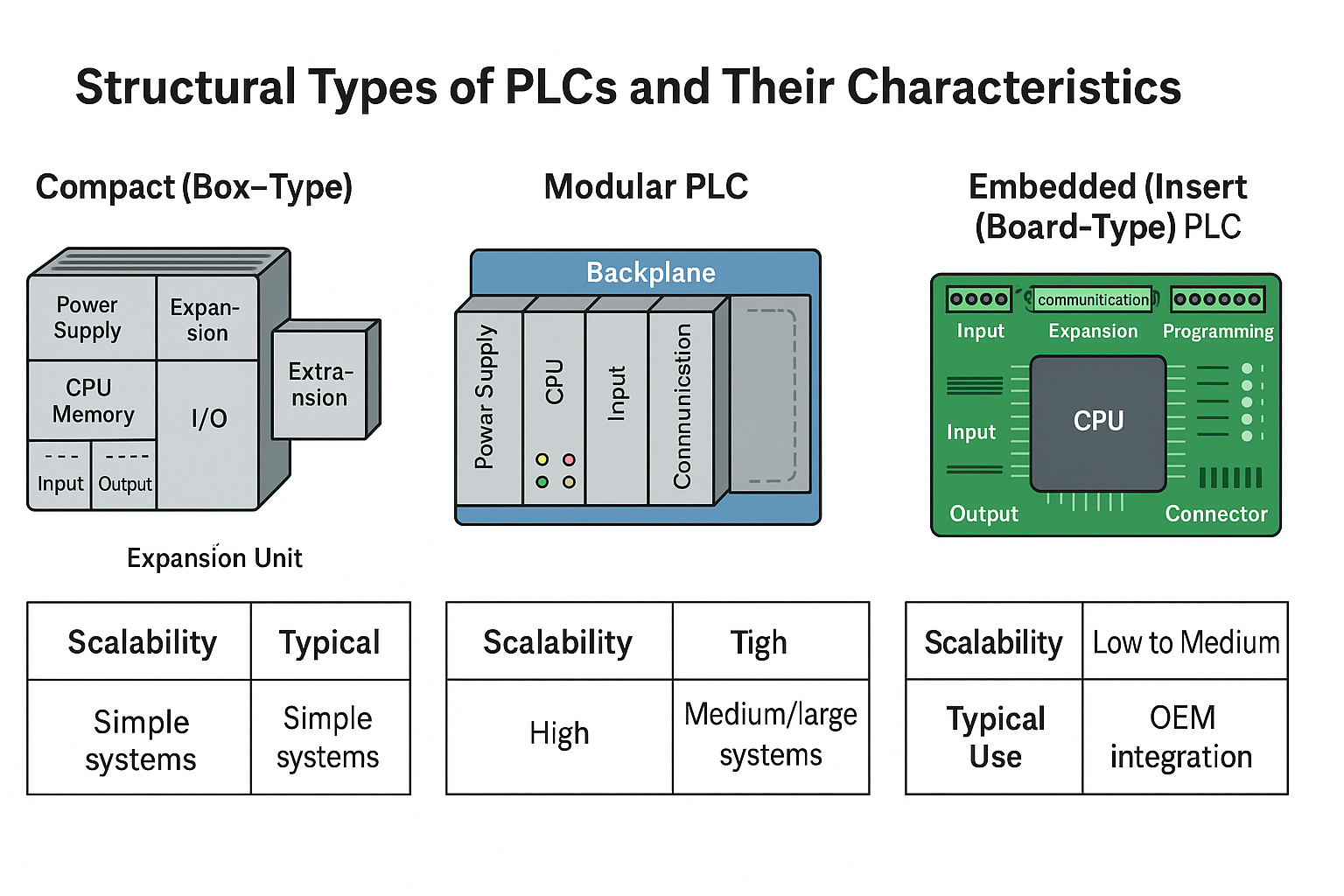
Modularity and Expandability: Modular design should be used so that I/O cards can be remotely placed, and the system should be easy to expand.
Environmental Adaptability: The system must meet the environmental requirements at the site, including temperature, humidity, vibration, corrosion, and explosion-proof specifications. Multiple levels of anti-interference, anti-corrosion, and explosion-proof measures should be implemented.
Openness and Interconnection: The PLC should support an open network structure, such as OPC and mainstream communication protocols like Profibus DP, Modbus, and Industrial Ethernet, allowing integration with the plant’s DCS (Distributed Control System) or BPCS (Basic Process Control System).
Hardware Configuration Core Points
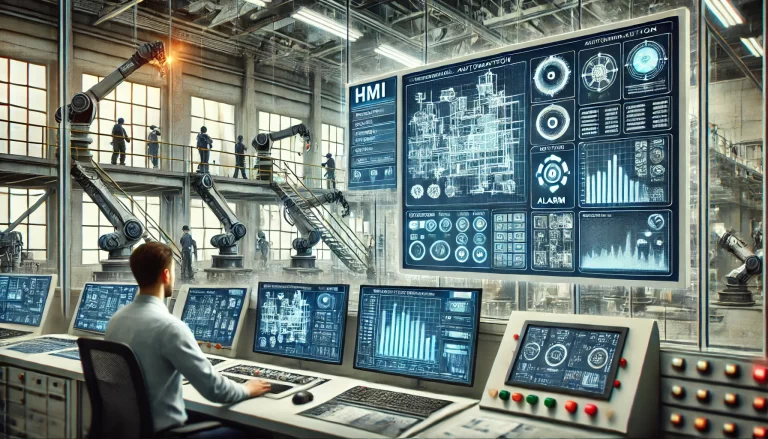
Network Architecture: The system usually consists of a control level (I/O units, control units) and a monitoring level (human-machine interface, programmer).
Fail-Safe Design: The instrumentation and control systems should be designed for fail-safe operation. In case of faults in components, signals, or power supply, the system should remain in a safe state.
PLC Selection and Configuration:
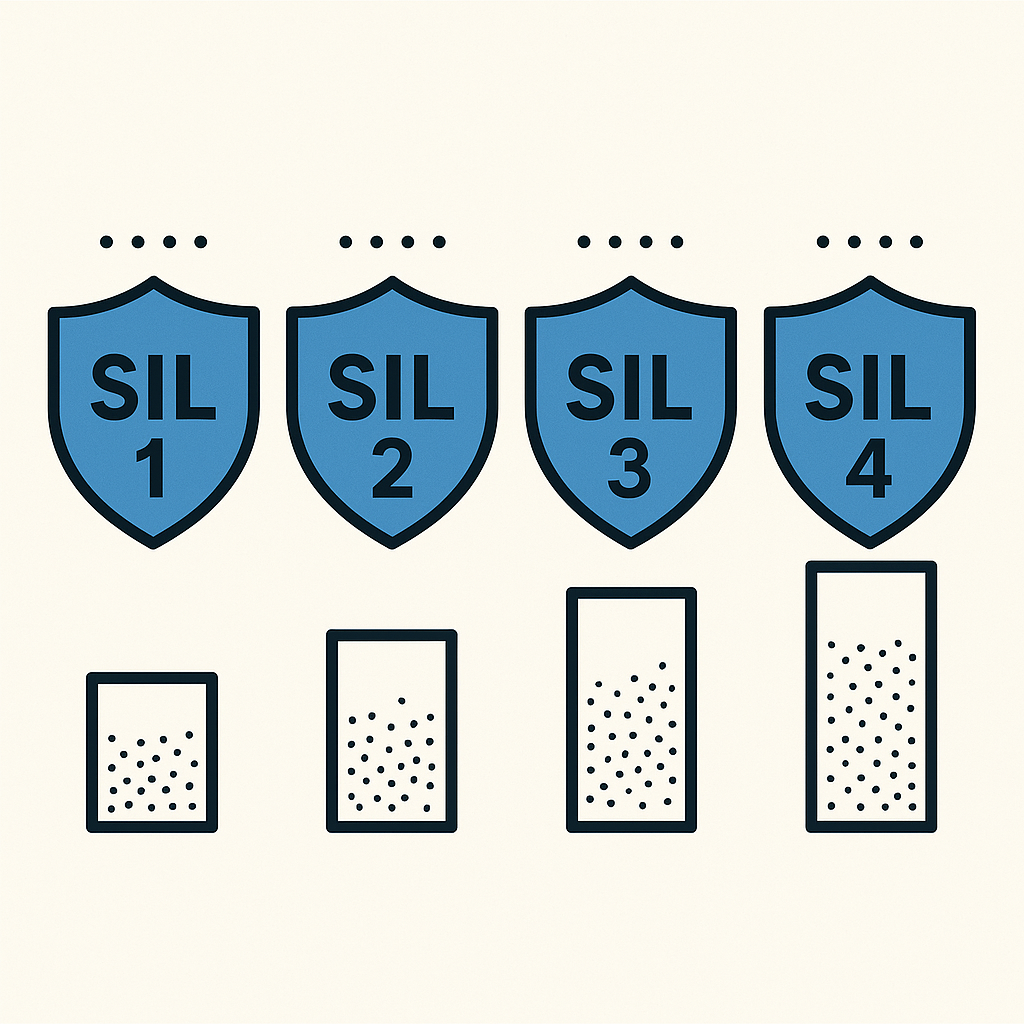
Control Unit (CPU): Should be based on an industrial-grade microprocessor with sufficient memory and scanning time to meet program and process response requirements. The response time for ordinary PLCs should not exceed 500ms, while safety PLCs (SIL) should have a response time between 100ms and 300ms.
Redundancy:
Non-critical or backup devices may not require redundancy.
For important/critical devices, redundancy should be configured for the CPU, power supply, and communication interfaces.
I/O Modules:
Channel Isolation: A fault in one channel should not affect other channels on the same card.
Hot Swap: The system should support online replacement of modules without affecting other parts of the system.
Status Indicators: Each card should have status and fault indicator lights.
Spare Capacity: Spare I/O points should be about 10-15%, with additional spare slots for cards.
Software and Configuration Requirements
Software: The system should come with a full set of operating systems, tools, communication software, and engineering configuration software (including offline simulation).
Configuration Work: Typically, the PLC vendor will complete the configuration based on design files provided by the designer (including logic diagrams, flow charts, loop files, etc.).
Programming and Debugging: The programmer should be able to complete configuration, monitoring, program development, diagnostics, and maintenance tasks.
Human-Machine Interface (HMI) and Operator Stations
Configuration Options: Depending on project needs, HMI stations can either be set up independently or shared with the plant’s main control system (DCS).
If set up independently, there should be at least two stations (one as a backup).
If shared, communication between the PLC and DCS should be redundantly configured.
Synchronization: The PLC system’s clock should be synchronized with the plant’s control system to ensure consistent data and operations.
Control Cabinets and System Structure
Enclosures and Protection:
Protection Class (IP): Indoor systems should meet at least IP21, while outdoor systems should meet IP54. Specific protection levels should be determined based on installation location and environment.
Material and Structure: The control cabinet should have enough strength and rigidity. The surface should be corrosion-resistant (e.g., powder coating), and the typical color should be RAL 7035 (light gray).
Explosion-Proof: Explosion-proof requirements depend on the project’s needs.
Cabinet Layout:
Separation of High and Low Voltage: High and low voltage components should be separated in the cabinet and shielded from each other.
Heat Dissipation: Large components and heat-generating devices should be placed at the lower section of the cabinet, while heat-sensitive parts should be at the top.
Ease of Maintenance: Frequently operated components should be installed at accessible positions.
Communication and Integration
Interface with Main System (DCS/BPCS): The communication protocol (e.g., Modbus TCP, OPC UA) should be used to exchange data between the PLC and the main system.
Hard-Wire Connections: Important signals and key data must use hard-wired connections to ensure reliability.
Redundancy: Communication networks may also be configured for redundancy, ensuring reliable data exchange without interruption.
Key Considerations
Design and Procurement Phase:
Clear Control Methods: Define whether to use the plant’s main control system, an onboard PLC control system, or an integrated control system based on the equipment’s characteristics.
Unified Brand and Model: Use a consistent PLC brand and model within the same plant to reduce spare parts cost and simplify programming and maintenance.
Technical Specifications: Ensure that the procurement contract includes detailed technical specifications, including performance indicators, redundancy requirements, interface protocols, environmental ratings, and documentation.
Installation and Commissioning:
Environmental Protection: Ensure that control cabinets are installed in non-hazardous, climate-controlled rooms. Outdoor cabinets should meet explosion-proof and dehumidification requirements.
Electromagnetic Interference (EMI) Protection: Strictly follow wiring standards to avoid electromagnetic interference that can destabilize the PLC system.
Operation and Maintenance:
Password Management: Ensure the system’s passwords are accessible to the user for maintenance and modification.
Spare Parts: Ensure there are spare parts for critical components like I/O modules, communication modules, and power supplies.
Regular Maintenance: Periodically inspect fans, filters, and wiring to ensure stable operation of the PLC system.
Special Considerations for Safety PLCs (SIL)
Certification Requirements: Ensure that the PLC meets safety requirements and is certified by national or international safety organizations.
I/O Configuration: Redundant input and output channels should be configured to prevent signal loss, ensuring that the system functions safely under all conditions.
Implementing control systems with PLCs requires thorough attention to detail at every phase—design, installation, and operation. By clearly specifying requirements, monitoring the project during implementation, and ensuring that all systems are well-integrated and properly maintained, you can ensure the success of these complex systems.