Level measurement may seem basic in process control, but its reliability directly impacts safety, efficiency, and production continuity. Across industries—especially chemical and petrochemical—engineering teams are increasingly replacing ultrasonic level transmitters with radar technology. Why is this shift happening? The answer lies in physics, performance, and field experience.
1. How They Detect Level: Radar vs. Ultrasonic
Radar Level Transmitters
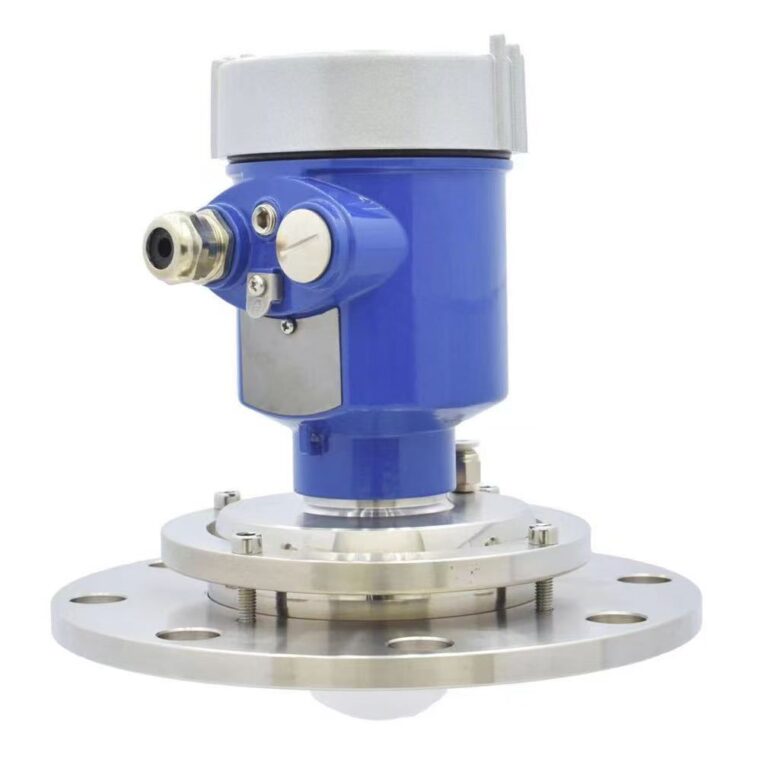
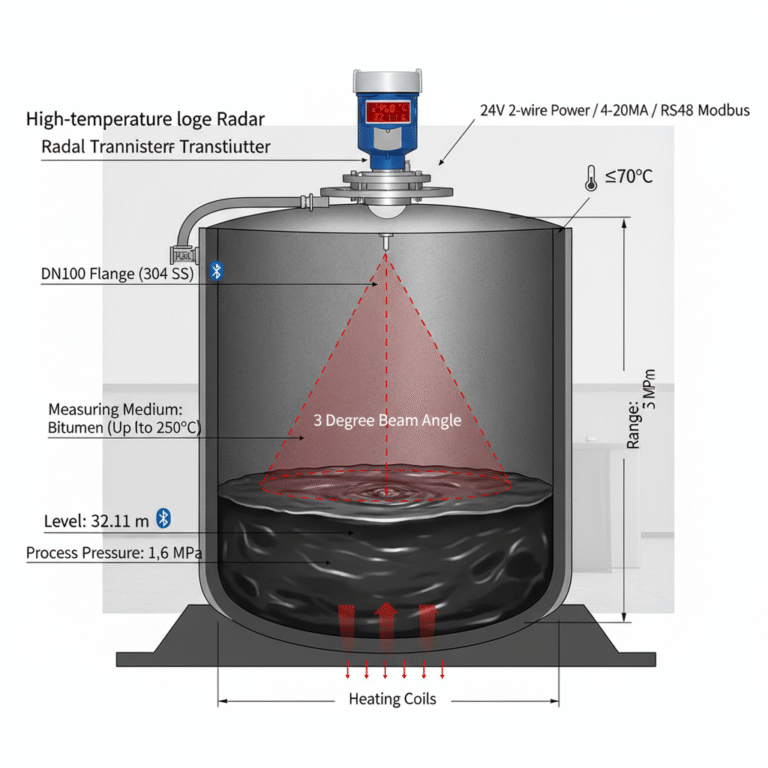
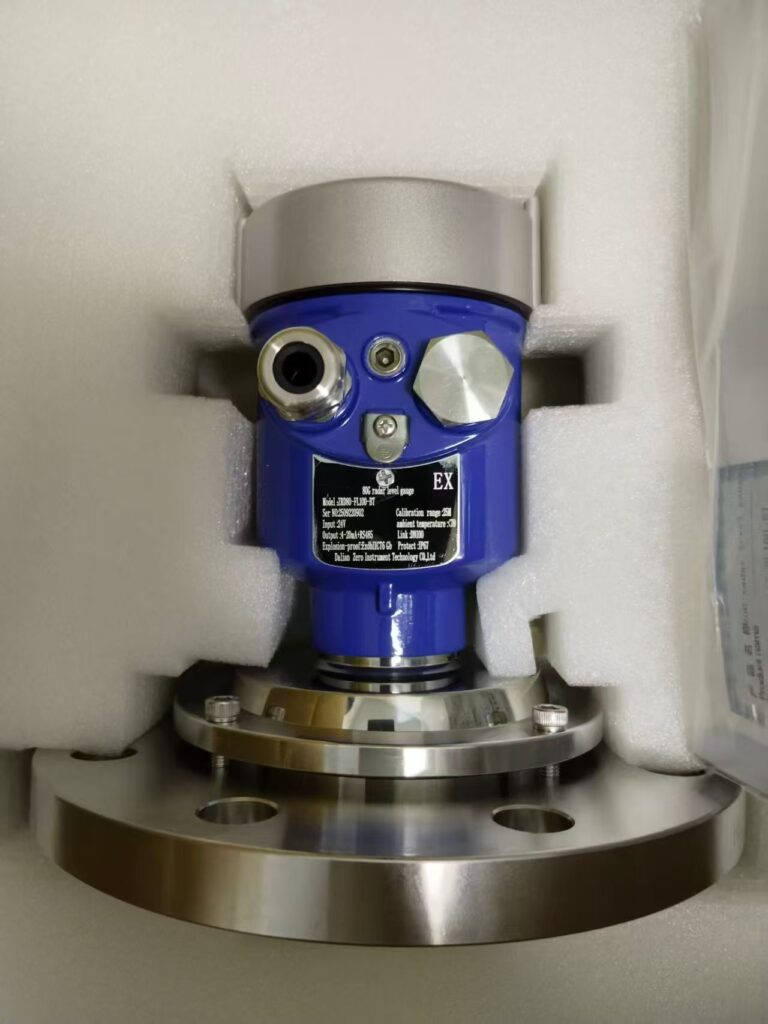
Radar instruments emit microwave or millimeter-wave electromagnetic pulses toward the medium. The signal reflects from the product surface and returns to the antenna. By measuring time of flight, the system calculates the height of the material.
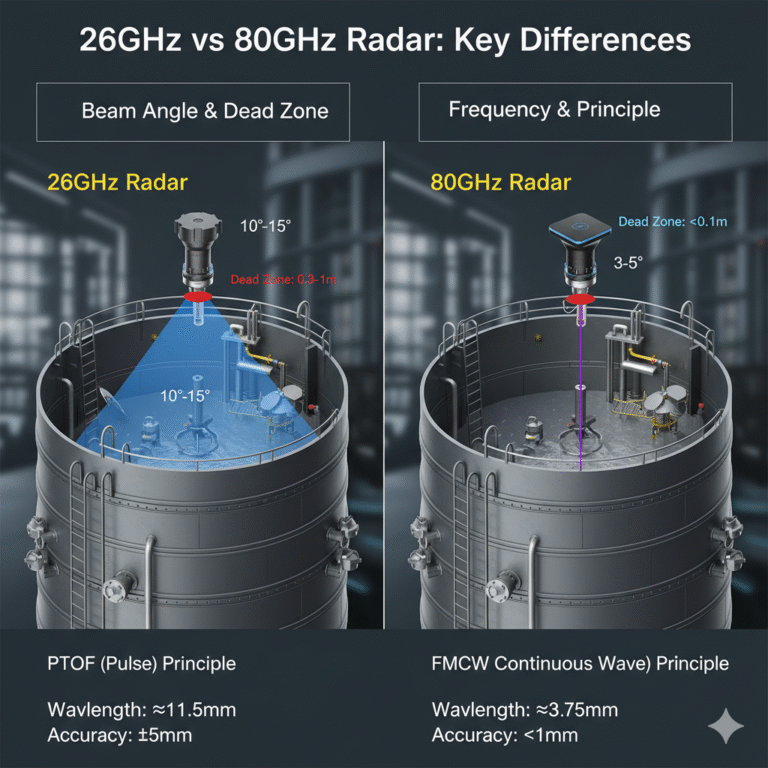
Typical operating frequencies: 6–80 GHz
Minimal influence from temperature, pressure, vapor or humidity
High-frequency radar provides sharper separation of echoes and better performance in challenging conditions
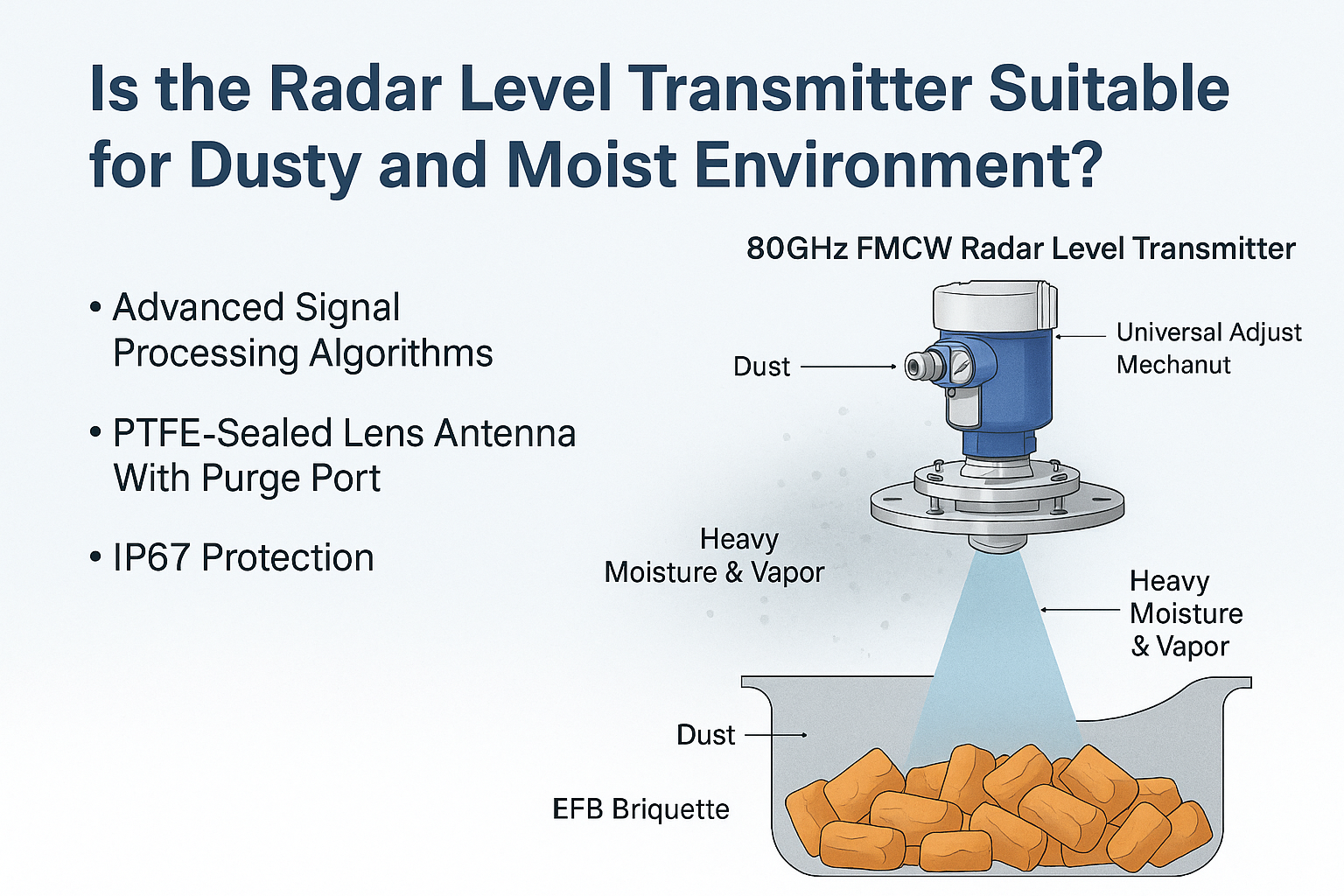
This makes radar highly tolerant of ✔ steam, ✔ dust clouds, ✔ agitation, ✔ and closed vessels.
Ultrasonic Level Transmitters
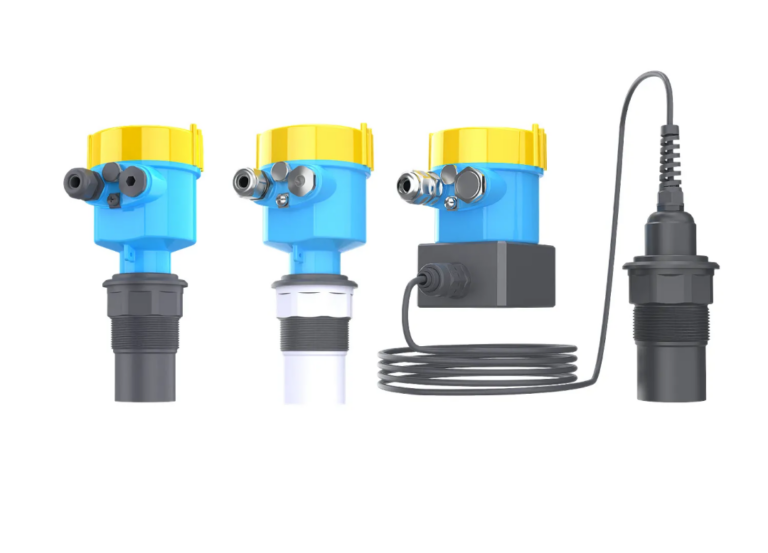
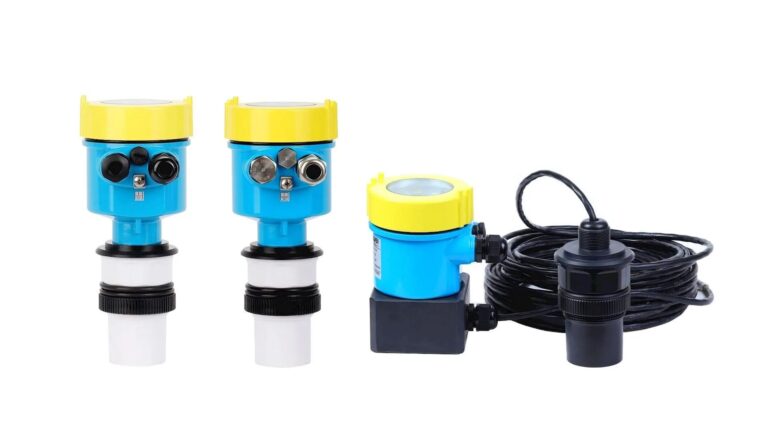
Ultrasonic transmitters operate using acoustic waves, typically in the 20–200 kHz range. Echo time is converted into level, similar to radar.
Advantages:
Simple design
Lower hardware cost
Easy installation
However, acoustic waves are strongly influenced by environmental conditions, which limits reliability in industrial processes.
2. Performance Under Real Industrial Conditions
Industrial tanks are rarely “clean and quiet.” Steam, turbulence, foam, temperature gradients, and pressure fluctuations are commonplace.
Radar in Harsh Environments
Radar inherently resists:
High temperature & high pressure
Foam and vapor layers
Heavy dust
Noise from mixers and falling product
Because electromagnetic signals are mostly unaffected by gas-phase properties, radar maintains stable echoes even when conditions change rapidly.
Ultrasonic Limitations
Acoustic waves do not travel as consistently:
Temperature shifts → change speed of sound → create errors
Vapor and foam → absorb or scatter sound
Dust → weakens echo signal
Pressure variations → distort measurement path
Result: ultrasonic readings may fluctuate or drop out entirely in demanding service.
3. Accuracy and Measuring Range
Radar
Modern radar level sensors achieve:
Accuracy to ±1 mm
Measuring ranges up to 100–150 meters
Suitable for tall vessels, silos, or bulk solids storage
Ultrasonic
Typical range < 15 meters
Works well in open tanks or water treatment systems
Performance declines sharply with disturbances
4. Cost Is More Than the Purchase Price
Ultrasonic – Lower Initial Cost
Ultrasonic instruments are attractive for basic applications due to:
Minimal upfront investment
Rapid commissioning
But maintenance grows over time:
Parameter drift
False readings
Higher service frequency when process conditions change
Radar – Lower Lifecycle Cost
Radar hardware pricing has fallen significantly as technology matured. When combined with lower maintenance demand, radar often delivers:
Better uptime
Less engineering supervision
Fewer technician interventions
Higher long-term cost efficiency
5. Digitalization: Radar Becomes a Smart Measurement Node
New-generation radar instruments go beyond measurement. Advanced capabilities include:
Bluetooth commissioning via mobile app
Local wireless setup without opening housings
Cloud monitoring and remote diagnostics
OTA (over-the-air) firmware upgrades
Adaptive echo learning algorithms
These features:
Reduce on-site workload
Improve troubleshooting accuracy
Enable remote support
Support predictive maintenance
Extend instrument lifetime without shutdown
For many chemical plants, this digital transformation is the deciding factor.
6. Practical Selection Guide
Condition
Recommended Technology
Steam, foam, dust, agitation
Radar
Tall silo or enclosed tank
Radar
High accuracy requirement
Radar
Open water basin / wastewater
Ultrasonic
Strict budget, clean conditions
Ultrasonic
Conclusion
Ultrasonic and radar level transmitters both have a place in industry. However, as process conditions become more complex—and operational reliability becomes more critical—radar delivers superior stability, accuracy, and lifecycle value.
For:
Chemical processing,
Petrochemicals,
Mining,
Bulk solids,
High-temperature or vapor-heavy vessels,
Radar has become the preferred choice, not because ultrasonic is outdated, but because radar performs where conditions demand more.