
Inrush current is a familiar—but often misunderstood—phenomenon in industrial power systems.
Many engineers know its damage can be immediate and costly, yet struggle to pinpoint where it comes from, how to measure it, or what to do about it.
This article breaks down the essentials of inrush current: its definition, root causes, testing methods, and preventive measures—helping plant engineers safeguard equipment reliability and operational safety.
🔍 What Is Inrush Current?
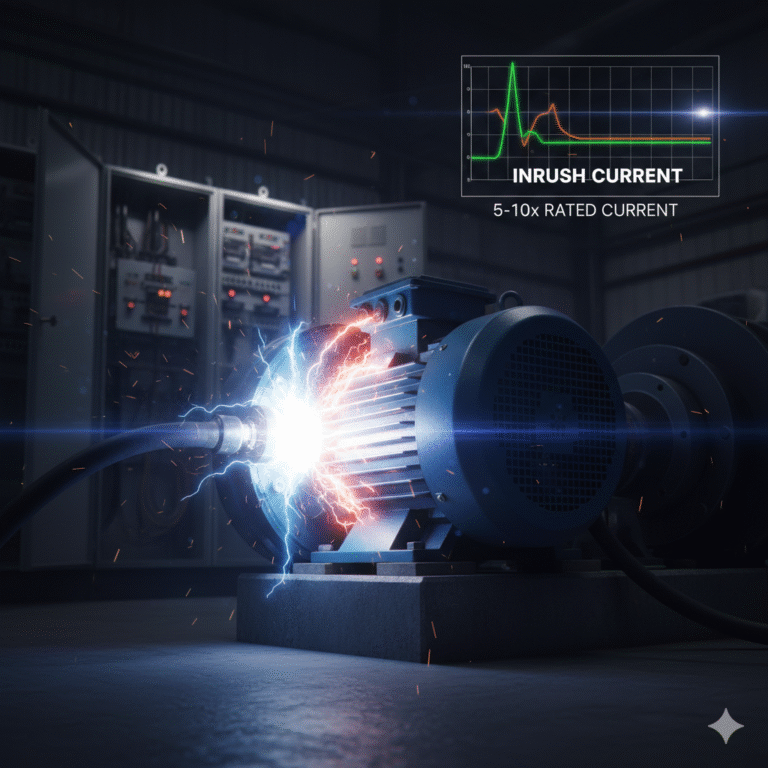
Inrush current refers to a momentary surge of electrical current that occurs the instant a device is energized.
It is typically caused by sudden changes in load, circuit energization, or power disturbances.
Key characteristics:
Extremely high amplitude
Short duration (milliseconds to a few seconds)
Peak can reach several times the steady-state operating current
This surge is generated when an electrical system responds to a sudden shift in energy balance—charging capacitors, magnetizing transformer cores, or accelerating motors from standstill.
📌 Example:
An induction motor at startup may draw 5–10× its rated running current, due to rotor inertia and static friction.

⚙️ Why Does Inrush Current Occur?
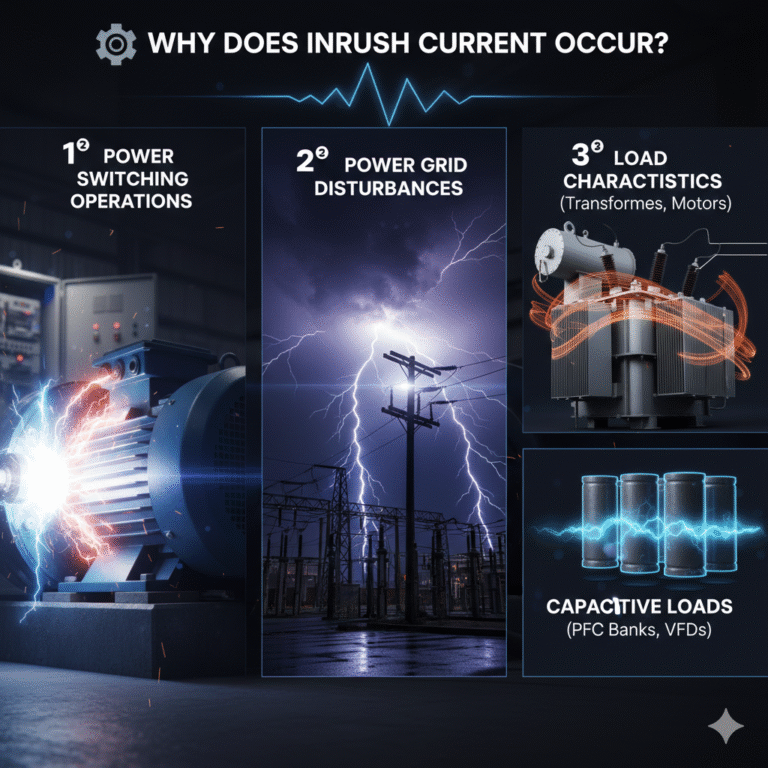
Common industrial causes include:
1️⃣ Power Switching Operations
Starting large motors or compressors
Energizing transformers or reactors
Sudden trip and restart events
2️⃣ Power Grid Disturbances
Lightning strikes
Short circuits
Utility-side voltage sag/swells
3️⃣ Load Characteristics
Inductive equipment (transformers, motors) need magnetizing current
Capacitive equipment (power factor correction banks, VFD DC bus) draws rapid charging current
Inrush current behaves like a surge wave—abrupt, intense, and potentially destructive.
🧪 How to Measure Inrush Current Correctly
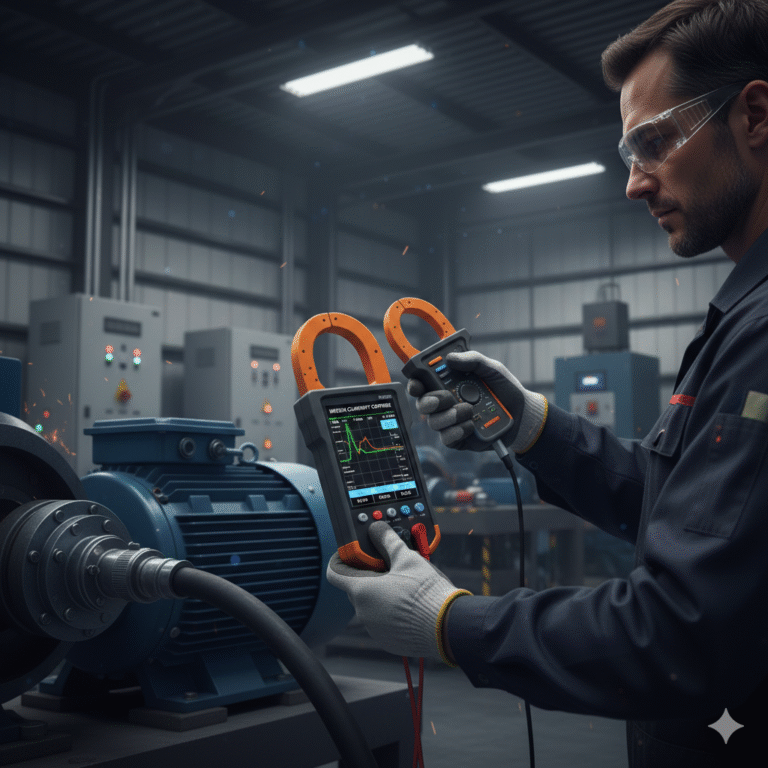
Accurate measurement is crucial for identifying abnormal startup conditions, mis-sized protection devices, and hidden system instability.
✔ Instruments Should Have:
📍 Inrush Capture Function
Able to:
Trigger on peak current
Record RMS evolution
Display waveform details
Log voltage simultaneously
This allows engineers to distinguish between supply-side faults and equipment-driven inrush.
📍 Adequate Sampling Rate & Bandwidth
Because surges are fast and irregular, meters should support:
High sampling speed: 80 kS/s – 1 MS/s
Low capture window: milliseconds or microseconds
📍 Correct Measurement Range & Accuracy
Clamp sensors must match expected load levels—from light control circuits to high-amp motor feeders.
📍 Fast Computational Response
Trend resolution should be at least 10 ms, with the ability to detect transient spikes.
👀 Best Practices During Testing
Record voltage and current together
Select proper trigger thresholds to avoid false captures
Ensure motors or transformers return to thermal baseline before repeating tests
Monitor for a full operating cycle rather than single startup events
🛡 Building an Inrush Current Defense Strategy
To protect electrical assets, engineering teams should combine design decisions with ongoing monitoring.
1️⃣ Preventive Design
Select equipment with proper inrush withstand capability
Add surge protective devices (SPD) at strategic nodes
Consider soft-start or inrush-limiting components
2️⃣ Routine Diagnostics
Test heavy-load equipment (motors, pumps, compressors) quarterly
Inspect aging protective components—MOVs, fuses, relays
3️⃣ Rapid Troubleshooting
Check recorded inrush behavior when failures occur
Use waveform analysis to locate root causes (internal vs external fault)
4️⃣ Data Management
Establish an inrush current baseline database by equipment type:
New equipment
After major repairs
During periodic inspections
A data-driven approach helps predict degradation before failures happen.
🏁 Conclusion
Inrush current is invisible to the eye but highly destructive to electrical assets.
Through careful testing, informed design choices, and continuous monitoring, plants can:
Extend equipment service life
Reduce unplanned downtime
Prevent safety hazards
Lower maintenance and replacement costs
Mastering inrush current is not only a technical skill—it is a strategic responsibility tied to productivity, safety, and long-term asset health.