Vortex flowmeters are widely used for measuring both liquid water and steam in industrial applications. Although the fundamental measuring principle remains the same, the physical properties of the media—such as density, viscosity, temperature, and pressure—lead to significant differences in installation requirements, compensation methods, and sensor selection.
This article explains the common principles and key differences between water and steam measurement using vortex flowmeters, helping engineers select and apply the instrument correctly.
1. Common Principles (Shared Fundamentals)
Despite measuring different media, vortex flowmeters operate on the same basic concepts when used for both water and steam.
1.1 Identical Measuring Principle
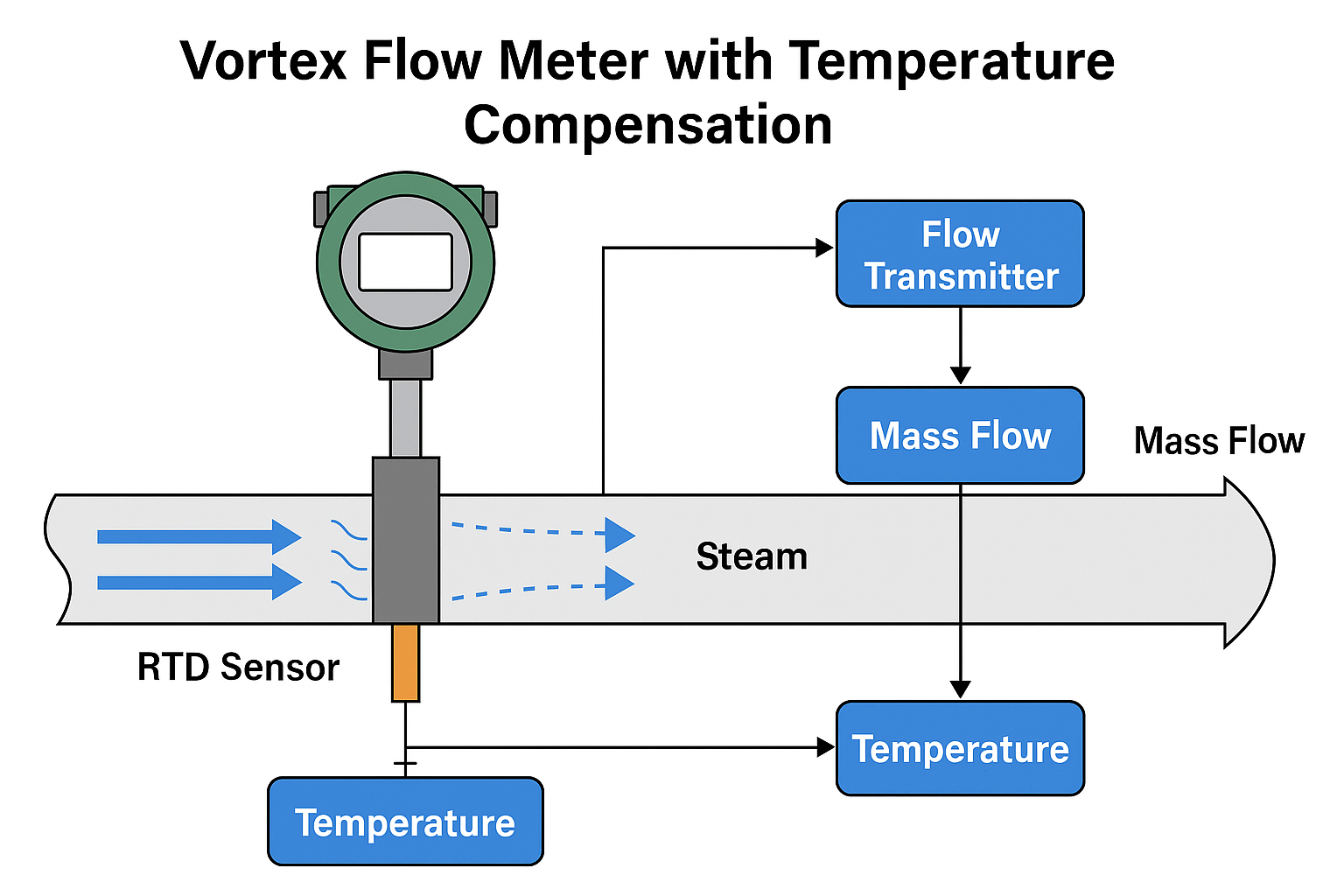
Vortex flowmeters are based on the Kármán vortex street principle. When fluid flows past a bluff body (vortex shedder), alternating vortices are generated downstream. The vortex shedding frequency is proportional to the flow velocity and is used to calculate volumetric flow rate.
1.2 Similar Mechanical Structure
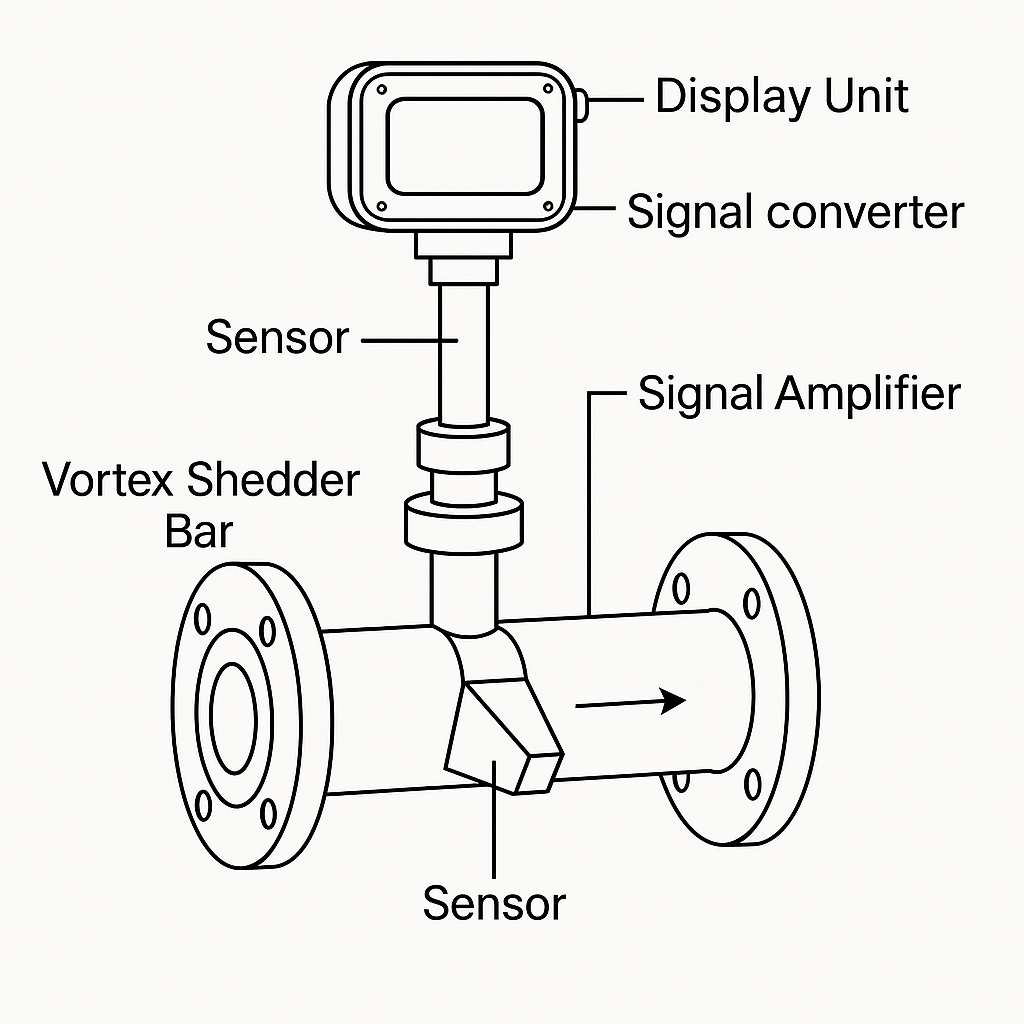
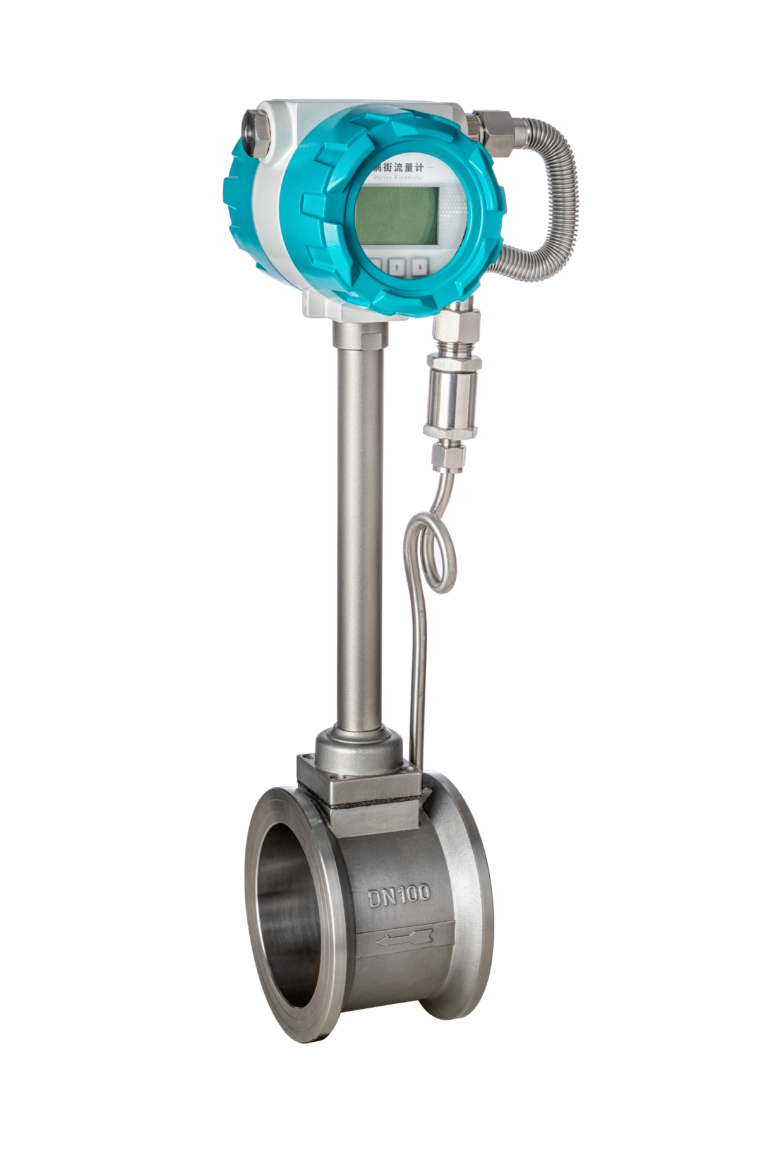
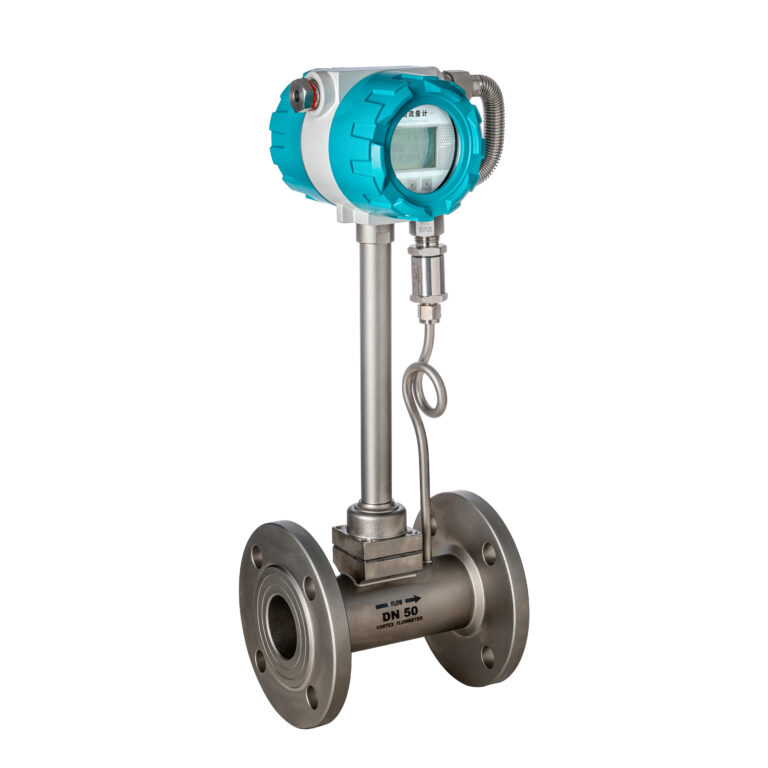
Typical vortex flowmeters for both water and steam consist of:
A vortex shedder bar
A sensing element (such as a piezoelectric or capacitive sensor)
A signal converter
In all cases, full-pipe flow is essential to ensure stable vortex generation and accurate measurement.
1.3 Unified Output Signals
Both applications support standard industrial outputs, such as:
4–20 mA analog signal
Pulse output
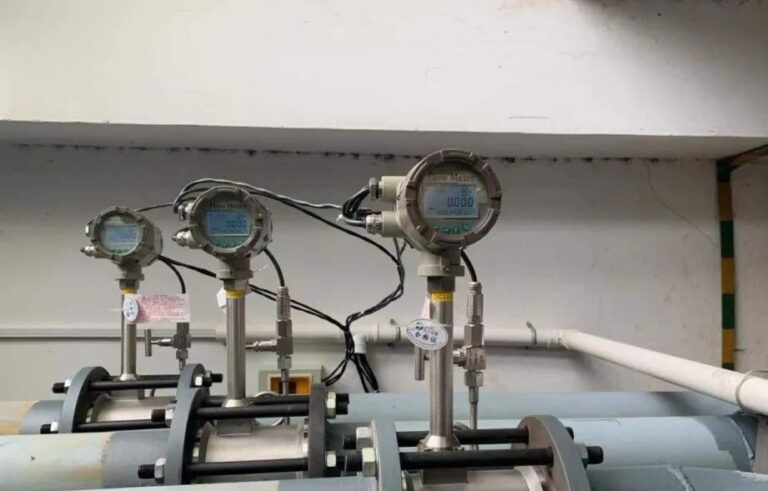
These signals can be used for flow indication, totalization, or integration into DCS/PLC control systems.
2. Key Differences Caused by Medium Properties
Due to the fundamental differences between liquid water and steam, their measurement characteristics vary significantly.
2.1 Medium State
Water Measurement
Typically single-phase liquid
Operates at ambient or moderate temperatures
Viscosity and density remain relatively stable
Steam Measurement
Can be saturated steam (near gas–liquid boundary) or superheated steam
Operates at high temperature and pressure
Medium state is highly sensitive to temperature and pressure fluctuations
2.2 Density and Flow Type
Water
Density is nearly constant (≈1000 kg/m³ at room temperature)
Volumetric flow is often sufficient
Mass flow calculation usually does not require additional compensation
Steam
Density varies significantly with temperature and pressure
For example, saturated steam density increases from approximately 0.58 kg/m³ at 0.1 MPa to about 5.15 kg/m³ at 1 MPa
Accurate measurement requires temperature and pressure compensation to convert volumetric flow into mass flow
2.3 Sensor and Material Selection
Water Applications
Liquid viscosity has minimal impact on vortex frequency
Sensor selection mainly focuses on resistance to fouling and erosion caused by impurities
Standard piezoelectric sensors are generally sufficient
Steam Applications
Typical operating conditions:
Temperature: 150–400 °C
Pressure: 0.1–10 MPa
Sensors must withstand high temperature and pressure
Materials must resist oxidation and corrosion caused by steam
Stainless steel (e.g., 316L) and high-temperature-rated sensors are commonly required
2.4 Installation Requirements
Water Measurement
Air bubbles must be avoided, as they interfere with vortex detection and may cause over-reading
Can be installed horizontally or vertically
For vertical installation, upward flow is recommended to maintain full-pipe conditions
Steam Measurement
Liquid slugging must be strictly avoided
Saturated steam may condense due to pressure drops, forming liquid droplets
Installation is recommended at the highest point of the pipeline, where steam naturally accumulates
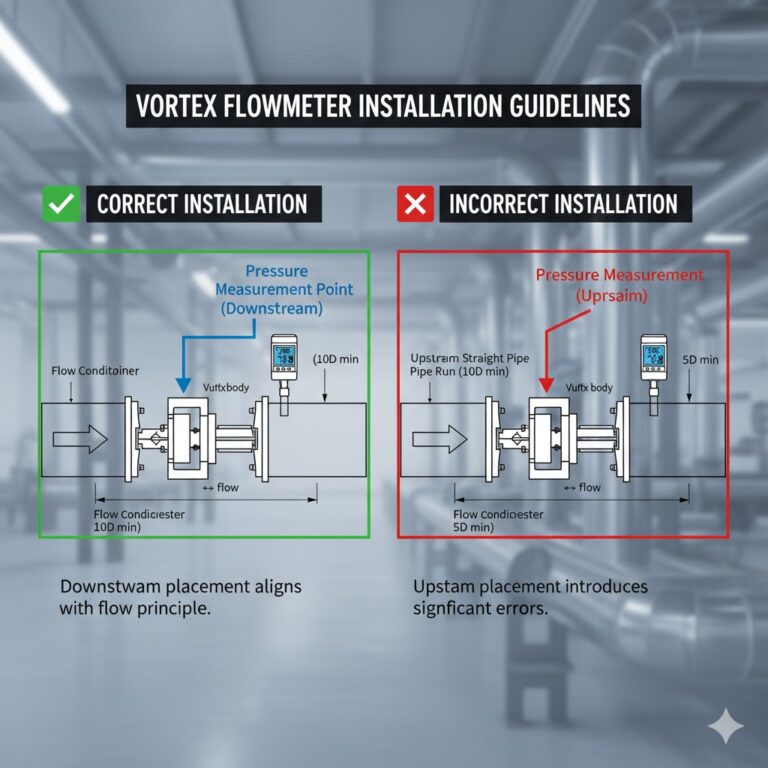
Longer straight pipe lengths are required:
Upstream: typically ≥20D
Downstream: typically ≥10D
Steam separators are often recommended for improved measurement stability
2.5 Protection and Maintenance
Water Applications
Adequate ingress protection (e.g., IP67) is required in humid environments
Periodic cleaning may be necessary to remove scale or deposits
Steam Applications
High-temperature sealing is critical (e.g., metal bellows instead of elastomer seals)
Regular inspection of temperature and pressure transmitters is essential to ensure accurate compensation
Compensation errors can directly affect mass flow accuracy
2.6 Vortex Stability and Measurement Accuracy
Water
Wide applicable flow velocity range
Stable vortex formation
Typical accuracy: ±0.5% to ±1%
Steam
High flow velocity (often 30–50 m/s)
Pressure fluctuations may cause rapid velocity changes
Vortex frequency may fluctuate more than in liquid applications
Typical accuracy: ±1% to ±2%
Signal converters with filtering functions are recommended
3. Engineering Conclusion
Vortex flowmeters operate on the same fundamental principle when measuring water and steam. However, steam measurement places much higher demands on:
Sensor materials
Installation design
Temperature and pressure compensation
High-temperature sealing and long-term stability
Water measurement mainly focuses on avoiding air entrainment and fouling, while steam measurement requires careful control of condensation, density variation, and compensation accuracy.
In both applications, the basic conditions—full-pipe flow, stable velocity, and minimal external disturbance—are essential to ensure reliable and accurate vortex flow measurement.