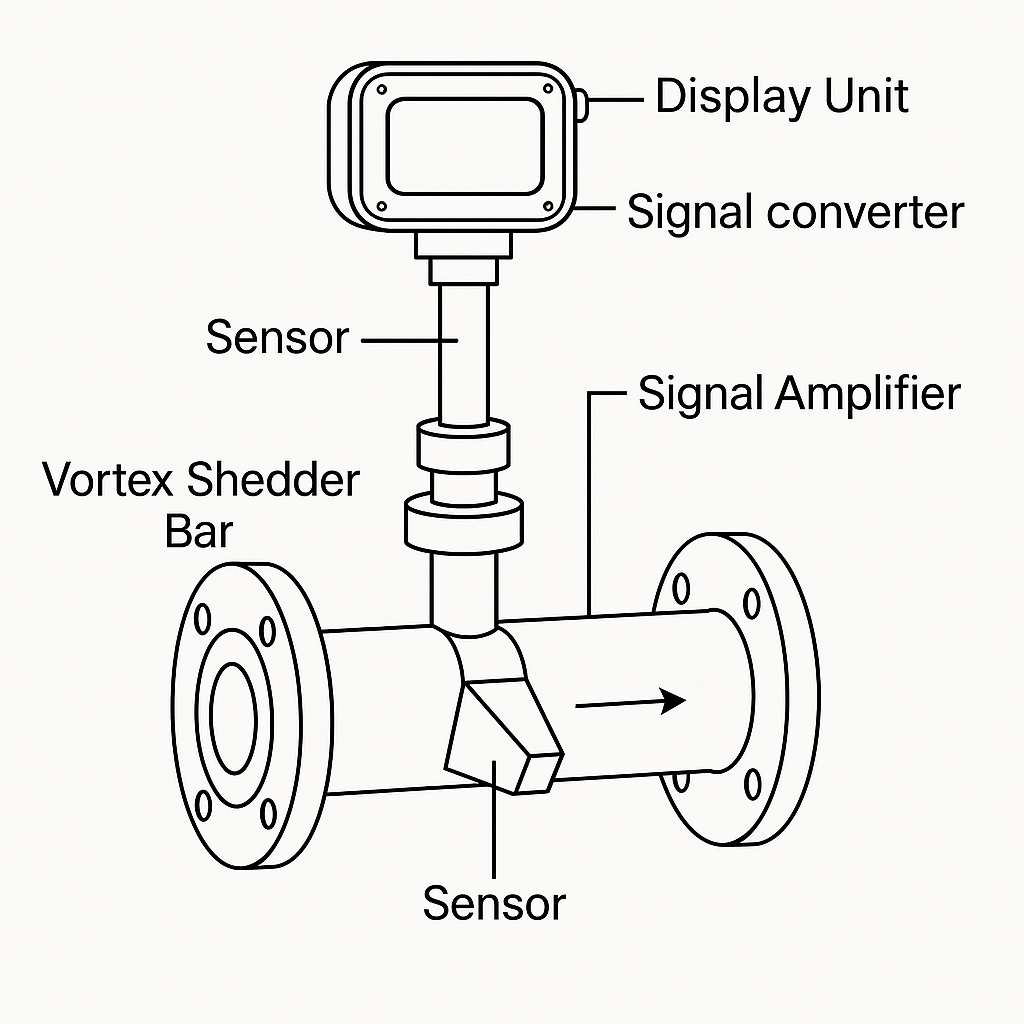
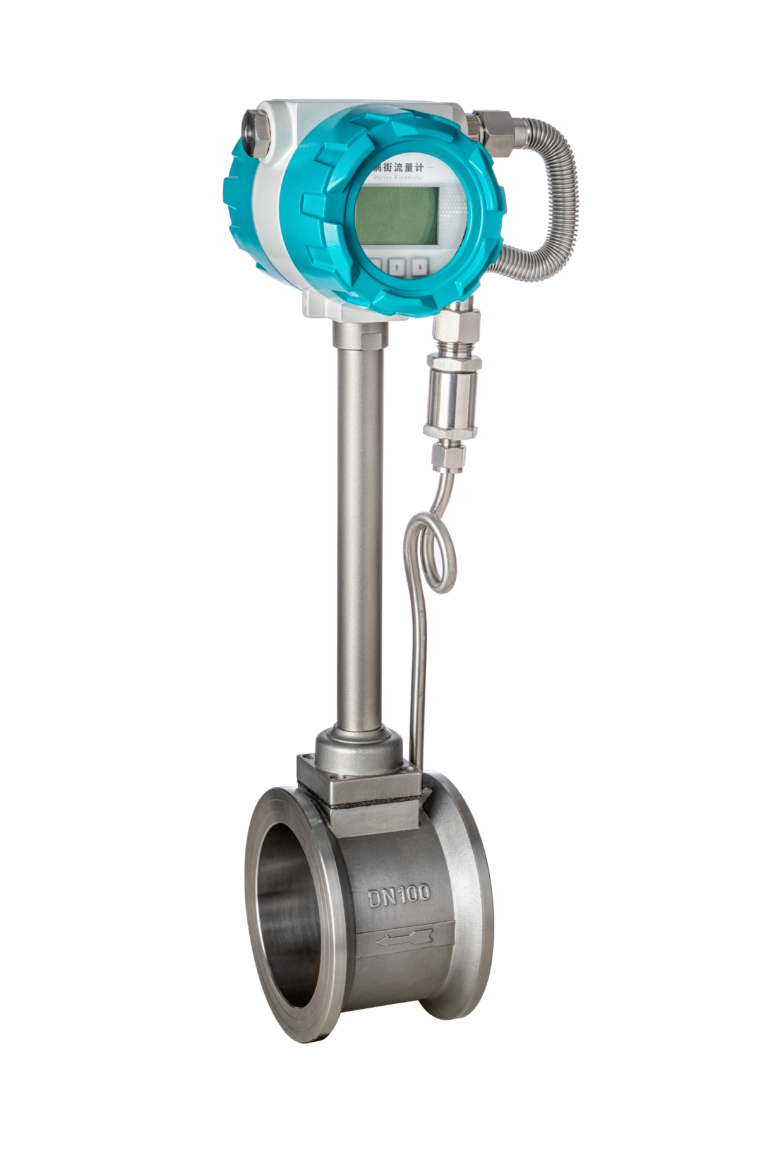
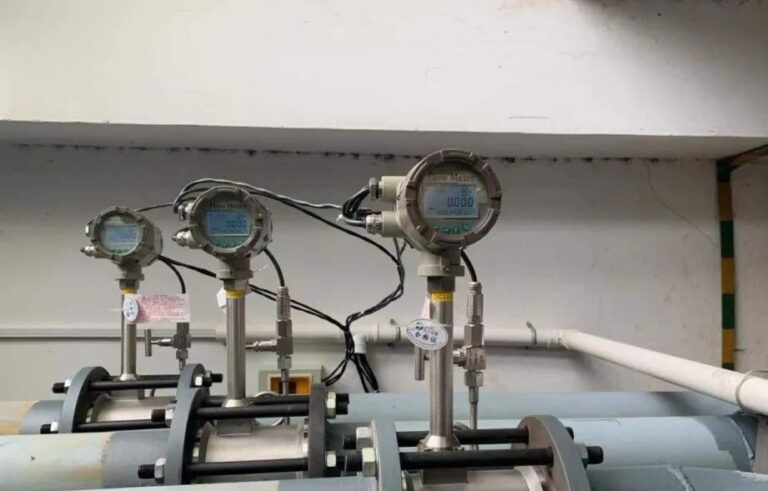
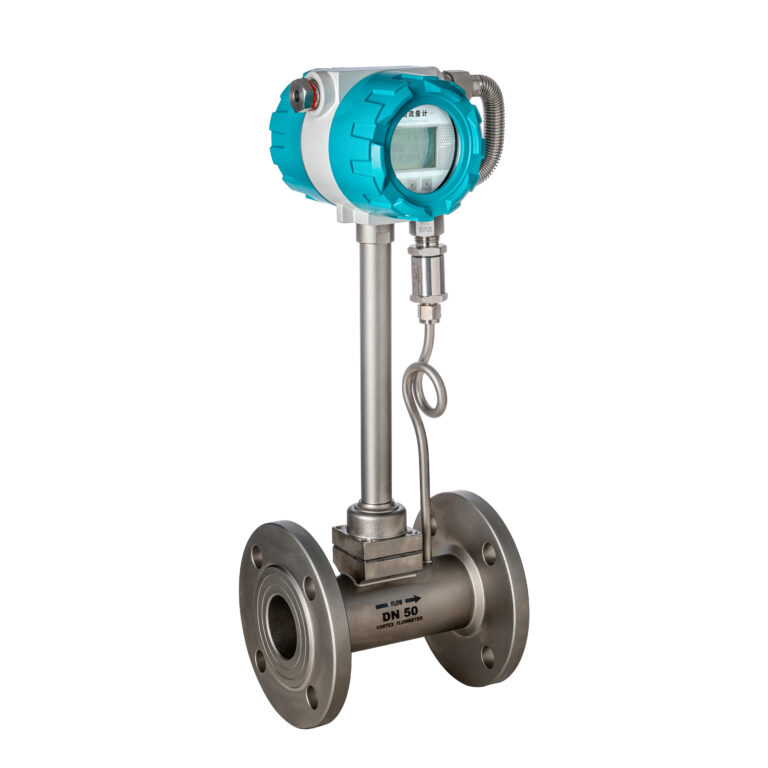
Vortex flow meters are widely adopted across multiple industries due to their rugged design, ability to handle steam and gas, and low maintenance needs. Unlike many other flow meter types, vortex meters can operate effectively under high temperature, high pressure, and challenging flow conditions, making them a popular choice for utility measurement and process control.
Here are the top 7 industrial sectors and scenarios where vortex flow meters are commonly used.
🏭 1. Steam Flow Measurement in Power Plants
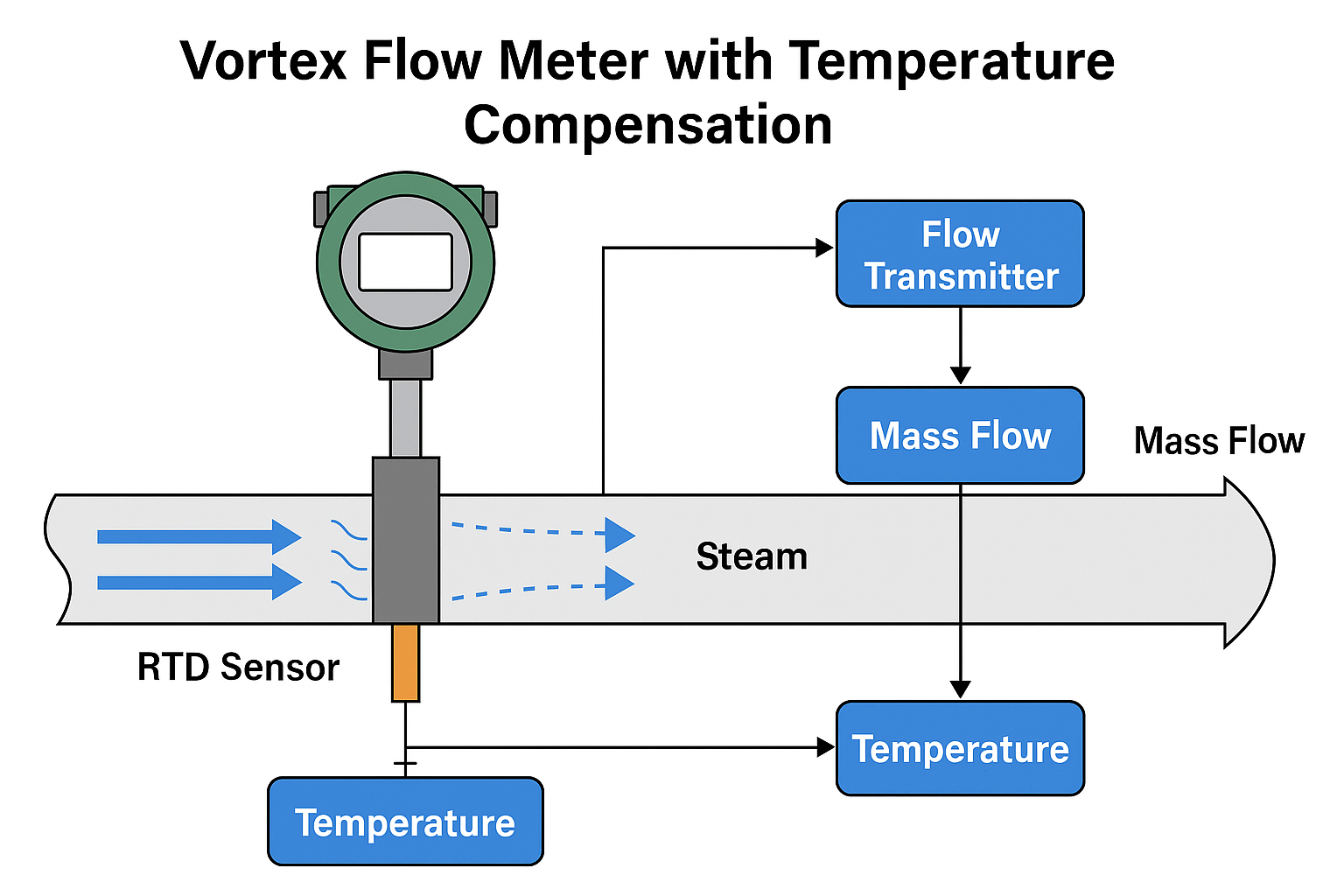
Why it’s ideal: Vortex meters can withstand the high temperatures and pressures typical in saturated and superheated steam systems. They offer accurate mass or volumetric flow readings for energy monitoring, boiler control, and turbine feed.
Key features:
High-temperature resistance (up to 400°C)
Optional temperature compensation
No moving parts, long-term reliability
⚗️ 2. Process Steam Monitoring in Chemical Plants
Application: Used for process heating, sterilization, and distillation.
Advantages:
Handles corrosive or reactive media with stainless steel body
Supports digital protocols (Modbus, HART) for DCS integration
Excellent repeatability for consistent process control
🧺 3. HVAC & District Heating Systems
Usage: Measuring steam or hot water flow in building-level or municipal heating systems.
Why vortex works well:
Compact design
Built-in totalizer for energy billing
Good performance with clean liquids or steam
🥫 4. Food and Beverage Industry – Clean Utilities
Application Areas:
CIP (Clean-in-Place) steam
Utility gases (CO₂, N₂)
Process water
Preferred features:
Sanitary or hygienic flange options
Easy-to-clean structure
High repeatability during batch operations
🏗️ 5. Compressed Air and Industrial Gases
Application: Compressed air flow metering in pneumatic systems, nitrogen flow monitoring in inerting systems, etc.
Why vortex meters are used:
No drift due to sensor wear
Handles wide range of flow rates
Can integrate with energy management platforms
🧪 6. Pharmaceutical and Biotech Plants
Common use: Pure steam and WFI (Water for Injection) systems require precise, sterile flow metering.
Why suitable:
Hygienic-grade vortex meters available
Suitable for clean steam at high purity
Integration with batch records and validation systems
🛢️ 7. Oil & Gas and Petrochemical Industry
Application Examples:
Fuel gas metering
Utility steam monitoring
Hydrogen or flare gas measurement (with caution)
Special needs met:
Explosion-proof design
Stainless steel or Hastelloy body options
High-pressure tolerance
✅ Summary Table: Where Vortex Flow Meters Excel
Industry
Measured Media
Why Vortex is Suitable
Power Generation
Saturated/Superheated Steam
High temp resistance, mass flow capability
Chemical
Steam, gases
Corrosion resistance, stable output
HVAC/District Energy
Steam, hot water
Energy metering, easy installation
Food & Beverage
Steam, CO₂, water
Cleanable, reliable in utilities
Industrial Gases
Compressed air, nitrogen
No drift, fast response
Pharma & Biotech
Clean steam
Sanitary design, high accuracy
Petrochemical
Fuel gas, steam
Explosion-proof, rugged
📌 Conclusion
Vortex flow meters offer a versatile and durable solution for flow measurement across multiple industries. With proper selection—especially considering media type, temperature, and installation constraints—they provide years of accurate, stable, and low-maintenance service in critical flow applications.