
A Practical Guide to Freeze Protection, Heat Tracing, Impulse Lines, Instrument Air and Outdoor Instrumentation
Winter is one of the most challenging seasons for instrumentation engineers and maintenance technicians. As ambient temperatures drop, instrumentation systems that have operated reliably throughout the year may suddenly develop problems such as frozen impulse lines, failed heat tracing, blocked pneumatic tubing, unstable signals, and malfunctioning control valves.
These failures are particularly common in chemical plants, oil and gas facilities, power stations, water treatment plants, and other industrial installations exposed to low temperatures.
In many cases, the problem does not originate inside the instrument itself. Instead, it is caused by freezing process fluids, moisture accumulation, inadequate insulation, or failures in auxiliary systems.
Understanding these common winter-related failures and knowing how to troubleshoot them can significantly reduce unexpected shutdowns and emergency maintenance work.
1. Impulse Line Freezing and Blockage
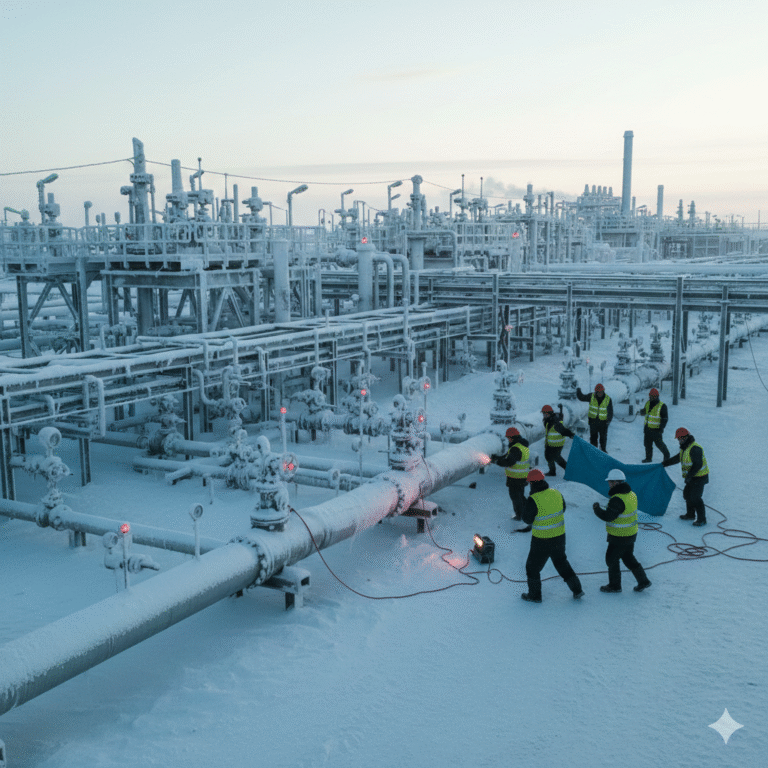
Impulse line freezing is one of the most common winter problems affecting pressure transmitters, differential pressure transmitters, and differential pressure level measurement systems.
Typical Symptoms
- Pressure readings suddenly become fixed and stop changing.
- Differential pressure readings fluctuate abnormally.
- The transmitter displays an apparently normal but incorrect value.
- The measured value does not respond to actual process changes.
Common Causes
When the temperature drops below the freezing point of water, moisture accumulated inside impulse lines, manifolds, or condensate pots may freeze and block the pressure transmission path.
However, freezing water is not the only possible cause. Depending on the process medium, other problems may include:
- Heavy oil or other viscous fluids solidifying at low temperatures.
- Chemical products crystallizing inside impulse lines.
- Salts or suspended solids accumulating and blocking small-bore tubing.
- Condensate freezing in gas measurement applications.
Inspection and Troubleshooting
Instrument technicians should pay particular attention to:
- Whether steam or electric heat tracing is operating properly.
- Whether insulation is damaged, wet, or missing.
- Whether condensate pots and drain points are functioning correctly.
- Whether the impulse lines have appropriate routing and slope.
- Whether the process medium is compatible with the installed heat-tracing arrangement.
Practical recommendation: Do not assume every blocked impulse line is caused by frozen water. Confirm the process medium and the actual blockage mechanism before selecting a corrective action.
2. Heat Tracing System Failures
Heat tracing is essential for protecting instruments and process lines from freezing, solidification, and crystallization.
Industrial facilities generally use two main types of heat tracing:
- Steam heat tracing
- Electric heat tracing
Common Failure Symptoms
When heat tracing stops working, the instrument or process line may cool down rapidly, causing the medium to freeze or become excessively viscous.
Conversely, excessive heating can also damage instruments, seals, electronic components, or process connections.
Common Problems
Steam heat tracing:
- Blocked steam traps.
- Insufficient steam pressure.
- Damaged steam tracing pipes.
- Poor condensate drainage.
- Leaking steam connections.
Electric heat tracing:
- Power supply failure or circuit breaker tripping.
- Damaged heating cables.
- Faulty temperature controllers.
- Failed temperature sensors.
- Incorrect temperature settings.
Inspection Priorities
Pay particular attention to instruments measuring:
- Water-containing process fluids.
- High-viscosity oils.
- Crystallizing chemical solutions.
- Fluids with relatively high freezing or solidification points.
Do not rely only on checking whether the heat-tracing power supply is energized. Verify that the actual instrument and process line temperatures remain within the required operating range.
3. Freezing of Liquid-Filled Systems and Instrument Connections
Freezing can damage not only impulse lines but also liquid-filled instrument systems, isolation chambers, and other enclosed sections containing trapped liquid.
Typical Symptoms
- Cracked impulse tubing or instrument connections.
- Leakage around manifolds and fittings.
- Damaged pressure transmitter diaphragms.
- Permanent zero shifts or abnormal readings after thawing.
Why Does This Happen?
Water and many other liquids change volume or generate substantial pressure when freezing.
If liquid is trapped inside a closed section without sufficient expansion space, freezing can create excessive mechanical stress.
This may damage:
- Small-bore tubing.
- Isolation valves.
- Diaphragm seals.
- Pressure sensing elements.
- Enclosed liquid-filled chambers.
Prevention Measures
- Identify all liquid-filled sections exposed to freezing temperatures.
- Provide appropriate insulation and heat tracing.
- Drain systems when permitted by the process and operating procedures.
- Select suitable diaphragm seal filling fluids for the expected temperature range.
- Check the minimum allowable ambient and process temperatures of the instruments.
Special attention is required for remote diaphragm seals and capillary systems. Their filling fluid and installation conditions must be suitable for the expected operating environment.
4. Control Valve and Actuator Problems in Cold Weather
Low temperatures can significantly affect pneumatic control valves, positioners, actuators, and associated air supply systems.
Typical Symptoms
- Control valves respond slowly.
- Valve movement becomes unstable.
- The positioner output pressure fluctuates.
- The valve sticks or fails to reach the commanded position.
- The control loop starts oscillating or becomes difficult to stabilize.
Common Causes
1. Lubricant viscosity increases
Some lubricants become more viscous at low temperatures, increasing mechanical resistance in moving components.
2. Moisture freezes inside pneumatic tubing
Water in compressed air may freeze in filters, regulators, solenoid valves, or positioner air passages.
3. Positioner performance deteriorates
Cold temperatures, moisture, unstable instrument air pressure, and unsuitable installation conditions may affect positioner operation.
4. Mechanical components become stiff
Seals, packing, actuator diaphragms, and other components may behave differently under low-temperature conditions.
Recommended Checks
- Verify instrument air pressure and quality.
- Inspect filter regulators and pneumatic tubing.
- Check for moisture or ice inside the air supply system.
- Confirm that actuator and positioner temperature ratings are suitable.
- Inspect valve stem movement and packing friction.
- Review positioner calibration and control loop performance.
Important: Valve hunting or oscillation should not automatically be attributed to low temperature. Check the air supply, valve friction, positioner tuning, and process control loop before identifying the root cause.
5. Signal Fluctuations and Outdoor Electrical Enclosure Problems

Winter weather can also create problems in electrical connections, junction boxes, cable glands, and outdoor instrument enclosures.
Typical Symptoms
- Unstable 4–20 mA signals.
- Intermittent communication failures.
- Unexpected transmitter alarms.
- Abnormal resistance or insulation measurements.
- Signals that fluctuate during rapid temperature changes.
Common Causes
Temperature changes can affect enclosure seals, cable glands, and electrical connections.
If moisture enters an enclosure, condensation may form when the internal temperature changes. In freezing conditions, accumulated water may freeze and damage connections or seals.
Typical problem areas include:
- Outdoor junction boxes.
- Explosion-protected electrical enclosures.
- Cable glands and conduit connections.
- Terminal blocks.
- Instrument power supply connections.
Troubleshooting Recommendations
- Inspect enclosure covers and sealing gaskets.
- Check cable gland installation and sealing conditions.
- Look for condensation or water accumulation.
- Inspect terminal blocks for corrosion and loose connections.
- Verify power supply stability and grounding.
- Check cable insulation and signal continuity.
For critical 4–20 mA measurement loops, technicians should verify the actual loop current using appropriate test equipment rather than relying exclusively on the control system display.
Any inspection inside hazardous-area enclosures must follow the applicable explosion-protection requirements and site safety procedures.
6. Flowmeter and Level Transmitter Measurement Problems
Different measurement technologies have different vulnerabilities in winter.
6.1 Electromagnetic Flowmeters
Electromagnetic flowmeters may experience measurement problems when the process medium freezes, solidifies, or crystallizes inside the measuring tube.
Potential problems include:
- Reduced or interrupted flow.
- Incomplete filling of the measuring tube.
- Changes in conductivity due to process conditions.
- Damage caused by freezing liquid inside a fully enclosed measuring tube.
Recommended checks:
- Confirm that the measuring tube remains full where required.
- Check process temperature against the medium’s freezing point.
- Inspect insulation and heat tracing where necessary.
- Verify that the flowmeter’s liner and sensor temperature limits are not exceeded.
6.2 Vortex Flowmeters
Vortex flowmeters can be affected by changes in process conditions, including freezing or solidification of the medium.
In steam applications, condensate accumulation and freezing in associated impulse or pressure measurement lines may also cause problems.
Check the process medium, flow conditions, installation arrangement, and associated instrumentation.
6.3 Differential Pressure Flow Measurement
Differential pressure flow measurement systems are particularly vulnerable when impulse lines become blocked or freeze.
Even if the primary element continues to operate normally, blocked high-pressure or low-pressure impulse lines can produce incorrect differential pressure readings.
Both sides of the measurement system must be checked.
6.4 Radar Level Transmitters
Radar level transmitters generally do not have the same impulse-line freezing problems as conventional pressure-based level measurement systems.
However, they can still experience winter-related problems, including:
- Ice or snow accumulation around the antenna.
- Condensation on unsuitable antenna surfaces.
- Freezing of process connections or external accessories.
- Electronics operating outside their specified ambient temperature range.
For outdoor installations, verify the antenna design, enclosure protection, installation location, and operating temperature specifications.
6.5 Hydrostatic Level Measurement
Hydrostatic level measurement systems are particularly vulnerable to impulse line freezing, especially when measuring water or other liquid media in exposed installations.
A blocked pressure transmission line may cause an incorrect level indication even when the actual tank level is changing.
Practical recommendation: When a level reading suddenly becomes abnormal in winter, compare it with an independent measurement or process indication before assuming that the tank level has genuinely changed.
7. Instrument Air Freezing and Moisture Problems
Instrument air is another critical system that requires special attention during winter.
Pneumatic control valves, positioners, solenoid valves, and other pneumatic instruments depend on a stable supply of clean, dry compressed air.
Typical Symptoms
- Control valves fail to move.
- Positioners respond slowly or intermittently.
- Solenoid valves fail to operate correctly.
- Filter regulators become blocked.
- Pneumatic pressure fluctuates unexpectedly.
Why Does Instrument Air Freeze?
Compressed air contains moisture unless it has been properly dried.
When compressed air expands through a pressure regulator, its temperature may decrease. If sufficient moisture is present and local conditions reach the freezing point, ice can form inside the regulator or pneumatic passages.
The risk depends on the pressure, moisture content, pressure dew point, temperature, and operating conditions.
Inspection Priorities
- Check the compressed air dryer.
- Verify the pressure dew point.
- Inspect automatic condensate drains.
- Drain air receivers and filters according to maintenance requirements.
- Check filter regulators for accumulated moisture.
- Verify that air supply pressure remains within the instrument manufacturer’s specified range.
Important: Simply draining the air receiver is not enough if the air dryer is malfunctioning or the pressure dew point is too high for the winter operating conditions.
8. Incomplete Winter Inspections and Poor Shift Handover
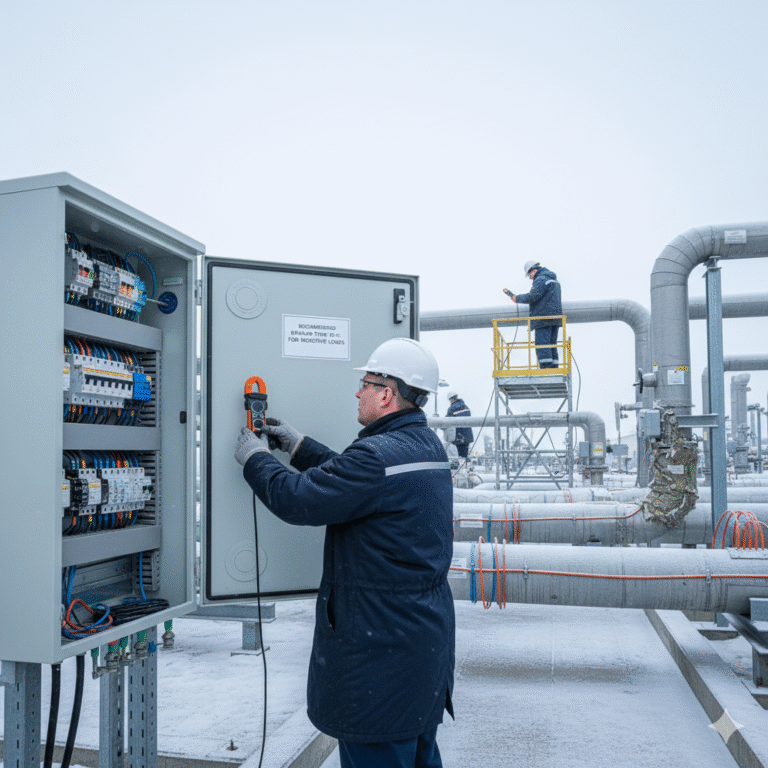
Some winter instrumentation failures are not caused by a single equipment defect. They occur because small problems are overlooked during routine inspections.
For example, heat tracing may appear normal during the afternoon shift, but an unexpected nighttime temperature drop can cause an exposed impulse line to freeze.
A junction box may also appear dry during one inspection but develop condensation after a sudden temperature change.
Common Maintenance Mistakes
- Checking the heat-tracing power supply without measuring actual line temperature.
- Inspecting insulation visually without checking for damaged or wet sections.
- Ignoring instrument air moisture levels.
- Failing to record abnormal ambient or process temperatures.
- Not checking exposed drain and vent points.
- Assuming an instrument is healthy simply because its display is working.
Good shift handover procedures should include the status of heat tracing, insulation, instrument air, and known vulnerable measurement points.
9. Winter Instrumentation Inspection Checklist
A systematic winter inspection program helps identify potential problems before they cause instrument failures or process interruptions.
| Inspection Item | What to Check |
|---|---|
| Pressure transmitters | Impulse lines, manifolds, insulation and heat tracing |
| Differential pressure transmitters | Both impulse lines, condensate pots and drain points |
| Heat tracing | Power supply, steam traps, controllers and actual temperatures |
| Instrument air | Dryer operation, pressure dew point and condensate drainage |
| Control valves | Actuator movement, positioner response and air supply |
| Outdoor junction boxes | Sealing, condensation, moisture and terminal conditions |
| Flowmeters | Process freezing, solidification and measuring tube conditions |
| Level transmitters | Impulse line condition, antenna condition and temperature limits |
| Drain and vent points | Blockage, freezing and drainage conditions |
| Shift handover | Abnormal readings, failed heat tracing and unresolved maintenance issues |
Inspection frequency should be adjusted according to local climate, process hazards, equipment criticality, and site operating procedures.
10. Emergency Troubleshooting: What Should Instrument Engineers Do First?
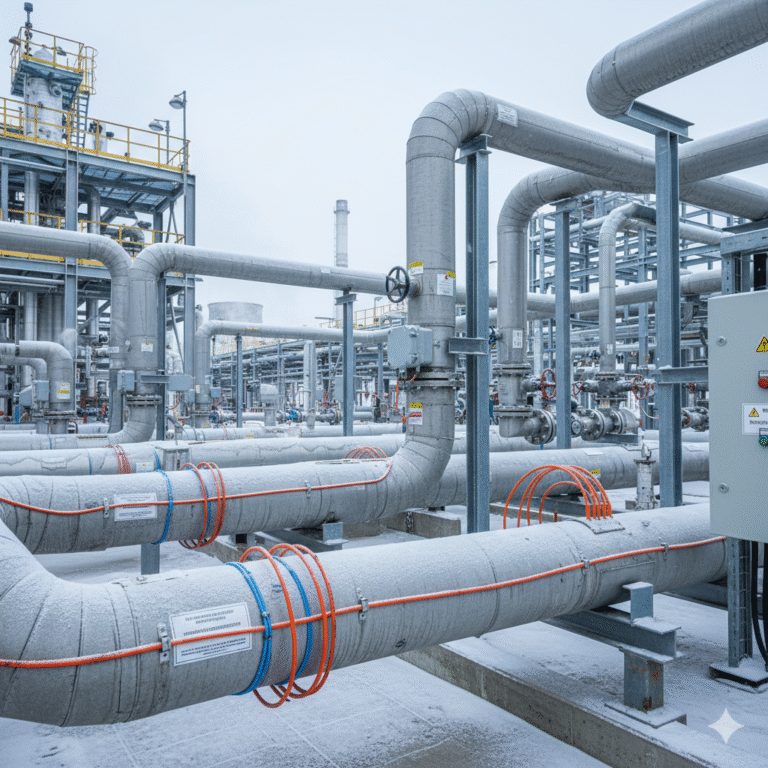
When an instrument fails during extremely cold weather, a structured troubleshooting approach is more effective than immediately replacing the instrument.
Step 1: Confirm whether the process condition has actually changed.
Compare the instrument reading with other process indicators, redundant measurements, and operating conditions.
Step 2: Check the heat tracing and insulation.
Verify power supply, steam availability, insulation condition, and actual temperatures at vulnerable locations.
Step 3: Inspect impulse lines and pneumatic systems.
Look for frozen liquid, blocked tubing, accumulated moisture, and abnormal pressure conditions.
Step 4: Check the electrical system.
Inspect power supply, terminal connections, cable glands, grounding, and signal continuity.
Step 5: Restore operation and verify the measurement.
After corrective maintenance, confirm that the instrument responds correctly and that its reading agrees with an independent reference or process indication.
Safety warning: Never use an open flame to thaw instrument tubing or electrical equipment. Do not loosen fittings, remove transmitters, or open pressurized impulse lines to release suspected blockages without proper isolation, depressurization, permits, and approved procedures. For hazardous or high-pressure services, follow the site’s approved maintenance and process safety requirements.
11. Conclusion
Winter is a demanding season for instrumentation engineers because low temperatures can expose weaknesses in impulse lines, heat-tracing systems, instrument air supplies, outdoor electrical installations, and process measurement equipment.
The most common winter-related problems include:
- Frozen or blocked impulse lines.
- Heat-tracing failures.
- Freezing of trapped liquids.
- Control valve and actuator malfunctions.
- Moisture-related electrical problems.
- Flowmeter and level transmitter measurement errors.
- Ice formation in instrument air systems.
- Incomplete inspections and poor shift handover.
The key to preventing these failures is not simply replacing faulty instruments. It is understanding the entire measurement system, including process connections, auxiliary equipment, environmental conditions, and installation details.
A well-planned winter inspection program, proper insulation, reliable heat tracing, dry instrument air, and effective maintenance procedures can significantly reduce unexpected failures and improve plant reliability.
For instrumentation engineers, the best winter maintenance strategy is simple: identify vulnerable points early, verify actual operating conditions, and prevent freezing before it becomes an emergency.