
In a District Metered Area (DMA), one of the biggest problems is not the absence of a flow meter.
It is having a flow meter installed — but not being able to trust the data it provides.
After a DMA has been operating for several months, engineers may start asking questions such as:
- Why is the minimum night flow unusually high?
- Why does the flow fluctuate so much from day to day?
- Why doesn’t the DMA inlet volume match customer consumption?
- Why did the calculated leakage rate change after replacing the flow meter?
Sometimes, the problem is not the DMA model or the leakage calculation.
The problem started when the flow meter was selected.
This article explains how to select an electromagnetic flow meter for DMA applications, what parameters matter most, and which common mistakes can compromise water-loss analysis.
1. What Does a DMA Actually Measure?
DMA stands for District Metered Area.
In simple terms, a water distribution network is divided into smaller, hydraulically defined zones. The inflow and, where applicable, outflow of each zone are monitored so that the utility can establish a water balance.
A typical DMA monitoring system may include:
DMA boundary control + inlet/outlet flow measurement + customer consumption + pressure monitoring + data transmission + analysis
The objective is not simply to know the instantaneous flow rate.
The real questions are:
How much water entered the DMA?
How much water was legitimately consumed?
Where did the remaining water go?
The difference may be related to leakage, metering inaccuracies, unauthorized consumption, boundary problems, or other factors that require further investigation.
Reliable inlet flow measurement is therefore one of the foundations of effective DMA management.
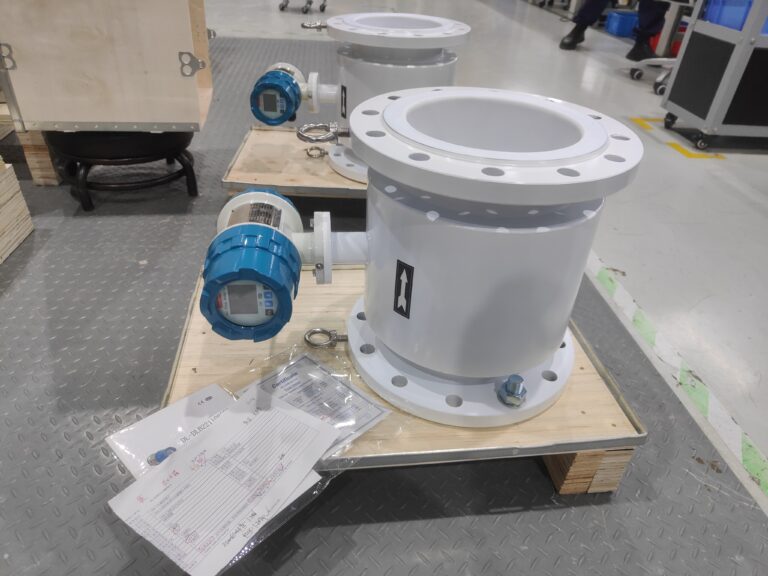
2. Why Are Electromagnetic Flow Meters Commonly Used in DMA Systems?
DMA monitoring requires more than an occasional flow reading.
It requires continuous, stable, long-term measurement that can be trusted for water-balance and leakage analysis.
Electromagnetic flow meters are widely used for water applications for several reasons.
No Moving Parts
An electromagnetic flow meter does not rely on turbines, impellers, or other mechanical moving components to measure flow.
This is particularly useful in municipal water networks where meters are expected to operate continuously for long periods.
Suitable for Conductive Water Applications
Electromagnetic flow measurement is suitable for conductive liquids and is therefore widely applied to potable water, raw water, wastewater, and other conductive water services, provided the minimum conductivity requirements of the selected meter are satisfied.
Bidirectional Flow Measurement
Some DMA networks may experience reverse flow under certain operating conditions.
A meter capable of detecting and totalizing flow in both directions can provide valuable information in these situations.
Totalized Flow Measurement
DMA analysis is not only concerned with:
“What is the flow rate right now?”
More important questions are:
- How much water entered today?
- What was the total volume this week?
- What was the monthly inflow?
- How does it compare with billed or authorized consumption?
For this reason, reliable totalized volume is extremely important.
3. Don’t Select a DMA Flow Meter by Pipe Size Alone
One of the most common mistakes is:
“The pipe is DN300, so we need a DN300 electromagnetic flow meter.”
That may be correct — but not necessarily.
Pipe diameter is not the same thing as measurement range.
A DN300 pipeline may carry a high flow rate during peak demand but a much lower flow rate at night.
For DMA applications, the meter should therefore be evaluated against at least three operating conditions:
- Qmin — Minimum flow
- Qnormal — Normal operating flow
- Qmax — Maximum flow
This is particularly important when Minimum Night Flow is used for leakage assessment.
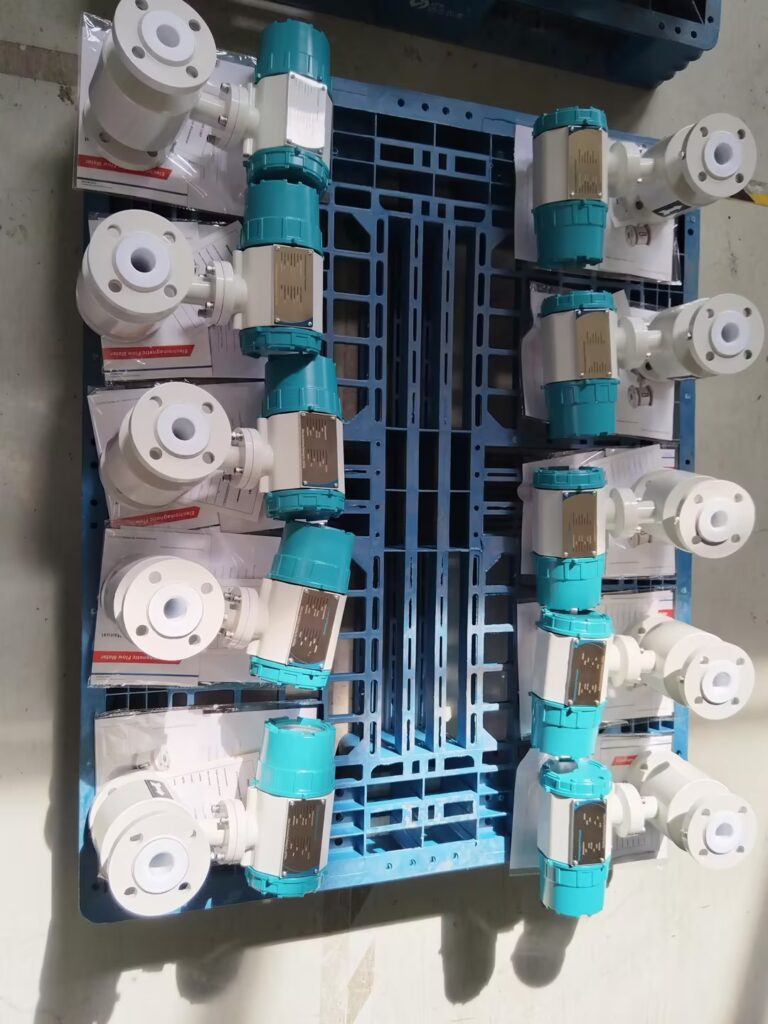
4. Minimum Night Flow Is Critical
Many engineers naturally ask this first:
“What is the maximum flow?”
For DMA projects, another question may be even more important:
“What is the minimum flow?”
During late-night and early-morning periods, residential and commercial consumption generally decreases, and many industrial users may also reduce demand.
The DMA therefore enters a relatively low-flow condition.
This is exactly where leakage analysis becomes particularly valuable.
If the selected flow meter performs poorly at the expected minimum flow, the resulting data may distort the analysis.
A DMA meter should therefore not only be capable of measuring high flow.
It must also measure low flow reliably and repeatably.
Minimum Night Flow Does Not Automatically Equal Leakage
One important point should also be clarified:
Minimum Night Flow (MNF) is not automatically the same as leakage.
Night flow may still include legitimate consumption, continuous industrial demand, tank filling, operational use, and other authorized consumption.
MNF is an important input for leakage assessment, but it must be interpreted together with legitimate night consumption and the hydraulic characteristics of the DMA.
5. Check Flow Velocity, Not Just Flow Rate
A useful way to evaluate meter sizing is to calculate the corresponding flow velocity.
The basic relationship is:
v = Q / (3600 × A)
Where:
- v = flow velocity in m/s
- Q = flow rate in m³/h
- A = internal cross-sectional area of the meter in m²
Consider a DMA with:
- Minimum flow: 30 m³/h
- Normal flow: 300 m³/h
- Maximum flow: 800 m³/h
Instead of checking only whether the meter can handle 800 m³/h, calculate the flow velocity at all three conditions.
This tells you much more about whether the selected meter size is suitable for the actual operating range.
The final acceptable velocity and measurement range should always be checked against the specifications of the selected electromagnetic flow meter.
6. Does the Flow Meter Have to Match the Pipe Diameter?
Not always.
Suppose the existing water main is DN500.
Does that automatically mean you must install a DN500 electromagnetic flow meter?
No.
The decision should consider:
- Minimum flow
- Normal flow
- Maximum flow
- Flow velocity
- Available pressure
- Allowable pressure loss
- Pipeline configuration
- Installation space
- Meter measurement characteristics
- Maintenance requirements
In some applications, installing a smaller meter with reducers may improve the measurement conditions at low flow.
However, reducing the meter size should never be done arbitrarily just to increase velocity.
A reduced-bore installation can introduce additional pressure loss and change hydraulic conditions.
The meter size should therefore be determined through engineering evaluation and verified against the manufacturer’s requirements.
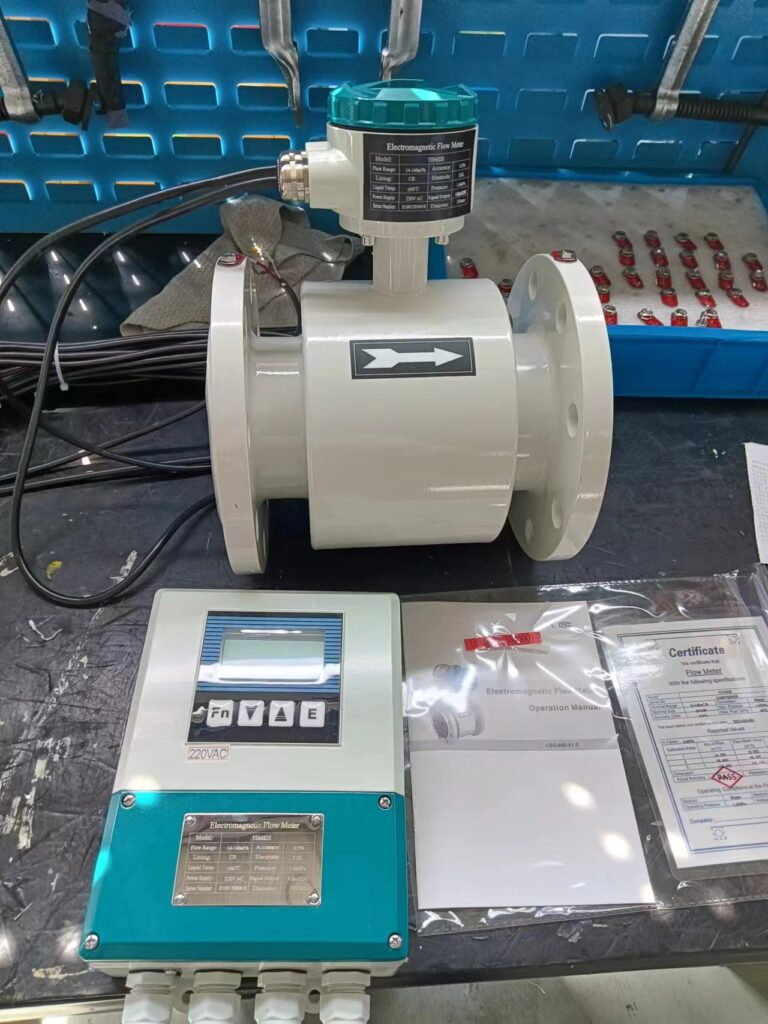
7. Accuracy Is Not the Only Specification That Matters
A common purchasing question is:
“The accuracy is ±0.5%. Is that good enough for a DMA?”
Accuracy is important, but the number printed on the datasheet does not tell the whole story.
For long-term DMA measurement, consider the entire measurement system.
Low-Flow Performance
Can the meter reliably measure the expected minimum night flow?
Repeatability
Under similar hydraulic conditions, does the meter provide consistent results over time?
Zero Stability
Is the zero point stable during long-term operation?
Empty-Pipe Detection
Could the pipeline become partially filled or empty under abnormal operating conditions?
If so, empty-pipe detection may be useful.
Bidirectional Measurement
Can reverse flow occur in the network?
If yes, confirm how forward flow, reverse flow, and net totalization are handled.
Totalization and Data Logging
Can the required flow and totalized volume data be recorded by the meter or by the associated RTU/data acquisition system?
Communication
Can the meter communicate reliably with the DMA monitoring platform?
In many projects, these characteristics are just as important as a single headline accuracy figure.
8. Data Transmission Is Part of the Measurement System
A DMA project does not end when the flow meter is installed.
The real work starts when engineers begin analyzing the data.
Depending on the project, data may need to be collected:
- Daily
- Hourly
- Every 15 minutes
- Every 5 minutes
- Or at another specified interval
The communication architecture therefore needs to be considered during meter selection.
Depending on the system, this may include:
- 4–20 mA
- Pulse output
- RS485
- Modbus RTU
- Wireless RTU
- Cellular communication
- NB-IoT or other low-power communication technologies
The exact solution depends on the DMA platform and project architecture.
The objective is simple:
Reliable field data must reach the monitoring platform continuously and correctly.
A highly accurate meter is of limited value if its data cannot be reliably transmitted and recorded.

9. What If There Is No Power at the DMA Site?
Many DMA metering points are not located inside treatment plants or pumping stations.
They may be installed:
- Along roads
- Inside underground chambers
- In residential areas
- In remote parts of the distribution network
A stable AC power supply may not be available.
Before selecting the flow meter, determine:
Is reliable power available at the installation point?
If not, the project may need to consider:
- Battery-powered flow meters
- Solar power
- Low-power data loggers
- Low-power wireless transmission
- Other suitable remote power solutions
For this reason, a DMA flow meter should not be treated as an isolated instrument.
It is part of a complete remote metering node.
10. Pay Attention to IP Protection in Underground Chambers
DMA flow meters are frequently installed in underground valve or meter chambers.
These environments may experience:
- High humidity
- Condensation
- Water accumulation
- Temporary flooding
The IP protection rating should therefore be selected according to the actual installation environment.
Check not only the meter body, but also:
- Sensor protection rating
- Converter protection rating
- Cable glands
- Junction boxes
- Cable connections
- Chamber drainage
For split-type electromagnetic flow meters, the sensor and converter may require different protection levels depending on where each component is installed.
A meter that works perfectly in a dry workshop may not survive long-term exposure to a flooded chamber.
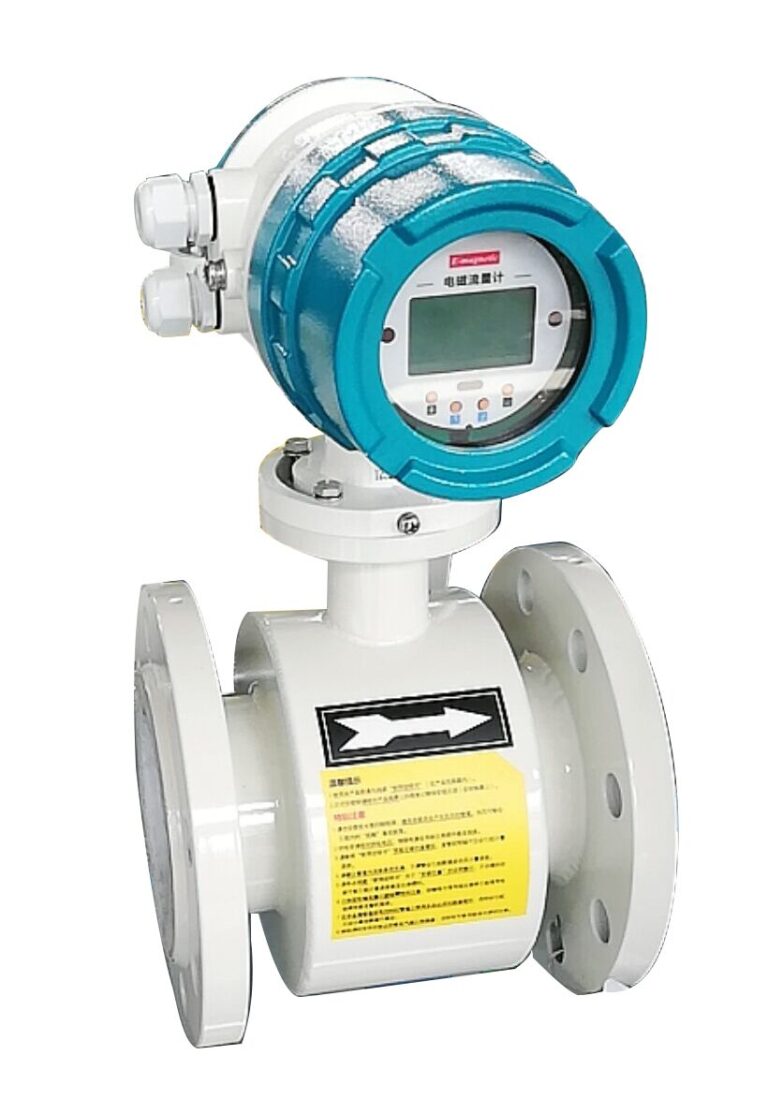
11. Correct Installation Is Just as Important as Correct Selection
Selecting the right electromagnetic flow meter is only half the job.
The other half is installing it correctly.
Because DMA data is used for water-balance and leakage analysis, installation errors can have consequences far beyond a simple unstable display.
Keep the Pipe Full
The measuring tube should remain completely filled during normal operation.
Installation points where partial filling or trapped air frequently occurs should be avoided.
Avoid Problematic Hydraulic Conditions
High points, pump suction conditions, free discharge arrangements, and other locations that may cause negative pressure, air accumulation, or incomplete filling should be carefully evaluated.
Follow the Manufacturer’s Straight-Pipe Requirements
There is no single upstream/downstream straight-pipe rule that should be copied blindly for every electromagnetic flow meter.
Requirements may vary according to:
- Meter design
- Upstream disturbances
- Valves
- Pumps
- Elbows
- Reducers
- Installation configuration
Always follow the technical requirements of the selected meter.
Grounding and Shielding Matter
Some unstable flow signals are blamed on the meter when the actual problem is related to:
- Improper grounding
- Poor shielding
- Cable routing
- Electrical interference
- Incorrect wiring
These basic installation details can determine whether the DMA receives stable data for years or unreliable data from the beginning.
12. Don’t Blame the Flow Meter Before Checking the DMA Boundary
Imagine a DMA that is supposed to have two inlet pipes.
The meters are working correctly, but the daily water balance never seems to match.
Before assuming the flow meters are wrong, ask another question:
Is the DMA really hydraulically isolated?
Check for:
- Bypass pipelines
- Fire-water connections
- Emergency interconnections
- Unknown cross-connections
- Leaking boundary valves
- Additional water sources
A highly accurate electromagnetic flow meter cannot compensate for an incorrectly defined DMA boundary.
This is one of the major differences between DMA monitoring and ordinary point flow measurement.
A DMA is a water-balance system, not simply a collection of flow meters.
13. Think in Terms of Water Balance
The final objective is not simply to read:
“Today’s inlet flow was X m³.”
The DMA system needs to connect multiple pieces of information:
DMA inflow
↓
Authorized/customer consumption
↓
Minimum night flow
↓
Potential background leakage
↓
Abnormal flow
↓
Leakage trends
The electromagnetic flow meter is only one part of this system.
But it is one of the most important data sources.
If the inlet measurement is unreliable, every calculation downstream becomes less reliable.
14. Eight Questions to Ask Before Selecting a DMA Electromagnetic Flow Meter
Before selecting a meter, collect at least the following information:
| Parameter | Information Required | Why It Matters |
|---|---|---|
| Pipe Size | DN or inch | Initial meter sizing |
| Minimum Flow | m³/h | Low-flow and MNF measurement |
| Normal Flow | m³/h | Main operating range |
| Maximum Flow | m³/h | Upper measurement requirement |
| Medium | Potable water, raw water, etc. | Conductivity and material selection |
| Installation | Chamber, ground level, pump station, etc. | IP rating and installation design |
| Power Supply | AC, DC, battery, solar | Meter and telemetry configuration |
| Data Communication | 4–20 mA, pulse, RS485, Modbus, wireless | DMA platform integration |
Without this information, selecting a meter based only on pipe diameter and price is risky.
15. Common Mistakes in DMA Flow Meter Selection
Several mistakes appear repeatedly in DMA projects:
Mistake 1: Selecting the meter only according to pipe diameter
Pipe size alone does not define the required measurement range.
Mistake 2: Checking maximum flow but ignoring minimum flow
A meter may perform perfectly during daytime peak demand but provide less useful data during critical low-flow periods.
Mistake 3: Comparing only the accuracy percentage
Low-flow performance, repeatability, zero stability, installation, and communication also matter.
Mistake 4: Ignoring the installation environment
An inappropriate IP rating can cause reliability problems in wet underground chambers.
Mistake 5: Treating communication as an afterthought
A DMA needs continuous historical data, not only a local display.
Mistake 6: Assuming every water-balance problem is caused by the flow meter
DMA boundary conditions, bypasses, valve leakage, customer meter errors, and legitimate consumption must also be investigated.
Mistake 7: Choosing the lowest purchase price
A cheaper meter can become expensive if unstable data eventually requires:
- Shutdown
- Excavation or chamber access
- Removal
- Reinstallation
- Recalibration
- Communication reconfiguration
- Platform recommissioning
In DMA projects, the costliest meter is often the one that has to be replaced.
16. A Practical DMA Selection Checklist
Before placing an order for an electromagnetic flow meter, confirm:
DMA boundary integrity
Pipe diameter
Minimum flow rate
Normal operating flow
Maximum flow rate
Flow velocity at Qmin, Qnormal, and Qmax
Medium and conductivity
Operating pressure
Operating temperature
Required accuracy
Bidirectional flow requirement
Totalizer requirement
Installation location
Full-pipe conditions
Available straight-pipe length
IP protection requirement
Power supply
Output signals
Communication protocol
Data logging/RTU requirements
DMA platform interface
Grounding arrangement
Final Thoughts
A successful DMA project is not simply:
Install flow meters → collect data → calculate leakage.
It is a complete process:
DMA design
↓
Boundary control
↓
Inlet and outlet metering
↓
Pressure monitoring
↓
Customer consumption measurement
↓
Data transmission
↓
Water balance
↓
Leakage analysis
↓
Abnormal-flow detection
↓
Continuous optimization
The electromagnetic flow meter is one of the “eyes” of this system.
If the measurement is unreliable, the analysis based on it will also be unreliable.
So when selecting an electromagnetic flow meter for a DMA, remember:
Check minimum flow before focusing on maximum flow. Understand the actual site conditions before comparing brands and prices.
Do not oversize a meter simply to accommodate maximum flow while ignoring what happens at two or three o’clock in the morning.
That low-flow period may contain some of the most valuable information in the entire DMA.
Ultimately, a DMA is not only trying to answer:
“How much water entered the district?”
The more important question is:
“Where did all that water go?”
And before you can answer that question, you need to make sure the first measurement in the water balance is reliable.
Need Help Selecting a DMA Flow Meter?
If you are selecting an electromagnetic flow meter for a DMA or water distribution network, provide the following information:
Pipe size + Qmin + Qnormal + Qmax + medium + pressure + installation location + power supply + communication requirement
With these parameters, the meter size and configuration can be evaluated against the actual operating conditions rather than selected by pipe diameter alone.